Autonomous Cars Are Still Cars
Yes, autonomous vehicles will reduce accidents and deaths on our streets and highways, but they won’t reduce the far higher rates of death due to poverty and everything that comes with being poor. In fact, autonomous vehicles will lead to more poverty and the deaths associated with poverty.
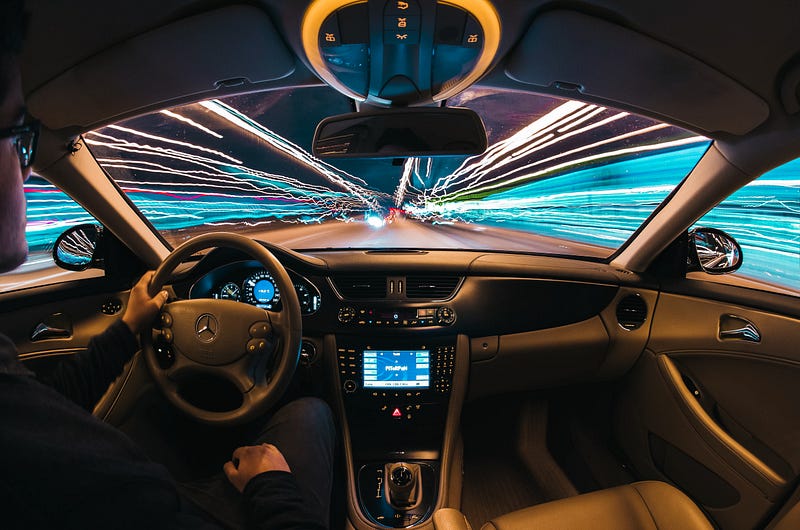
Autonomous cars are still cars. Though not as much as some others autonomous cars still pollute, still bring congestion and gridlock to our cities, still require vast natural resources , still enable urban sprawl, and are no more than a solution to a manufactured problem.
Autonomous cars will create more traffic congestion than they solve.
“But research by GreenBiz has indicated that in the US, it could encourage “a lot more driving”. A 2019 survey of 940 drivers of partially automated vehicles found that as many as 35% of respondents said they drove longer distances because of this technology.”
It stands to reason that electric cars of any kind will increase congestion as those who own them would drive them more than they drive now. I would certainly drive more if gasoline was .20 to .25 cents per gallon like it was when I started driving, why wouldn’t I drive more if I had an electric car?
Worst of all, autonomous cars will never serve those who need them most — the poor who lack access to public transportation, and the poor elderly who struggle to walk to the bus stop. Autonomous cars are still cars, and those who perceive and promote them as some sort of solution to transportation woes are blind to the biggest problems facing us today. Or they don’t care.
Don’t get me wrong, I love to drive — always have. I learned to drive in my Daddy’s tractor-trailer while traveling along the New York Thruway in the middle of the night. I quickly mastered the 10 forward speeds and 2 reverse speeds of the Roadranger transmission. No, it wasn’t an automatic. I was eleven years old. Before I turned 16 and got a driver’s license I had already driven that tractor-trailer in every US state east of the Mississippi plus Iowa. (27 states in total) I had also driven in the Canadian provinces of Quebec and Ontario. I was hooked.
I bought my first car, a 1962 Fiat 600 when I was 14. My first pick-up, a 1956 Ford F100 at 16, and my first motorcycle, a 1948 Harley-Davidson when I was eighteen.
I drove tractor-trailers for more than 3 million accident free miles after I turned eighteen. Not once did I ever dream of a time when an autonomous truck would be doing the driving for me.
Am I against autonomous vehicles? Of course not. Most of you are clueless, distracted, poorly trained, and haven’t the natural abilities and patience required to be good drivers, much less, great drivers. Autonomous vehicles for the rest of you would make my driving and riding experiences less stressful, and more pleasurable. Buy one if you can.
But autonomous vehicles are not going to solve the world’s problems and will only serve to make things worse.
Autonomous vehicles will be manufactured in autonomous factories without the need for humans. Autonomous vehicles won’t even require people to drive them out of the factories to storage lots where, when called, they will drive themselves onto trailers pulled by autonomous trucks, railcars pulled by autonomous locomotives, and autonomous ships — the obvious intention of those who are leading the autonomous vehicle industry. Autonomous vehicles and the technology it creates will lead to mass unemployment of the most skilled labor in the world. Pretty soon even those who design and program autonomous vehicles will be replaced by autonomous designers and programmers. After all, programmers, designers, and factories are all far easier to replace than creating autonomous vehicles. The technology that can drive a car, truck, airplane, or boat is far harder to implement than the tech needed to automate factories.
“Many railroad workers see this “worker shortage” as the opening shot in letting trains become autonomous, the president of CSX even came out and said all of the “crew shortage” problems would be eliminated if they could go to one man crews. This is another line the industry is putting out. If we automated ALL of railroading today, the railroads would say “we don’t have enough robots,” and “robots are too expensive to run,” just like it’s “too expensive to pay employees. The real problem here is the SAME problem that exists everywhere else in the supply chain, and that is the more the transportation services can be constrained, the more these services can charge due to “shortages.”
The parts needed to make autonomous vehicles will be made in autonomous factories, and delivered by autonomous trucks to the autonomous factories where autonomous vehicles are produced. Over 99% of the workforce required to build cars today will be unemployed. What’s that, you say they can be trained for new jobs that increase the numbers of skilled workers competing to remain employed? You’re right, that’s exactly what will happen just as has happened with every new disruptive change that ever came into existence.
Ryan also writes,
“Many railroad workers see this “worker shortage” as the opening shot in letting trains become autonomous, the president of CSX even came out and said all of the “crew shortage” problems would be eliminated if they could go to one man crews. This is another line the industry is putting out. If we automated ALL of railroading today, the railroads would say “we don’t have enough robots,” and “robots are too expensive to run,” just like it’s “too expensive to pay employees.” The real problem here is the SAME problem that exists everywhere else in the supply chain, and that is the more the transportation services can be constrained, the more these services can charge due to “shortages.”
Even those of you who are in the business of designing and programming autonomous vehicles are designing and programming yourselves out of work. And too many of you are too stupid to see it coming.
Don’t you get it, the technology used to make autonomous vehicles will be capable of replacing anyone, everyone, even CEOs. Ask yourself, why would shareholders be willing to employ a CEO when the job can be done with a machine? That MBA will become a useless scrap of paper as the same technology that is capable of creating autonomous vehicles can and will be used to make every job autonomous.
School teachers and restaurant workers will be replaced with robots. Plumbers, construction workers, and appliance repair men will all fall victim to technology. When your fridge is in need of repair it will call for a robot repairman to ride to your home in an autonomous van, open your autonomous door, and replace the broken module in your fridge before billing your account. The very definition of autonomous is,
“…denoting or performed by a device capable of operating without direct human control.”
Fast Company is reporting that Robinhood, Oracle, Shopify, Netflix, Coinbase, and Lyft are all laying off citing rising cost and falling business, but Fast Company also reports,
“Shifting models of how work gets done has fueled demand for enterprise automation. Organizations are increasingly digital and rely on automation and artificial intelligence technologies to do more with less. The U.S. government is no exception — President Biden’s Management Agenda emphasizes automation’s role in government modernization and the federal government’s goals of strengthening and adding flexibility to its workforce.”
That’s right, the governments that employ roughly 20 million US workers, https://www.statista.com/statistics/204535/number-of-governmental-employees-in-the-us/ are going to replace them with the same technologies that allow your car to drive itself.
Autonomous technology, while great for big business, will destroy what is left of small business as owners of small businesses will not be able to afford the high upfront costs of buying the autonomous machines necessary to remain competitive.
Yes, autonomous vehicles will reduce accidents and deaths on our streets and highways, but they won’t reduce the far higher rates of death due to poverty and everything that comes with being poor. In fact, autonomous vehicles will lead to more poverty and the deaths associated with poverty.
Autonomous vehicles won’t feed the hungry. Promoters of creative disruption as a means to economic growth never point to the fact that after a couple of hundred years of disrupted growth the total number of poor and hungry people worldwide is greater than has ever existed before. Every new technology ever created has been heralded as the solution to what plagues the world but the problems remain, bigger than ever before.
The World Bank defines extreme poverty as living on less that $1.90 cents per day. How many of you reading this could survive on $1.90 a day? None of you, that’s how many. You can’t even buy a sandwich for $1.90.
Autonomous cars are still cars. Autonomous cars do nothing to make medicine and healthcare more accessible and affordable. They won’t educate and train people to care for themselves, nor will autonomous vehicles do anything to bring society closer together. In fact, autonomous cars will only be available to the well-to-do and will be just another status symbol — another means to separate the rich from the poor.
You’ll not be able to repair your own autonomous car. You won’t know how. Your local garage won’t be allowed to work on your autonomous car even if they are competent and equipped to do so. Don’t believe me? Ask anyone who owns a Tesla today. Your autonomous car will be leased, not owned, and you won’t be able to buy your leased autonomous car when your lease ends as manufacturers, the government, and insurance companies will not be willing to bear the risks brought about by older, and possibly poorly maintained autonomous cars.
How is it people love to use the word progress to describe things that won’t make the world a better place for everyone and not just the few who can afford it?
That’s not to say things won’t work out for those who survive the coming Great Autonomous Purge. In the next couple hundred years employment will be replaced with already much needed Universal Basic Income. Eventually most transportation will be public transit. Actual workers, if there are any workers left, will commute from Atlanta, Georgia to Richmond, Virginia (an 8 hour drive) in less than 2 hours using autonomous high speed rail.
Those who survive will live in domed or underground cities safe from global warming. Just make sure not to live too close to the underground sewage storage tunnels.
Anyway, I’m not worried as I won’t be here to see it.


