avatarColleen Millsteed

Free AI web copilot to create summaries, insights and extended knowledge, download it at here

5538

Abstract

nFyJy2veBw.jpeg"><figcaption>Image courtesy of <a href="https://en.m.wikipedia.org/wiki/Rainbow_lorikeet#/media/File%3ARainbow_lorikeet.jpg">Wikipedia</a></figcaption></figure><h2 id="554d">Spotted Quoll</h2><p id="38eb">The Spotted Quoll is a carnivorous marsupial and is in fact, the world's second-largest carnivorous marsupial, second only to the Tasmanian Devil.</p><p id="c5cc">Males generally weigh around 3.5 kilograms, females 1.8 kilograms and are found in the wet forests of southeast Australia and Tasmania. There is a separate sub-species found in northern Queensland.</p><figure id="568e"><img src="https://cdn-images-1.readmedium.com/v2/resize:fit:800/1*F0Mb1oq-3LGZiBBUpyha3A.jpeg"><figcaption>Image courtesy of <a href="https://en.m.wikipedia.org/wiki/Tiger_quoll#/media/File%3ATiger_Quoll_6178.jpg">Wikipedia</a></figcaption></figure><h2 id="1029">Sugar Glider</h2><p id="5420">It is called the Sugar Glider because of its preference for sweet sap and nectar; it has a pair of gliding membranes that attach its forelegs to its hind legs, giving it the ability to glide through the air.</p><p id="6d66">Found in southern Queensland and New South Wales, they are covered in a pale grey to brown fur, with a lighter shade on their underbelly.</p><p id="013a">Their length from nose to tail is usually in the 24 to 30 centimetre range, and weight for the males is 240 grams, and for females, 115 grams.</p><figure id="686a"><img src="https://cdn-images-1.readmedium.com/v2/resize:fit:800/1*XXhvNFsYiOhPV3_FV1dadw.jpeg"><figcaption>Image courtesy of <a href="https://commons.m.wikimedia.org/wiki/File:Petaurus_breviceps_1.jpg#mw-jump-to-license">Wikipedia</a></figcaption></figure><h2 id="fe33">Tree Kangaroo</h2><p id="4dc3">Tree Kangaroos are another marsupial species and can be found in far northeastern Queensland and some small islands off the North Queensland coast.</p><p id="9935">The Tree Kangaroo thrives in the treetops and, depending on the sub-species, can grow from 48 to 90 centimetres in length and weigh between 5.5 and 15 kilograms.</p><figure id="b1a7"><img src="https://cdn-images-1.readmedium.com/v2/resize:fit:800/1*7kqkdTXz9A-yA1RUoeYKpA.jpeg"><figcaption>Image courtesy of <a href="https://commons.m.wikimedia.org/wiki/File:Matschies_tree_kangaroo_Dendrolagus_matschiei_at_Bronx_Zoo_1_cropped.jpg#mw-jump-to-license">Wikipedia</a></figcaption></figure><h2 id="4f67">Wallaby</h2><p id="0e1d">The Wallaby, a small version of our Kangaroo, will only grow to a maximum length of 180 centimetres and weigh around 18 kilograms.</p><p id="2d4b">Like our Kangaroos, Wallabies are herbivores and can be found throughout the entire continent of Australia.</p><figure id="4303"><img src="https://cdn-images-1.readmedium.com/v2/resize:fit:800/1*ruDg0NVNpTjnZ847BJca3w.jpeg"><figcaption>Image courtesy of <a href="https://commons.m.wikimedia.org/wiki/File:Red_necked_wallaby444.jpg#mw-jump-to-license">Pixabay</a></figcaption></figure><h2 id="6b2a">Wombat</h2><p id="0791">Pudgy short-legged marsupial, a Wombat usually grows to a length of 1 metre and weighs between 20 to 35 kilograms. They are found in southern and eastern Australia, as well as Tasmania.</p><p id="dc6a">A species of the marsupial family, but unlike other marsupials, the Wombat has a backwards facing pouch.</p><figure id="68a4"><img src="https://cdn-images-1.readmedium.com/v2/resize:fit:800/1*FkQIbKsCV169qnJRVFgMvQ.jpeg"><figcaption>Image courtesy of <a href="https://commons.m.wikimedia.org/wiki/File:Vombatus_ursinus_-Maria_Island_National_Park.jpg#mw-jump-to-license">Wikipedia</a></figcaption></figure><h2 id="ce6f">Bandicoot</h2><p id="81a7">Another marsupial, the Bandicoot, has a V-shaped face, grow to 28 to 78 centimetres in length and weigh between 0.2 to 1.8 kilograms.</p><p id="032a">As a digger, they have sharp claws and their small teeth are designed so they can easily chew their food, as they are herbivores.</p><figure id="8453"><img src="https://cdn-images-1.readmedium.com/v2/resize:fit:800/1*BxGuYDH75RSPDfOvKS7twQ.jpeg"><figcaption>Image courtesy of <a href="https://commons.m.wikimedia.org/wiki/File:Perameles_gunni.jpg#mw-jump-to-license">Wikipedia</a></figcaption></figure><h2 id="3958">Bilby</h2><p id="cc8a">Similar in looks to the Bandicoot, except this marsupial has larger ears, like a rabbit. On average, they grow to 55 centimetres, not including the tail and weigh between 800 grams to 2.5 kilograms. The male is larger than the female, as in the other marsupial species.</p><figure id="2ab0"><img src="https://cdn-images-1.readmedium.com/v2/resize:fit:800/1*_JqVIXxNcpiLsjbNixznGg.jpeg"><figcaption>Image courtesy of <a href="https://commons.m.wikimedia.org/wiki/File:Macrotis_lagotis_-_bandicut_conejo.jpg#mw-jump-to-license">Wikipedia</a></figcaption></figure><h2 id="2daf">Echidna</h2><p id="33a9">Sometimes known as the Spiny Anteater, although their diet consists of ants and termites, they are not to be confused with the American Anteater.</p><p id="c201">The Echidna and the Platypus are the only living mammals that lay eggs to reproduce.</p><p id="f327">They are a medium-sized mammal and are covered by coarse hair and spines. Female Echidnas can weigh up to 4.5 kilograms, the larger males at around 6 kilograms, and they can be found throughout the entire Australian mainland.</p><figure id="4557"><img src="https://cdn-images-1.readmedium.com/v2/resize:fit:800/1*hucVXPAEs4IlHXx-FZBb_A.jpeg"><figcaption>Image courtesy of <a href="https://commons.m.wikimedia.org/wiki/File:Short-beaked_echi

Options

dna_in_ANBG.jpg#mw-jump-to-license">Wikipedia</a></figcaption></figure><h2 id="9097">Emu</h2><p id="7fe9">The second-tallest bird in the world, second only to the Ostrich, can be found throughout most of Australia. Covered in greyish-brown soft feathers, the Emu is a flightless bird and can reach up to 1.9 metres in height with their long necks and longer legs.</p><p id="b374">Emus can weigh up to 37 kilograms, the female larger than the male in this species, and they can sprint at 48 kilometres per hour if need be.</p><figure id="fb9a"><img src="https://cdn-images-1.readmedium.com/v2/resize:fit:800/1*pP7phuOSMKrf7IfUlMWVUg.jpeg"><figcaption>Image courtesy of <a href="https://commons.m.wikimedia.org/wiki/File:Emu_1_-_Tidbinbilla.jpg#mw-jump-to-license">Wikipedia</a></figcaption></figure><h2 id="7532">Kookaburra</h2><p id="5bd9">You can hear their laughter at all hours of the day, but are especially loud when the sun rises; the Kookaburra is one of our cutest animals, in my opinion.</p><p id="d1ab">They grow to a maximum of 47 centimetres in length and weigh around 300 grams.</p><p id="8a48">As they are primarily carnivorous, they'll keep the rats, mice and snakes down, much to our joy. Although they are of the Kingfisher family, they are not necessarily associated with water and they’ll rarely eat fish.</p><figure id="8d85"><img src="https://cdn-images-1.readmedium.com/v2/resize:fit:800/1*idMolAKIARR8rNUZFdM5GQ.jpeg"><figcaption>Image courtesy of <a href="https://en.m.wikipedia.org/wiki/Kookaburra#/media/File%3ADacelo_novaeguineae_waterworks.jpg">Wikipedia</a></figcaption></figure><h2 id="ade0">Platypus</h2><p id="9fb5">Now, how cute is this little guy? The Platypus is found along the eastern coast of Australia.</p><p id="e41c">Like the Echidna, the Platypus is the only other mammal to lay eggs, instead of giving birth to live young.</p><p id="bc47">The male of the species is larger than the female, but the weight of both sexes varies greatly between 0.7 to 2.4 kilograms. Males are predominantly around 50 centimetres in length, with the females measuring in at 43 centimetres.</p><figure id="67ab"><img src="https://cdn-images-1.readmedium.com/v2/resize:fit:800/1*JjLPZ897N0dkTdxHfWAH5Q.jpeg"><figcaption>Image courtesy of <a href="https://en.m.wikipedia.org/wiki/Platypus#/media/File%3ASchnabeltier_1.jpg">Wikipedia</a></figcaption></figure><h2 id="85d6">Tasmanian Devil</h2><p id="f642">The Tasmanian Devil is a carnivorous mammal around the size of a small dog. They can run up to 13 kilometres an hour if the need arises.</p><p id="f8c1">Until recently, they were only found on Tasmania, but due to the fear of extinction, they have been reintroduced into New South Wales.</p><figure id="0f70"><img src="https://cdn-images-1.readmedium.com/v2/resize:fit:800/1*dRAGKSAy6ewftWrGb_RsFg.jpeg"><figcaption>Image courtesy of <a href="https://en.m.wikipedia.org/wiki/Tasmanian_devil#/media/File%3ATasmanian_Devil_markings.jpg">Wikipedia</a></figcaption></figure><h2 id="aef8">Thorny Devil</h2><p id="5292">A personal favourite of mine, as I once had one as a pet, and they are fascinating creatures, also known as the Mountain Devil.</p><p id="7aa4">They grow to around 21 centimetres for females and slightly less for males. The colouring of the Thorny Devil is amazing, as they are dressed in the camouflaged colours of tans and browns. During the warm weather these colours will lighten and then when the cooler weather arrives, the colours will darken.</p><figure id="8421"><img src="https://cdn-images-1.readmedium.com/v2/resize:fit:800/1*dqPyIG-LOStecdy9v6SMuw.jpeg"><figcaption>Image courtesy of <a href="https://en.m.wikipedia.org/wiki/Thorny_devil#/media/File%3AThornydevil.jpg">Wikipedia</a></figcaption></figure><p id="61e9">This is, by no means, an exhaustive list of our cute wildlife, but I wanted to give you the knowledge that our animals are not all bad.</p><p id="3ebf"><i>Thank you for reading.</i></p><p id="981e"><i>If you liked this piece, you might also like this one.</i></p><div id="eee9" class="link-block"> <a href="https://rocknheavy.net/guns-n-roses-concert-review-c6760b69ced4"> <div> <div> <h2>Guns N' Roses Concert (Review)</h2> <div><h3>Brisbane Australia</h3></div> <div><p>rocknheavy.net</p></div> </div> <div> <div style="background-image: url(https://miro.readmedium.com/v2/resize:fit:320/1*GYnJfo_pNJ_U1BhDmnSN5g.jpeg)"></div> </div> </div> </a> </div><p id="cef1"><i>Become a Medium member to read unlimited stories from your favourite writers.</i></p><div id="8679" class="link-block"> <a href="https://colleenmillsteed.medium.com/membership"> <div> <div> <h2>Join Medium with my referral link — Colleen Millsteed</h2> <div><h3>As a Medium member, a portion of your membership fee goes to writers you read, and you get full access to every story…</h3></div> <div><p>colleenmillsteed.medium.com</p></div> </div> <div> <div style="background-image: url(https://miro.readmedium.com/v2/resize:fit:320/0*g3XW1i15tI1Vo7ul)"></div> </div> </div> </a> </div><p id="7cd7"><i>Approved by Be Open's Editors: <a href="https://medium.com/@shayens">A Shayens Abran</a> & <a href="undefined">Priya Tandon</a></i></p></article></body>

Australia's Cutest Animals

Remember though, they are still wild animals

Image courtesy of Pixabay

I recently wrote an article on Australia's Deadliest Animals in an endeavour to quell people's fear of visiting our shores.

If you're interested in reading this article, here is the link.

Now, I thought it appropriate to write an article highlighting our cutest animals, so you have both sides of the coin in your educational arsenal.

Remember, these animals may be cute, but they are still wild animals and as such, some are still considered dangerous.

Kangaroo

There is often a misconception that, in Australia kangaroos are everywhere and you've only to walk down the street to see them hopping around. This may be some-what true in some small towns, but it is not the norm.

Our Kangaroos can get quite large; both the red and grey Kangaroo males, known as Boomers, can reach a height of 2 metres and weigh around 90 kilograms. The females are generally smaller than the males.

Kangaroos are powerfully built, with large muscular hind legs and a muscular tail for balance. Their large feet are engineered for leaping. These marsupials are a perfect fighting machine, and this you need to be wary of. They'll stand on their powerful tail and kick with those killer legs. They'll also box with their smaller but still powerful arms.

Female Kangaroos have a pouch in the front of their abdomen for their joeys, and they will house their young until they are fully developed.
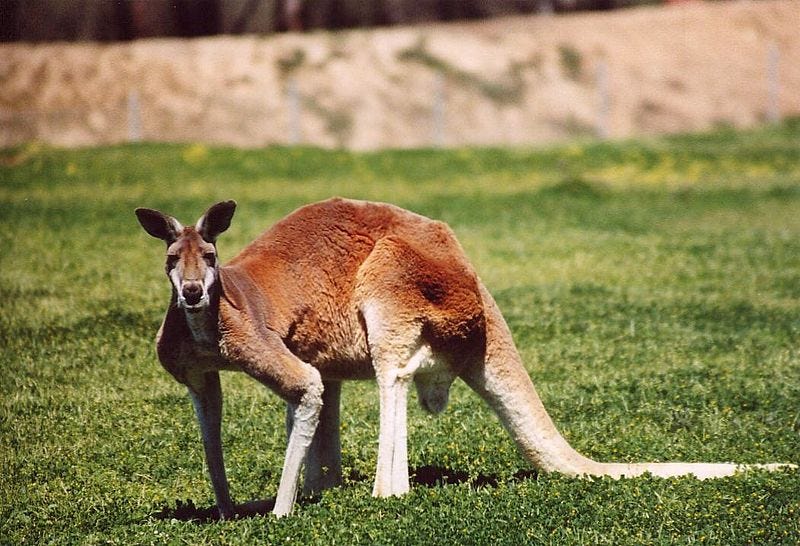
Image courtesy of Wikipedia

Koala

Also called the Koala Bear, but this is, in fact, inaccurate. Most tourists can recognise our famous koalas, with their teddy bear-like bodies, large head and round fluffy ears. They are mainly found on the east coast of Australia.

Koalas generally have a body length of up to 85 centimetres and weigh around 15 kilograms. Their fur is anything from brown to silver-grey.
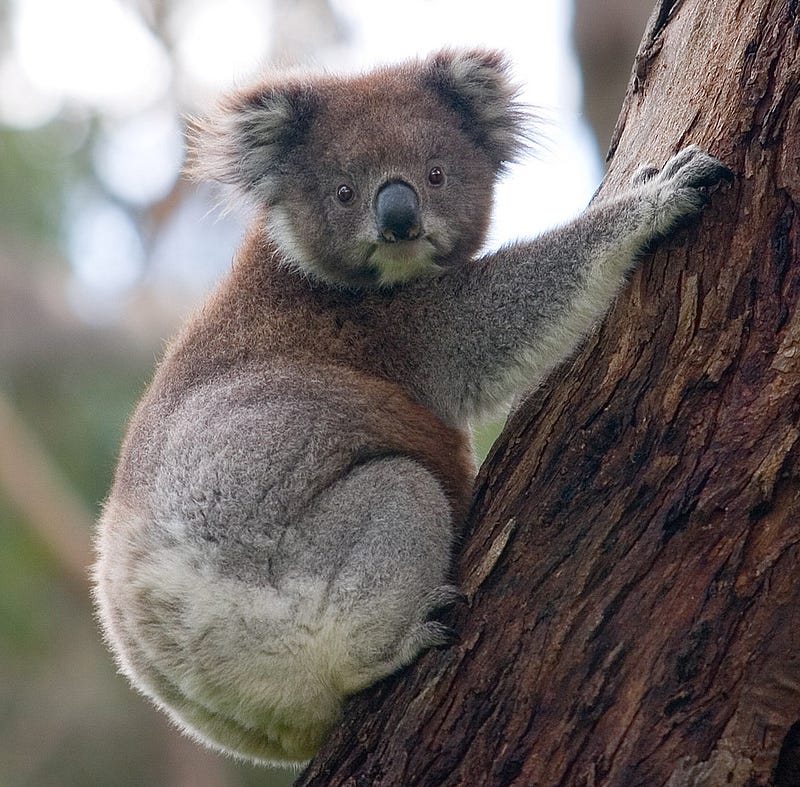
Image courtesy of Wikipedia

Potoroo

Also known as the rat-kangaroo, these cute creatures are smaller than our kangaroos and wallabies, gaining a maximum weight of 4,200 grams.

They can be found in the bushland of southeastern Australia and Tasmania.

Like kangaroos, they carry their young in a pouch. Potoroo's general diet consists of fungi, roots and small insects.
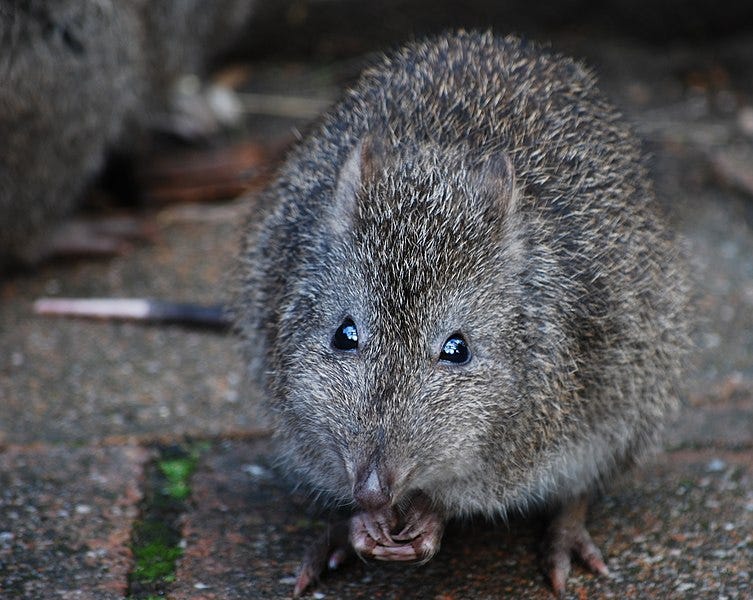
Image courtesy of Wikipedia

Quokka

A Quokka is a small animal, roughly the size of a domesticated cat and is found on some of the small islands, and a small portion of the mainland, at the bottom of Western Australia.

As a part of the marsupial family, the Quokka carries her young in her pouch. They are 40 to 54 centimetres long and weigh between 2.5 and 5 kilograms. They have round ears, stocky-built hind legs and a short, broad head.
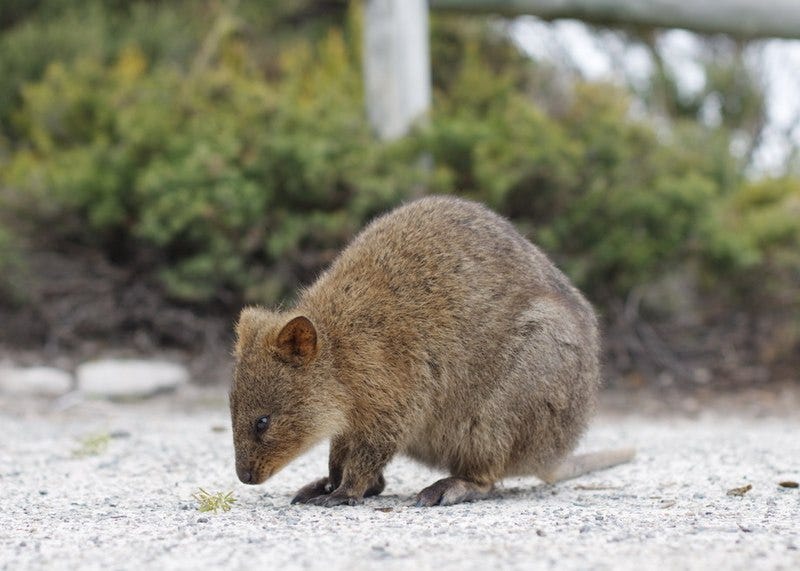
Image courtesy of Wikipedia

Rainbow Lorikeet

A beautifully coloured bird found along the eastern seaboard, from northern Queensland to South Australia. They prefer the natural rainforest and coastal bushland areas.

They are a medium-sized parrot, with lengths between 25 to 30 centimetres and weighing 75 to 155 grams. Their colour is phenomenal, with a head of deep blue, a collar of greenish-yellow, a predominantly green body and wings, the chest an orangey-yellow, a blue belly and when in flight, their underwing is red with a yellow wing-bar contrast.
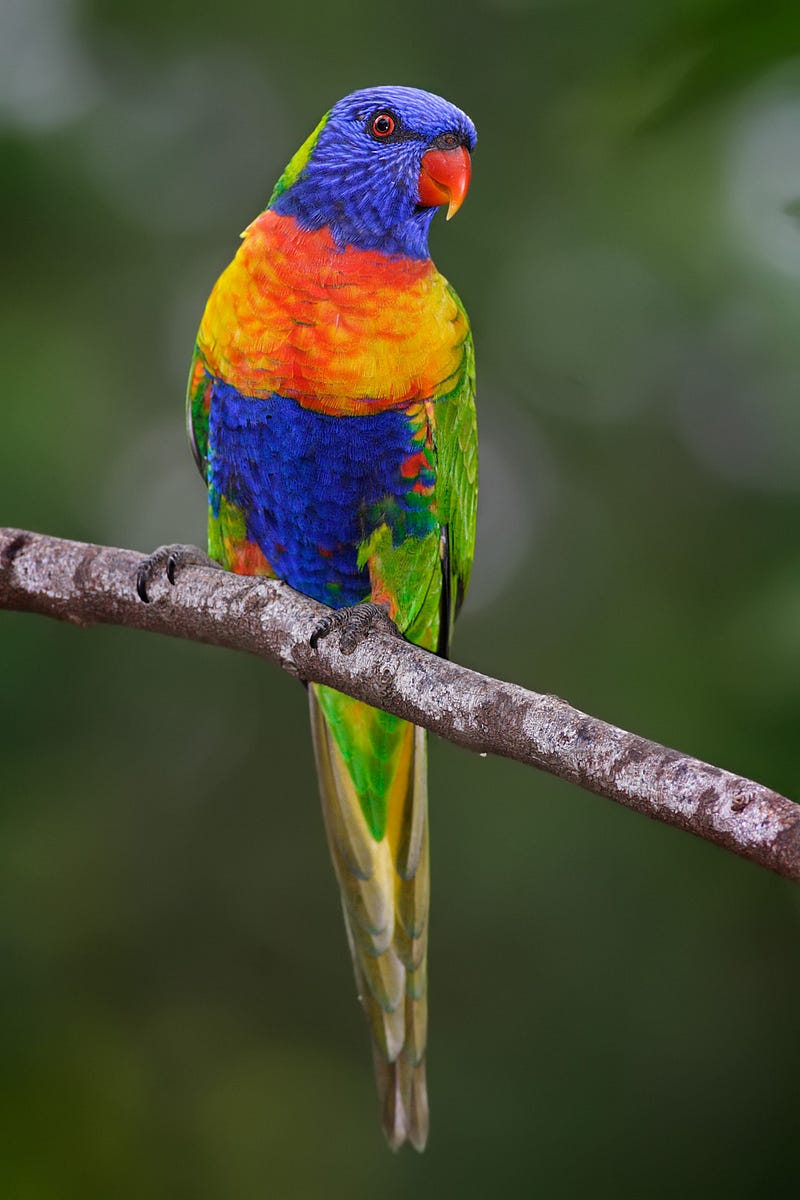
Image courtesy of Wikipedia

Spotted Quoll

The Spotted Quoll is a carnivorous marsupial and is in fact, the world's second-largest carnivorous marsupial, second only to the Tasmanian Devil.

Males generally weigh around 3.5 kilograms, females 1.8 kilograms and are found in the wet forests of southeast Australia and Tasmania. There is a separate sub-species found in northern Queensland.
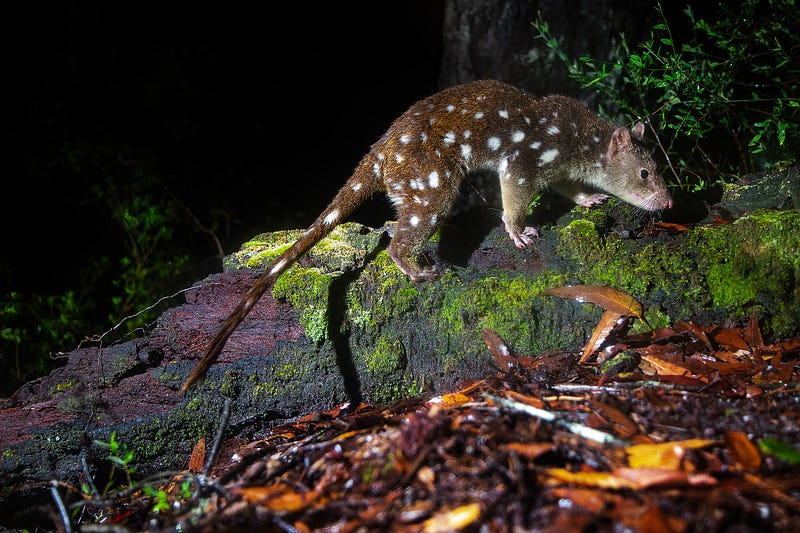
Image courtesy of Wikipedia

Sugar Glider

It is called the Sugar Glider because of its preference for sweet sap and nectar; it has a pair of gliding membranes that attach its forelegs to its hind legs, giving it the ability to glide through the air.

Found in southern Queensland and New South Wales, they are covered in a pale grey to brown fur, with a lighter shade on their underbelly.

Their length from nose to tail is usually in the 24 to 30 centimetre range, and weight for the males is 240 grams, and for females, 115 grams.
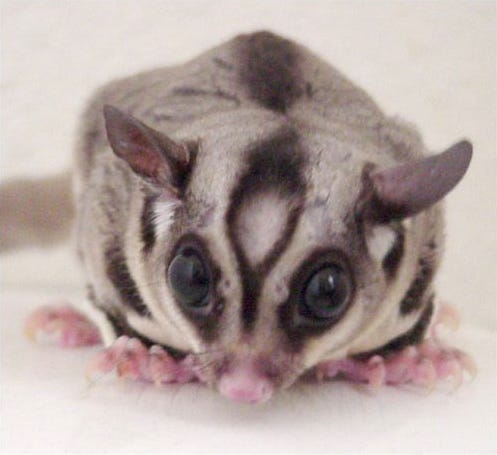
Image courtesy of Wikipedia

Tree Kangaroo

Tree Kangaroos are another marsupial species and can be found in far northeastern Queensland and some small islands off the North Queensland coast.

The Tree Kangaroo thrives in the treetops and, depending on the sub-species, can grow from 48 to 90 centimetres in length and weigh between 5.5 and 15 kilograms.
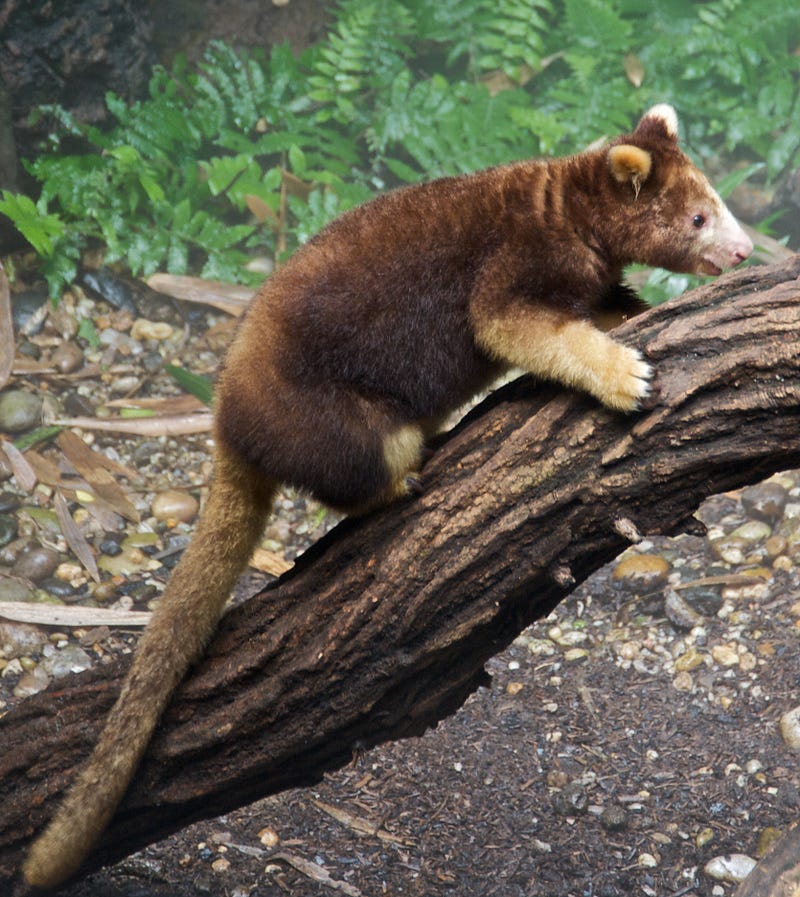
Image courtesy of Wikipedia

Wallaby

The Wallaby, a small version of our Kangaroo, will only grow to a maximum length of 180 centimetres and weigh around 18 kilograms.

Like our Kangaroos, Wallabies are herbivores and can be found throughout the entire continent of Australia.
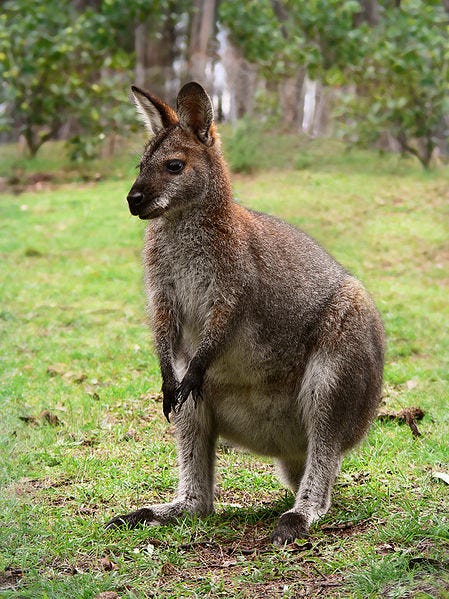
Image courtesy of Pixabay

Wombat

Pudgy short-legged marsupial, a Wombat usually grows to a length of 1 metre and weighs between 20 to 35 kilograms. They are found in southern and eastern Australia, as well as Tasmania.

A species of the marsupial family, but unlike other marsupials, the Wombat has a backwards facing pouch.
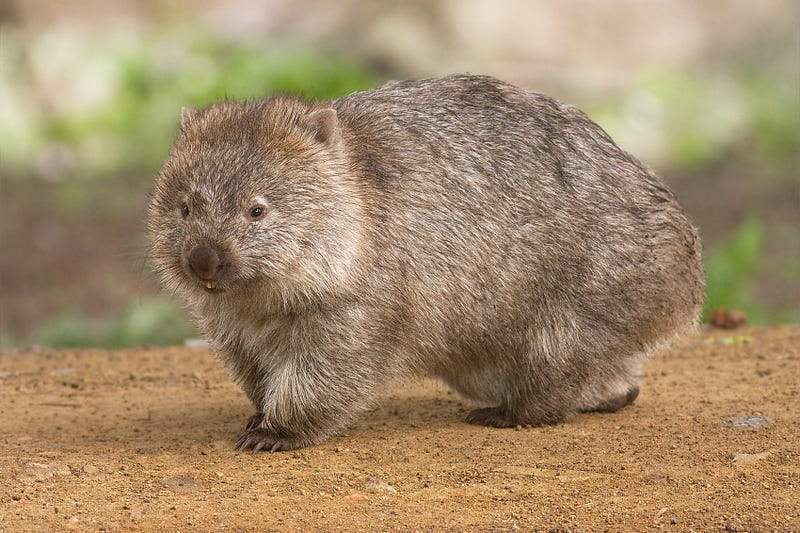
Image courtesy of Wikipedia

Bandicoot

Another marsupial, the Bandicoot, has a V-shaped face, grow to 28 to 78 centimetres in length and weigh between 0.2 to 1.8 kilograms.

As a digger, they have sharp claws and their small teeth are designed so they can easily chew their food, as they are herbivores.
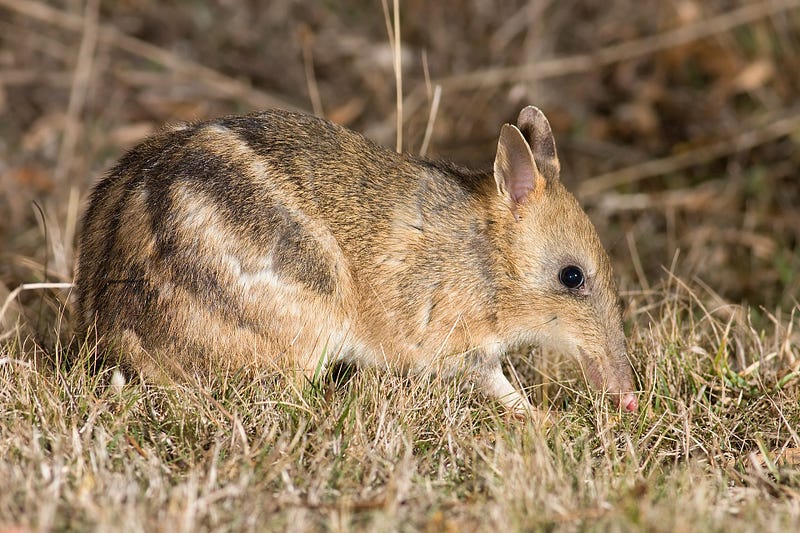
Image courtesy of Wikipedia

Bilby

Similar in looks to the Bandicoot, except this marsupial has larger ears, like a rabbit. On average, they grow to 55 centimetres, not including the tail and weigh between 800 grams to 2.5 kilograms. The male is larger than the female, as in the other marsupial species.
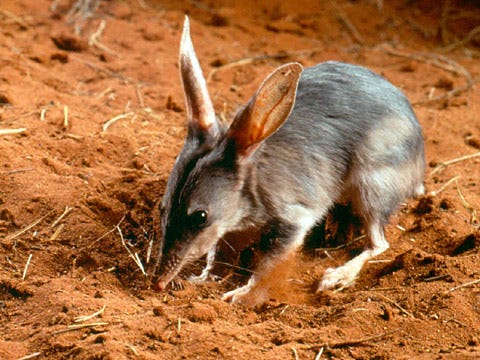
Image courtesy of Wikipedia

Echidna

Sometimes known as the Spiny Anteater, although their diet consists of ants and termites, they are not to be confused with the American Anteater.

The Echidna and the Platypus are the only living mammals that lay eggs to reproduce.

They are a medium-sized mammal and are covered by coarse hair and spines. Female Echidnas can weigh up to 4.5 kilograms, the larger males at around 6 kilograms, and they can be found throughout the entire Australian mainland.
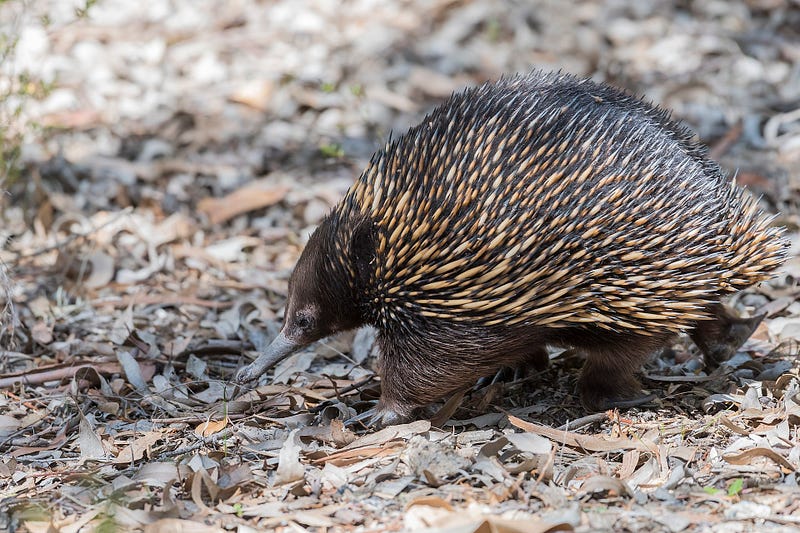
Image courtesy of Wikipedia

Emu

The second-tallest bird in the world, second only to the Ostrich, can be found throughout most of Australia. Covered in greyish-brown soft feathers, the Emu is a flightless bird and can reach up to 1.9 metres in height with their long necks and longer legs.

Emus can weigh up to 37 kilograms, the female larger than the male in this species, and they can sprint at 48 kilometres per hour if need be.
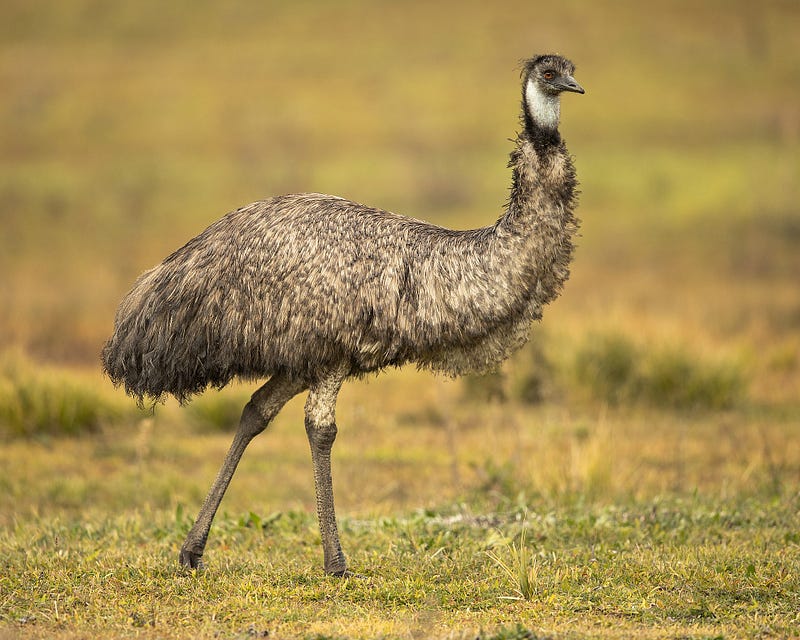
Image courtesy of Wikipedia

Kookaburra

You can hear their laughter at all hours of the day, but are especially loud when the sun rises; the Kookaburra is one of our cutest animals, in my opinion.

They grow to a maximum of 47 centimetres in length and weigh around 300 grams.

As they are primarily carnivorous, they'll keep the rats, mice and snakes down, much to our joy. Although they are of the Kingfisher family, they are not necessarily associated with water and they’ll rarely eat fish.
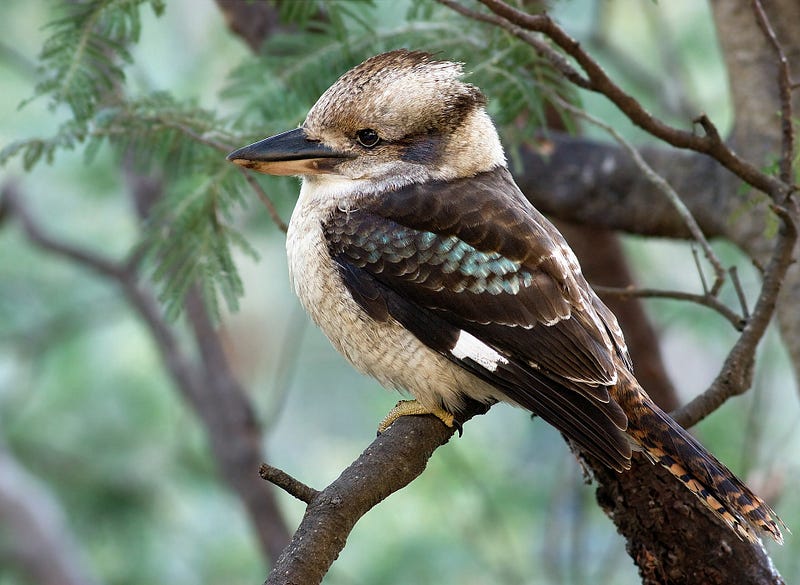
Image courtesy of Wikipedia

Platypus

Now, how cute is this little guy? The Platypus is found along the eastern coast of Australia.

Like the Echidna, the Platypus is the only other mammal to lay eggs, instead of giving birth to live young.

The male of the species is larger than the female, but the weight of both sexes varies greatly between 0.7 to 2.4 kilograms. Males are predominantly around 50 centimetres in length, with the females measuring in at 43 centimetres.
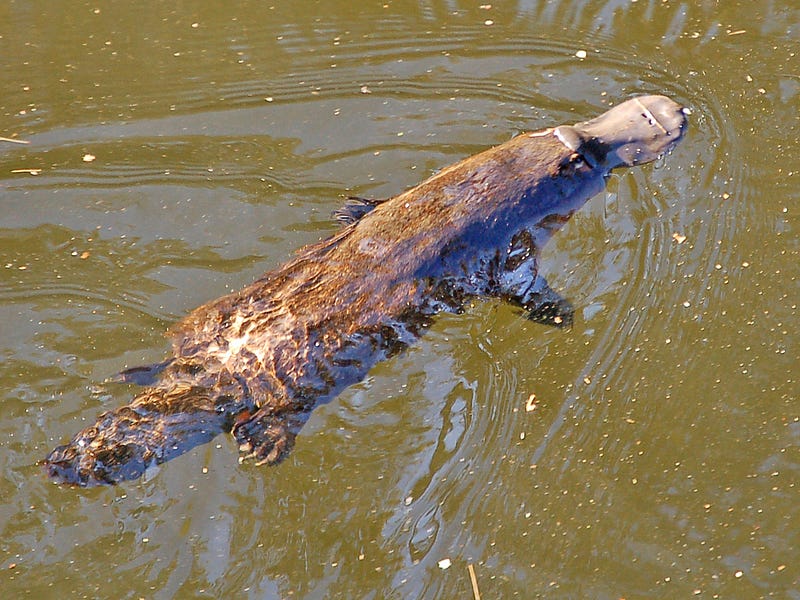
Image courtesy of Wikipedia

Tasmanian Devil

The Tasmanian Devil is a carnivorous mammal around the size of a small dog. They can run up to 13 kilometres an hour if the need arises.

Until recently, they were only found on Tasmania, but due to the fear of extinction, they have been reintroduced into New South Wales.
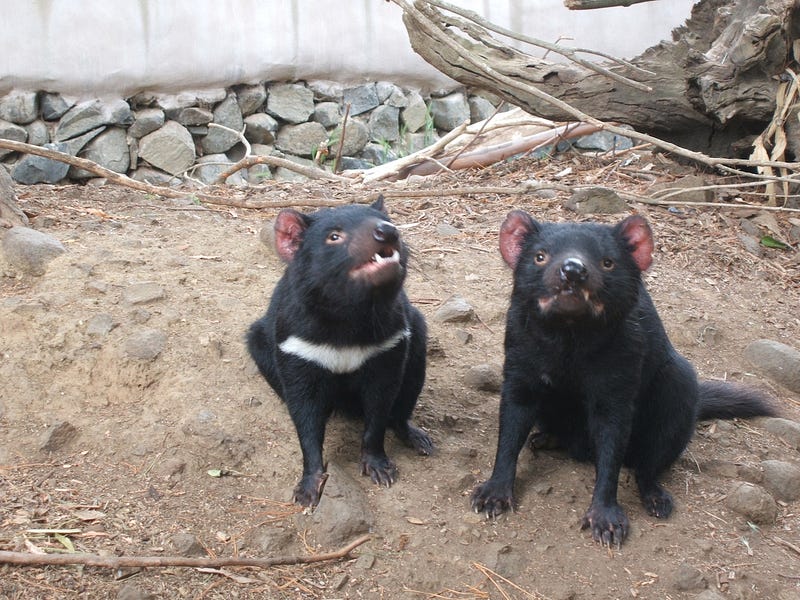
Image courtesy of Wikipedia

Thorny Devil

A personal favourite of mine, as I once had one as a pet, and they are fascinating creatures, also known as the Mountain Devil.

They grow to around 21 centimetres for females and slightly less for males. The colouring of the Thorny Devil is amazing, as they are dressed in the camouflaged colours of tans and browns. During the warm weather these colours will lighten and then when the cooler weather arrives, the colours will darken.
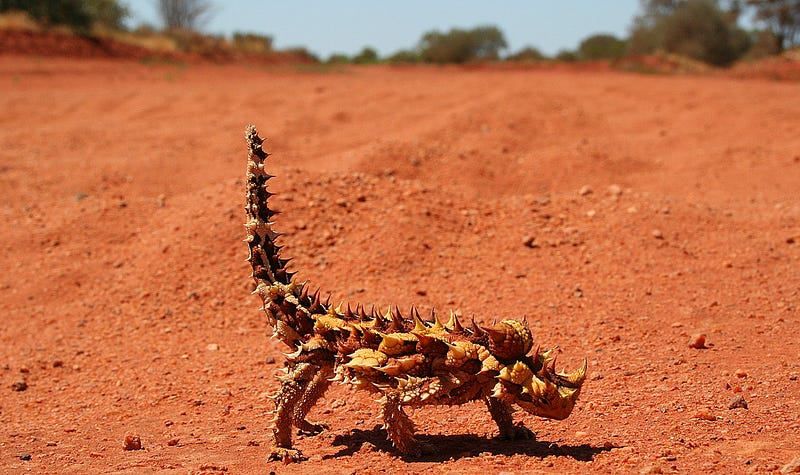
Image courtesy of Wikipedia

This is, by no means, an exhaustive list of our cute wildlife, but I wanted to give you the knowledge that our animals are not all bad.

Thank you for reading.

If you liked this piece, you might also like this one.

Become a Medium member to read unlimited stories from your favourite writers.

Approved by Be Open's Editors: A Shayens Abran & Priya Tandon

Nonfiction
Be Open
Australia
Millsteed
Animals
Recommended from ReadMedium