
Aunt Jemima, Dead at Last?
What Was The Meaning Of Her Life?
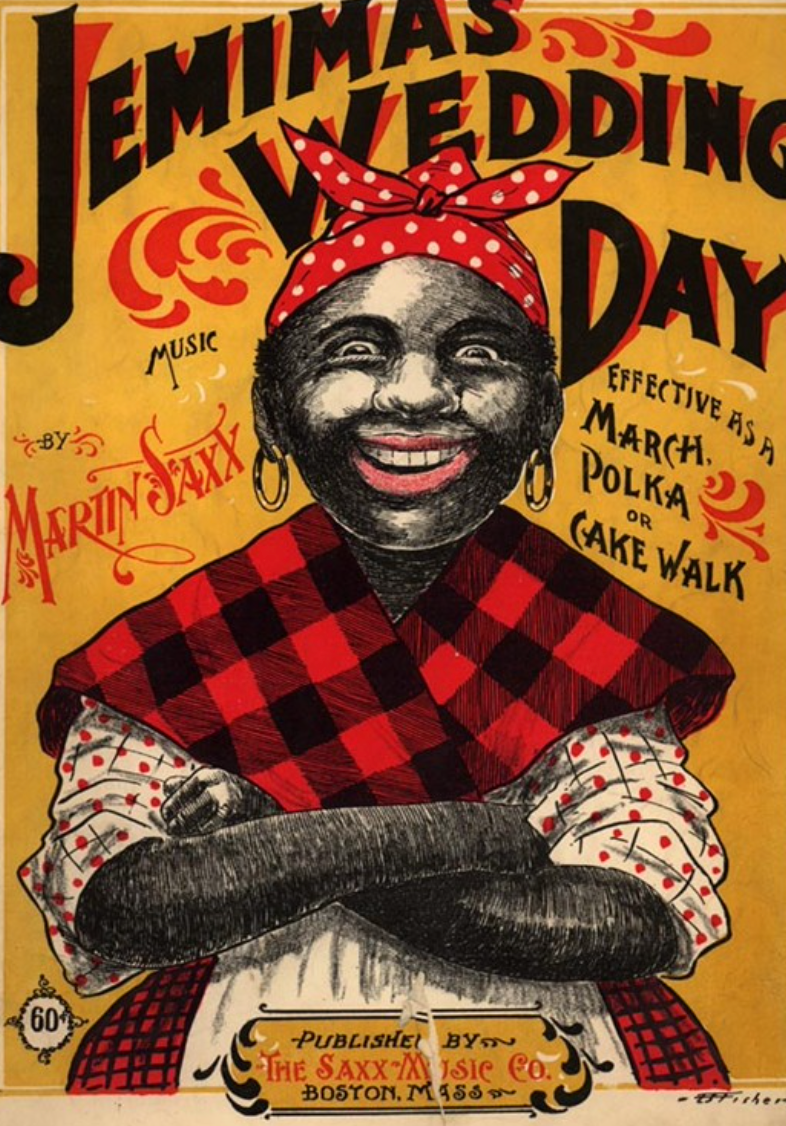
And perhaps, Robert Hayden said it best in his poem, “Aunt Jemima of the Ocean Waves”:
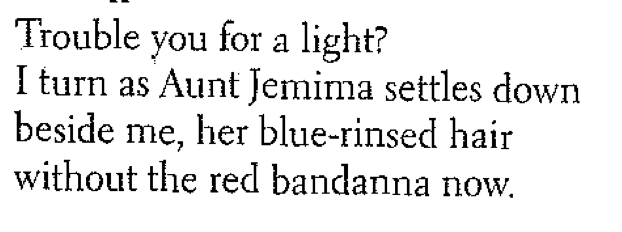
Hayden, in the poem, encounters Aunt Jemima on a beach, in the sand and it is here where he allows Aunt Jemima to speak and tell her story and to speak directly to what she is and what she perpetuates. In a sense, Hayden’s poem does more than the name change will ever do and the elimination of the image.
But, Aunt Jemima has officially entered William Faulkner’s “past.” Or, as Faulkner wrote — “The past is never dead. It’s not even past.” This means that Aunt Jemima is not really dead, at all because America did it all wrong. Like Robert E. Lee’s statues in Charlottesville, Va., and New Orleans, she has been removed from your pancake boxes and syrup containers.
Gone. Poof. Don’t believe me? My daughter sent me the evidence — her image is gone. The Pearl Milling Company followed through and finally, I saw the evidence that occurred I am told over 9 months ago. I don’t really do box pancakes anymore but I do have the proof.
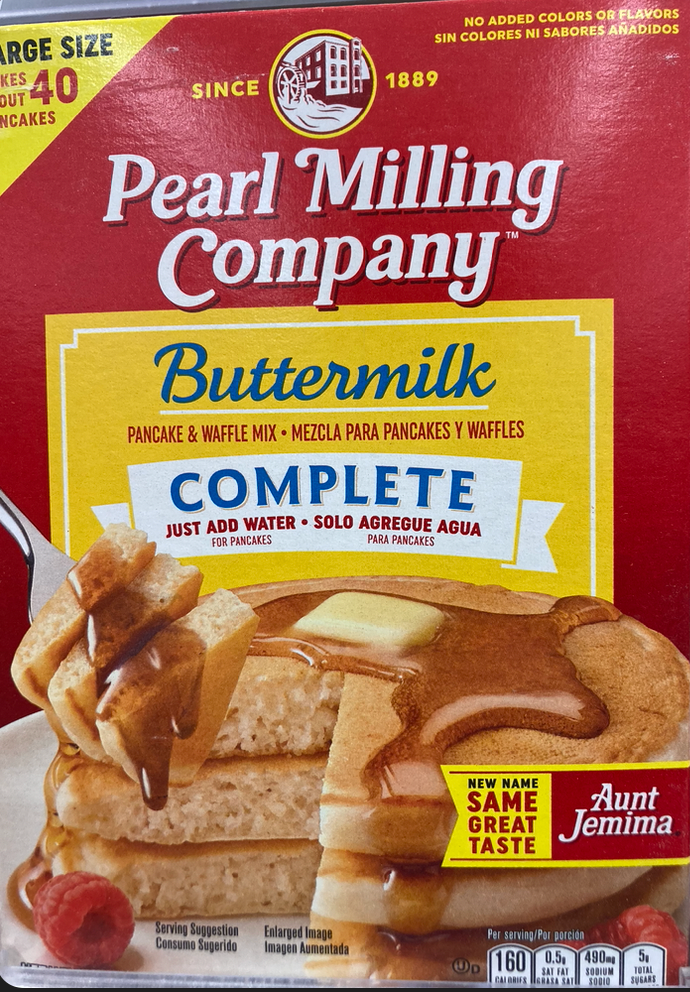
I am not sure what it means for the long term. Can racial equality be achieved in this manner? Surely not right away but it doesn’t hurt. The elimination of racist symbols is necessary.
Germany banned the swastika. Germany also did not put up statues to Nazis like America did with Confederates.
It is not much for now but it does say we, as a society, collectively reject white supremacy. I read a few articles about the life and times of Aunt Jemima and like anyone’s biography, it was even more revealing. For instance, Aunt Jemima, like a lot of white supremacist imagery at the time, existed before her birth. In addition, Aunt Jemima was a post-Reconstruction deal, so to speak as was a lot of this white supremacist imagery, between the North and South after the Civil War. The once slave-owning South received an olive branch from the industrial North — the Black stereotypes from the racist South.
It was, as a few have written, a way for white America to put the past in the past, or try to do so. It is pure white male supremacy.
Poet, William Childress, in 1971, wrote about the racist truth of Aunt Jemima:
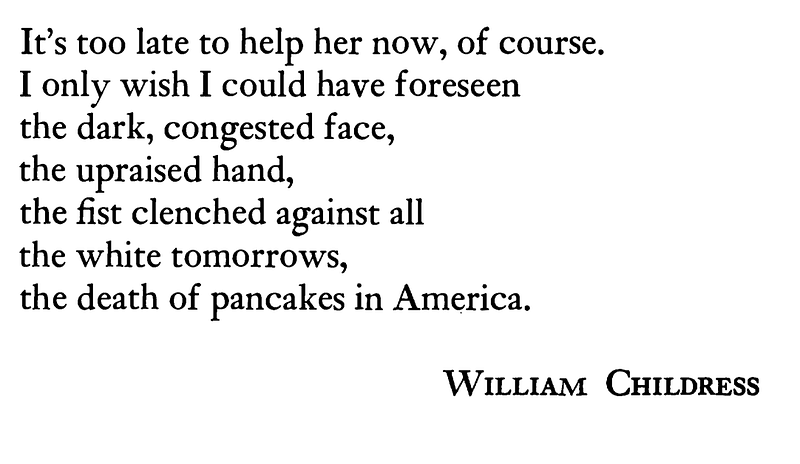
The life and death of Aunt Jemima, in America, is why the 1619 Project is needed and why Antiracism programs and teachings are needed. Aunt Jemima is situated in history right now as something by a few bad actors, a few racist minds. But it isn’t. Aunt Jemima is exactly what “Critical race theory” is asserting.
White male supremacy is part of America’s foundation. It cannot be separated from American cultural, social, and political life. The ideology is the reason why America was founded and how it has become what it has become America.
In this case, it cannot be separated from American commercial life. That is how much it is part of America and all Americans.
No one thought she was odd or a symbol of white supremacy. It was said that the introduction of Aunt Jemima (and other such relics of the old slaveholding South) put things back in order as they once were before the war.
No one, not even some Black Americans, could imagine Aunt Jemima, not on those products. Looking at the box of pancake mix above, even I admit, it looks like they should have just changed the box color and everything.
They should not even have put the “Aunt Jemima” name on the box. Like that means anything at all. All it means is America is founded on white supremacy and it has taken the country four centuries to take a tiny step to reconciliation. A tiny step. I am not going to pretend more will happen. Just making a note.
Related Writings
Sources
“The Metamorphosis of Aunt Jemima,” William Childress, College English , Dec., 1971, Vol. 33, №3 (Dec., 1971), p. 336, National Council of Teachers of English
“Ain’t Your Mama on the Pancake Box? Aunt Jemima and the Reproduction of the Racial State,” The Black Reproductive: Unfree Labor and Insurgent Motherhood, Sara Clarke Kaplan, University of Minnesota Press. (2021)
“Mammy the Huckster: Selling the Old South for the New Century,” Jo-Ann Morgan, American Art, Spring, 1995, Vol. 9, №1 (Spring, 1995), pp. 86–109, The University of Chicago Press on behalf of the Smithsonian American Art Museum.