
Who’s Afraid Of Critical Race Theory?
White Supremacists, Of Course.
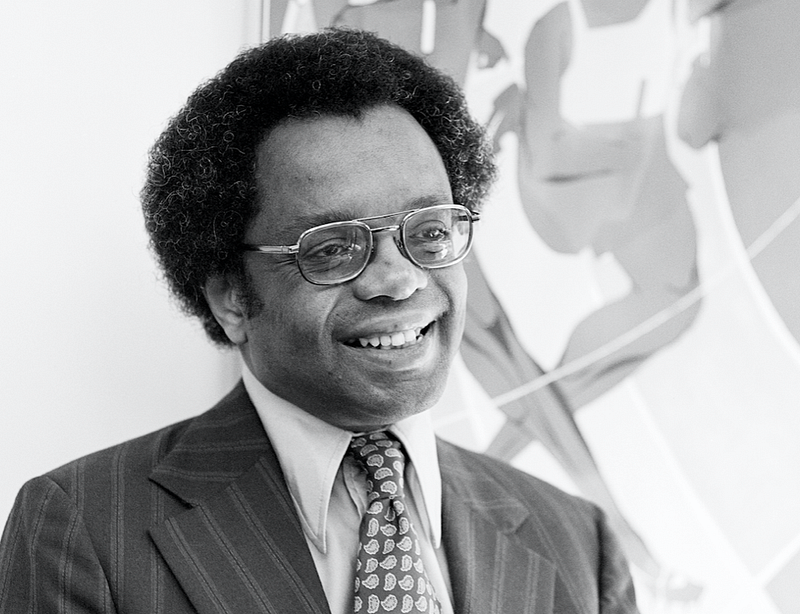
“Education leads to enlightenment. Enlightenment opens the way to empathy. Empathy foreshadows reform.” — Derrick Bell
Way back in 1995, Derrick Bell, one of the key players in the Critical Race Theory movement, wrote about the attacks on the movement from many different ideological spectrums.
This is back when CRT, as it is now known, was only known to law students, civil rights lawyers, legal scholars, and curious researchers and readers.
Bell’s article, Who’s Afraid Of Critical Race Theory? is one of the most important ever written on the topic because it is independent thought and most of all, it is written in the spirit of the Nigerian writer, Chinua Achebe, who famously proclaimed — “Until the lions have their own historians, the history of the hunt will always glorify the hunter.”
Critical Race Theory is the story from the lion’s perspective. It does not and will not glorify the hunter. This is why there is growing opposition to it even though the opposition has no idea what the lion is saying.
According to Bell, “Critical race theory” in its “writing and lecturing, uses “first-person, storytelling, narrative, allegory, interdisciplinary treatment of law, and…an “unapologetic use of creativity” to describe and comment on racism in America.
It is a “disruptive” concept according to Bell “because its commitment to anti-racism goes well beyond civil rights, integration, affirmative action, and other liberal measures.” It is also “highly suspicious of the liberal agenda.”
With that description, one wonders why it is that the most vicious attacks on the theory are coming from conservative circles and not liberal circles.
That is because the overarching ideology consistent in both conservative and liberal camps is white supremacy. This is the gas for America’s engine of systemic racism.
Neither camp really wants to relinquish their attachment to it despite years and years of struggle for fundamental change.
Derrick Bell began writing about the failures of the Brown v. Board of Education decision in the ‘70's’. He did not specifically call his ideas “Critical Race Theory (CRT).”
Bell, who died in 2011, just wanted to explain that the Brown decision did not liberate Black people in America completely and totally. In addition, it didn’t even do what it was designed to do in the lawsuit— provide Black children with equal educational opportunity in the United States.
After the famous decision in 1954, Whites fiercely resisted the ruling. Remedies hoped for from Brown were not implemented very forcefully, and the decision itself, as far as educational reform, remains a struggle for Black children.
Even now, most of the interpretations of the decision hardly consider the interests of Black children. Brown itself is white supremacy and everyone knows it who reads it honestly.
Bell explained in plain language, in that first article he wrote in the CRT vein, that in America, at least historically, the only time things get accomplished is when whites and Blacks have similar goals, if only for a brief moment.
This specific legal theory is known today as “interest convergence.” The theory is simple: goals of the two racial groups converge and success on something is possible. In other words, if white people see something in it for whites, they are willing to give Black people a small piece of their basic rights within society but only then.
Interest convergence theory is one of many ideas that fall under the theoretical umbrella of Critical Race Theory. This is also why current efforts to ban CRT make no sense and don’t exactly ban anything. There are so many writings, scholars, and writers who are classified as CRT to lump them all into one category of Marxist influenced thinkers is lazy analysis.
Many CRT writers are opposed to affirmative action. Many aren’t. They are fine with it. Some CRT scholars are hard left; some aren’t. That is again why the CRT bans are more publicity stunts than anything. They provide an opportunity for white politicians to give the impression they are pushing back against Black people yet again.
Interestingly enough, this is precisely what Bell said happens and happened over and over again in history in America. Progress followed by rollbacks. Black and white interests converge and then whites decide to push back the small gains regarding basic rights afforded to Black people.
Fact is, none of these politicians even know what it is they are pushing back against. I have read a number of the articles condemning CRT and not one has truly shown even a general knowledge of CRT and its wide array of scholars and writers.
If anything, the opposition is pushing back on CRT because they need a bogeyman. They need a Willie Horton. A “Welfare Queen.” You can’t kill the message (or defend it) so kill the messenger. White supremacy is indefensible but it must be defended at all costs; it is all we’ve got.
I did not refer to the situation as “white supremacy in America” either because I don’t believe white supremacy and America are separate things. America is white supremacy.
Here’s an analogy: a bowling alley is not a building with bowling balls and bowling pins and bowling lanes. It is an entity that exists only because of bowling and possible only because bowling is supported.
It is a commercial, social, and cultural embodiment of that ideal. Such is America with white supremacy. Without it, America goes away as we know it. Whites will recognize the economic class inequalities and immediately seek economic justice.
This is why Bell knew the conversation had to change in 1980. Bell’s concept was similar to when Martin Luther King Jr. said that Black Americans were being asked to integrate into a house on fire.
Harry Belafonte once recounted King’s sentiments as follows:
“I’ve come upon something that disturbs me deeply. We have fought hard and long for integration, as I believe we should have, and I know we will win, but I have come to believe that we are integrating into a burning house. I’m afraid that America has lost the moral vision she may have had, and I’m afraid that even as we integrate, we are walking into a place that does not understand that this nation needs to be deeply concerned with the plight of the poor and disenfranchised.”
When King says, via Belafonte, that “America has lost the moral vision she may have had,” he is describing interest convergence. King made that statement as America deeply resisted hardcore change in its racial caste structure and continued to pursue imperial domination of the world.
CRT does not mince words either. Its writers, and thinkers, many of whom disagree on a variety of methods of racial progress, don’t either.
According to law professor, Jeffrey J. Pyle, in a 1999 law review article, Critical Race Theory contends that “racism is endemic to American life.”
In addition, racism is pervasive and immutable, and ‘lies at the very heart of American — and western — culture.’ Racism is a “defect in the collective unconscious…cultural phenomenon that automatically ‘reproduces hierarchy’ even in the absence of conscious discrimination.” Pyle based his definition on a review of many Critical Race theory writers.
In a recent article from the medical field, CRT’s origins are described as follows:
“Critical Race Theory integrates transdisciplinary methodologies that draw on theory, experiential knowledge, and critical consciousness…to illuminate and combat root causes of structural racism. It emerged after years of struggle by law students and faculty contesting what they perceived as institutionalized racism in the hiring and curricular decisions of elite law schools. Convinced that their understandings of racial power dynamics diverged in important ways from those of other legal models, they convened a meeting in 1989 at which they enumerated key racial equity principles. They coined the term “Critical Race Theory” to name the emergent set of methodologies that draws on these principles in pursuing racial equity via the law. Persons whose scholarship relies on Critical Race Theory (called critical race theorists) are often described as “a collection of activists and scholars interested in studying and transforming the relationship among race, racism, and power.”
Critical Race Theory is a threat to how America is configured as a country for whites, dominated politically, economically, and culturally by whites, and one which must stay that way to be America. CRT exposes America as morally repugnant despite the great values tucked into the U.S. Constitution that was ignored from Day 1.
Oklahoma, Idaho, and Tennessee have banned the teaching of CRT, even though they have no idea what they are banning mostly because CRT is a threat to their view of the world. Georgia has as well.
One would think CRT is evolution and these scholars who teach it and write about it are a bunch of God-hating devil worshipers. Thing is, they aren’t and CRT isn’t either.
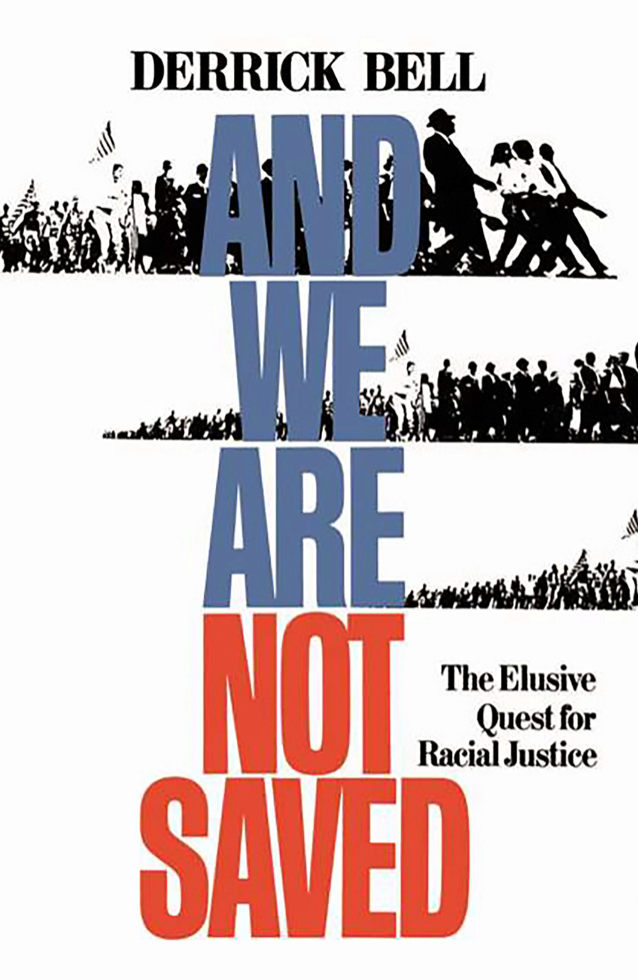
Derrick Bell named his first book after a quote from the book of Jeremiah in the Bible — And We Are Not Saved. Bell’s writings are often written in the model of biblical parables.
Bell even includes the entire passage to Jeremiah is included as an epigram in the book, And We Are Not Saved:
“The harvest is past, the summer has ended, and we are not saved.”
But the full name of the book is the key to understanding why these legislators are so afraid — And We Are Not Saved: The Elusive Quest for Racial Justice.
But Bell wasn’t the first writer or person to reject the limited progress against white supremacy in American society and in its institutions and history. Yet, he was one of the first to change the analysis of America and racism in the post-civil rights period from harping about the many Black elected officials in office to something more concrete. Bell made it fairly clear that this was not the goal of the civil rights cases or laws.
One of the recently passed laws, in Idaho, states that “critical race theory,” exacerbates and inflames “divisions on the basis of sex, race, ethnicity, religion, color, national origin, or other criteria in ways contrary to the unity of the nation and the well-being of the state of Idaho and its citizens.”
The law, signed by the governor does not define what is “critical race theory” and what isn’t critical race theory. The law, if they try to enforce it should be legally dead on First Amendment grounds.
The entire law, in fact, is an attempt to send a message and silence the current discourse in the U.S. over the nation’s ugly racist history. Make it illegal to talk about it. Scare people. Scare educators.
And once you pass such laws, like in Eastern bloc authoritarian countries from the 50s, 60s, 70s, and 80s, you have to start tracking and monitoring people. It is inevitable. Yet, freedom-loving conservatives and others support the bans.
The African-American Policy Forum has documented the many efforts to attack Critical Race Theory though few of the attackers know what they are attacking and trying to limit.
Hillsdale College, a private college, has declared war on Critical Race Theory; yet, in its call to arms to confront the concept, misdefines it completely. Again, just like those legislators, they have little idea what it is that they are trying to stop.
Perhaps it is a free and liberating thought analysis on white supremacy.
References
Sarah Ellison, How The 1619 Project Took Over 2020, The Washington Post, October 13, 2020, online version, at https://www.washingtonpost.com/lifestyle/style/1619-project-took-over-2020-inside-story/2020/10/13/af537092-00df-11eb-897d-3a6201d6643f_story.html, last accessed, May 2, 2021
Chandra L. Ford, PhD, and Collins O. Airhihenbuwa, PhD, “Critical Race Theory, Race Equity, and Public Health: Toward Antiracism Praxis,” American Journal of Public Health, September 1, 2010, Vol. 100, No. S1
Derrick Bell, And We Are Not Saved, Basic Books 1989
Derrick A. Bell, Who’s Afraid of Critical Race Theory, 1995 U. ILL. L. REV. 893 (1995).
Derrick Bell Brown v. Board Of Education And The Interest-Convergence Dilemma, Harvard Law Review, Vol. 93, 518 (1980)
Toby Egan, Critical Race Theory’s Individual Flaw, 67 UMKC L. REV. 661 (1999).