
Attention U-Net, ResUnet, & many more
It's been a while since the inception of U-Net, the network was initially designed to do medical image segmentation but since then it’s been used for all sorts of segmentation tasks. In my limited experience, I’ve always found that segmentation works better than object detection (given that you have the labeled data). The probable reason for segmentation being better than detection is that it is learning to identify each pixel as part of the object or not whereas detection tries to learn the four sets of coordinates surrounding the object (a much tougher and error-prone task to optimize). In this blog, we are going to take a look at all the different versions of U-Net that are highly efficient and take up the performance of the original U-Net by multiple notches.
Following are the different versions of U-Net:
- U-Net
- V-Net
- U-Net++
- R2U-Net
- Attention U-Net
- ResUnet
- U²-Net
- UNET3+
- TransUNET
- Swin-UNET
Let’s take a look into the all-new exciting world of U-Net. Feel free to skip the explanation of U-Net (most of you are already aware of that).
U-Net
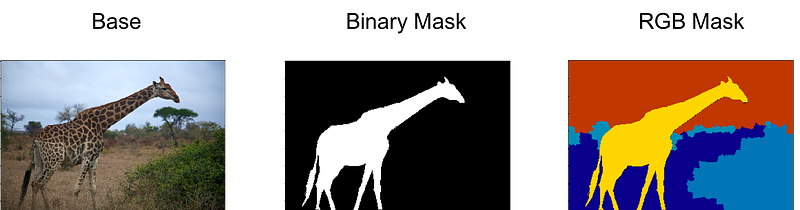
To understand the architecture of U-Net let’s understand the given task first. Given an input image network should try to generate a segmentation output mask which means each pixel should be classified as the desired object or not (look at the figure below). So, the idea behind U-net was that, if we feed the image to an encoder that keeps decreasing the spatial size of the feature block; after sufficient training, the network will generalize to store only the important features and discard away less useful data. Finally, the output of the encoder followed by a decoder will generate the desired output mask. The problem was that the decoder layers were not getting enough context in order to generate the segmentation mask from the encoder output.
The great idea introduced in the U-Net paper to solve the context issue was to add skip connections from the encoder to the decoder before each size-reduction step. Given below is the architecture of the U-Net, we can see that after applying two Conv blocks image is reduced by half, and from each Conv block (2 Conv blocks), there is a skip connection that takes the features from the encoder and concatenates them to the decoder thus giving the decoder enough context to generate proper segmentation mask. If we replace the operation of concatenation with the addition we get the network called LinkNet. LinkNet performs similar to the U-Net (in some cases even beating the U-Net).
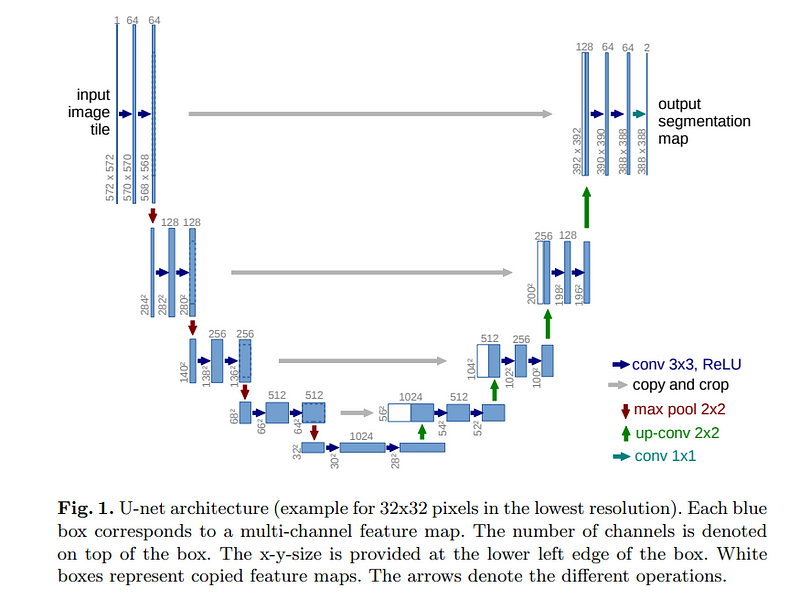
The basic principle behind each U-Net variation is first to decrease the feature block spatially and then increase it back again to the original size creating a bottleneck for learning the important features. Also, add skip connections between the encoder and decoder so that network has enough context while generating the segmentation mask.
V-Net
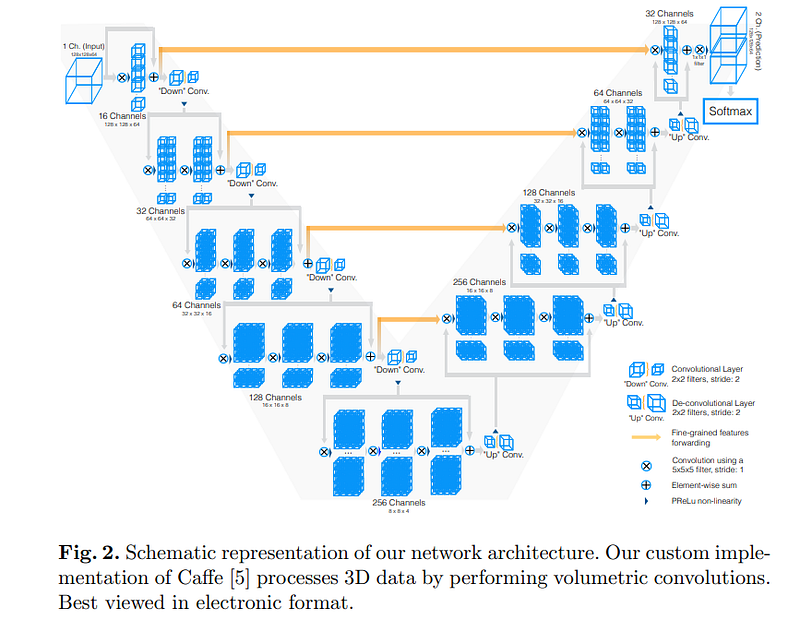
The original V-Net was proposed for 3D or volumetric data but it can be still used with 2D images. The only difference between U-Net and V-Net is that V-Net uses a convolutional layer replacing the up-sampling and down-sampling pooling layer. The idea behind V-Net is that using the Maxpool operation leads to a lot of information loss thus replacing it with another series of Conv operations without padding will help in preserving more information.
U-Net++
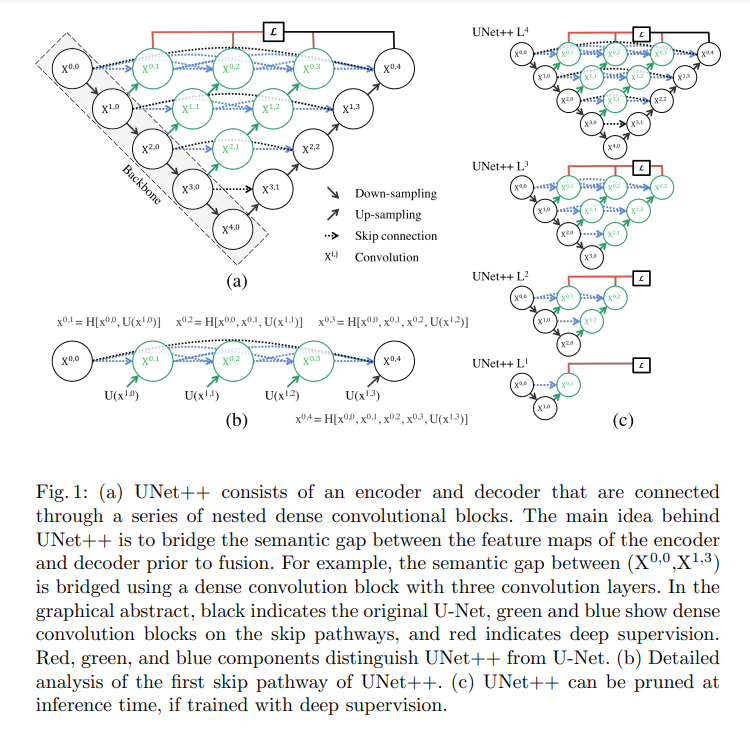
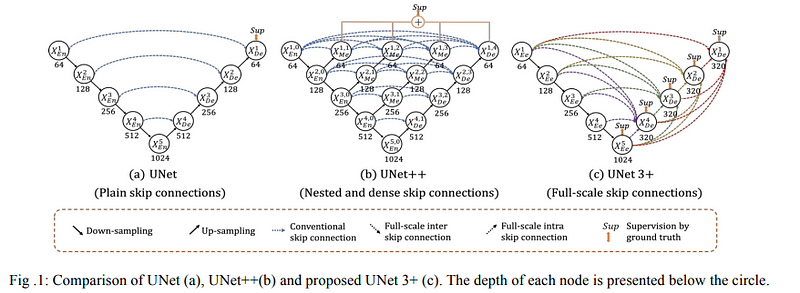
This network took the idea of skip connection even one step further. Why take the contextual information from the same spatial dimension between encoder and decoder. Instead, they took the context from each encoder level (spatial size-wise) and scaled it accordingly to feed it to every level in the decoder. See the given below image to understand it clearly.
R2U-Net
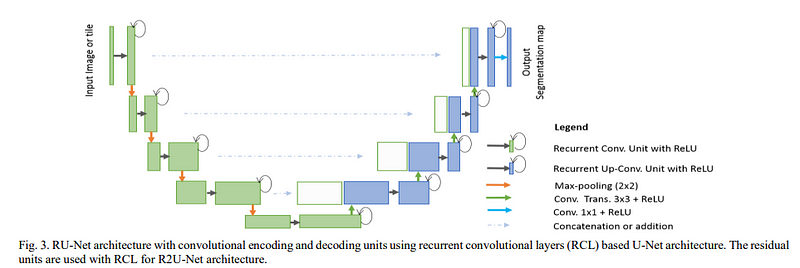
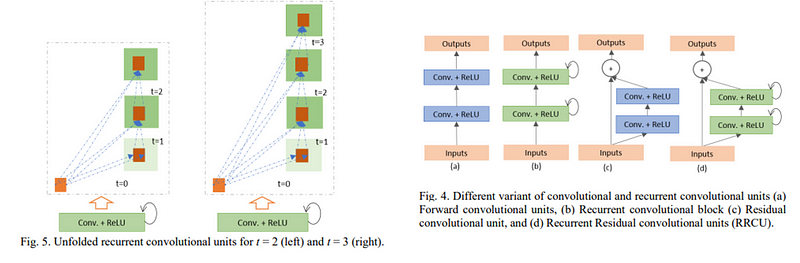
This paper tried to use the idea of the recurrent neural network to give the temporal dynamic behavior to the network. I’m not sure why they think this is going to give better results but in my testing, it completely failed to converge on a custom dataset.
Attention U-Net
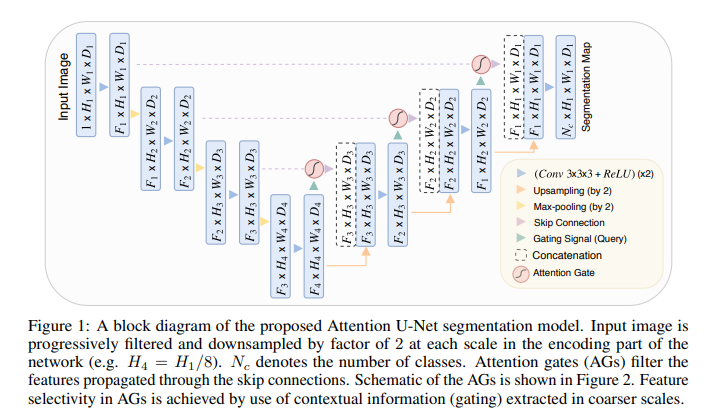
This network borrowed the idea of an attention mechanism from NLP and used it in skip connections. It gave the skip connections an extra idea of which region to focus on while segmenting the given object. This works great even with very small objects due to the attention present in the skip connections. This one is a little bit more complex to implement on your own from scratch but the idea behind this is quite ingenious and simple.
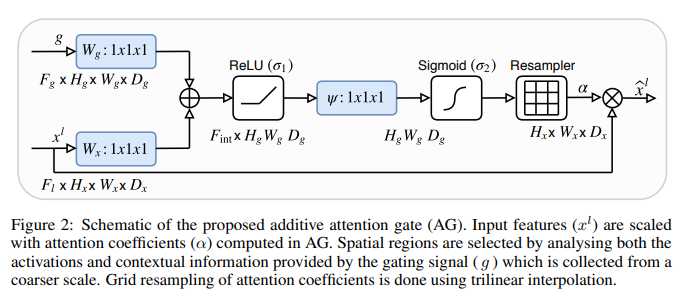
How the attention mechanism works is as follows:
- The attention gate takes in two inputs, vectors x and g.
- The vector, g, is taken from the next lowest layer of the network. The vector has smaller dimensions and better feature representation, given that it comes from deeper into the network.
- In the example figure above, vector x would have dimensions of 64x64x64 (filters x height x width) and vector g would be 32x32x32.
- Vector x goes through a stridded convolution such that its dimensions become 64x32x32 and vector g goes through a 1x1 convolution such that its dimensions become 64x32x32.
- The two vectors are summed element-wise. This process results in aligned weights becoming larger while unaligned weights becoming relatively smaller.
- The resultant vector goes through a ReLU activation layer and a 1x1 convolution that collapses the dimensions to 1x32x32.
- This vector goes through a sigmoid layer which scales the vector between the range [0,1], producing the attention coefficients (weights), where coefficients closer to 1 indicate more relevant features.
- The attention coefficients are upsampled to the original dimensions (64x64) of the x vector using trilinear interpolation. The attention coefficients are multiplied element-wise to the original x vector, scaling the vector according to relevance. This is then passed along in the skip connection as normal.
ResUnet
ResUnet is a very interesting idea that takes the performance gain of Residual networks and uses it with the U-Net. Given below is the architecture of ResUnet. In my testing, I’ve found that it is a very capable network but with a slightly large number of parameters.

U²-Net
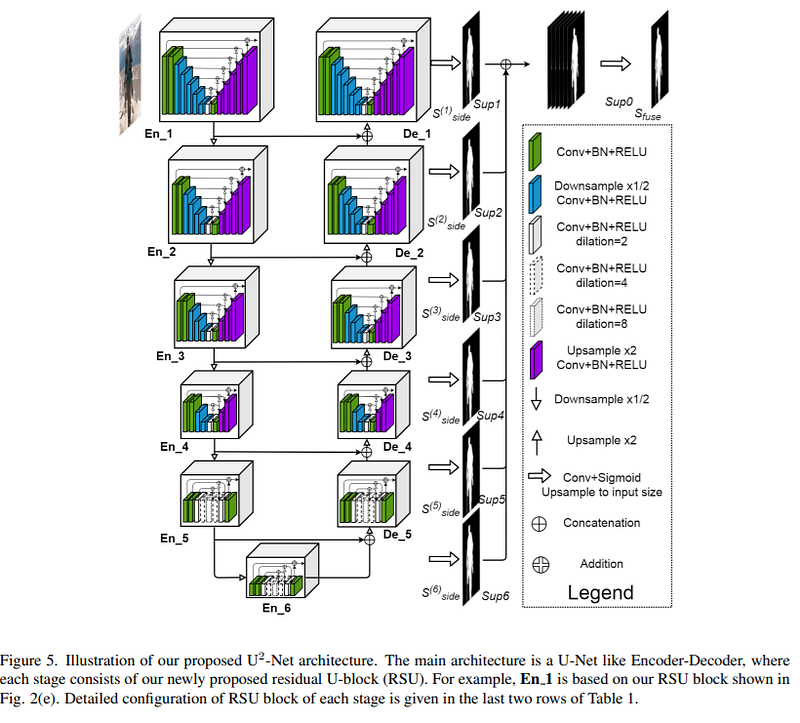
It uses the idea of U-Net and implements that in each Conv block. It is basically a U-Net of U-Net. If you want to know more about this network click here.
UNET3+
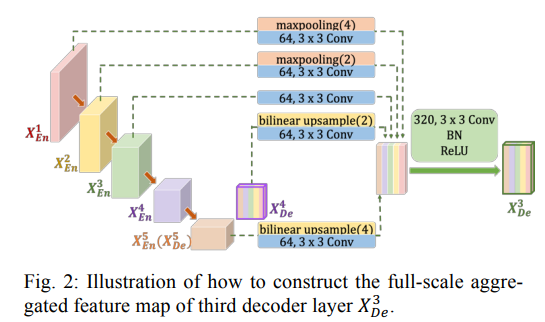
This is similar to UNet++ but with fewer parameters. This works extremely well, comparable to Attention U-Net but with even fewer parameters. Another novel idea in this paper is that classification results are also used to augment the process of segmentation (it’s called the Classification Guided Module). Explaining the full implementation detail of this paper is beyond this blog.
TransUNET
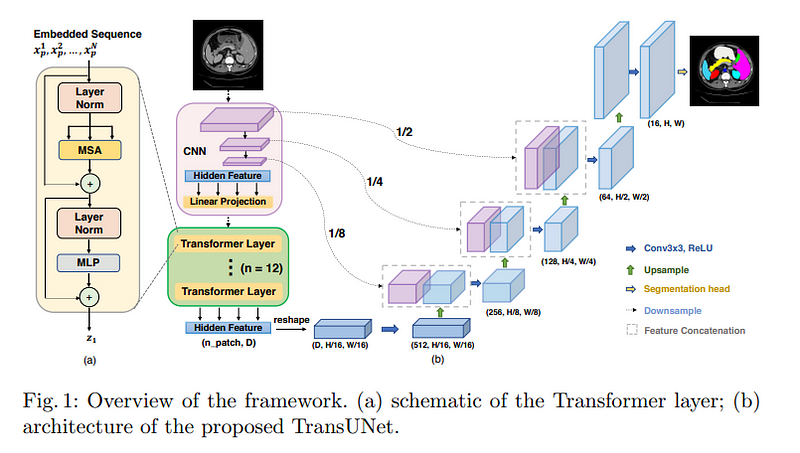
TransUNET is based on the idea of using Transformers. Recently Vision Image transformers made a huge noise in the field thus researchers of this paper thought why not add that to UNet as well. It is indeed a very capable network but takes a lot of time to train, much slower to train compared to other variants of UNet (I couldn’t run this because it has more than 400 million parameters). Explaining the mechanism of the transformer is another blog in itself. But if you are interested in Vision Transformers click here.
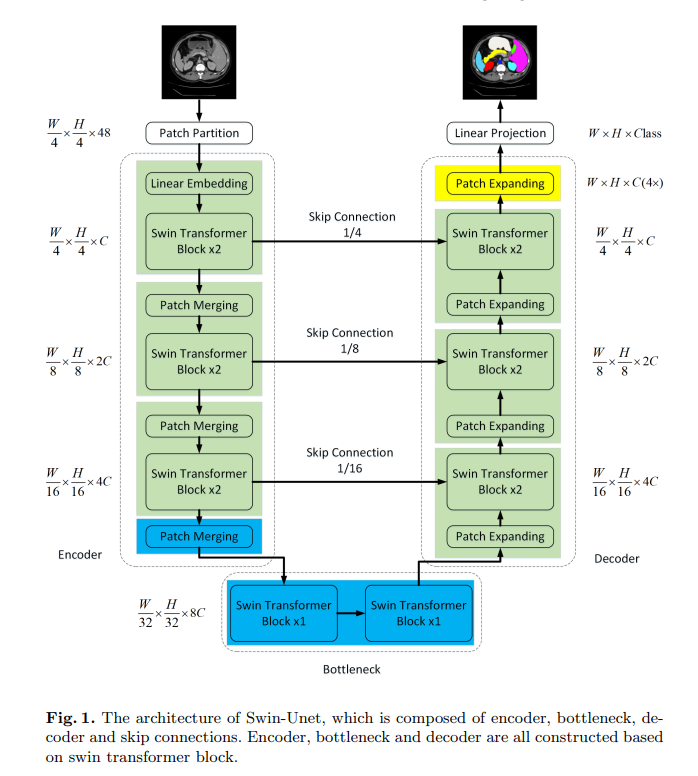
Swin-UNET
This architecture is also based on Transformers but this time it is Swin-transformers. This is also pretty slow to train but manageable with an RTX-GPU. In my testing, it gave some decent results but was still too big and slow compared to smaller, faster, and better Attention U-Net. To know more about Swin Transformers click here.
Conclusion
In my testing of all these U-Net variants on a custom dataset, I find that Attention U-Net and Unet3+ are the best performing networks with a limited number of parameters (less than 10 million). Other networks might outperform these two but they require a huge amount of data and computation power.


