
Atala
A butterfly, and the steak that inspired it
Today’s New York Times Spelling Bee letters:
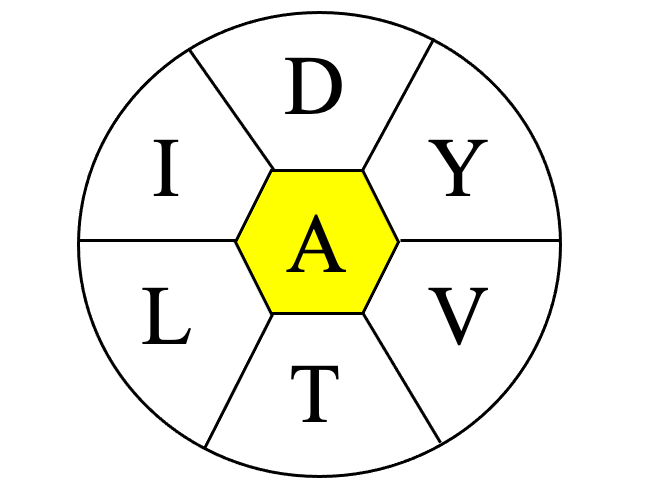
D, I, L, T, V, Y, and center A (all words must include A)
Merriam-Webster says…
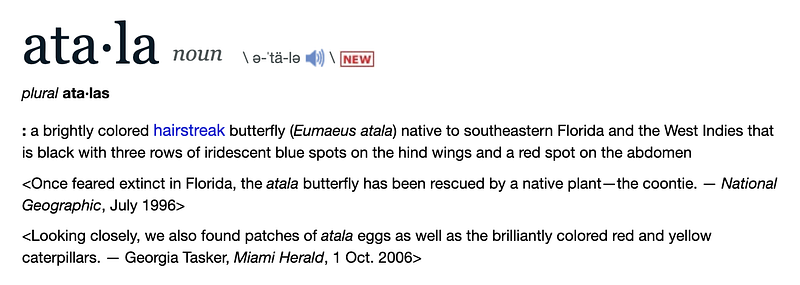
Silly little dictionary! Don’t you know that atala can’t possibly be a word if The New York Times says it ain’t?
For a complete list of rejected words, check out the Spelling Bee Master.
What’s your favorite dord* from today’s puzzle?
My Two Cents
Okay, okay, I have to admit that the subtitle at the top of today’s article is a bit clickbait-ish. After all, a steak did not inspire the name of the butterfly known as atala. I don’t know if there has ever been a butterfly or moth (or any other animal, for that matter) named for a cut of meat. If you’ve heard of one, by all means let us know in the comments section.
There is a connection between the atala and a steak, but it’s slightly convoluted. You’ll have to read on to find out, though.
Love story
The dictionary defines a hairstreak as “any of various small butterflies of Strymon and related genera usually having striped markings under the wings and thin filamentous projections from the hind wings.”
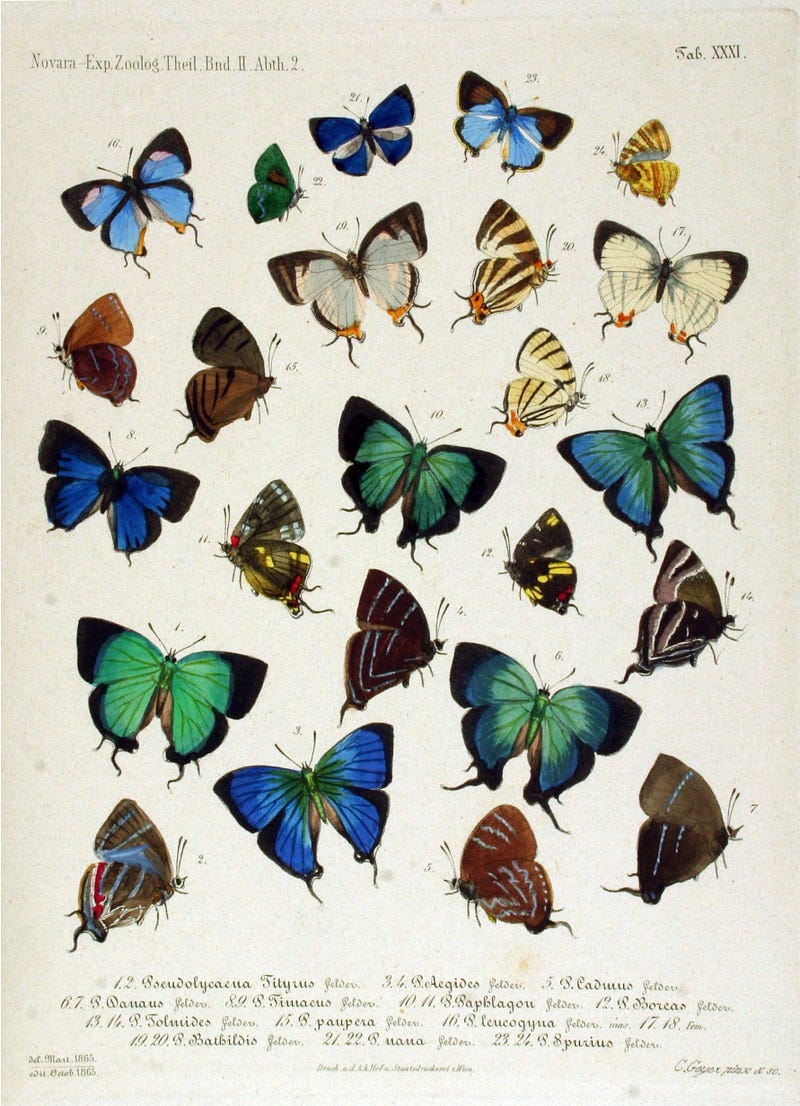
I don’t think you can see the striped markings in the above illustration, but the filaments area easily visible.
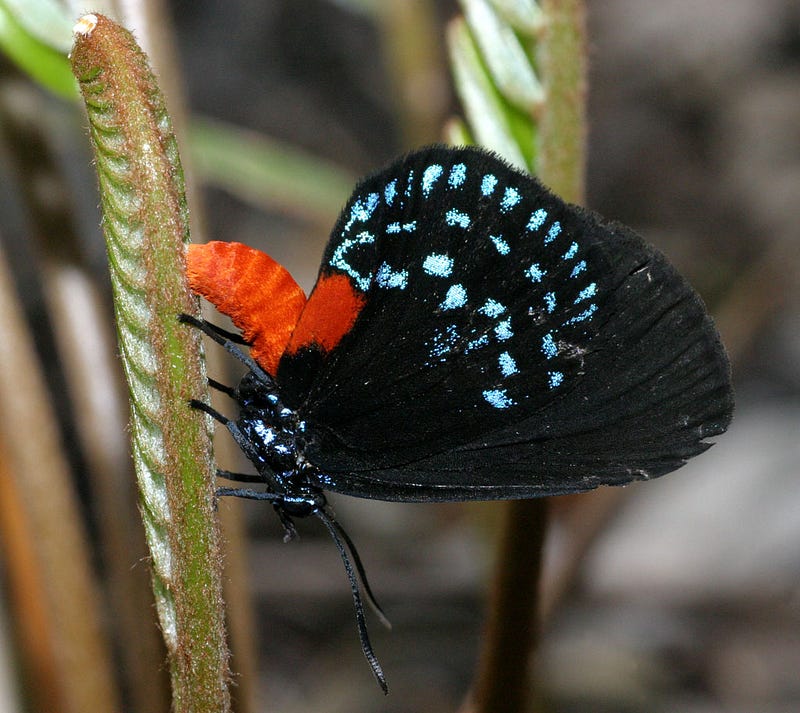
Eumaeus atala, or atala butterfly, is one such hairstreak. The female below is busy laying her eggs inside this plant, which gives you ample time to notice that she has white markings under her wings… although I don’t see any long, thin projections coming from behind.
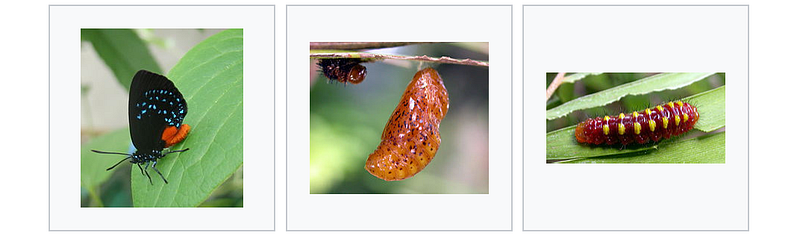
Here are three stages in the life of an atala. They’re in reverse order, so just imagine this butterfly lives in the Tenet universe.
One interesting about atalas is that males have something called a hair-pencil on their abdomen, which they use during courtship. I couldn’t find a picture of atala hair-pencils, but here is one from a moth:
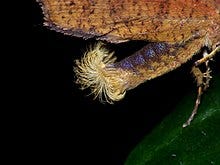
During mating, a male atalas will hover in front of a female, extend its weird penis, and waft pheromones in her direction. If the chemical compounds work their magic, both parents will soon hear the pitter-patter of hundreds of caterpillar feet.
The atala is also known as the coontie hairstreak because its larvae feed on the coontie palm. Despite its name, the coontie is not a true palm tree, but rather a cycad, a plant with an unbranched trunk which can either be tall or short, a large pith with a starchy center, and a terminal crown of long leaves and one or more cone of a rather large size.
So, yes, similar to the palm tree, but not quite.
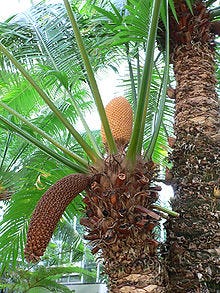
Another distinguishing feature of cycads (like the one above) is that they tend to be compared to certain body parts. You can probably guess which one. That’s right: the hair-pencil on the atala!
Cycads produce a toxin that stays in the atala’s system forever, which helps this insect avoid predators throughout its entire life cycle. The atala is found mostly in Florida, the Bahamas, and Cuba, as that is where the coontie palm grows. In fact, because said plant was overharvested in Florida between the 1930s and 1950s, the atala was thought to be locally extinct. Fortunately, that’s not the case, and today it thrives in that state.
It was a Cuban zoologist –Felipe Poey– who described and named the butterfly. Poey also founded the Museum of Natural History in his country, helped create its Academy of Science, and was the first professor of zoology and comparative anatomy at the University of Havana. He was well-known around the world as an expert on fish and Lepidoptera (butterflies and moths).
Being that Poey was also a well-traveled and well-read person, he was quite familiar with a successful French novella published around the time he was barely two years old. The work, titled Atala, ou Les Amours de deux sauvages dans le desert (Atala, or the Loves of two savages in the desert), tells the story of a Natchez man named Chactas who falls in love with the woman –Atala– who saves him from a death sentence issued by a Seminole chief.
The novella was penned by François-René de Chateaubriand, a writer, politician, diplomat, and historian descended from an old aristocratic family from a part of France known as Brittany. (Back then, when people of other regions teased his region, Chateaubriand would yell at them “Leave Britanny alone!”)
Chateaubriand lived through the French Revolution and the rule of Napoleon Bonaparte. He also traveled to the newly-born United States in 1791, where he spent time with the Native Americans and became sympathetic with their plight –though this was not always reflected in his writing. Chateaubriand’s experience in the U.S. formed the basis and setting for three of his novels, which in turn became a cornerstone of the French Romance movement in literature.
According to German-American historian and author Peter Gay, Chateaubriand was the dominant literary figure in France during the first half of the nineteenth century. Chateaubriand was also known for his lack of modesty, considering himself the greatest lover, the greatest writer, and the greatest philosopher of his time.
Perhaps that is why they named a dish after him.
Lovely steak
If you’ve ever had a Chateaubriand, congratulations. I’m curious as to whether it tastes different from other really good steaks. Supposedly this culinary term began its life as a way of preparing beef, but later became synonymous with the cut of meat, too.
Supposedly it was the French writer’s chef who first prepared it. According to Danilo Alfaro of the spruceeats.com…
…chateaubriand was a large, boneless cut of beef prepared by layering it within two or more lesser steaks, tying it into a bundle, then roasting or grilling it. When the outer steaks were charred, the roast was done, and the burnt outer steaks were then discarded. This technique supposedly ensured that the chateaubriand was cooked evenly throughout.
Alfaro explains that “It’s a distinctly more extravagant variation on the technique of barding, where a piece of meat is wrapped in fat before roasting it.”
Back then the portion of beef used was the sirloin. Today the outer steak wrap is no longer used, and the word Chateaubriand also describes the thick portion at the front of a beef tenderloin. This specific cut was so designated by Georges Auguste Escoffier, a French chef, restaurateur, and culinary writer.
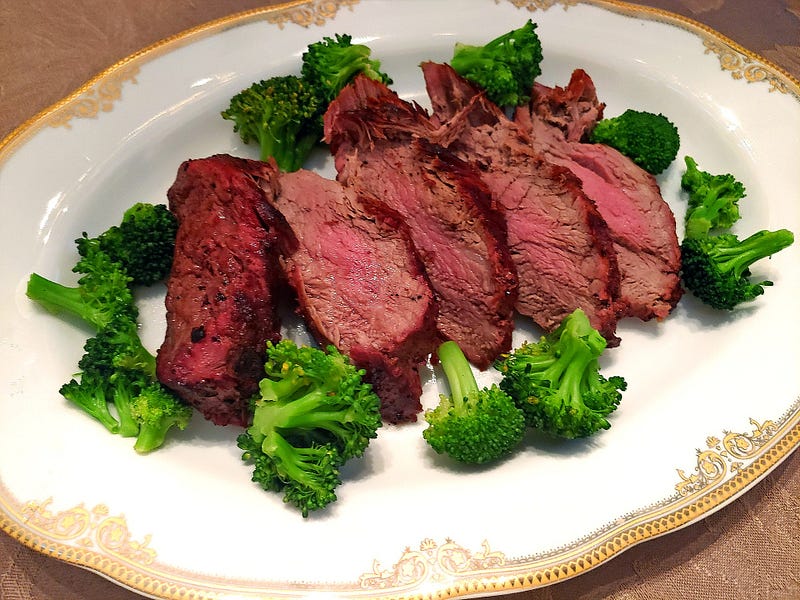
The above dish was served with broccoli, but typical side dishes of Chateaubriand include maître d’hôtel butter (a compound butter prepared with parsley, lemon juice, salt, and pepper), duchess potatoes (mashed potato, egg yolk, and butter that is formed into shapes and then baked until golden), Chateaubriand potatoes (potatoes trimmed down to the size of olives and sautéed in butter), or Bouquetière (an arrangement of vegetables set to resemble flowers — carrots, turnips, and potatoes browned in butter with cauliflower in Hollandaise sauce are often used).
If you’d like to try your own hand at preparing some Chateaubriand, here’s a recipe by Rebecca Franklin, also from thespruceeats.com
Now you know. Next time you’re in a restaurant and you hear a diner order a Chateaubriand, you can go over to their table and tell them that the dish they’re eating is named after a man who wrote a novel featuring a Native American heroine that inspired the name of the atala butterfly. Don’t be surprised if the diner asks you to leave. Not because they want to enjoy their dinner in peace… but because the editors of the Spelling Bee decided that atala is a dord*.
You can check out my previous entry on another dord* here:
*What the heck is a dord, you ask? Here’s the answer: