
Atacama Desert — the driest place in the world with a bloody history in the background
The driest place in the world, the Atacama Desert, holds many secrets. The development of agriculture in what is now Chile has contributed to increased violence between villagers, scientists say.
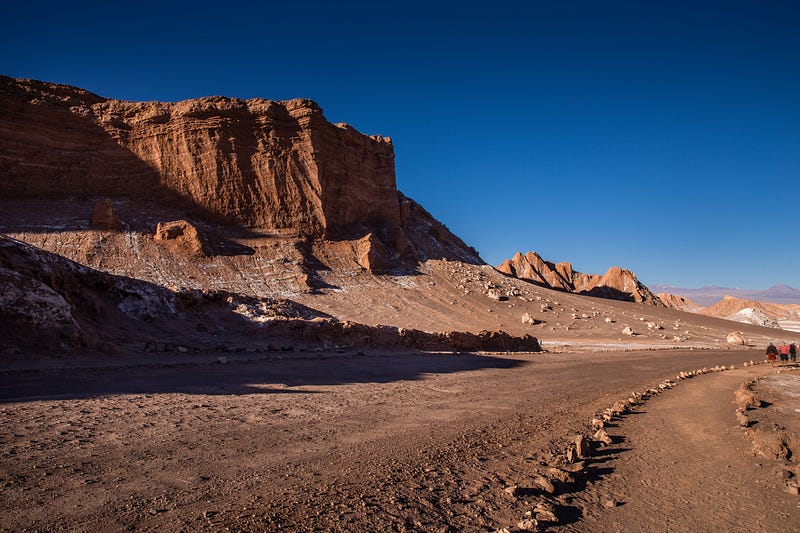
Chile’s Atacama Desert is the driest place in the world. It is estimated that in some parts of this extremely harsh region, it has never rained. Sand, rocks, geysers… It might seem that the local landscape and terrain structure are boringly uniform. Nothing could be further from the truth. This is a real paradise for geologists.
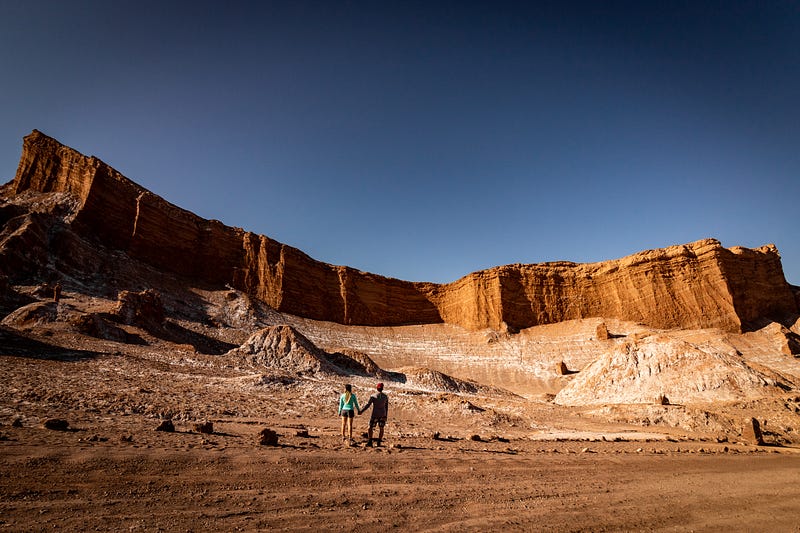
What contributed to the formation of the Atacama desert?
The Atacama hides many secrets, and one of them is sheets of glass measuring up to half a meter in length. The objects form a belt stretching for more than 70 kilometers. How did the black and dark green glass find its way into the desert? According to scientists, something must have heated the sand and melted it. One of the oldest theories says, the fire may have been triggered by a lightning strike. Recall that the driest place on Earth was not always so.
Thousands of years ago, the area of today’s desert was covered with grass. Over the years, there have also been speculations that the glass was formed as a result of the activity of local volcanoes. However, there is no scientific confirmation of this. The authors of the latest research are leaning toward a hitherto unknown theory.
As scientists have determined, the glass fragments may be the remnants of a comet explosion that allegedly occurred 12,000 years ago. Minerals included in meteorites were detected in the collected glass fragments. NASA employees confirm that the structure of the glass finds is similar to the sample from comet Wild 2. According to the authors of the study, this is to be a definitive confirmation of the theory of a cosmic explosion on the Atacama.
“For the first time, we have clear evidence that the glasses were created by radiant heat and winds from a fireball that exploded just above the Earth’s surface,” argues Peter Schultz, co-author of the study and professor emeritus at Brown University. — “It must have been a really powerful explosion. The falling meteorites we sometimes see in the sky are like small specks compared to the source of this explosion,” he adds.
Glass in the Atacama Desert
Explaining the origin of the glass in the Atacama Desert is much more complicated. Scientists point out that some pieces of glass are twisted and curled. As they explain, this must have occurred as a result of an explosion, triggering winds similar in strength to tornadoes.
Chemical analysis, in turn, showed that the fragments of the mysterious glass have minerals in their composition, which form baddeleite crystals in thermal decomposition. This process occurs at temperatures above 1,600 degrees Celsius, which is much higher than that of a fire.
Research on glass from the Atacama Desert is not complete. In the next stages, scientists want to determine the age of the finds and what size the potential comet was. So far, it is known that the explosion 12,000 years ago may have coincided with the extinction of all large mammals in the region.
“It is possible that the event was witnessed by the first inhabitants of today’s Atacama Desert. It must have been quite a spectacle,” — Schultz comments.
Farmers of the Atacama
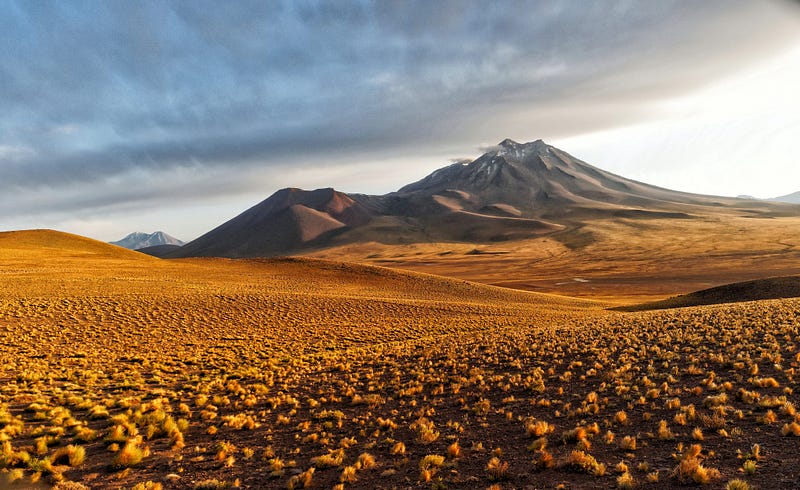
The Atacama Desert is one of the driest places in the world. Despite this, the region’s first inhabitants were farmers. The development of agriculture in what is now Chile contributed to increased violence between villagers, researchers say.
The researchers analyzed the skeletons and mummified remains of 194 people living in the Atacama Desert between 1000 BC and 600 AD. They determined that violence became decidedly more common as people began to toil in agriculture. However, the problem persisted for hundreds of years. Both men and women were victims.
Agricultural development contributed to population growth and the establishment of villages. Such major changes were also associated with new problems — social inequalities began to become more pronounced, and territorial claims became a hotbed of conflict.
“A complete change in the interaction of communities caused tensions and violence,” the study authors explain.
Remains from hundreds of years ago indicate that Atacama farmers were extremely cruel. One woman was tortured by stretching her skin over her face. In men, broken limbs and fingers were prevalent.
The scale of the problem was shown by a study of human remains from six cemeteries in the Azapa Valley. Most of the victims (51 percent) suffered head injuries, 34 percent suffered injuries only on the body, and 15 percent were beaten on the head and body. According to the researchers, the healed wounds indicate that acts of violence did not always result in the death of the victims. However, the researchers point out that in most men the injuries did not have time to heal before death — so they were most likely the cause of death.
“It is possible that men injured themselves during brawls and fights with weapons, for example, spears, slingshots, maces, clubs or knives. Women may have been beaten at home,” the researchers comment.
To determine whether the victims lived in villages in the Atacama desert, the scientists conducted chemical analysis of the remains of 69 people. The study showed that only 26 of them lived in the region, while the rest ate foods unusual for the desert, such as marine animals.
“Conflicts and violence may have involved two groups: fishermen and farmers colonizing the valley,” the researchers — the researchers suggest.
Of course, tensions were present even before the development of agriculture. The struggle for natural resources only intensified them. Over time, the phenomenon of violence began to diminish. In the first centuries AD, the frequency of injuries was already much lower. Scientists explain that this may have had something to do with the emergence of social practices regulating conflict and property rights.
What was life like in the Atacama Desert before the advent of agriculture?
People living along the coast for about 9,000 years toiled by hunting, fishing and gathering. It wasn’t until about 3,000 years ago that they began growing crops and raising animals. The villages that sprang up in the driest regions of the Atacama did not develop as rapidly as others. The lack of fertile soil and limited access to water effectively hindered this.
Cool that you made it to the end of this article. I will be very pleased if you appreciate the effort of creating it and leave some claps here, or maybe even start following me. It would be nice if you also left a tip! Thank you!


