
At Your Funeral, You Can Be Yourself
Learn to die.
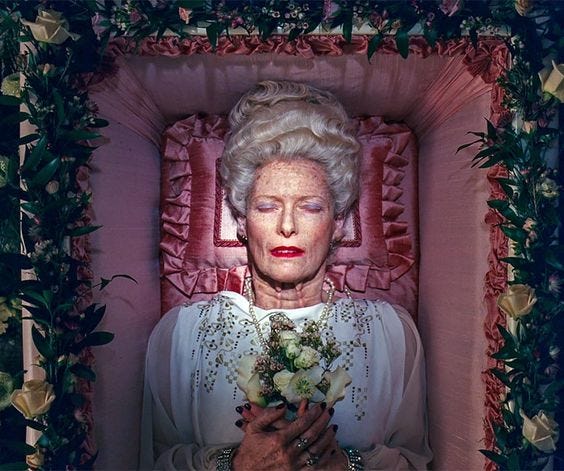
When a man I loved more than anything else passed away, it was a month before my 20th birthday. I got presented by life with an opportunity (and an ultimatum) to rethink my relationship with death.
He died in a completely unexpected way — a heart attack at a supermarket’s parking lot. Since that day, I have constantly been wondering about the fleeting nature of our existence.
If all of this can end in one second, why do we waste so much time on things that ultimately don’t matter at all?
That was a question I had been waking up with ever since.
It got me, alongside other things, a lot of material to work with: years-long depression (now healed), recurring suicidal thoughts, and wading through my mind to accept that what’s gone is never to come back in the same form.
After that, I finally understand a bit more about dying.
Dying is a skill
“Live as if today was the last day of your life” is a tremendous simplification of what is a humanity-existence-old philosophy.
When served as a motivational snippet in speeches or an embroidered quote, it merely scratches the surface of what it truly means.
Once you walk the talk, of course, condensed “truisms” like this one can serve as profound reminders. But standalone, they can’t do much.
You need to hoard everything they’re built upon before you will be able to decipher the code.
That requires a lot of practice.
The best way to learn about the key ingredients of life is, of course, by living.
And what’s the best way to live? Dying.
You must live before you die. But you must die before you can live.
Life teaches us how to die at any given moment. But we choose to look the other way.
If we face it, we will gain a priceless opportunity to die many times while still alive.
All we have to do is take life as it is and march into whatever it throws at us with our heads high up and our feet firmly on the ground.
If going forward requires us to die, we die.
Your deaths mean you shed the old and shrunk elements of self that you’ve carried for years — sometimes since you were a small child — and make room for self-actualization*.
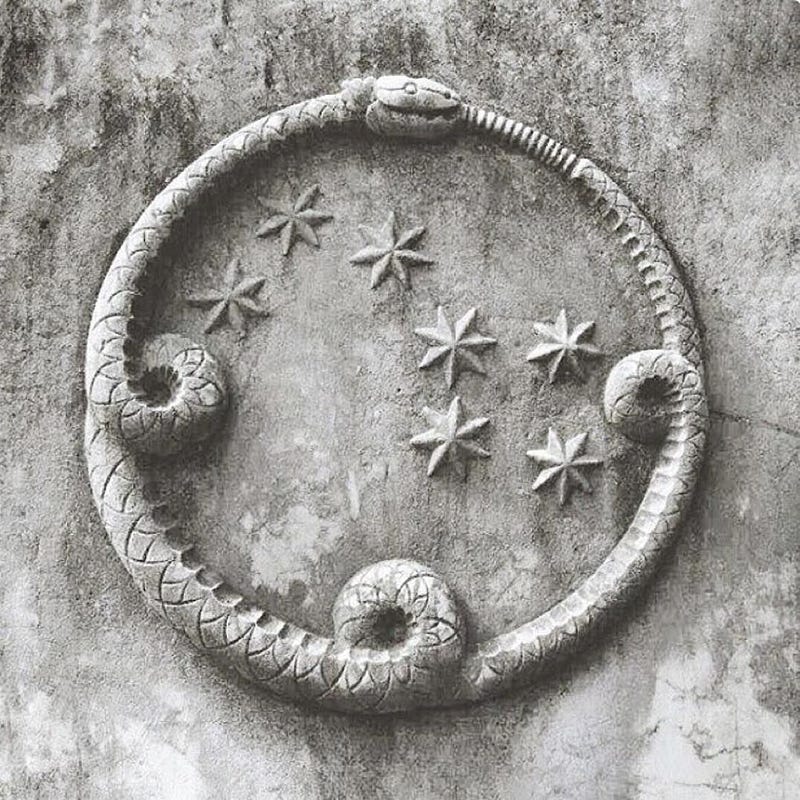
Snakes shed their skin to grow (some even eat their own tails to get reborn; check out the Ouroboros). Think of your deaths as skin-shedding or tail-eating. And your funerals as celebrations of growth.
The funeral is when you cross chapters. In this most intimate moment with yourself, you get to choose what to carry onward and what no longer serves you. These are the only moments in life when you face your true self — stripped of all decorations and frippery our minds use to spare us discomfort.
And then you die — to make the process complete.
Life’s measured in the number of your funerals. Or, at least, the life well lived is.
At your funeral, you can be yourself. — Laura Huxley
Memento Mori: Meditate On Your Mortality
Another way to go about death (the final one) is to exercise dying through contemplation of it.
“Let us prepare our minds as if we’d come to the very end of life. Let us postpone nothing. Let us balance life’s books each day. … The one who puts the finishing touches on their life each day is never short of time.” — Seneca
The quote from Seneca above is a more direct application of the embroidered truisms.
It gives a more elaborated insight into what it truly means to live as if you were going to die tomorrow.
Marcus Aurelius joins the death Fanclub and writes in his Meditations: “You could leave life right now. Let that determine what you do and say and think.”
Meditating on your mortality is only depressing if you miss the point (as Ryan Holiday said). When done right, it acts as an inoculation against the life-wasteful virus we all are infected with: ignorance.
When you spend a few minutes a day considering the possibility of your own death and the impermanence of your existence, you will experience a big perspective rearrangement. Your focus will start shifting from small-minded worries, short-sighted cravings, and self-absorbed goals, and instead, it will point at the matters of global, if not universal, importance.
This perspective shift is not only immensely beneficial for your mental well-being but also absolutely crucial for the well-being of our species (and, by extension, the faith of the planet).
Living with your death in mind makes you less attached to material possessions, titles, social status, opinions, and plans.
Any time you have a problem with something, think of death. Ask yourself, “if I were to die an hour from now, how would I like to behave?”.
If you can get past your personal issues and ego, you’ll find that you want the situation to turn out well and cause no harm to anyone. So why bother creating excessive drama when you can snap out of your short-sightedness with a simple reflection on death?
Constantly revisiting the notion of your own morality will enable you to evaluate what truly matters to you. Thanks to that, you will either start to think about how your individual existence can be of benefit to others or, at least, as the Dalai Lama said, not create more problems for the world.
Going about your days with this “deadly” attitude will paradoxically make you feel happier, lighter, less anxious, bolder, and more willing to try new things.
So when you go to bed tonight, think, after Seneca, “You may not wake up tomorrow” and “You may not sleep again” when you open your eyes the next day.
Death implies Life
– Alan Watts
Death is the greatest gift to humanity, for it makes life scarce.
“A lot of people feel that death will take something away from them. The wise person realizes that death is constantly giving them something. Death is giving meaning to your life.” — M.A. Singer
This is true for your own death — but also the passing of your loved ones. Relearning how to live after losing a pillar of your existence rips out the meaning like nothing else.
In the book called “The Untethered Soul”, Michael A. Singer writes in-depth about the greatness of death:
“It is truly a great cosmic paradox that one of the best teachers in all of life turns out to be death. No person or situation could ever teach you as much as death has to teach you. While someone could tell you that you are not your body, death shows you. While someone could remind you of the insignificance of the things that you cling to, death takes them all away in a second. While people can teach you that men and women of all races are equal and that there is no difference between the rich and the poor, death instantly makes us all the same.”
Death leaves aside all the bullsh*t stories and excuses our minds create, and pulls out the meat, the essence of our existence. Nothing gives value to life more than death. Nothing makes life more precious than the fact it might end any second.
It doesn’t matter what age you are; at any time, you could take a breath, and there may never be another. It happens all the time to people of all ages. One breath, and they’re gone.
Do you realize that what you’re doing at any moment is something that someone was doing when they died? Seriously. Anything you can think of doing was someone else's last moment.
No one knows when their time will be. That’s not how it works. And that’s good. What’s not so great, though, is that we treat our lives as if they were going to last forever. That’s a fundamental error in our thinking.
“You really don’t need more time before death; what you need is more depth of experience during the time you’re given.” — M.A. Singer
Let Death be your teacher
Take a moment to review everything you are filling your days with. Look how much time and energy you put into them.
Now, imagine if you knew you were going to die within a month.
How would that change things? How would your priorities change? How would your thoughts change? Think honestly about what you would do with your last month.
There’s no better question you could be asking yourself right now.
If these are the things you’d change, if that’s really what your last month would look like, why do you still have to think of changing things?
So why not be bold enough to reflect regularly on how you would live that last month?
Remodel your life in a way that will put you at peace with death.
If your end were to come in an hour, a week, a month, a year, it shouldn’t be of any difference to how you live. If you knew you were to die, you would live exactly the same way you are living right now. That’s a life lived fully, without making any compromises or playing games with yourself.
“Death has made you a great promise in which you can find deep peace. The promise is that all things are temporal (…) Feel grateful to death for giving you another day, another experience, and for creating the scarcity that makes life so precious. If you do this, your life will no longer be yours to waste; it will be yours to appreciate.” — Michael A. Singer
Start using this method to let go of the scared part of you which keeps you from living life fully. Since you can be sure you’re going to die, be willing to say what needs to be said and do what needs to be done. Be willing to be fully present without being afraid of what will happen in the next moment. Don’t search for meaning; create it every moment as if it were your last.
That’s how people live when they learn they have a fatal disease and will die soon.
You get to do that, too — because you are facing death every moment.
If you live life fully, you won’t have any last wishes. You will have lived them every moment.
The question is, are you going to wait until that last moment to let death be your teacher?
“Don’t you understand that every minute you’re a step closer to death? This is how to live your life. You live it as though you were on the verge of death, because you are.” — Michael A. Singer.
*read Viktor Frankl to learn more about that concept; “Man’s Search For Meaning” is a good place to start.
Before you go
I’m Justyna Cyrankiewicz, and I write about simple things that make overcomplicated minds.
If you enjoyed this piece, consider subscribing to my free weekly letters. It’s a community of people who, like you, care about what’s up in their heads.
P.S. Please note that this story is based on my personal experience, the books I’ve read, and the teachings I have received. Don’t follow online advice if your mental health is severely at risk; reach out to friends, professionals, and other groups to gain relevant support for your particular situation.
Thank you for being here.