
Astronaut moved 100 meters away from the shuttle. Who made the first spacewalk?
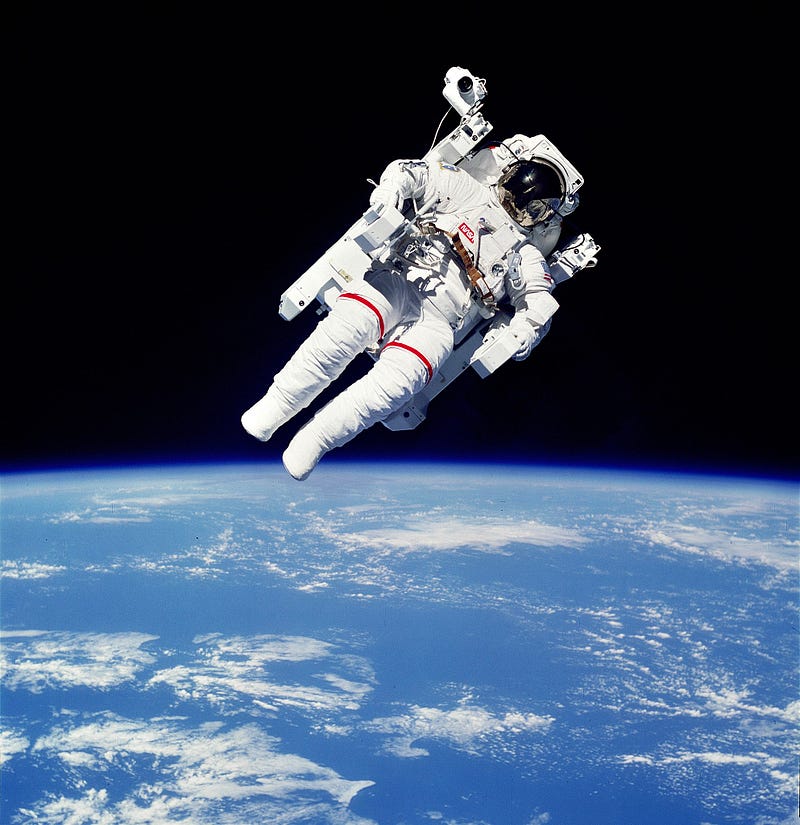
On February 7, 1984, Bruce McCandless, a member of the Challenger shuttle crew, became the first man in history to leave a spacecraft without a permanent connection to the craft. It was a historic spacewalk.
.jpg)
A day later — on February 8 — a second crew member, Robert Stewart, also experienced an “unattached spacewalk,” as the press described it at the time.
Previously, all spacewalks (EVA, or Extra-Vehicular Activity) were performed by astronauts tethered to the spacecraft by a rope, which̨ then pulled them aboard. This time the freedom̨ the astronauts were given by the MMU, the Manned Maneuvering Unit, weighing 148 kilograms on Earth.
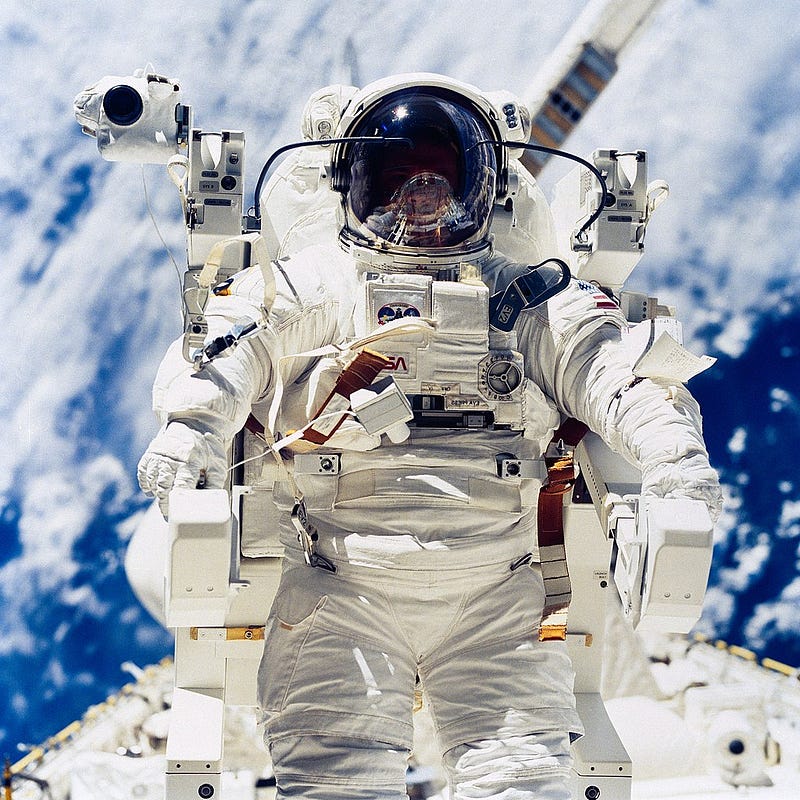
What was the MMU’s jet backpack?
The MMU was a jet backpack consisting of two Kevlar-reinforced aluminum alloy tanks.
- They contained 5.9 kg of nitrogen, enough for six hours of operation.
- Twenty-four nozzles, located at various points of the MMU, actuated by the astronaut’s fingertips allowed maneuvering.
- An automatic hold function allowed both hands to be freed to make repairs, for example.
- The device could reach a speed of 25 m/s.

How to prepare for a spacewalk?
The day before the spacewalk took place, the pressure was reduced and the amount of oxygen on the ship was increased to remove nitrogen from the astronauts’ bloodstream. When performing a spacewalk in low-pressure spacesuits, nitrogen can cause serious health complications and even lead to death.
“I put on underwear along with flexible tubes filled with water to keep me cool, and a spacesuit. I heard: You’re ready. Go, go, go! I entered the airlock, closed the hatch, unhermetized it, opened it and…. I went out!” — recounted Bruce McCandless.
What was the free space walk like?
The 47-year-old astronaut was in space for almost four hours. He flew at a speed of 28,000 km/hr, but he was moving at only 31 cm/s relative to the spacecraft.
“I wanted to say something similar to Neil [Armstrong] when he landed on the moon, so I said: ‘Maybe it was a small step for Neil, but for me it’s a big leap.’ That eased the tension a bit. I was terribly cold, my teeth were chattering, I was panting all over,” Bruce McCandless reported.
The jumpsuit was designed to allow the astronauts to work intensely. Then they sweated and had to be cooled. This time, however, McCandless moved effortlessly through space and additional cooling was not needed.

What happened next with the jet pack?
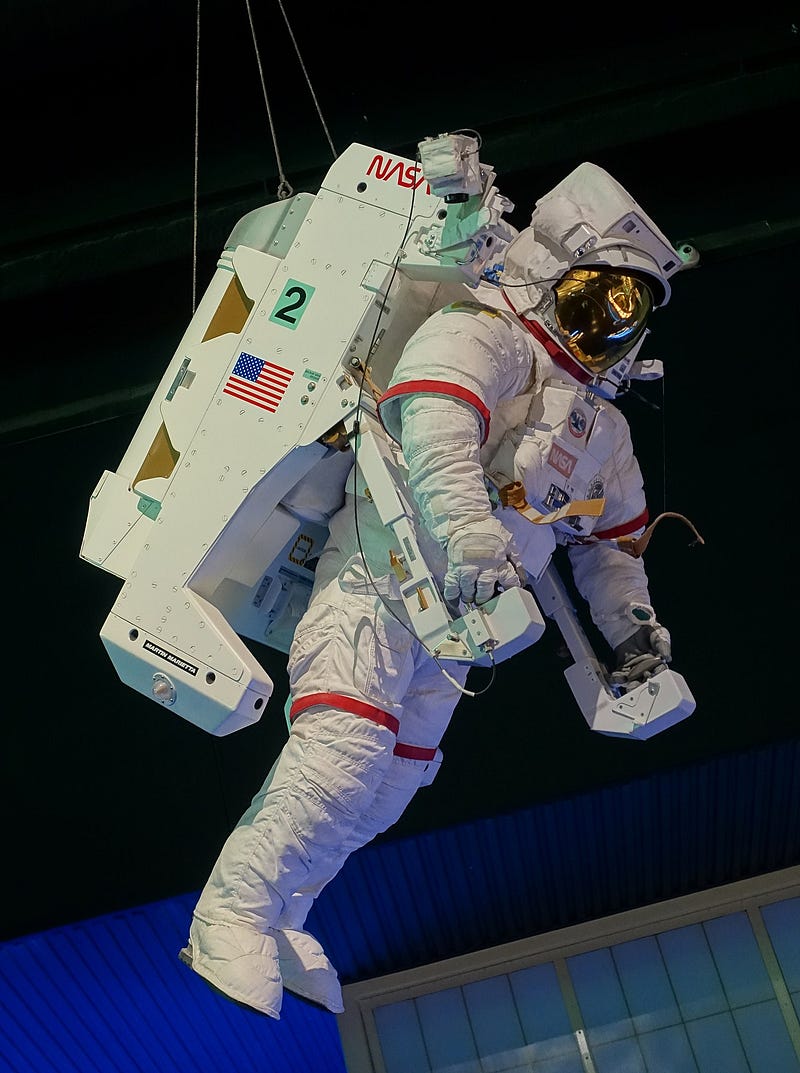
The MMU was designed by engineer Charles Whitsett, with whom McCandless had worked since 1967. During that time it also supported other missions and waited its turn to fly into space. “They ate, slept and breathed the same”. — they said of them at NASA. It was a grueling 17 years of research, testing, constructing, tweaking, troubleshooting. The astronaut conducted testing of the MMU in both underwater conditions and within the Skylab space station.
Despite so many years of work, the jet backpack did not remain in use for long. Its last mission was STS-51-A, which flew in November 1984. Astronauts Joseph P. Allen and Dale Gardner using the MMU then intercepted two satellites, took them to the payload bay and returned to Earth with them.
That’s where the MMU’s career ended. Jet packs found their place in museums. They were eliminated by … space shuttle, which was so maneuverable that it was easier to simply fly it up to the desired object and grab the robotic arm.
What is found in space?
Space is almost a total vacuum. If the astronauts were not protected by a special suit, the effect of the vacuum, and thus the sudden cutoff of oxygen, would cause them to lose consciousness after just 10 seconds. Cerebral death would have occurred after just 2 minutes.
Cool that you made it to the end of this article. I will be very pleased if you appreciate the effort of creating it and leave some claps here, or maybe even start following me. It would be nice if you also left a tip! Thank you!