
Astrology For Newbies
Here’s How We Experience Transiting Planets From an Astrological Perspective
The meaning of planetary transits from an Astrological perspective, plus how you can use them in Natal Chart predictions.
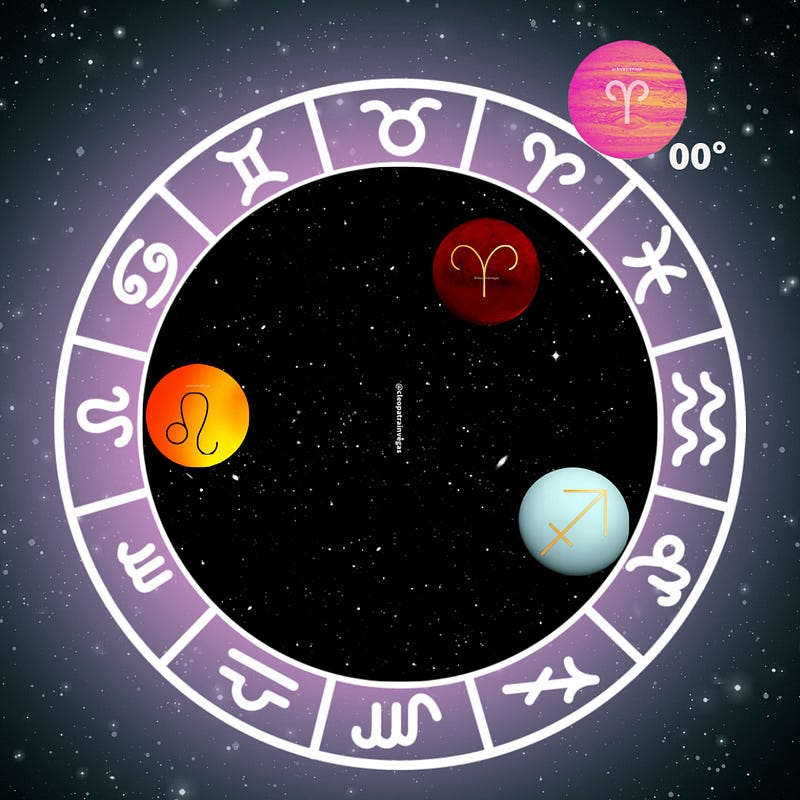
“Ugh, I feel so unfocused today, and it seems like everyone has an attitude; what gives?!”
Sometimes we have days when we feel more energized than usual, while others might feel hyper or edgy.
Then there are times when we’re dealing with something that doesn’t seem to let up for weeks, months, or even years. One of the main reasons we experience these short to longstanding issues is because of planetary transits.
Most people associate Astrology with Sun Sign Horoscopes; however, those are created using transiting planets. In other words, we use Astrology transits to create magazines and newspaper Scopes to forecast what planets influence us.
But not only that, when we use transits, we get an accurate forecast based on how the celestial bodies align.
Planets naturally revolve around the Sun Astronomically, but they also form connections with one another while they are traversing the solar system. As they connect with the Sun, another celestial body, they create aspects like conjunctions, trines, squares, and oppositions. These alignments generate a vibrational effect resulting in us feeling the influence of these energies.
How Transits Affect Us On a Collective Level
If you’ve been following my work, you’ll know that I’m a Mundane Astrologer, a branch that deals with forecasting Astrological events. I read this through the transiting planets, which is how the weekly’s are written and made on my podcast.
When we Astrologers look at the transiting planets, we can do short and long-range events.
The short-range events are delineated by looking at the Moon, Mercury, Venus, and Mars transits.
Transit events can last a few hours with the Sun and Moon because they move through each Sign in 2 ½ days. Mercury, Venus, and Mars take about two to 4 days, depending on their orbit and if they’re in Retrograde. These planets also transit into new Signs for a minimum of 3 weeks with Mercury and Venus and 6 weeks with Mars.
With these, we could have an alignment of the Moon and Venus that pronounces vulnerability and emotional connections. This is because the Moon deals with our emotions, while Venus is about romance.
When we have Mercury to Mars in a complicated alignment, it can promote standing up for ourselves because Mercury is communication, and Mars is how we assert ourselves. Or there could be the Sun connecting to Neptune for a few days causing us to feel unsure of ourselves. This is because the Sun deals with confidence, and Neptune makes things foggy resulting in uncertainty.
Long-range forecasts deal with Retrogrades, outer planet to the outer celestial body connections, and rare Astronomical alignments. Also, when these heavenly bodies transit into a New Sign, it takes years for them to move through these Zodiac placements.
These kinds of events can last weeks, months, and sometimes years. For rare alignments, some only come around every 10, 15, or every 20 years, like the Square between Saturn and Uranus.
With a cycle like Saturn Square Uranus, we look at situations collectively.
Outer planet connections are slower moving, so they take time to develop, which is why when they do hit, they pack a punch. We can also see global trends through these cycles. This is because societal situations aren’t instantaneous, and just like rare planetary transits, it takes time to develop. All these scenarios unfold over time.
The Retrogrades are also large cycles lasting longer than a day, with Mercury being the shortest at 3 weeks and Pluto being the longest at 5 ½ months.
Understanding Transits to Your Natal Planets
Natal interactions are different than a collective reading because it affects you as an individual.
If you’re familiar with your Birth Chart, you know it’s made up of planets in specific Signs, the 12 houses that these celestial bodies reside in, and the 4 Angles, i.e., your Rising, IC, Descendant, and Midheaven.
Natally you have a fixed set of placements from the time of your birth because the personal Horoscope is a moment in time taken at the time, day, and year you were born. So, this is your personal energy and is the foundation for your life.
The transiting planets move around your chart constantly, causing these areas of life to be activated. This is used as a forecasting technique to see what events could unfold over a lifetime.
Other techniques forecast the movement of the planets and how it affects you.
Still, transits are an excellent place to start if you’re just getting into examining possible outcomes for yourself.
For instance, say you have a Natal Moon in Gemini in the 4th house of your Chart, and Venus is also in that Sign; this would activate your placement. An interaction like this can bring fun and festivities in your home environment, promote better relations with family and those who live with you, and have you interested in decorating your abode. And because this is Gemini, it could bring fun times with siblings, aunts, uncles, and cousins.
Venus would stay in that house for 3 weeks promoting these themes but would be on your Moon for a few days.
And the outer planet would be a longer duration.
Let’s say you had an empty 9th house with no planets or asteroids, but you get a long Transit from Saturn in Aquarius. This would take about 2 ½ years to move through that part of your Natal Chart. The 9th house has to do with publishing, philosophy, higher education, long-distance travel, and many more.
But for this example, let’s say you were on the fence about starting college or have been back and forth about going back to university. Saturn enters this house, and slowly things begin to unfold. Gradually, you begin to narrow down your options because this planet is about reducing unnecessary things resulting in you finding a college better suited for you.
Alternatively, this could be a time to take your ideas and make them more concrete so you can publish them online as a writer, on YouTube, and in other ways, you would post media.
Or say you’re experiencing a Retrograde connecting to your Natal planets; there would be a slow development in 3 sections.
This is because of the pre-shadow, which shows us our RX theme, then we have the actual Retrograde, which brings up the things from that section. And after the 3rd hit will be during the post-retrograde shadow, which will help go over the other parts of this cycle.
Say you were experiencing Mars Retrograde to a planet in your 11th House. This Regressive Cycle is connected to that planet by an opposition. This could be when you’re reconsidering your friendships or if you want to be part of a group any longer.
Another important thing to consider is how many degrees a planet is from your Natal placement.
As a planet approaches a specific configuration in your chart, it is called applying. And as the celestial body moves off your planet, it is in a term called separating. An orb of about 10 degrees applying and 6 degrees max as the planet is separating from your Natal placement is usually the best amount to use for accuracy.
How To Read A Personal Transit Wheel To Your Birth Chart
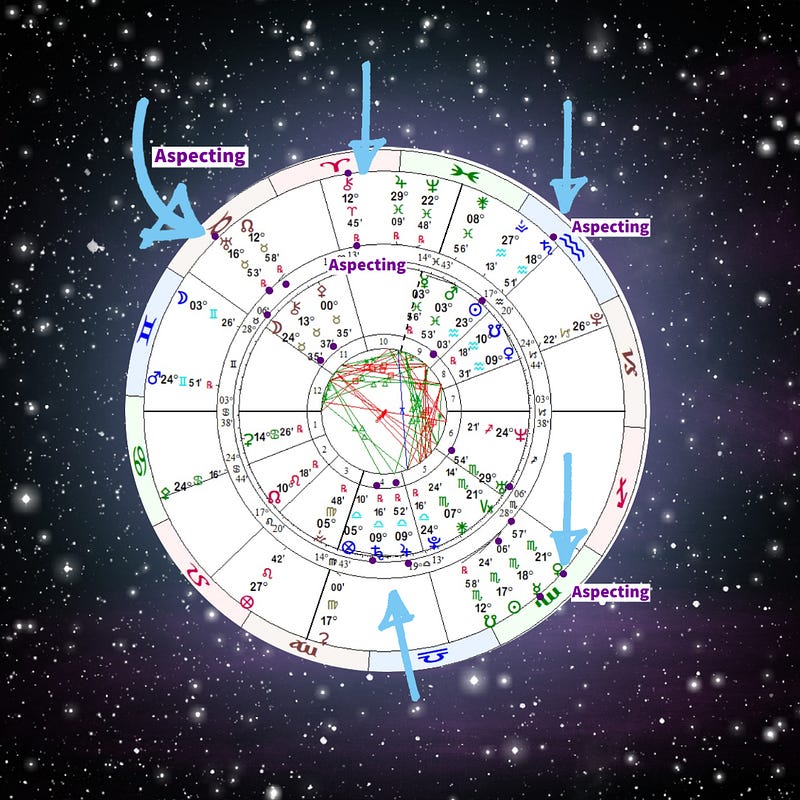
If you don’t have Astrological software, my recommendation is 2 websites, Astroseek and Astrodienst.
On Astroseek, at the top left-hand corner, you will see a tab that says “Free Horoscopes” click on the drop-down menu, and it will show a list of items but what you’re looking for is the “Transit Chart Calculator.”
From there, you’ll go to a page where you can input your birth data, and voila, instant Transits to your Natal with a Chart wheel and a list of which planets are connecting with you. You can even pick a date and range from the past to months or years down the line that you want to examine.
For Astrodienst, there’s a 3 lined grid on the top left corner; click on “Free Horoscopes” then “Horoscopes at a glance,” and you’re brought to a page with a variety of options, but for this, you’ll want to click on “Extended Chart Selection” which is located on the top row of options right in the middle with a wheel that has tons of colors.
Once you click on that, input your birth data, and you will also see a variety of add-ons and other options but for this purpose, keep it simple and only use the default settings.
Click on “Show Chart,” and you’ll move to a page with your Natal Chart. On the right side, there’s a green tab that says “With Transits” click on that, and it will display how the planets are moving through your birth placements.
Doing these activities is a fun way to see which planets are aspecting you on a personal level rather than a general collective reading.
Of course, the collective ones you would hear from me or anyone else who educates about the transits are helpful, like checking out a weather forecast. Still, it’s always lovely to see how the Astro-climate’ll personally impact you.
But either way, use this information to gain knowledge about how to read your own chart and eventually others.
Are you an avid reader?
Sign up today to binge-read my articles, plus gain access to thousands of other writers. Signing up supports the work of creators like myself and other writers on this platform; there’s a link below to become a member.