
Ask Lewis: Tips On Applying the Power of Knowledge
How to get the information you need.
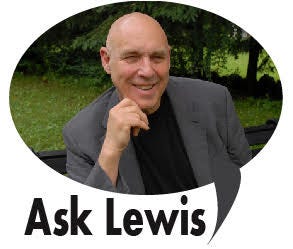
I’ve have had great success in my life. The main path to my success was built on a foundation of love, kindness, compassion, empathy, wisdom, goodness, appreciation of beauty, competence, gratitude, information, and critical thinking.
In this story, I want to focus on the power of information and how I apply it.
Information
Information is anything that changes the probability of states within a system.
With human systems, these states can refer to consciousness and the model of the world we carry around with us in our heads — constantly changing with new information such as sensation, thinking, learning, and discussion.
There are a lot of good definitions for Information out there. However, I would probably define information as anything that has meaning. For example, if I were to take a random string of letters, that’s not really information. “d8asdd^fekds-nfes” has no meaning, and it is essentially random. It doesn’t communicate anything. On the other hand, “My name is Harrison” does have meaning. It can be interpreted and communicates some sort of meaning. Something that tells you something about something. It is some kind of package of symbolic references. It is not the thing itself, it is about something, an abstract representation of that something, allowing you to know something about it at a distance.
All useful information is assembled into a form that represents what actually is there. Information is not the same as data. It is often distinguished from data, which would be pieces of symbolic content, not necessarily assembled into a form that represents what actually is there. It is also often distinguished from knowledge, which would be information organized into more of a system.
One can argue about whether misinformation deserves to be called information or not. We’re surrounded by messages about stuff, such as ads or political speech, which are intended to influence us, to actually make us not find out what something really is. It looks like information, but does it actually represent the subject matter if it is false?
There are more technical and precise definitions of information, as used in information theory or information science. What I suggest here is merely a common sense understanding.
In my daily morning information-gathering ritual, I focus on 7 areas:
1. Global News,
2. Local News,
3. Politics,
4. Entertainment (pop-culture trending influencers)
5. Lifestyle,
6. Business.
Every morning after my meditation, yoga, Tai Chi, and YouTube laughter ritual, I take a few minutes to review the BBC, Yahoo News, Al Jazeera, MSNBC, Huffington Post, and the National Review (For an intelligent right-wing and conservative viewpoint).
My goal in all of this is to take 15–30 minutes to build an intellectual fact-based mental puzzle. Each piece adds to the next one. Here I am building an information reserve concerning a wide range of subjects such as literature, philosophy, mathematics, various professions, and social and physical sciences. There is no memorization here.
This entire process takes about 30 minutes. Then I clean my mental palette with NiceNews.com
So, I now have organized information (processed data).
Here is a general example of what I do: Imagine the climate activist Thunberg measured the temperature outside of her house for the last 3,650 days at the same time of the day. Every day temperature measurement is data. You have 3,650 pieces of data. Then Greta groups these data into 10 consequential 365-long parts and calculates a mathematical average for each of the 10 parts. She’s smart and knows that temperature goes up or down depending on the time of the year. But, she’s also trying to create information from this data — she hopes that when she puts these 10 averages one to another you will see that the average temperature per year goes up. If this is the case — this would be information.
· So, information is processed (with some intent)
· It is parsed down to single points — data (sometimes data is so obvious — you don’t have to process it. This is also called common knowledge).
· Now you have to determine how you want to use this data. There are multiple ways to do this.
To take it even step further, if you find this information helpful/valuable — it becomes knowledge to you. But, if it’s useless to you — it remains information. This applies to both Greta Thunberg's information and any lack of response to that information.
The majority of data is not information. But, all knowledge is information, and this information is built around data.
There’s no excuse for intentional ignorance, and believe me, whether we want to acknowledge it or not, we all pay a price for intentional ignorance.
The Takeaway
Information is already accessible to you everywhere. Usually, you should only think of a question to already know the answer. However, everyday noise can distort the incoming flow of information, so that is where you would need “Search”. Using the computer as an access terminal to knowledge is of course the very basic hard-wired method to interface the global electronic consciousness. To practice instant information retrieval, try to search for any subject that comes to your mind during the day, parse the information with your eyesight on the computer screen, and then let it digest in your mind. Next time, try to simply think of a topic, but do not interface with a computer. Just `sit by’ in your head, keep silent, and try to observe the thoughts that come to your mind. To practice that, repeat a computer search followed by a non-computer search on the same topic. With practice, test searching for topics that truly interest you and have a strong relevance to a situation or a task at hand — without using a computer. See what results you get. I do not promise a full “Wikipedia” a type of information retrieval, but just enough of revelation to give you an insight into the question you have.
I want to acknowledge Flemming Funch, Sasha Mrkailo, Alex Gieselman, Andy Kirievskiy, Torbjørn Wikestad, and Atul. It was their posts in an online forum that motivated me to write this story.
Other of my stories in a similar vein @LewisCoaches
Before you go…
I am Lewis Harrison, an Award Winning author of over twenty books on personal growth and strategic thinking. For over a decade I was the producer and host of the show “What’s Up” on NPR affiliated WIOX FM in New York.
Now, aside from writing on Medium, and connecting personally with my readers, I teach seminars and speak on personal development, and life strategies throughout the world.
To learn more about my thread — Ask Lewis — please read this short piece below…
I also offer a free Personal Growth newsletter. Subscribe below and I’ll send you a free Ebook of self-improvement strategies.
Just Click Below to subscribe …
“Join my group of 18,000 influencers”.
I write full time for Medium, Ask Lewis, RealUGuru, and The International Association of Healing professionals. If you enoy my stories and would like to support my work please donate at