
As a Gay Man Who Lived, Let Me Tell You What Hope Means
Snatching victory from inevitable death changes your definition of the possible
I gasped and clutched my stomach as powerful memories tried to crush me. I’m not ashamed to say I ran into the kitchen and poured a huge slug of scotch into a coffee mug and downed it in one snap.
I snapped off my TV and tried to stop shaking.
It was far too late at night to reach out to a friend, so I sat there in the dark, hugging my knees, remembering. I don’t mean I replayed the curated, episodic memories I had stored and reinforced to make sense of the AIDS years. I mean I relived the raw emotions again, the fear that tried to kill hope.
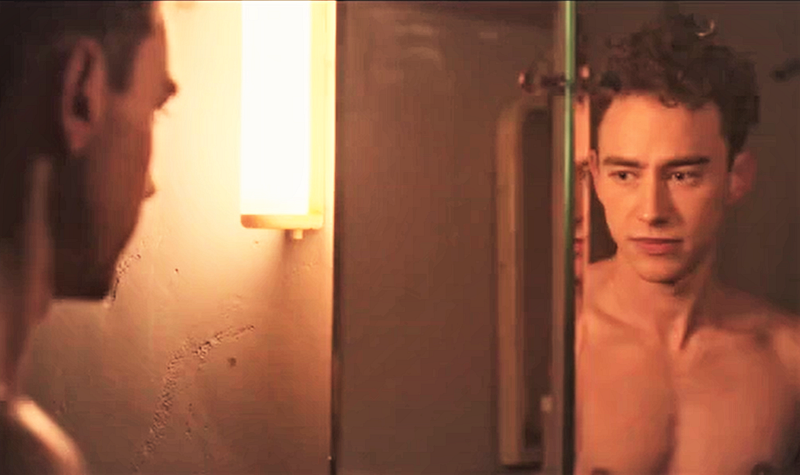
That was my reaction a year ago to It’s a Sin, the U.K. miniseries that follows the lives of young people at the beginning of the AIDS pandemic, people who were almost exactly my age when AIDS started its killing spree.
The scene that left me a shaking mess was not overtly horrible.
A young man (pictured above) was checking himself in the mirror for KS lesions. Kaposi’s sarcoma is a rare skin cancer that manifests as purplish lesions. Before effective treatment for HIV, KS was often the first sign you had AIDS or that it had progressed to the point that death would soon follow.
Buried memories rushed back and knocked me on my ass.
I was naked in the bathroom. The mirror was steamy but as I wiped it off with my bathrobe and twisted around, something blotchy and ugly on my back screamed at me.
“Lenny!” I yelled, then wished I hadn’t. Did I want my partner to know yet?
“Is that? Look at that!” I said when he opened the door.
He rushed over and ran huge palms up and down the hot skin under my shoulder blades. I felt a burst of pain and then he was whispering in my ear. “Bubby, calm down. It’s a big nasty pimple. That’s all. You’re fine.”
He rocked me in his arms, whispering, “you’re fine,” over and over as we held each other in bed and failed to fall asleep.
Does it sound like I felt hopeless back in 1992 or 1993 or whenever that happened? That’s not the first time Lenny or I freaked out thinking one of us had AIDS. It wouldn’t be the last time. Our friends were dying one by one, either holding court in New York City hospital beds before we attended their funerals, or disappearing silently back into the heartland, never to be heard from again.
Even though we took safer sex seriously, we knew either of us could be next.

Let’s talk about queer activism, positive change, and hope’s audacity
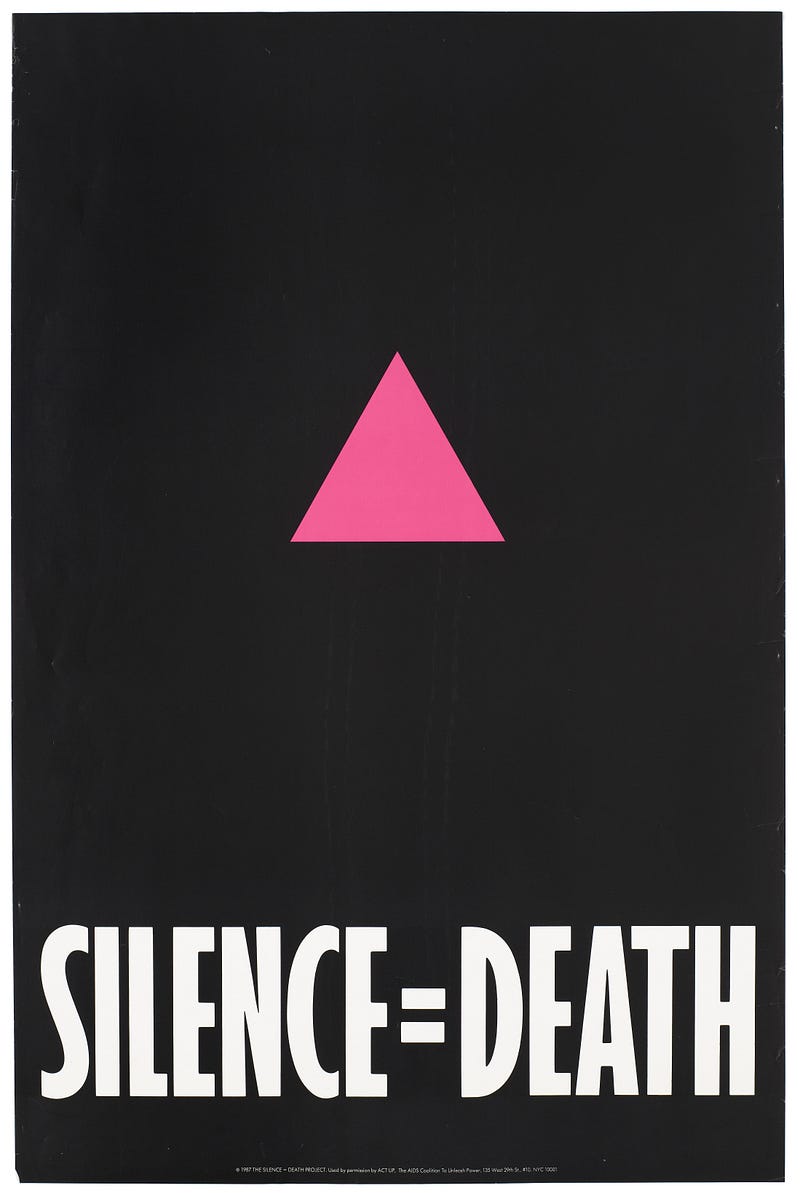
I got up the next morning, not that I remember the specific morning, dressed in an outfit with at least one “Silence = Death” logo and went to an Act Up event or to my job at an HIV/AIDS service agency. I swallowed my fear and refused to believe death was inevitable. Maybe that’s not true. Maybe I did believe AIDS would defeat us all, maybe I couldn’t see any way out of our nightmare, but I refused to act on that belief.
I chose to fight instead.
I chose to teach job skills to men and women living with HIV and AIDS. I chose to hold the hands of friends and strangers who were scared because they were dying at a ridiculously young age. I brought soup to their dark apartments and spooned it past chapped lips.
I wrote a piece of rhythmic prose once that I’ve performed a few times in public. Maybe this excerpt from It’s Your Turn can help you FEEL it:
Maybe since that time that he whispered sour into your ear that he was terrified of dying and you admitted that so were you but, hey, each of us is immortal because we each live in our own personal universe that has no beginning or end because how could we know if it did? Maybe since that time you really are friends even though that weird little chain of thought only comforted you for a second and probably didn’t help him at all even though he laughed and patted your cheek.
You go for the soup and see a bone china saucer sitting in the sink crusted with egg yolk so you wash it and taste the soup and it’s cold and you bring it to Alan and he’s coughing.
Can’t catch his breath. Choking on phlegm. He grabs your arm, panic twisting his face and he pulls you in. You pat his back and he’s so light you might break him and he’s so, so hot, which is weird because that color of cold yellow wax can’t be hot even though it’s burning you.
I chose to believe, act, protest
I chose to demand action from our government, public health authorities, and the pharmaceutical industry. I chose to BELIEVE and to act on the belief that we could fight and win.
I chose to swallow the reality everyone knew was The Truth: that HIV was too difficult a virus to treat or cure, that my friends with the virus must die, would die, soon.
I didn’t ignore reality. I spent many a weekend dancing in booty shorts with glitter in my hair, tossing condoms and safer-sex pamphlets into crowds of gay men in public parks. If I could help people stay HIV free, I had to do that.
But that wasn’t enough! Not even close.
I listened to people like Peter Staley and Anthony Fauci who insisted virology could and must catch up with HIV. I joined Act Up demanding we as a nation work for that reality, work with immediacy and optimism, with all the resources 256 million Americans could marshal.
Every time a promising treatment turned futile, my hope flickered like a dying candle. Not again! No! This one was supposed to work! Please!
I listened to the medical naysayers but refused to let them extinguish my flame. I heard the homophobes and religious haters who insisted they would have no part helping us, who screamed God was punishing us or that we deserved what we were getting.
And my candle burned on.
Then one day, when hope was at its lowest point, whispers ran wild in HIV/AIDS activist circles. “This time it’s real. It’s not a new drug, it’s a different way to use the old drugs. It’s working! People are getting up from their death beds and living again. It’s happening! It’s really happening!”
I went to work one day and a case manager, my friend who had clearly been at the end of his road — emaciated, sallow, covered with purple lesions — smiled and told me he was going to live.
He did. He put on 50 pounds in a matter of weeks, his color came back, he stopped coughing, and his skin cleared up. One day, he brought a gym bag to work and went to lift weights at the Y after we closed.
People today call that the Lazarus Effect
It wasn’t the end of HIV/AIDS, but it was the end of AIDS as an automatic death sentence. Today, people living with HIV can access treatment that lets them live a normal lifespan without fear of opportunistic infections, unable to pass the virus on through sex.
We still had plenty of work to do to make treatment accessible, but the hard, hopeless, impossible part of the fight was over. We won! In spite of naysayers, our own crippling fear, despite determined religious and political opposition, our candles blazed high.
Snatching victory from inevitable death changes your definition of the possible
Today’s anti-LGBTQ backlash has a lot of queer and progressive people feeling hopeless or nearly so. I just read a story in the New York Times about a teenager being criminally tried for having an abortion, and I’m tempted to feel despair.
Books are banned, libraries attacked, queer kids assaulted and made to feel like unwanted monsters at school. Violence is up, tolerance is down, hatred seems to burn high on every horizon.
But look, that doesn’t mean we give up; it means we fire up and fight harder, armed with the audacity of a hope that knows no limits.
That’s how I think. That’s how I exist.
I lived. My friends lived. When somebody tries to tell me progress is impossible, I answer them that if Peter Staley, Larry Kramer, Ann Northrup, and Anthony Fauci had let hope flicker out in 1990, millions would have died.
But they didn’t let hope die. I didn’t let it die. My friends and lovers didn’t let it die. We defined possible with audacity and then fought until we made it real.
That’s what hope means to me. Will you think about what it means to you while you believe and fight?
My writing is always free to readers who click my social media links, but if you’d like to browse more, click here to join Medium. Your nominal membership fee will help support my work:
To get an email whenever I publish a new story, Click Here:

This story is a response to the Prism & Pen writing prompt, “LGBTQ Hope and Joy Are Antidotes to Fear”.