Areas: Saudi Arabia & Russia Aren’t Fooling Around With OPEC+ Oil Cuts
Well the saga continues for global oil markets: Saudi Arabia and Russia have agreed to cut oil production at a rate of 1,000,000 barrels per day and 500,000 barrels per day, respectively.
The cuts were officially announced on 3 July 2023 at an OPEC+ meeting where both Saudi Ministry of Energy officals and Russian Deputy Prime Minister Alexander Novak were in attendance.
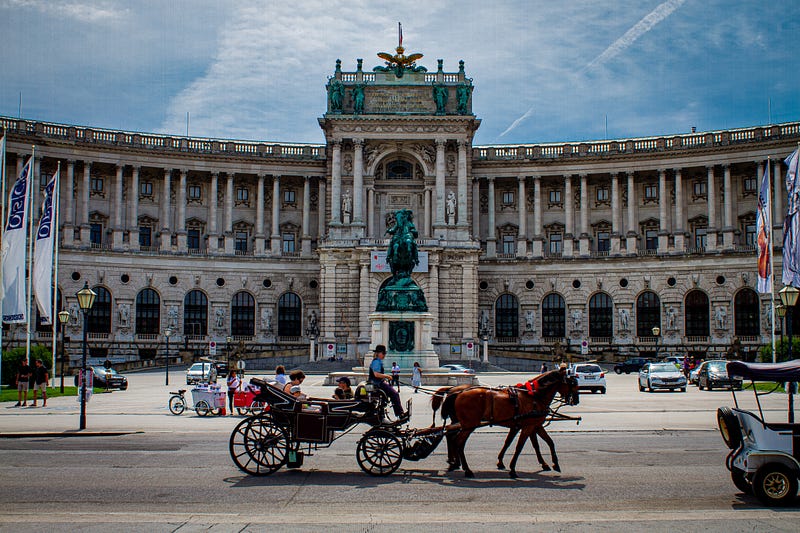
The OPEC+ meeting held at the organization’s headquarters in Vienna, Austria, might have a bigger impact than most people realize, because the demand for crude oil is still very high, which is why Saudi Energy Minister Abdulaziz bin Salman told media that this voluntary output cut was meant to “ice the cake”. AP News
In hopes that these cuts will bring stability to the crude oil market, the intentions among OPEC members do not seem as clear to me anymore. The cuts were supposed to keep oil prices volatile, but instead they have already been quite stable since the cuts began.
A writer for OilPrice.com, Simon Watkins, says that the Saudi Arabia-Russia relationship is key to understanding the dynamics as the transition from OPEC to OPEC+ is beginning to take shape, with Russia potentially playing a more leading role than Saudi Arabia over the direction of global oil markets. You can read a full analysis about these trends in his article.
I was able to find an in-depth report about this developing story written by the Center for Strategic and Intenational Studies (CSIS) — OPEC Has a Russia Problem.
CSIS is one of the most informative think-tanks on how international affairs are dictating strategy and foreign policies in Washington DC.
This particular article was written right before the oil cut announcements, on 2 July 2023, which just goes to show how much foresight is being put in to this OPEC+ dilemma. They indicated that cuts were “quite possible” citing some previous quotes from Saudi energy minister Abdualziz bin Salman about the disconnections from oil prices and market fundamentals.
Oil prices and market fundmentals might be an important factor to the world’s largest producers of oil and gas, but the future trends will have an even bigger impact on global commodities markets. That’s where attention should be going foward, as the geopolitical trends are pivoting toward the broad base of commodities as part of the radical changes in industrial policies.
In Areas & Producers, we are always wanting to put the global commodities in perspective, and for what it means to the geopolitical trends in any given regional context around the world. That’s why I’m offering this previous update from the publication about Russia’s Gazprom, as well as an overview of content about Saudi energy and mining companies Saudi Aramco and Ma’aden. It’s important to know the role of Russia and Saudi Arabia within the wider geopolitical trends of the Middle East and North Africa (MENA) region.

Producers: Gazprom Is Ready To Send Energy Supplies To EU Through Ukraine
- Gazprom is Russia’s main gas entity, thus making it one of the most significant players in the global markets.
- It was reported by Reuters on 3 June 2023 that Gazprom has sent 40.3 million cubic metres (mcm) of gas to European markets. The gas was exported via pipeline through Ukraine.
- As if foreshadowing isn’t enough to explain the shape of global commodities markets and geopolitical trends, reports are already circling about the rise in natural gas prices in European markets this summer. BNN Bloomberg
I’ve been publishing a lot of content about offshore oil and gas, but also about how LNG exports are seeking to completely change the game for global energy markets. Here’s a piece of content about Russia sanctions.
The European Union (EU) courageously announced that it was formulating a Market Correction Mechanism on 22 November 2022. Since November, the proposal to set a price cap on natural gas prices via the Title Transer Facility (TTF) gas price benchmark has been one of the hotly contested issues within the EU. The Agency for the Cooperation of Energy Regulators (ACER) is responsible for monitoring the price correction mechanism and any safeguards that would be put in place against price and market volatility.
It was finally announced on 19 December 2022 that the natural gas price cap would go into effect in Feburary 2023. Euronews said that the price cap on natural gas “is aimed at curbing energy prices as the bloc reels from a crisis exacerbated by Russia’s decision to stop supplying the EU with fossil fuels to retaliate against sanctions over its war in Ukraine.”
The price cap aims to halt prices from going above €180 per megawatt-hour during at least three consecutive trading days.
After finalizing the legislation, Jozef Sikela, the Czech minister of Industry and Trade, said: “We have succeeded in finding an important agreement that will shield citizens from skyrocketing energy prices…from risks to security of supply and financial markets stability.” The agreement was met according to the EU’s “qualified majority” rule, by which 55% voted in favor of the natural gas price cap.
Criticism has not only come from EU countries such as Hungary, but also from the American trading exchange platform Intercontinenal Exchange (ICE), which voiced its opposition to the EU’s gas price cap on the grounds that: “Our customer outreach and internal risk assessment suggest that the mere presence of a cap, significantly increases the probability of the cap being triggered.”
That’s where the safeguards come into play. According to the European Commission (EC), market regulators have the authority to suspend the price cap mechanism in the event of high-risk market volatility in energy prices and supplies.
To know more about Russia sanctions, and how they are affecting industrial policies in Europe, read the full story in Areas & Producers:
Russia Sanctions Dovetail With Industrial Policies & Energy Cooperation.
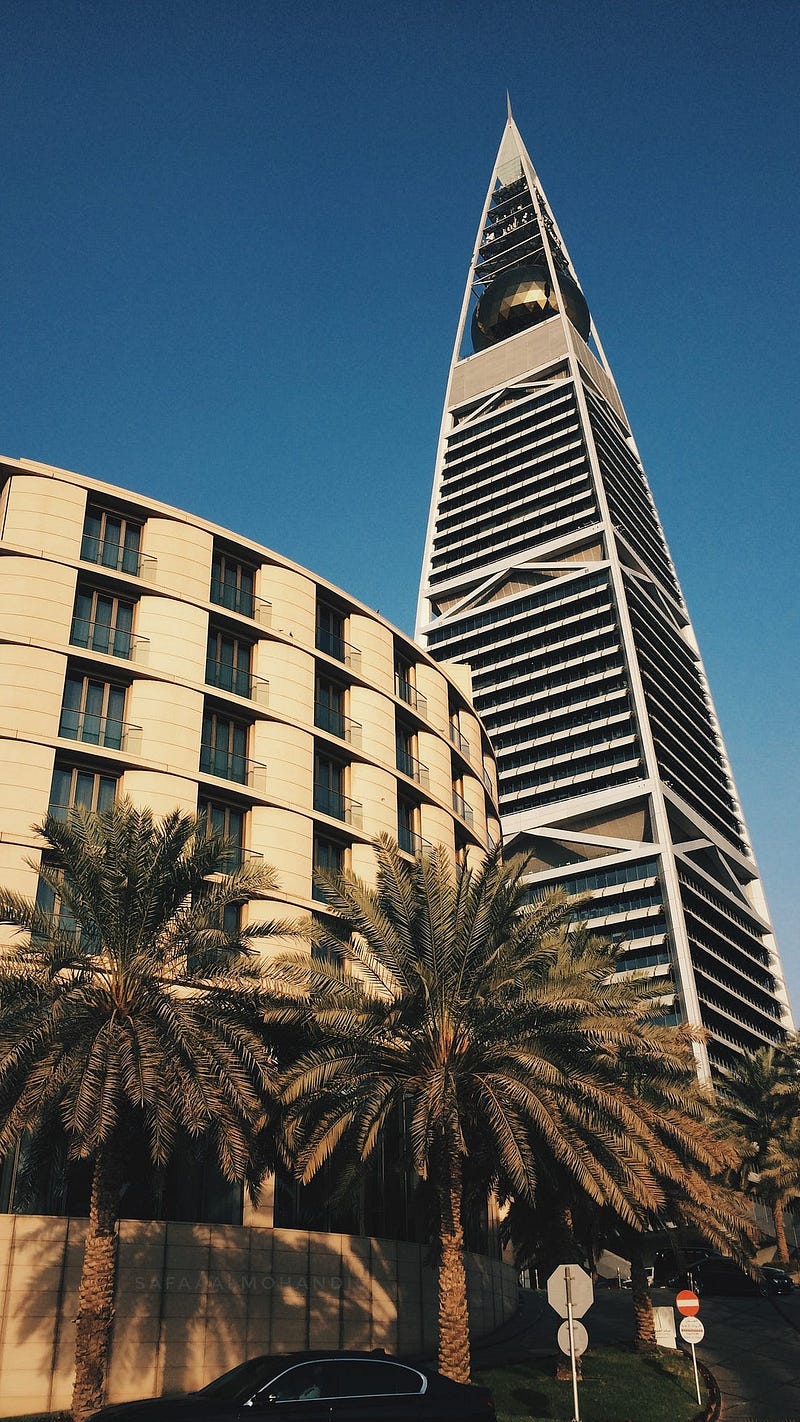
Producers Overview: Saudi Aramco & Ma’aden
It was reported by Reuters on 25 May 2023 that the Saudi oil and gas giant, Saudi Aramco, intends to invest in the development of Iraq’s Akkas gas field. It was reportedly discussed at the Saudi-Iraqi Coordination Council.
Meanwhile, on the same news day, Upstream reported that Saudi Aramco had reached an agreement with China’s Offshore Oil Engineering Company (COOEC) for an engineering, procurement, construction and installation (EPCI) contract at the Safaniyah oilfield in Kingdom of Saudi Arabia.
China, through companies like COOEC, is becoming a leading EPC or EPCI player in the global oilfield services industry. According to the news agency Oil & Gas Middle East the contract will be worth $1 billion as it is “the world’s biggest conventional offshore oil field…”
The First Arab-Chinese Summit signals a change in the thinking on Saudi Arabia’s control over oil production, and how they wish to court China as a major oil importers. Increasing military and defense ties would be a big step, though I don’t think that’s the overall concern here.
A bigger concern is how and to what extent China is going to roll out its Belt and Road Initiative (BRI), where the Middle East and North Africa (MENA) is poised to play a pivotal role in linking up supply chains and transport routes throughout the European, African and Asian continents.
This is relevant to global oil supplies in a number of ways. Let me just say that the countries with increased leverage over oil markets are more likely to use this advantage to achieve political ends. A successful roll out of the BRI in MENA would be benefical to OPEC oil supplies and exports. China would need ALOT MORE oil, and the supply chains would improve the prospects of getting more oil moved around North Africa, set to become one of the world’s next industrial and energy hubs.
It was reported by Reuters that Berkshire Hathaway has once again increased its stake in the Permian Basin oil and gas producer Occidental Petroleum (OXY).
This brings their overall investment stake in the company to 24.4%.
Warren Buffet’s company has increased shares in OXY since the company acquired Anadarko Petroleum Corporation in 2019.
This is a big story in stock market and financial news, as it revealed a much bigger focus on energy equities and an overall bullish environment for capital investments in the energy sector, especially in oil. However, it must be taken into consideration how much of an impact China and India will have on global oil markets. They are the biggest importers of Russian oil. But they are also competing for global industrial production capital and foreign direct investments (FDI) vis-a-vis one another.
That’s why the increased attention put on the United States’ oil and gas production markets are only one part of the story: it is not necessarily the driving factor for global energy markets. This is evident in the decision of OPEC+ to decrease their oil production output in spite of competition from US oil and gas production.
To know more about Saudi Arabia’s industrial push in the Middle East and North Africa (MENA) region, read an overview of content about Saudi Aramco and Ma’aden in Areas & Producers.


