
Are You Sending Your Kids to School This Year?
Distance learning can be stressful if not done right. Then again, physical classes come with a risk of exposure to the coronavirus. Should we just postpone the school year?
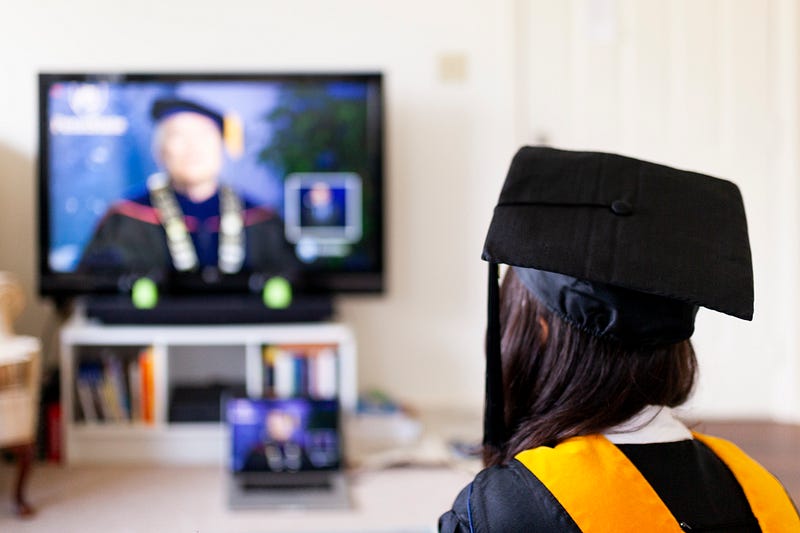
I’m part of several online dad communities. Many of the emerging discussions revolve around whether we should send our kids to school this academic year.
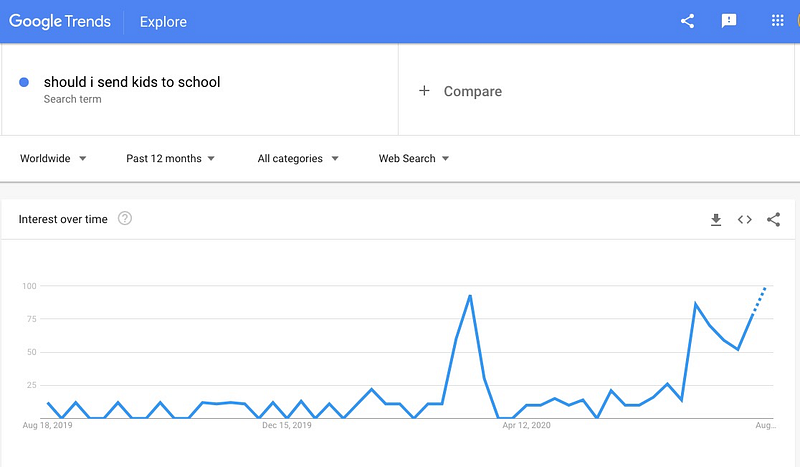
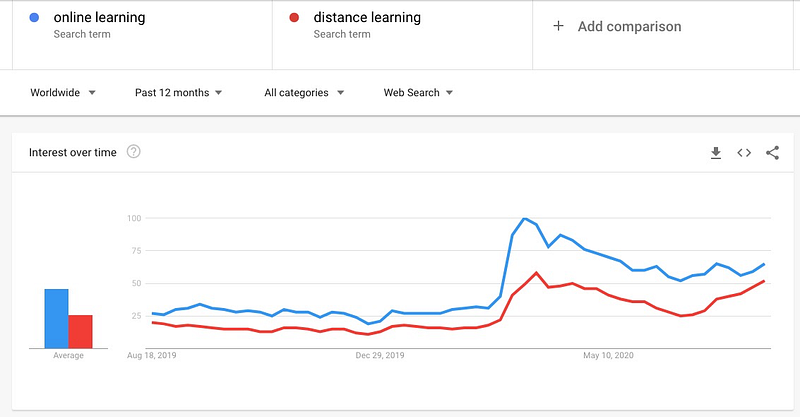
True enough, there is a trend going on about “distance learning” and “should I send kids to school,” which have peaked just around the time coronavirus lockdowns went in place and again just as the new school year is about to start.
Many private schools in my country have already started their classes, focusing on online activities. Most of these involve synchronous learning, however. This means that there are video conferencing calls through Zoom, Microsoft Teams, or other similar platforms.
The Department of Education recently announced that the opening of public school classes would be moved from August 24th to October 3rd — a development welcomed by the community.
According to the DepEd, enrolment figures for both public and private schools dropped 27.3 percent in the K-12 levels compared to 2019 figures. More than 300,000 students previously enrolled in private schools also transferred to the public school system, which the authorities attribute to cost-reduction measures by families.
Challenges in connectivity
The Philippines is notorious for having the slowest and most expensive internet connectivity in Southeast Asia, according to an Akamai State of Internet Report done this year, cited by the Philippine Daily Inquirer . The Philippine Star also reports that the Philippines ranks 63rd out of 100 countries in the 2020 Inclusive Internet Report done by the Economist Intelligence Unit and commissioned by Facebook.
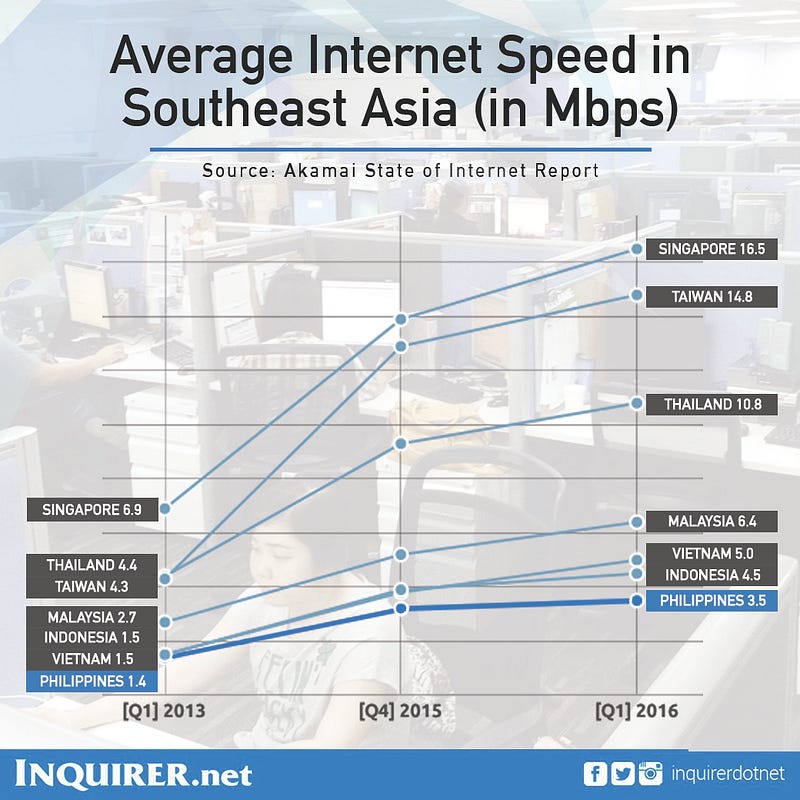
The Philippines reportedly has a 72.1 percent internet penetration rate. However, only 30 percent have a reliable fixed broadband connection, with the rest of the populace relying on slow and unreliable mobile phone connectivity. This is proving to be a challenge for both work-from-home setups, as well as distance learning.
It’s not only a challenge for students, but also for teachers. The Inquirer also ran a story about how teachers would travel or even climb mountains just to get a good signal for internet connection.
Some regional school districts are doing a mix of mailed-in modules and online learning, in order to cater to students who do not have access to internet connections and devices. And then there are the proposals to use TV and AM radio programming to reach last-mile audiences.
The infrastructure is clearly not ready to take on the additional load of synchronous distance learning.
“Zoom fatigue” will be stressful
Even for those who have reliable connections, there are still challenges in user-experience.
The new normal has necessitated the use of synchronous platforms to collaborate and communicate. But this takes a toll on productivity!
I’ve been working remotely for 15 years now, but it’s only this year when I experienced what has been dubbed “Zoom fatigue” after having daily videoconference calls.
National Geographic ran a story on how excessive use of such virtual platforms have a neurological effect. A video call “impairs these [nonverbal] ingrained abilities, and requires sustained and intense attention to words instead.”
The unprecedented explosion of their use in response to the pandemic has launched an unofficial social experiment, showing at a population scale what’s always been true: virtual interactions can be extremely hard on the brain.
On a video call the only way to show we’re paying attention is to look at the camera. But, in real life, how often do you stand within three feet of a colleague and stare at their face? Probably never. This is because having to engage in a “constant gaze” makes us uncomfortable — and tired.
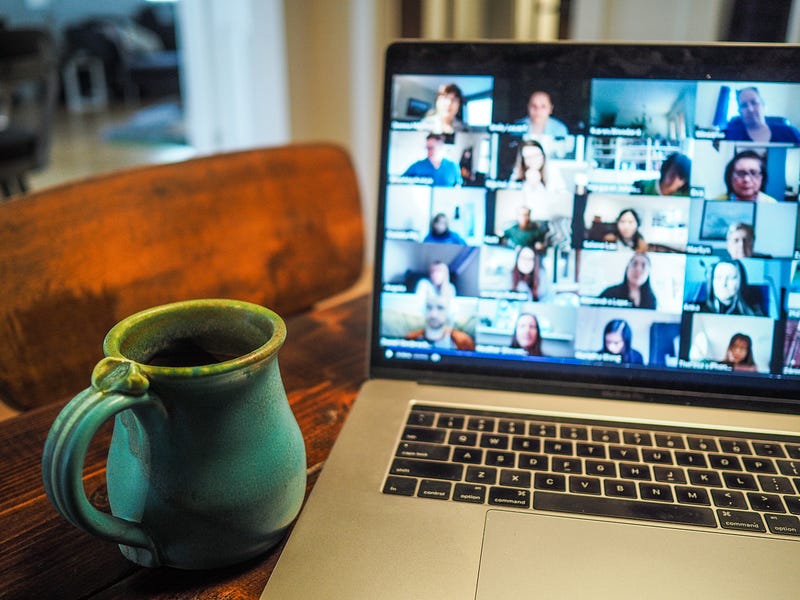
These studies are mostly done on the workplace. I can personally attest to how excessive Zoom calls can be taxing to one’s health — and that involves a professional doing calls with clients and colleagues. What more if it involves grade school or high school students attending virtual classes in real-time?
College students also fall victim to Zoom burnout. I have warned my eldest daughter, who is currently an architecture freshman, about my wariness over synchronous distance learning, when there are alternatives that might be more conducive to learning. Which brings us to the next point.
Effective distance learning goes beyond classroom-like interactions
Proponents of home-schooling cite fit and flexibility as the main advantages of focusing on the learning experience rather than a classroom setup.
A March 2020 study by the National Home Education Research Institution finds that home-schooling is seeing growth in the U.S., previously being seen as “alternative” and now bordering on “mainstream.” And while the benefits focus more on social, emotional, and psychological development, the metrics also suggest some benefits over a classroom environment.
The home-educated typically score 15 to 30 percentile points above public-school students on standardized academic achievement tests.
For higher-education, there is an emerging trend toward asynchronous and certification-based learning. For example, recruiters reportedly regard professional certifications from companies like Google as a consideration in their hiring decisions.
Even Google itself says its professional career certification program will be considered as equivalent to four-year degrees by hiring managers, which makes one ask whether a full-time university education is necessary at all.
“In our own hiring, we will now treat these new career certificates as the equivalent of a four-year degree for related roles.”
I have personally had a pleasant experience being part of certification courses on platforms like Coursera. The study experience is mostly asynchronous, meaning students can study at their own time by watching interactive video lectures, reading the required materials, and participating in online quizzes and tests. The platform also includes a forum wherein students can interact with one another. It does not have to be in real-time.
Of course, success will highly depend on one’s discipline and participation. But since it is not forced, it does not disincentivize students who are otherwise not predisposed to sitting in front of a computer screen for hours on end.
I’ve heard about schools, teachers, and professors requiring their students to wear uniforms and keeping their cameras turned on during teleconferences. I think that’s crazy!
One challenge with distance education — both for students and their parents —is that we parents will almost certainly have to be more involved in our children’s learning. There is one funny meme that’s representative of how many parents with young kids feel these days.
It translates: “Why does it feel as if I’m the one enrolled?”

True enough, not all parents have the time, patience, and experience to handle the additional responsibility of home-based education. Thus, for those with younger kids, it might feel as if you’re the one going through the curriculum!
The effectiveness of distance learning will also depend on the age and capability of the child, as well as the number of other children also learning from home.
There are also economic factors, like whether parents are able to allot some time monitoring their children’s learning progress, amid having to also work or do business. In addition, in some lower-income communities, families rely on schools to provide much-needed daily nutrition for their children.
The nuclear option
Then there is the more drastic solution of postponing school altogether until the pandemic lifts up. It’s not necessarily an easy solution.
The U.S. CDC itself cites both benefits and drawbacks to long-term school closures. NPR also provides some analysis, at least from the U.S. perspective.
If schools have to close for a while, superintendents want to be sure learning doesn’t entirely stop. But educators have a legal obligation to make sure whatever education they do offer works for every child — and that can be expensive.
Kenya has cancelled school this year, opting instead for a 2021 reopening. “The 2020 school calendar year will be considered lost due to Covid-19 restrictions,” says its education minister. China, Italy, Japan, and other countries have also decided to cancel the school year. According to Unicef, 1.6 billion children around the world will not be able to attend school this academic year.
The question here is whether learning will necessarily stop if the formal school year is postponed by one year.
Are you sending your kids to school this year?
I have decided to home-school my children this year. It’s a decision that involves financial, safety, practical, and developmental considerations.
For everyone else, the decision will also have to involve both the family and the community or school district you are part of. What are your thoughts, opinions, and options on your kids’ education while the pandemic rages on?


