
I’ve Been Cutting My Own Hair for 2 Years Now, and Here’s What I Learned
It’s not just about the cost, but also control, convenience & skill
In early 2018, I bought a US$10 set of clippers and learned to cut my own hair. At first, I was not very good. There was even one time when my hand accidentally slipped, resulting in an uneven cut on one side. I got a lot of laughs from my family and friends.
Fast forward to 2020 and the coronavirus pandemic. This year, a lot of people had been stuck at home in dire need of haircuts. Due to the lockdowns in many parts of the world, many had been unable to go to salons and barbershops for grooming.
Searches for “cut own hair” peaked in the week of April 5–11, 2020, just a month after many cities started enforcing lockdowns.
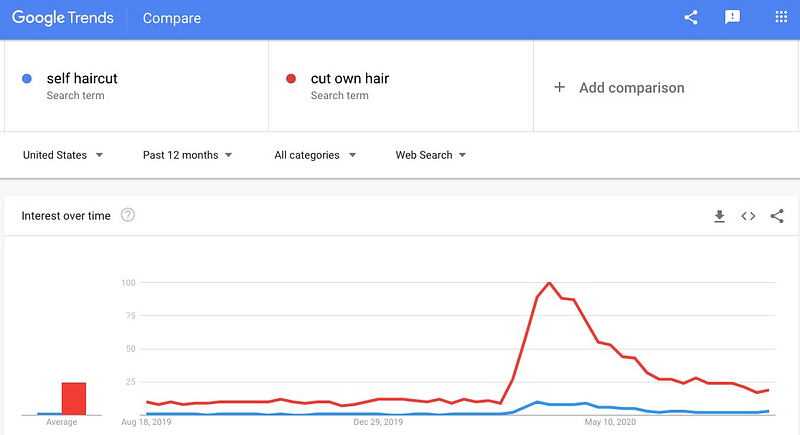
After the trend waned, interest in self-haircuts and related terms has remained at least double compared to the time prior to the pandemic. Mainstream media like WIRED and Independent even ran features on self-haircuts.
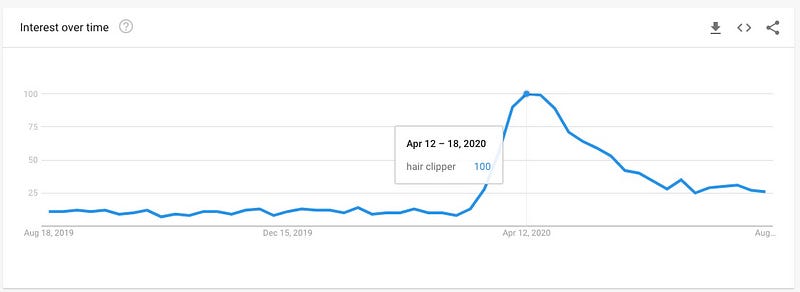
It only goes to show that the skill of cutting one’s own hair — or that of your family members’ — is gaining interest as people shelter-in-place or at least avoid crowds.
I’ve been able to improve my technique in the nearly two years since I started. I give myself a trim every week. I can even do a quick trim in 5–10 minutes, just to make sure I don’t look messy at the sides and back.
It’s not just about cost
Men’s haircuts in the Philippines average US$3 to US$5. You can even find corner barbershops that charge US$1 haircuts. Your mileage may vary, of course. But once you find a good barber and you’re able to stick with them, then you’re all set to go.
For the longest time, I had a barber who knew exactly what kind of cut I wanted. In 2016, he went to the Middle East to work, however. Barbers’ salaries aren’t exactly high locally (US$3,691 per year!), and working abroad affords him the opportunity to get at least 5x-10x more than what he earned here.
So that left me scrambling for alternatives. Sadly, no one was able to get just what I wanted with a haircut. Some cut too short. Some cut too long. Most of them didn’t get exactly the cut I preferred.
Control
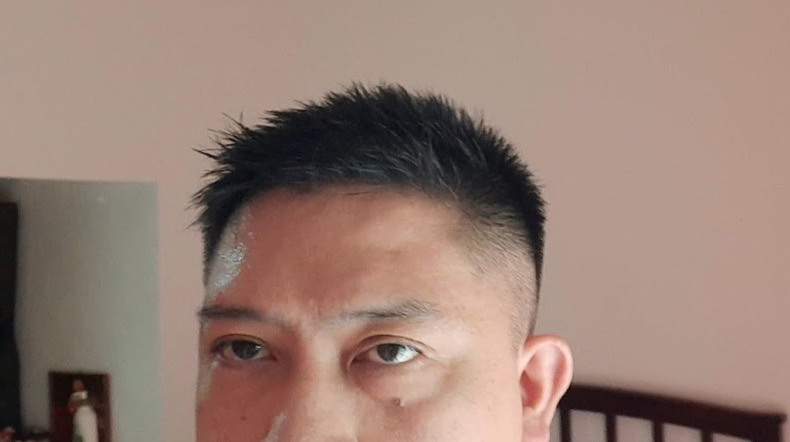
Cutting my own hair allowed me to have more control over how I wanted to look and feel. It initially took several months of trial-and-error for me to get the hang of it, but I got there.
This might not be applicable to everyone. But I’m more into practicality. I don’t want to spend a lot of time on daily grooming.
Hence, I go for a short buzz at the sides and back (I can recall my ROTC days wherein I would get what was known as a “4x5” cut). I would trim the top so that my hair would stand when dry. I don’t buzz it all, though.
This way, I just dry after I shower, then I’m all good.
Control goes beyond this, however. While I’m not paranoid, I feel vulnerable having another person holding sharp objects near my head and neck. Did you know that there have been studies about the risks of HIV transmission from sharp objects at barbershops and salons?
Convenience and safety
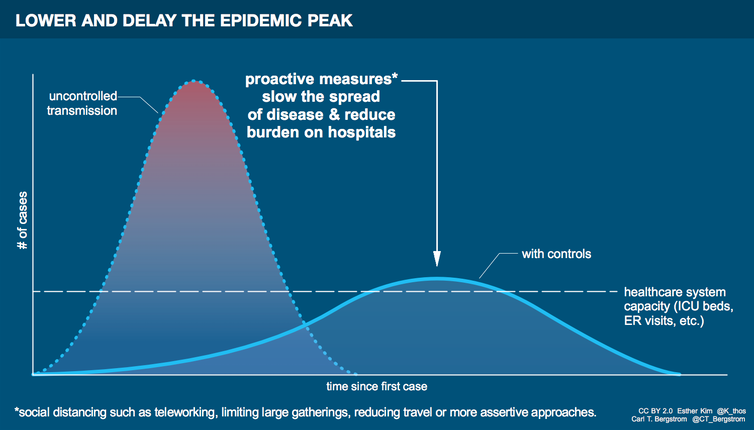
Many people today think of lockdowns as an inconvenience. It’s much more than that — it’s a bitter pill we all have to swallow, especially for small businesses that are facing the crunch due to closures.
Unfortunately, barbers, stylists, and other skilled tradespeople, are badly affected. Many have had to resort to alternative means of earning an income.
In some places, the economy is getting back on track again, but going out for non-essential activities (e.g., buying food, medicine, supplies) still comes with some risk of getting infected.
While I would be happy for barbers and stylists once their businesses reopen, I would still prefer the convenience of being able to give myself a haircut anytime I want.
Why? I’m a single father with five kids of various ages. A 2018 survey found that parents only have around 30 minutes per day of “me” time.
The last time I had a haircut at the barber’s, I brought my then two-year-old with me, and she wanted to sit on my lap! Before, whenever I wanted to get a haircut, I would have to find just the right timing to do so, which is not very easy.
Satisfaction and learning
Perhaps the biggest benefit for me is the feeling of satisfaction with learning a skill. Admittedly, one of my frustrations is that I did not get to pursue higher learning — I dropped out of my graduate economics program in 2005 being too busy with work and family.
Hence, I’ve been building on skills and knowledge . For example, I’m pursuing Psychology and Machine Learning certifications, as well as financial literacy courses. I’ve been a licensed amateur radio operator since 2015. I’ve learned to brush up on creativity by collaborating on a children’s book with my illustrator daughter.
And yes — I’ve also learned to cut my son’s and daughters’ hair. It’s not yet perfect, but at least they get to look nicer even when they can’t go to the salon or barbers during the pandemic.
It can be a shared experience
Above all these, one of the things that drove me to learn how to cut my hair was when my late wife was undergoing chemotherapy in 2018. She already expected to lose her hair, so she went for a short style at the salon.
After her first chemo session, when she noticed her hair starting to fall, she asked me to buzz it all off. This gave her an increased sense of control. She passed away in June 2019, but all of these shared experiences are something I always cherish and keep in my memory.
Should you learn to cut your own hair?
Many people have had to face this question during the pandemic. It’s either you’re on lockdown, you’re trying to avoid going out, or your stylist/barber has closed shop for the meantime.
Some friends of mine have gone for buzz cuts, which are the easiest. Folks with long hair can more easily trim using sharp scissors.
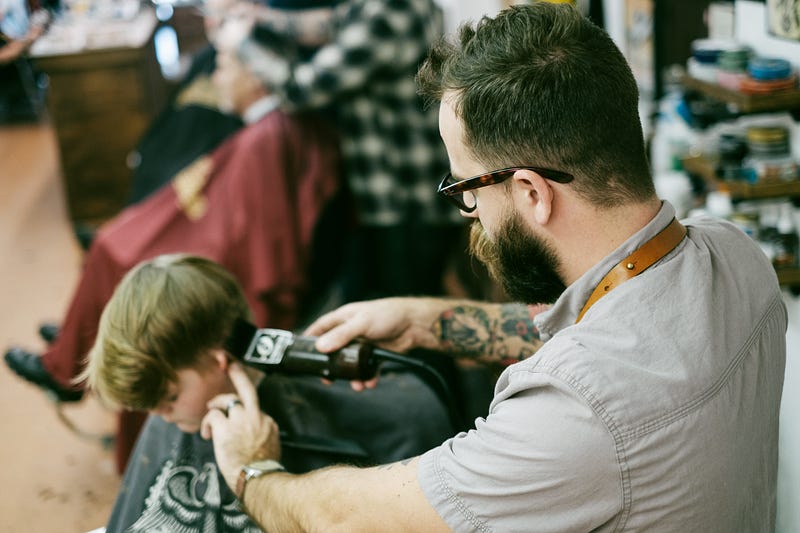
For me, it has become a necessity in self-grooming, like brushing teeth, shaving facial hair, or clipping nails. Given that COVID-19 is expected to still be around through 2021, this is certainly something that everyone should consider.
Here’s how to get started.
Check out some guides online
Don’t settle for just one guide, since people would usually teach using different techniques and equipment. You might also have to adjust or vary your technique, depending on your hair type and style preference. YouTube is a good start. You can also check out these tips shared by a professional.
I would start with the basics. It’s easier to trim than completely achieve a different style. From there, you can make improvements. At the very least, it can help reduce the discomfort of an overgrown cut!
Use good equipment
Cheap clippers and scissors can only get you so far. Higher-end equipment will come with additional accessories that will make self-haircuts easier, including shaped ear guards (which minimizes the difficulty of shaping hair near your ears), wireless capability, etc.
A good set of clippers would usually cost at least US$100 (check out Wahl or Remington — these are affiliate links, by the way).
Be sure to have enough mirrors, especially when you need to cut at the back, which can get tricky.
Find a well-lit place that’s easy to clean
For me, it’s the bathroom, since I can get showered right after I cut my hair. Yes, it gets messy.
Be prepared to make mistakes
It’s trial-and-error. But hey, you’re not going out to social events anytime soon anyway, right? What’s great about hair is that it grows back!
Good luck!


