Are You Seeking More Innovative Ideas?
Do you find yourself struggling to come up with new ideas? Are you surprised/impressed by how quickly other people can develop creative ideas? It’s not because you can’t. It’s probably because you’re trying too hard.
Danger of Slipping Into Autopilot
It’s easy to slip into autopilot mode when you are too comfortable at work. You know what you need to do and can do your work relatively well without significant problems. However, if you’re not setting stretch goals, you might find yourself doing more or less the same type of work.
Marinade For Better Results
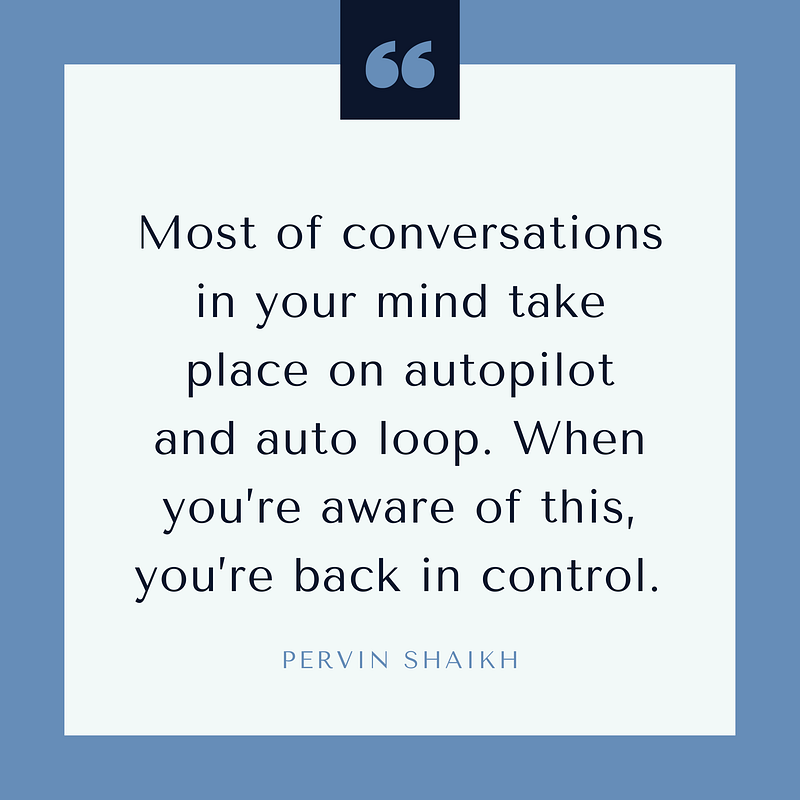
Imagine The Following. You follow a cooking recipe. After a while, it becomes your go-to-fav, and as you become confident, you begin experimenting with ingredients or the method. Over time, you’ve adapted this recipe to make it work for you.
Instead of using an air-fryer, you make a roast chicken/meat. To get full flavour, you’ve decided to marinate your meat and leave it for a few hours or overnight. I believe this method is beneficial when developing creative ideas for a problem.
Guess what? This analogy can be applied to the creative thinking process. When you’re trying to solve a problem and struggling to find a solution, leave it and do something else. Why? Your powerhouse needs time to try and find the best solution for you. How long should you leave it for? It depends on you.
Flex The Grey
Eat The Frog. What do I mean by this? Brian Tracey recommends starting your work day by tackling a task you don’t want to do or the one you’ve been putting off.
Do something you don’t like doing. Why? It helps you shift focus and train your brain to accept the situation. Consequently, you’ll start developing resilience, which will help you face the step in front of you. Instead of the avoidance approach, you’ll be ready to step forth.
Do Something Different
As an Executive Coach, I always invite my clients to do something completely different from their daily routine. Why? It helps to collect new data points, which serve them well when faced with uncertainty. Instead of fearing uncertainty, the brain will connect unrelated ideas to create something different.
My Story
Who says learning is boring? Photography was a new hobby that improved my attention to detail capabilities. I’m no photographer, and I don’t have any expensive equipment. I only have my mobile phone.
I don’t specifically set aside time for my hobby; I do this as I go about my everyday life around London. I started uploading photos about London on Instagram about four years ago. I chose London because I’m a born and bred Londoner who wants to capture London through my eyes. I did it for fun and learned as I went along.
Building Momentum
I started getting followers from around the world interested in my photos. I am faceless on the Platform, so I don’t feel the pressure of being ‘visible, ‘ which can stop many people from wanting to be online.
Initially, I didn’t have a strategy or plan and neither did I wait for the ‘perfect picture’. Even to this day, I don’t overthink in advance. I take pictures of what I want to show my global audience. Not only have I improved my development area, but I’ve had a lot of fun in the process and met some wonderful people.
I also believe writing a blog each week was the foundation for writing articles on Medium. Instead of thinking about it for ages, it was a swift decision to join and write on Medium. Now, I’m learning as I read other people’s posts; I design my infographics and experiment with new themes. It’s a win/win for me.
Stop Trying Too Hard
Jason worked very long hours in a FinTech in London. He’d been with TechBase for over two years and was doing well. He was the creative Business Director. His job was to generate new business opportunities. Lately, he was feeling like he lost his creative mojo.
Jason didn’t feel creative in meetings, especially with the co-founder, who seemed to flow with new ideas. Jason wanted to kickstart his creative juices, too. Jason decided to talk to Abi over an informal coffee, but he didn’t directly ask him how he came up with excellent creative ideas. Instead, he gained invaluable insight and asked Abi what he enjoyed doing outside work.
Abi spent each Monday afternoon doing something completely different and often non-work related. He said it was vital not to always be in work mode because it hampered his focus and motivation.
Abi found that, over time, this helped him to step back and mull over challenges without panicking or overthinking. Instead, he could think and apply creative techniques to his work, which enabled him to innovate when needed.
Jason made a mental note and decided to do something different each week. He put this activity into his diary so that he wouldn’t get tempted to procrastinate or cancel if something came up.
Jason decided to visit museums and art galleries each weekday. He’d get his weekly local entertainment guide and note events he wanted to see. At first, the change was subtle, but over time, he noticed a difference in how he engaged with others, especially Abi, in leadership meetings.
Jason found himself proposing more creative ideas and was able to talk through his ideas constructively. He continued with his weekly visits because he learned a lot, developed an understanding of the exhibitions, and had fun in the process.
Parting Comments
In today’s fast-paced world, people work longer hours and take fewer breaks. I understand why some people feel they must be constantly connected to work, even during their non-work hours. I believe once every so often is ok, but it can become problematic over time.
I believe it’s essential to take the time to rest and recharge on your non-work days. It’s crucial for your physical and mental health. Why? Resting on non-work days helps your powerhouse to rest and recover but also gives you time to explore new hobbies and interests or engage in creative pursuits. This can help you approach your work with fresh perspectives and ideas.
Thank you for your attention.
Follow me for more valuable tips.
Pervin
linktr.ee/AimHighLtd


