Are You Really You?

*Names have been changed.
A few weeks ago, I was catching up with my friend Sara* over drinks at our local skate park. She had just gotten caught up on a group chat we were in, and it had gotten a little heavy. My own contribution to it had been an honest response to the question, "How are you all doing"?
I expressed that I had been struggling with some things recently. The TLDR version is that my 40th birthday was coming up very soon, and it's caused me to reflect on what little I've done with my life. I've been left to look at all the goals and to-do lists that remain unmet and unaccomplished, and I'm filled with nothing but a sense of disappointment and dread.
Combine that with this last year of coping with the death of loved ones, my husband and I both losing our jobs, readjusting to the cross-country move that resulted from it, and all the grief that comes with these types of things, and I found myself very close to the edge of what many refer to as an "existential crisis."
I've been having trouble finding a true sense of purpose and meaning for ::: gestures widely::: all of this. All I seem capable of at the moment (when I'm not working) is either napping, crying, or a little bit of both. Long story short, I wasn't feeling great, and I wasn't going to lie about it. I hit send on my thought dump and tucked it away back into my pocket.

A couple of days after that, I was invited to head over to the skate park after work. During the summer, my (new) town uses the park for a monthly festival with vendors, food trucks, and live music. It was everything my depressed, introverted self wanted to avoid, like the Covid Pandemic.
However, I also knew that avoidance was probably not the healthiest thing for me either. I remembered what a therapist had told me years ago about the importance of just being around people. I resisted my urge to hibernate at home in my blanket cave with my cat and trash TV. Instead, as an act of self-care, I pushed myself and went to the park where my friends were.
So we were catching up, having a teary heart-to-heart, relating to each other, and expressing our frustrations, regrets, fears, and hopes for whatever our futures might be, and I immediately started to feel lighter. At one point, Sara leaned in a little and said, "I had no idea this was going on, why didn't you say something sooner?"
Without hesitation, I replied, "Because I didn't want to be a downer."

No sooner were those words out of my mouth, and I was instantly transported back in time to another conversation- significantly less pleasant- with someone I no longer know or speak to. It's an interaction that I've been trying to scrub from my memories for a while.
Among the many cruel comments that were dumped on me in that past moment, "… you're such a downer to be around…" was one that seemed to have embedded itself a little more deeply into my core. Here I was, over a year and many States away from when and where that conversation had taken place, identifying with a trait that someone else assigned to me, believing it true simply because they had said so.
Now, back on the park bench, halfway through a Twisted Tea, I started to think back on how many times since that conversation, I had shrunk myself around others and kept things to myself lest anyone else judge me the way this person had. But then Sara- my new friend, in this new place, in this new life said to me what that other person wasn't capable of; "It's ok, I don't ever want you to keep these things to yourself. You should always be able to talk about what's on your mind."
As she said this, I felt something shift in me. It was as if that "downer" label had loosened, and I could flick it off because it was never mine, to begin with. I realized that those comments were more of a projection from the person who had said them and that they had been using me as their broken mirror.
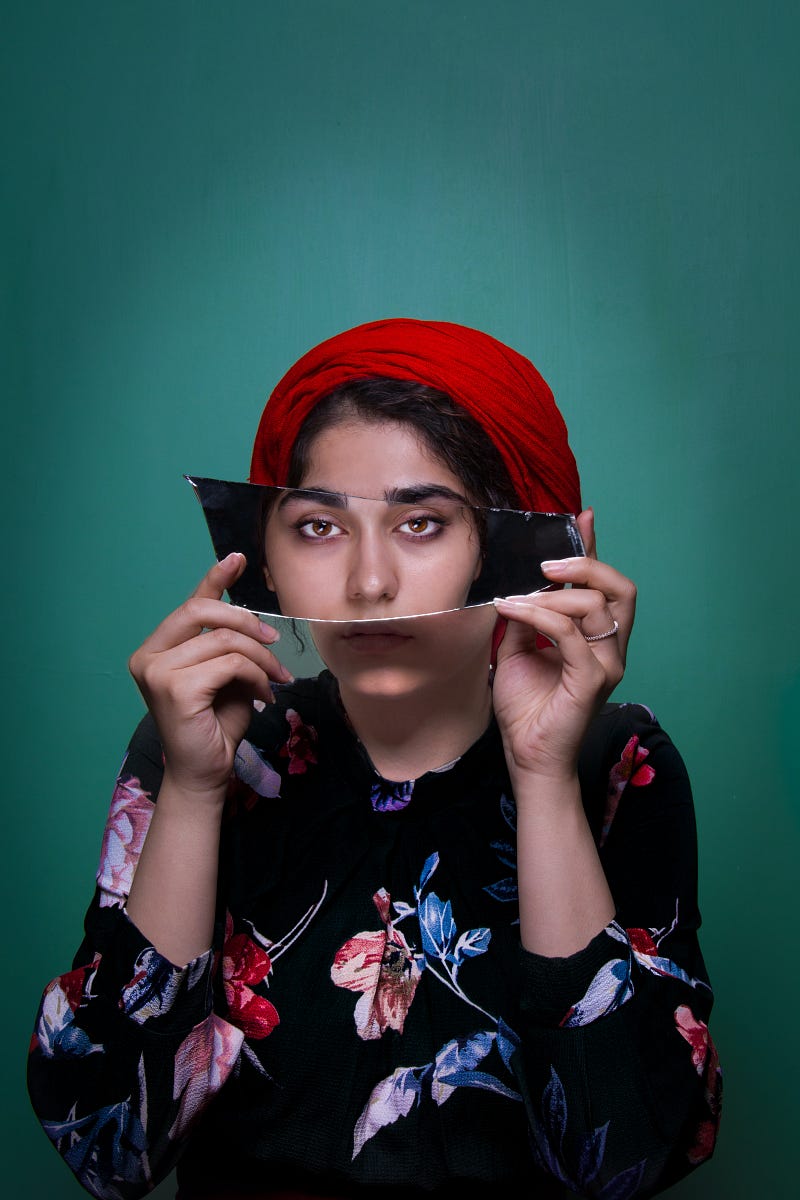
In her memoir The Stories We Tell, Joanna Gaines touches on this very thing:
…What pieces of your story are only there because someone else wrote them into it?…How much of who you now see when you look in the mirror is actually made of notions from other people? Their reckless words now written into your own reflection?
The truth is, yes, I have my "flaws" (like every other human on the planet), but I'm not a downer. So why was I identifying with that? Why had I let this other person convince me that they somehow knew me better than I knew myself?
This isn't the first time this has happened, either. I initially became aware of my misidentification problem a few years ago while on the phone with my friend Clark*. I don't remember what prompted me to say what I did, but I made a casual, self-deprecating comment about being a bitch.
"Do you really think you're a bitch, or is that your mother talking?" Clark asked.
The question stunned me, and I had to sit down once he pointed it out. This wasn't something I had ever stopped to question, and the notion that I was simply repeating the story that my mother had told me about myself left me completely gobsmacked.
Since then, I have made a conscious effort to be more aware of what I'm identifying with and make sure that the truth I hold toward myself isn't actually a lie written by someone else. It's probably why I was able to recognize the personal mislabeling while I was at the park. Further on in her book, Gaines stresses the importance of doing this very thing:
Identifying these, whether they’re assumed, unquestioned, or outright lies, is the first step in redeeming them…maybe there’s a chance that at some point along the way, you bumped up against one of those long held beliefs and you wondered, if even for a second, But does it really make sense? Might you live more freely without it? …While I’m an advocate for owning the whole story of your life…[not] every chapter is worthy of carrying forward- not if it’s holding you back. Not if it’s the reason you won’t ever hold empathy and understanding in its place, or ever allow the pieces of your brokenness to be stitched back together in a way that brings healing…
I will be 40 by the end of July, and I'll have 40 years' worth of stories and labels to sort through. Some of these (even the not-so-comfortable ones) I will keep, but I have a feeling that once I discern the truths from the lies and what their origins are, I will have made a lot more room for a story that's fully mine.
What about you?