
Are You Fed Up with People Blaming the Victim?
How our language furthers their abuse.
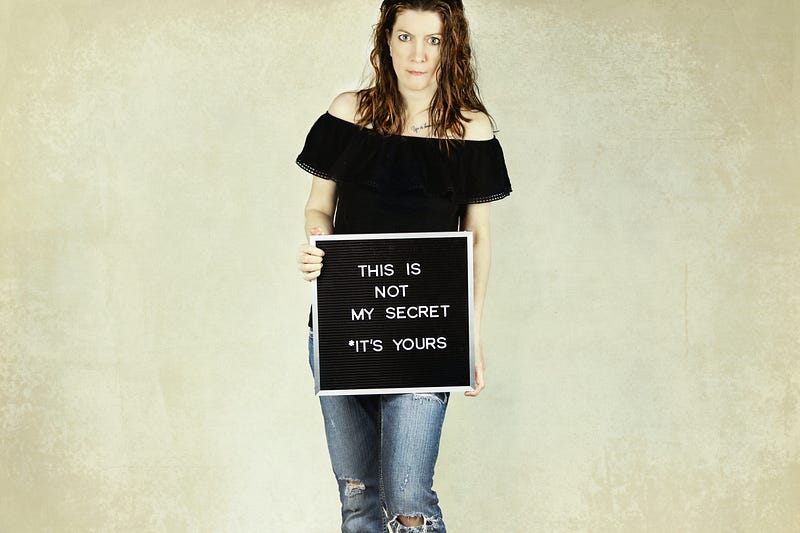
The power of words is vast. They convey meaning both consciously and subconsciously. Yet so often, we use phrases or words out of habit without considering their meaning.
Through my work with narcissist victims, my eyes have been opened to the subtleties of language.
Subtle objectification
A narcissist victim has been objectified by the narcissist. They were truly seen as an object, not a person. That alone is devastating.
They are often objectified again when they study and learn about narcissism. Too often there are references to old supply, new supply, primary supply, secondary supply, etc.
They are people, or in this context, sources of supply. To the narcissist they are an object. Their sources of education shouldn’t make them an object, too.
That which cannot be named
So often, we are afraid to even reference the abuse or the abuser. Our language tends to neglect them altogether.
The legal system only uses the word abuse if someone has been tried and convicted of abuse, and even then, only of physical abuse. They don’t consider emotional or psychological torture to be abuse.
If I mention having been abused, first the person looks at me like I have three heads. Then, they awkwardly end the conversation as quickly as possible.
Why can’t it be a matter-of-fact statement?
- I was psychologically tortured through gaslighting and sabotage.
- Flying monkeys were manipulated to be complicit in my abuse.
- My kids were physically abused.
At this point, there is no energetic charge to these statements. They are simply facts that are sometimes relevant details in a story. Yet, stating them is somehow made the equivalent of dropping 50 F-bombs in church.
It’s almost like the word “abuse” has become the word cancer, whispered uncomfortably in the 1970’s.
Why does the word carry more negative charge than any other part of our life story? We’ve lost loved ones, failed miserably, been dumped, and even been injured in weird, freak accidents.
When we make the victim feel shame for revealing their story, for sharing their abuse, we further abuse them.
Likewise, the word victim also carries a negative charge. It has a similar connotation to weakling, pansy, baby, or snowflake. It also implies the person should have known better or somehow deserved it. Why?
For this reason, some who have been victimized shy away from the word victim. I completely understand not wanting to be a perpetual victim, choosing empowerment instead, and yet it’s part of our history.
And, it’s again a matter-of-fact statement.
- He was a victim of a robbery.
- She was a victim of a hit-and-run.
- They were victims of assault.
By stigmatizing the use of the words abuse and victim, we project shame where there should be none. We blame the victim. We contribute to their abuse.
Emphasis on the wrong syllable
Our language also puts emphasis on the wrong person. It emphasizes the victim, rather than holding the responsible party accountable.
Consider the following headlines.
- A woman was raped in the park.
- A man raped a woman in the park.
The first is only about the victim. The second holds the abuser accountable.
- A man was the victim of a carjacking at the mall.
- A group of men carjacked a man at the mall.
Almost always, our language is about the victim — as if this woman was just walking in the park and did something to get herself raped. It makes no mention of the person who committed the crime, the person who is responsible.
Adding insult to injury
As a victim of narcissistic abuse, I’ve heard it all.
- Why did you let it happen?
- How could you not know?
- There must have been a characteristic that made you a good target. I’d never fall for that.
- Well, you did tolerate the lying.
- Why didn’t you just do the grocery shopping then?
- So he loses his cool. No one is perfect.
- It doesn’t sound like that big a deal.
- Surely you don’t believe he hid your keys on purpose. That’s crazy.
Why do all of these statements blame the victim and, when possible, give the responsible party a pass. Why not call out the lying, the over-spending, stomping around like an ogre, gaslighting, the deception? Those were the harmful actions.
Part of my healing involved letting go of many from my past. As I told a former close friend, you’re either anti-abuse or you’re pro-abuse. There is no neutral.
How do we flip the script and stop blaming the victim? How do we as a society become anti-abuse?
Disclaimer: This answer is for informational and educational purposes only and does not constitute medical or legal advice. It’s a recount of how I’ve been able to help myself and others heal from narcissistic abuse and how it may be helpful to you.
Dr Melissa Kalt, MD is a trauma and covert narcissistic abuse expert who helps high-impact women break free from the longstanding after effects of narcissistic abuse. Download her free risk-assessment guide, 3 Hidden Financial Risks Every High Income Woman MUST Avoid While Coparenting with a Covert Narcissist and find information on working with her on her website.
Recommended for you: How Do You Teach a Narcissist to Treat You Like a Human? and Why Do You, the Victim, Apologize to the Narcissist?
Are you new to Medium and want to keep reading? You can subscribe here for as little as $5 a month for unlimited access.


