
Are Alpha and Beta Males Real?
Do you consider yourself an Alpha?

James Bond is self-confident, is not afraid of anything or anyone, is well-trained, and is a heartthrob. You could call him the prototype of the alpha male. This term has become very widespread in recent years, especially on the Internet. The alpha is the ideal of the Red Pill movement. The counterpart is the rather insecure, not so dominant, and attractive beta.
These terms come from the animal kingdom. But can they be applied to humans at all?
To answer this question, we must first look at the definition of an alpha male in the animal kingdom.
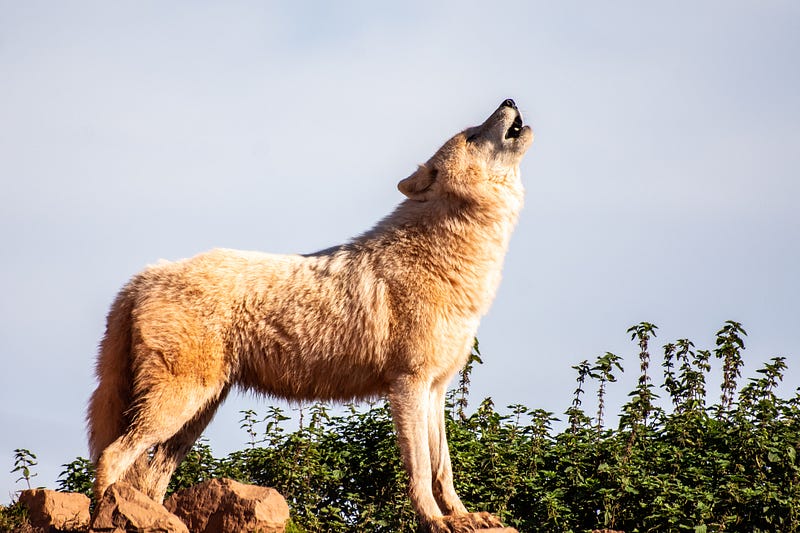
Alpha males are usually the strongest, most experienced, and most active animals in the group. They are also often the oldest and the only males in their group to produce offspring. In domestic cattle, for example, a strong bull is the alpha animal, the leading bull; in gorillas, the so-called silverback.
In domestic animals, if the males are kept separate, a strong female takes this role in the herd.
The term alpha animal is derived from alpha, the first letter in the Greek alphabet: Thus, alpha animals are the “first” (read: highest in rank) animals in their group. Accordingly, the animals immediately following them in rank are called beta males or beta females, and those in last place in the hierarchy are called omega animals. — Wikipedia
The Arguments Against Alpha Males In Humans
The first thought that came to my mind when I thought about my opinion on alpha males was that, unlike animals, humans do not live in a fixed social hierarchy. Depending on the situation, we are either dominant or submissive.
A great example of this is a friend of mine. He plays handball, a very popular ball sport in many parts of Europe.
He is the captain of his team and plays in the central position. His task is to control the game and call the next plays. So you could say that he is the alpha of his team on the field. As soon as the game is over, however, that changes. He is rather a quiet and reserved person. When his team goes out to celebrate after a win, it’s others who take charge. In this situation, you could call him a beta.
I think it’s like that for all of us. There are situations in which we have alpha tendencies and situations in which we have beta tendencies.
It’s safe to say that we can’t divide men into alpha and beta according to the animal world’s definition. To do that and assume that all alphas and all betas behave the same way makes no sense in my opinion.

But…
You can also look at this issue from the other side. A confident, athletic and handsome man will always be a confident, athletic and handsome man, no matter what situation he is in. Likewise, an insecure, socially awkward, and unathletic man will also remain that way in pretty much every situation.
So if we combine the two realizations:
- We behave differently in different social situations.
- But we still have certain characteristics in every situation, like our overall confidence.
… the following assessment makes sense to me:
Instead of putting men into 2 boxes: alpha and beta, perhaps we should see this more like a spectrum. Some men have more “alpha” tendencies, which means they tend to show more strength and dominance than others.
There are some characteristics that put men further on the alpha side of the spectrum. These are for example:
- Being a leader.
- Thinking for oneself.
- Showing confidence, for example by making eye contact.
- An athletic body with broad shoulders.
- A deep voice.
- Being tall.
- …
Summary
The classic definition of an alpha male probably does not apply to humans, as we don’t have clear, universal social hierarchies. Nevertheless, we cannot deny that some men, for example, are clearly more self-confident than others. So if you interpret the definition a little differently, you can find characteristics that can be seen as alpha tendencies.
I personally find it more appropriate not to distinguish between two separate groups. Instead, it’s more like there is a spectrum. No one is completely alpha or completely beta, but somewhere in between. One is more on one side, the other more on the other.
Thanks for reading!
Wait a second. You should get my articles in your inbox. Subscribe here. Maybe you also want to start writing on Medium yourself and make money. I made $2300 in my second month! You only need a membership for $5 a month. If you sign up with my link, you support me with a part of your fee without additional costs.
I think you will also like these articles:


