avatarDark Energy Articles

Free AI web copilot to create summaries, insights and extended knowledge, download it at here

2136

Abstract

uote><p id="fbf2">The researchers also point out that the symbols visible in the scan may not represent Roman numerals at all. However, the true meaning is still unclear.</p><h1 id="1fc1">Chemical analysis also revealed the presence of copper and gypsum</h1><p id="014c">The researchers also discovered traces of copper on the stone. The researchers suggest that the Scottish artifact was at some point in its history in a completely different, unidentified location. The researchers also say that it is very possible that <b>it served a completely different function at the time.</b></p><blockquote id="360a"><p>“The discolorations indicate that there was a brass object on the stone for a long time,” they — claim the authors of the discovery.</p></blockquote><p id="8c7d">The analysis also revealed the presence of gypsum on the Stone of Scone. Researchers believe it is possible that someone created a plaster cast of the sandstone in the past. The researchers admit that this is an unexpected discovery, as there are no records or evidence to indicate the creation of the cast.</p><figure id="b01d"><img src="https://cdn-images-1.readmedium.com/v2/resize:fit:800/1*TZUvkBmJGPgnSZWSCNFXLA.jpeg"><figcaption>The Stone of Scone Replica — [Photo: Scone Palace; replica of the Stone of Scone by Michael Garlick, <a href="https://creativecommons.org/licenses/by-sa/2.0">CC BY-SA 2.0</a>, via <a href="https://commons.wikimedia.org/wiki/File:Scone_Palace,_replica_of_the_Stone_of_Scone_-_geograph.org.uk_-_4286393.jpg">Wikimedia Commons</a>]</figcaption></figure><h1 id="960d">A symbol of Scottish independence</h1><p id="e848">For the English, the stone from Scone is the coronation stone of the kings of Great Britain, one of the artifacts involved in the ceremony to anoint the new heir to the throne. In 1296 it was transported from Scotland to England. Since then, for Scots it has become a symbol of their country’s struggle for independence and an almost sacred object.</p><p id="3320">So much so that in 1950 four friends from Scotland came to London’s Westminster to steal the “Stone of Destiny” and return it to its rightful owne

Options

rs. The block of red sandstone, weighing 152 kilograms, was attached to the floor under the throne in St. Edward’s Chapel. The intrepid thieves carried the huge boulder out of the building, packed it into a van, fled the police and transported the stone to their country. The perpetrators were not punished. <b><i>“How can you steal something that belongs to you?”</i></b> — Ian Hamilton said at the time.</p><p id="b5eb">The stone was kept at Scotland’s Arbroath Abbey for many months. Soon, however, the English forced the Scots to surrender the artifact, explaining it by the fact of Elizabeth II’s coronation. Experts admit that this event greatly awakened the nationalist-separatist sentiments of the Scots. In 1996, the stone was officially returned to the Scots and went to Edinburgh Castle.</p><p id="7821">The artifact is now only on loan to the English for the coronation ceremony of the new King of Great Britain. As early as May 6 of this year, it will once again be under the throne in Westminster when Charles III is announced as the new ruler of the United Kingdom.</p><div id="1b09" class="link-block"> <a href="https://readmedium.com/bronze-bull-a-terrible-torture-that-was-invented-in-antiquity-who-was-killed-in-this-way-95152fd77000"> <div> <div> <h2>Bronze bull — a terrible torture that was invented in antiquity. Who was killed in this way?</h2> <div><h3>The bronze bull was one of the most horrible tortures invented in antiquity. This method of execution involved locking…</h3></div> <div><p>medium.com</p></div> </div> <div> <div style="background-image: url(https://miro.readmedium.com/v2/resize:fit:320/1*hLJdFJSEvXCmfbEUU5i7-A.jpeg)"></div> </div> </div> </a> </div><p id="4417"><b>Cool that you made it to the end of this article. I will be very pleased if you appreciate the effort of creating it and leave some claps here, or maybe even start following me. It would be nice if you also left a tip! Thank you!</b></p></article></body>

Archaeologists have discovered hidden symbols on the Stone of Destiny. It is a British coronation artifact

The latest analysis of the Stone of Scone, also known as the Stone of Destiny, has revealed that there are previously unknown symbols on it. Researchers hope the discovery could shed new light on the history of Britain and Scotland in particular.
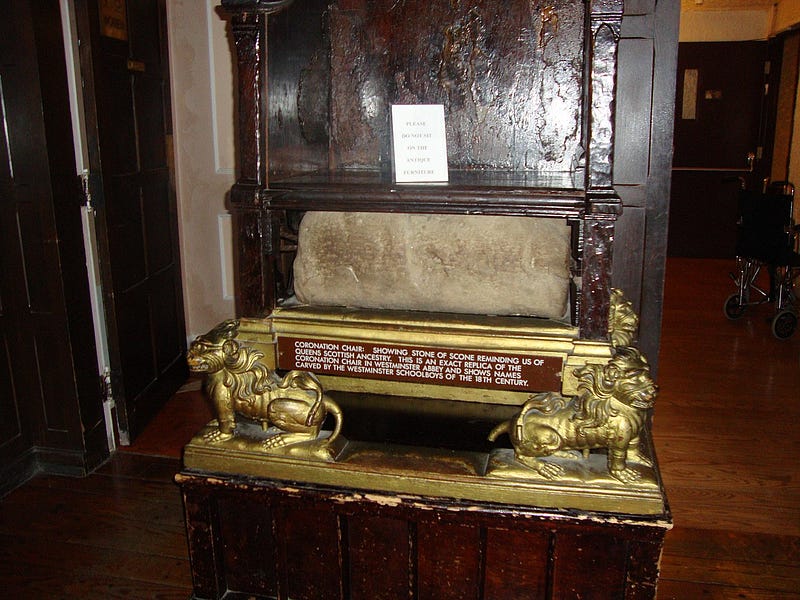
The Stone of Scone — [Photo: Rlevse, CC BY-SA 3.0, via Wikimedia Commons]

The Stone of Scone, also known as the “speaking”, “prophetic” or “destiny” stone, is an oblong block of sandstone found under the throne in Westminster during the coronation of the kings of Great Britain. Its history is unclear. It is known to have originated in Scotland and was sat on by the country’s first kings. One hypothesis indicates that Fergus Mór mac Eirc, who ruled Celtic Scotland in the 5th century AD, brought the stone from Ireland. It soon became a symbol of Scottish statehood and independence.

Scientists have discovered mysterious symbols on the Stone of Destiny

The latest analysis has revealed that there are previously unknown symbols and “anomalies” on the artifact. The research was carried out by scientists from History Environment Scotland, who conducted, among other things, laser scanning. They discovered that in one place they found previously unnoticed Roman numerals. They are three letters “X”, as well as one letter “V”.

“We were not aware of the existence of these characters. We don’t know why they were carved, what they mean, or who is responsible. We hope that future research will help solve this mystery,” Ewan Hyslop, a staff member at Historic Environment Scotland who led the latest research, tells Live Science.

The researchers also point out that the symbols visible in the scan may not represent Roman numerals at all. However, the true meaning is still unclear.

Chemical analysis also revealed the presence of copper and gypsum

The researchers also discovered traces of copper on the stone. The researchers suggest that the Scottish artifact was at some point in its history in a completely different, unidentified location. The researchers also say that it is very possible that it served a completely different function at the time.

“The discolorations indicate that there was a brass object on the stone for a long time,” they — claim the authors of the discovery.

The analysis also revealed the presence of gypsum on the Stone of Scone. Researchers believe it is possible that someone created a plaster cast of the sandstone in the past. The researchers admit that this is an unexpected discovery, as there are no records or evidence to indicate the creation of the cast.
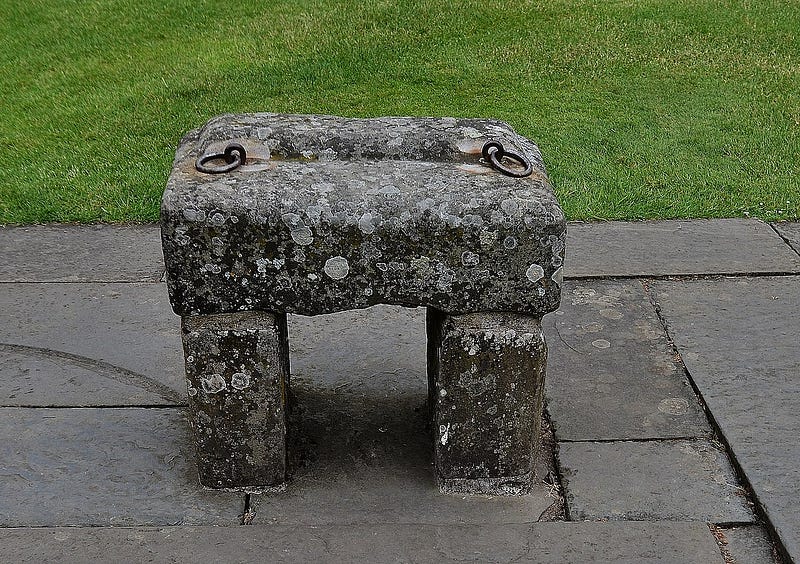
The Stone of Scone Replica — [Photo: Scone Palace; replica of the Stone of Scone by Michael Garlick, CC BY-SA 2.0, via Wikimedia Commons]

A symbol of Scottish independence

For the English, the stone from Scone is the coronation stone of the kings of Great Britain, one of the artifacts involved in the ceremony to anoint the new heir to the throne. In 1296 it was transported from Scotland to England. Since then, for Scots it has become a symbol of their country’s struggle for independence and an almost sacred object.

So much so that in 1950 four friends from Scotland came to London’s Westminster to steal the “Stone of Destiny” and return it to its rightful owners. The block of red sandstone, weighing 152 kilograms, was attached to the floor under the throne in St. Edward’s Chapel. The intrepid thieves carried the huge boulder out of the building, packed it into a van, fled the police and transported the stone to their country. The perpetrators were not punished. “How can you steal something that belongs to you?” — Ian Hamilton said at the time.

The stone was kept at Scotland’s Arbroath Abbey for many months. Soon, however, the English forced the Scots to surrender the artifact, explaining it by the fact of Elizabeth II’s coronation. Experts admit that this event greatly awakened the nationalist-separatist sentiments of the Scots. In 1996, the stone was officially returned to the Scots and went to Edinburgh Castle.

The artifact is now only on loan to the English for the coronation ceremony of the new King of Great Britain. As early as May 6 of this year, it will once again be under the throne in Westminster when Charles III is announced as the new ruler of the United Kingdom.

Cool that you made it to the end of this article. I will be very pleased if you appreciate the effort of creating it and leave some claps here, or maybe even start following me. It would be nice if you also left a tip! Thank you!

Britain
History
Science
Culture
Life Lessons
Recommended from ReadMedium