
Arabs in Rome ransacked St. Peter’s Basilica. The Islamic army easily defeated the Christian troops
Hordes of Islamic warriors invaded St. Peter’s Basilica, desecrating and looting the temple. It was August 27, 846. The Arabs in Rome were at the heart of Western Christianity.
Muslims enjoyed stunning triumphs in the Middle Ages. In the ninth century, they ravaged Italian lands more and more boldly, until they finally reached the Eternal City itself. A judgmental day had come for Italy.
The expansion of the Arabs in the eighth century
Having mastered northern Africa in the 7th century, the Arabs stood on the shores of the Mediterranean Sea, the barrier separating them from Europe. However, they did not intend to stop further conquests. According to the teachings of the Prophet Muhammad, they were to wage a holy war until the entire world came under the rule of the one true religion — Islam.
In 711, they forced their way through the Strait of Gibraltar, after which they captured all of Spain. They tried to push further north, but after two decades they were stopped by the Franks and Muslim expansion stopped at the gates of the Pyrenees.
Arab forces seized Sicily
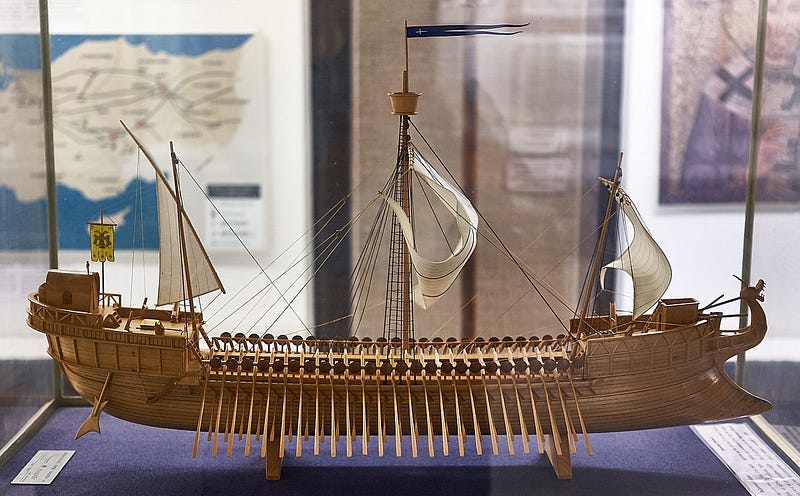
From northern Africa, the coast of Italy was also close, and they too became targets of attack. In sailing the Mediterranean, the Arabs used ships modeled on Byzantine dromedaries, with a crew of up to 300 men (sailors, rowers, soldiers). They also used smaller monorails, with a crew of about 70–80 men, in high-speed loot raids. The Islamic conquerors initially seized Byzantine ships in North African ports. Later, in turn, they ordered local boat builders to make copies of them for their fleet.
Probably as early as 667, the followers of Allah made their first invasion of Sicily, which became a prelude to regular raids on Italian coasts. The conquerors were particularly keen on capturing Mediterranean islands such as Sicily, Crete and the Balearic Islands. In the ports there, they could establish forward bases to attack territories and cities further north.
Conquering the islands was not easy. The army of the North African Aglabid dynasty captured Palermo in Sicily in 831 after a hard four-year battle, aided by Muslim reinforcements from Spain. This by no means meant control of the entire island; fighting dragged on for several more decades. However, control of the Palermo region was crucial.
Arab fleets from Africa could now stop at the Sicilian port, replenish their crews there, make repairs and take provisions, before heading for the Italian “boot.” In 838. “sons of Satan” — as they were called in Europe — sacked Brindisi, two years later — Bari. However, these towns lay quite far south of Rome, and the Eternal City was not too concerned about news of the attacks.
Rome ignored warnings of an invasion
It is not certain where the Arab expedition to Rome set out from in 846. The invasion fleet sailed either directly from Palermo or Tunisia, only hooking up with a Sicilian port along the way. It is likely that the crew of some ship sailing to Corsica realized that the Arabs were up to something, and informed the Corsican Count Adelvert.
This one immediately sent a messenger to Rome with a warning. The letter arrived in mid-August, but neither Pope Sergius II nor the notables of the Church State showed any special concern. Similar false alarms occurred frequently and the city was used to them. So they mocked the warnings:
“Oho, the Saracens are sailing on Rome again. And they will land again in some hole far to the south!”.
However, during the deliberations of the assembly of notables, a proposal was made to send a call to vassals and allies to gather under arms, just in case. This was done, sending out messengers. In the provinces, however, faith in the invasion proved even less than in Rome, and few moved from home.
Islamic troops captured Ostia without a fight
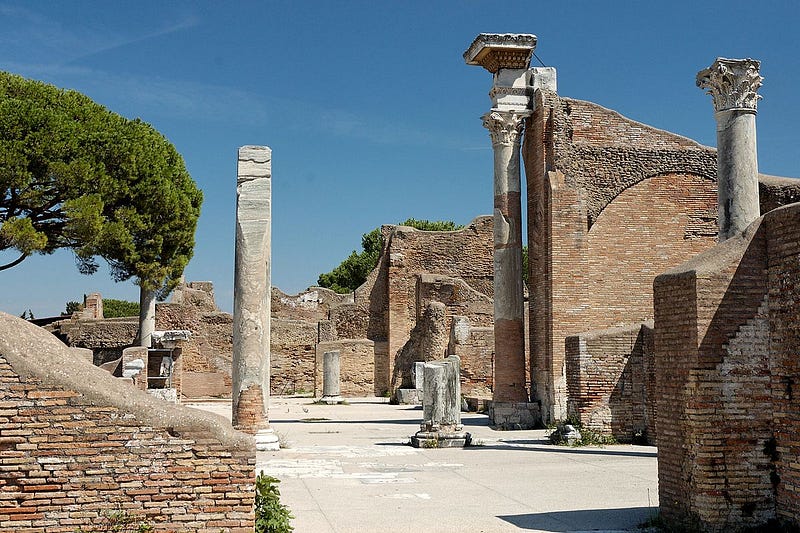
On August 23, 846, Saracen ships suddenly appeared at the mouth of the Tiber near Ostia, a former Roman port. Historians estimate that 5,000–7,000 warriors and several hundred horses came aboard some 70 sailing and rowing ships. Having disembarked, the invaders moved toward Ostia’s fortifications, recently reinforced with tall towers with catapult stations.
The walls soon became overgrown with the white silhouettes of lightly clad Arab soldiers, among whom the chainmail of some major warrior shone in the sunlight in places. The attackers looked at the fortifications with surprise, seeing no defenders on them. They cautiously approached the gates, fearing an ambush, but as they entered beyond the walls, they were greeted by a grave silence. In the streets, they encountered additional barrages and barricades with no one defending them. Ostia was completely deserted.
Why the garrison and residents abandoned the port, which was well prepared for defense, remains a mystery. Perhaps when the Saracen fleet appeared on the horizon, panic broke out in the town, which turned into a mass flight? Having sacked Ostia, the attackers took another coastal town of Portus without a fight and began to prepare for a march on Rome, 20 km away.
The Saxon army suffered a defeat
Rome’s situation was not cheerful. After a period of splendor in ancient times, the Eternal City was in decline. It had a population of about 30,000, twice as small as in the era of the collapse of the Roman Empire, not to mention the heyday. It could not count on serious outside help. On its own, it was able to field a few thousand defenders, mostly armed civilians.
Upon hearing the news of the Muslim landing in the Eternal City, men were hastily rallied under arms. First, a formation consisting of Germanic foreigners living in Rome marched towards Ostia: Franks, Saxons and Frisians. They were not professional soldiers, they worked in civilian occupations, standing under arms in case of danger. They were followed by a small number of regular Roman troops.
In the first minor skirmish, the Germans did not do badly, fending off a small detachment of Saracens. The Roman troops moved forward, but it was soon realized that the invaders were vastly outnumbered. The commander ordered the foreigners to stay put, while he himself withdrew with the Romans to the city.
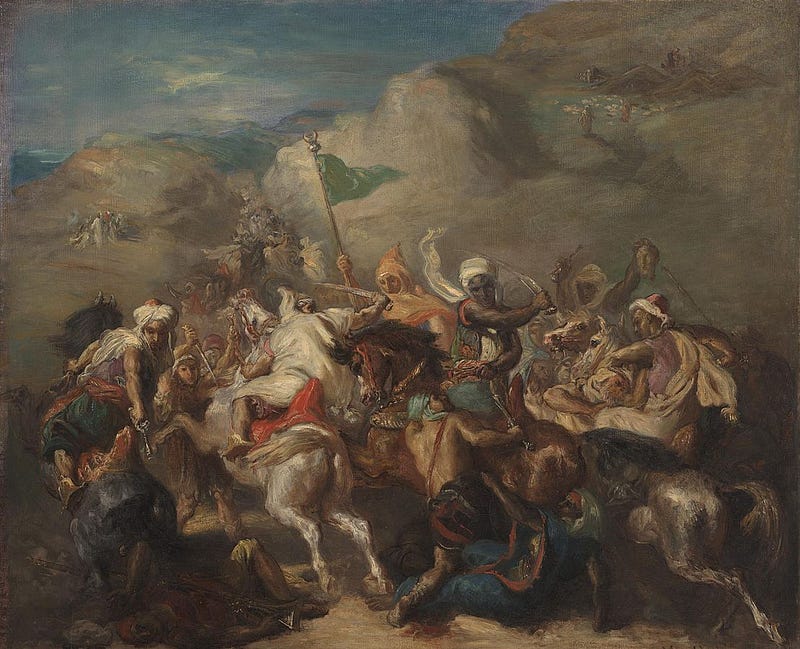
On the morning of August 26, the Arabs surprised the Germans, attacking their positions with fury. Stabbed with spears, chopped with swords and machetes, the defenders threw themselves into flight, leaving their fallen comrades on the field. The Saracens pursued them through the countryside, killing them one by one. The foreign troops were completely smashed.
Attack on St. Peter’s Basilica
The aggressors soon appeared on the Via Portuensis road and moved along it towards the city. They stopped when they saw in front of them the sagging silhouette of St. Peter’s Basilica, located outside Rome’s urban defense walls. The temple and its surrounding buildings were fortified and manned with defenders, so the forward Arab detachment decided to wait for the rest of the army.
Gradually, more columns of drab warriors in white robes and headdresses drew into the vicinity of the Eternal City. Horses screeched, sounds of pipes rang out, and shouts were uttered in various Arabic and Berber dialects.
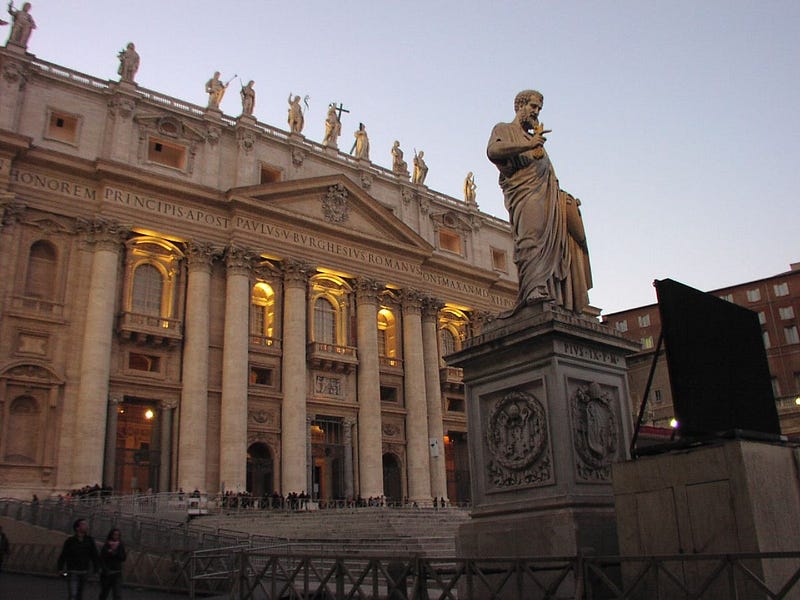
The next day, the Saracens moved to storm the suburbs, which were not protected by walls. They directed their main attack at the basilica manned by a detachment of Saxons. In the courtyard, in the cloisters, in the dark corners of the vast building complex, the jaws of swords and the shrieks of the combatants rang out. The defenders, protected by chainmail and helmets, put up stiff resistance, but the Arabs were overwhelmingly outnumbered. The outcome of the clash was a foregone conclusion.
The invaders plundered the heart of Christianity
Having cut the defenders to the bone, the Saracens began to strip the temple of its valuables. The same thing happened to the rich Basilica of St. Paul. The greatest treasures that could fall into their hands were the golden cross from above the alleged tomb of the Apostle Peter and the silver table given to the Church by Emperor Charlemagne.
A large number of chalices, monstrances, reliquaries encrusted with expensive stones were seized. Slaves were seized in nearby villas and houses, and chests of coins and jewelry were looted. According to witnesses who managed to survive, the conquerors would drape themselves in jewels, parading around in them like maidens at birth. The loot was loaded onto ships that sailed up the Tiber to Rome.
The citizens, led by the Pope, watched these events from the high Aurelian walls. At one point, however, they decided to take troops outside the gates and attack the Arabs. The defenders probably decided that they could not passively watch the destruction of the most important temples of Western Christianity.
Rome’s troops left the city and lined up in battle formation on the Campus Neronis. Accounts of the ensuing events have unfortunately been lost, and it is not known what the encounter between the two armies was like. According to historian Dr. Tommie P. Lankili, there was a clash that was inconclusive. This is because neither the Romans succeeded in driving back the attackers from under the city, nor did the Arabs manage to penetrate behind the walls, which would probably have been the consequence of crushing the enemy. Presumably the Roman commander, having realized after the first confrontation the superiority of the enemy, managed to withdraw his army behind the walls.
The Saracens did not try to conquer Rome
“Sons of Satan” continued to prowl the suburbs for some time, but did not attempt to launch assaults on the city’s fortifications. After a general reconstruction in 536, the walls of Rome, 12 meters high, were 19 km long, reinforced by a huge number of towers and moats. They were neglected, but still provided a formidable barrier to any attacker.
Taking cover behind such a shield, even armed civilians could successfully repel attacks. The Saracens, meanwhile, had neither siege machines nor catapults, the number of their warriors was besides far insufficient to attempt a siege.
In all likelihood, the leader of the Arab expedition, whose name history has not preserved, did not plan to capture the entire capital of Western Christendom at all. His goal was to plunder the suburbs, especially St. Peter’s Basilica. He was aware that it represented an easy morsel.
Arab merchants came to Italy, and one of them wrote down a traveling account of his stay in Rome. Many Arab mercenaries were also making a living in Italy during this period, taking part in feudal wars there. Tales of Roman churches filled with “great golden statues with rubies as eyes” circulated throughout North Africa. The Saracens no doubt knew that the basilica, of whose riches the legends circulate, was located outside the walls.
It can therefore be assumed that the 846 expedition was a so-called ghazw — a raid for loot purposes. Which by no means means means that actions of this type were not part of a holy war. On the contrary — it was hoped that territories ravaged by ghazw would more easily succumb to permanent conquest later, becoming part of Dar al-Islam, the land of Islam.
The Franks were defeated at Gaeta
The Church State enjoyed the protectorate of the Frankish emperor, who in theory provided it with defense. The Franks were located not far from Rome, in Spoleto. However, because they ignored Count Adelvert’s alarm, their troops began to assemble far too late.
When they finally moved toward the Eternal City, the Arabs were already following the Roman road Via Appia southward, moving away from Rome. They plundered more towns, and the fleet sailed close to the coast in their footsteps. “Sons of Satan” were able to successively load their prey onto ships and move on, marked by conflagration and plunder.
The Frankish forces, numbering several thousand armed, moved in the footsteps of the Arabs and caught up with them after a 150 km march, near Gaeta. However, the Saracens realized the danger in time and had enough time to prepare an ambush. Some of their warriors hid in a narrow gully on the enemy’s route of march and, keeping quiet, waited for their arrival.
The Franks were taken completely by surprise when a hail of Saracen arrows fell on them suddenly. One of the first victims was an ensign who collapsed to the ground killed, having let go of the banner. This momentarily broke the morale of the army, as the fall of the sacred ensign was taken as a bad sign. The soldiers threw themselves into a disorderly flight in all directions, pursued by the Arabs howling triumphantly. The surrounding fields and beaches were covered with dozens of corpses.
The Arabs signed a truce
It was already November and the weather at sea was getting worse and worse. However, the enraged Arabs could not deny themselves the pleasure of sacking Gaeta. They moved to storm the walls of the town, but were repulsed by the Gaetians and troops from nearby Naples who came to their aid.
The Arab chieftain soon received disturbing news: the storm that had begun to rage at sea had damaged some of the ships. Repairs had to be made, with the prospect of a dangerous return voyage ahead. Not wanting to risk further, the Saracens made contact with the enemy and negotiations began.
They ended with an agreement: both sides would refrain from attacks, the Arabs would quietly winter near Gaeta, and leave Italy in the spring. The invaders were well aware that sailing in the Tyrrhenian Sea in winter is dangerous due to fogs and violent storms, so waiting a few months was the best option.
The settlement was carried out without much grumbling. The local peasants who suffered most from it were those who, in addition to themselves and their feudal lords, still had to feed the several thousand Arab killers prowling the countryside.
Storm as punishment for sacrilege
In April 847, the Muslim fleet finally rebounded from the shores and, laden with a huge amount of prey, sailed toward Sicily. The perverse sea, however, played a murderous trick on the invaders. They were already far from Italy when a storm suddenly broke loose and the fragile monormen began to sink one after another. The fleet was then presumably only a few dozen kilometers from Sicily. According to one account, the sailors could already see in the distance the outlines of the mountains at the foot of which Palermo lies.
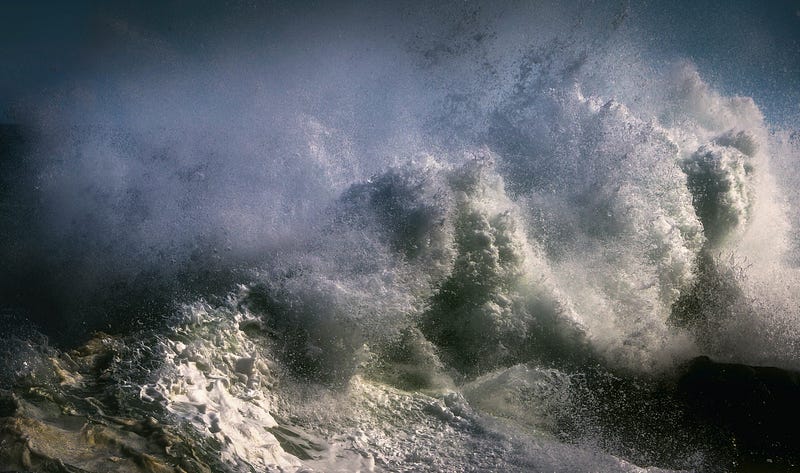
Christian monks later argued that a small boat with St. Peter standing on it appeared in the path of the Arab fleet, and with a flick of his hand, unleashed a storm. This did not quite agree with another of their claims: that the invasion of Rome was sent by God as a punishment for sinners. But these ambiguities hardly bothered anyone. It was widely believed that the entire Islamic fleet had gone down, punished for sacrilegious plunder.
Most likely, in reality it was somewhat different: some of the ships sank, some managed to reach the shore. In any case, all hearing of the most expensive precizos looted in the Eternal City was lost. On the other hand, Sicilian fishermen were said to have found on shore the corpses of Arab warriors draped in Roman necklaces, brooches and clasps, with numerous rings on their stiff fingers.
Rebuilding St. Peter’s Basilica
In Rome, Pope Leo IV, successor to the just-deceased Sergius, meanwhile undertook the reconstruction of the severely devastated St. Peter’s Basilica. He also proceeded vigorously to strengthen the city’s defenses. It was already known that there was no joke with the Arabs.
Towers were erected near the mouth of the Tiber on both banks, connecting them with a powerful chain. If necessary, it could be raised to block the entrance of enemy ships.
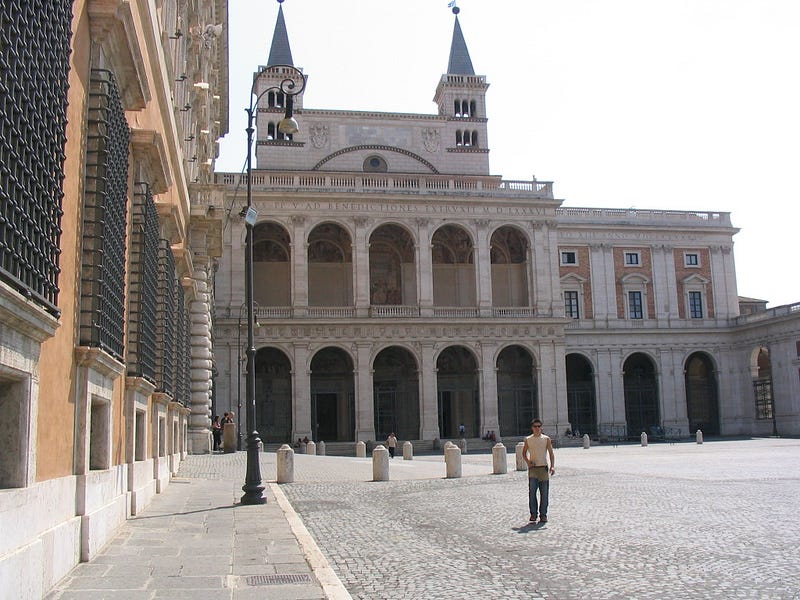
The entire Vatican Hill, with St. Peter’s Basilica within it, began to be surrounded by a thick wall. This created a fortified district called Leoniana. In the late 14th century, it would become the permanent seat of the popes, replacing the former Lateran Palace.
Another raid by the Arabs on Rome
In 849, the Arabs organized another raid on Rome. Their fleet was spotted near Sardinia and the alarm was immediately raised. This time the cities of Italy did not allow themselves to be surprised and came out united against the invaders. When the Saracen fleet approached the mouth of the Tiber, the combined armadas of Rome, Naples, Amalfi and Gaeta were already waiting for it.
The invaders were very unlucky this time. A powerful whirlwind scattered their fleet, which the Christian fleet immediately took advantage of. The Italian galleys surged forward, attacking and destroying individual dromons and monorails. Many Arabs were killed, a sizable number were taken prisoner. The victory of the Christians was unqualified. Some of the Islamic captives were immediately hanged on the coast near Portus, others were driven in chains to Rome. Turned into slaves, they later worked up a sweat building Vatican fortifications.
Construction of the new St. Peter’s Basilica
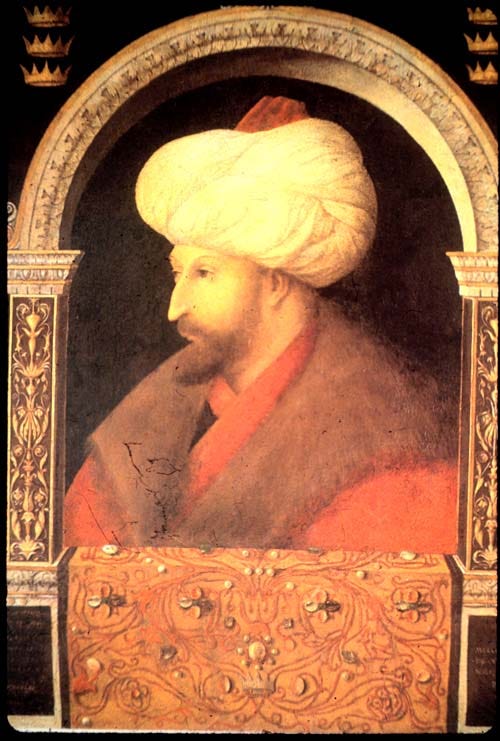
Followers of Allah never again threatened Rome in such a serious way. However, every now and then, the more bloodthirsty Islamic rulers threatened to capture the center of Western Christianity. The Turkish Sultan Mehmed II announced in the second half of the 15th century that he would turn St. Peter’s Basilica into a stable for his steeds.
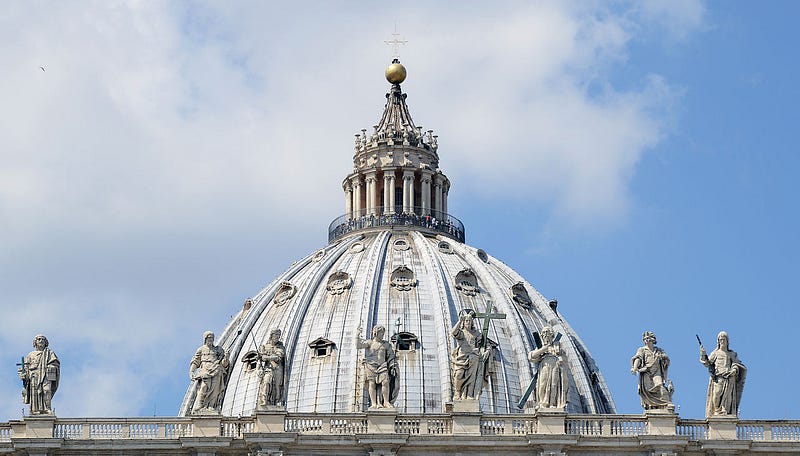
Paradoxically, at the time, this ancient temple commanded less and less respect from the popes themselves, fascinated by modern Renaissance architecture. In 1503, Julius II became pope and ordered one of the greatest monuments of early Christianity razed to the ground. The old St. Peter’s Basilica was completely demolished and a new one began to be built in its place — the one that adorns the Vatican to this day.
Cool that you made it to the end of this article. I will be very pleased if you appreciate the effort of creating it and leave some claps here, or maybe even start following me. It would be nice if you also left a tip! Thank you!




_at_Athens_War_Museum_on_12_April_2019.jpg)


