
April Is Autistic Pride Month
Moving far beyond “awareness”, we celebrate our AuSomeness
Performance is useless
Sharing social media posts to reflect support of a marginalized group is nice. If you share images and content by Actually Autistic creators, it may even educate some people, which is fantastic.
However, ally is a verb, not a noun or adjective. One should not call themselves an ally, that label is an honour for the marginalized group to bestow upon those they consider their genuine allies.
Allyship requires action. It requires change. Allyhip requires a willingness to hear things you may not want to hear, including criticisms of your own words and behaviour.
We all mess up. Being a true ally means taking chances, stepping beyond the convenience of performance, and making mistakes. It means speaking up when you see someone being mistreated because of who they are, not “staying out of it” for the sake of your own comfort.
Most importantly, it means centring the voices of those marginalized folks over your own, not virtue signalling and professing allyship simply to make yourself look good.
Autistic Pride vs. Autism Awareness
Autism “awareness” campaigns tell parents to “watch out” for the warning signs their child could be Autistic. They spread hurtful messages about how hard it is to live with an Autistic person.
This is awkward. We’re right here.
How would it feel to know that people wish you didn’t exist? How will their children feel when they grow up and read those kinds of messages one day? (And maybe they already are).
“Be careful how you speak to your children, one day it will become their inner voice.” — Peggy O’Mara
Instead of fighting against a person’s neurotype, we should focus our efforts and energy on improving acceptance, understanding, and embracing differences.
Imagine growing up in a society that genuinely celebrated diversity, rather than claiming to be inclusive, whilst striving toward compliance and conformity.
Kids know exactly how we feel about them
They know exactly how society feels about them too.
Imagine growing up in a society that genuinely embraced and celebrated diversity, rather than claiming to be inclusive, whilst striving toward compliance and conformity.
Every time someone gives our kids a strange look, or makes a thinly-veiled comment about them, they internalize that. Every time a kid makes fun of them, every time an adult criticizes them for being themselves, they internalize it.
This means our kids grow up perceiving themselves as weird, unwanted, bad, less-than, etc. Even when we don’t directly or intentionally say or do unkind things toward disabled and neurodivergent kids, they very quickly pick up on people’s attitudes.
People also (very wrongly) assume that non-speaking or intellectually disabled kids don’t understand what is being said about them. Some are so disrespectful as to talk about kids in their presence, as if they weren’t there.
That is ableist, disrespectful, and plain rude.
Don’t do that.
The Three Best Autistic-Led Books This Year
You can support Autistic creativity and entrepreneurship by purchasing from Autistic-run businesses, sharing content created by Autistic self-advocates, and reading books and articles by Autistic writers.
I am so excited about all of the incredible books that have been published, and are soon-to-be published, by Autistic authors. I am sure I will miss some, and for that I apologize in advance.
There were three books which really stood out for me, and have been incredibly relatable to my own personal journeys — journeys in parenting a neurodivergent child, and journeys of self-discovery.
I reviewed my three favourite books by Autistic authors, all published between October 2022 and January 2023.
The Judge Rotenberg Centre
I’ve published at least four different articles outlining the horrors which continue to be inflicted upon disabled and Autistic people who are forced to live (or attend day programs) at the JRC.
Every time I publish one of these articles, people ask variations of the question, “how is this allowed to happen?”
I’ll give you the top three reasons why this unethical and harmful organization is allowed to torture Autistic and disabled people:
1) Ableism
Disabled, Autistic, and other marginalized people are perceived and treated as less valuable. If this were happening to traditionally attractive, middle-class, non-disabled, allistic, white people… there would be a massive public uproar against the JRC.
2) Racism
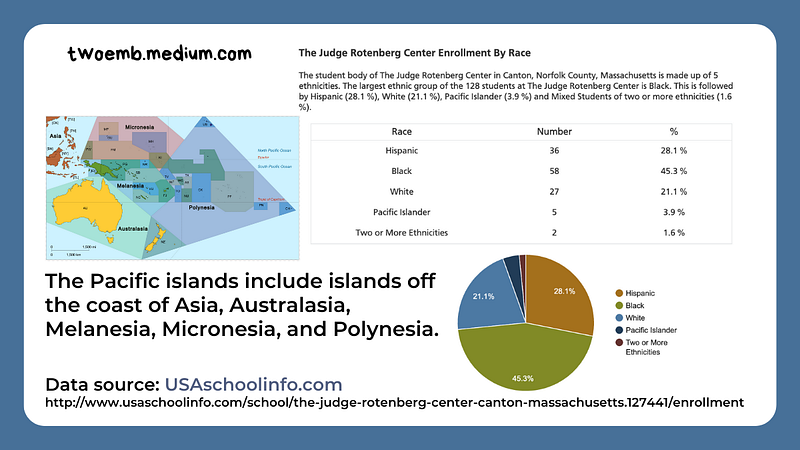
According to USA school info, the demographics at the JRC as of 2022 were 45% black, 28% hispanic, and only 21% white (the other 6% were made up of 4% Pacific islander — so, brown and asian people — and 2% two or more ethnicities).
3) Capitalism and greed
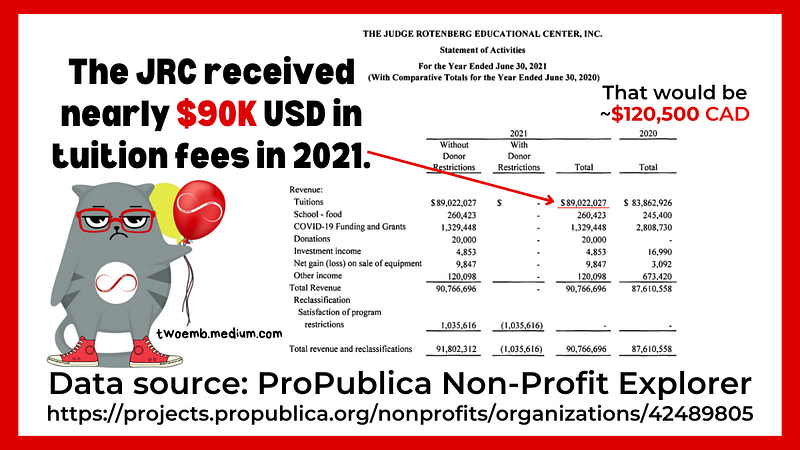
People make money off places like this. Staff are paid to control and torture the residents, people are paid to run the organization, and lawyers are paid to defend the rights of the JRC to continue using electric shock on vulnerable human beings.
Learn more: The truth about the Judge Rotenberg Centre
Get involved
This April (and all the time), please support Autistics. Support Autistic individuals, advocates, and autistic-led organizations, instead of allistic (non-Autistic)-led organizations and allistic-centred campaigns.
When you join medium, as a member you’ll have access to unlimited reads for only $5 per month. If you use my referral link, I’ll earn a small commission, and you’ll earn my undying gratitude.
If you’d prefer give a one-time tip, you can support my writing on Ko-Fi — also, it’s free to follow me on Facebook and LinkedIn!


