ARTIFICIAL INTELLIGENCE, ART & CULTURE
April Fool’s Day: I pranked BBC news with an AI image and they published it as a real photograph
Beyond a joke: Challenging perceptions of AI art with a prank
I love hoaxes, especially ones that involve images. From the fake photos of the Cottingley Fairies that fooled Sherlock Holmes’ creator Arthur Conan Doyle, to the footage of Swiss Spaghetti Trees that the BBC themselves perpetuated on the public in 1957, history is peppered with pranks that have not only entertained but also made us question the fabric of reality.
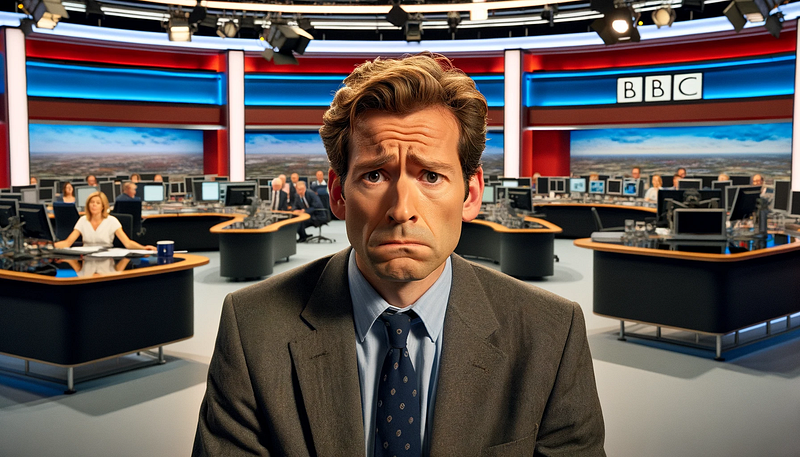
AI is an amazing tool to pull the wool over the eyes of the unsuspecting public — and astute institutions like the esteemed BBC, known for their journalistic integrity. Beyond mere mischief, there’s a benefit to a well-crafted ruse: it raises awareness of the urgent need for AI visual literacy.
A New Tradition: Annual AI Art April Fools’ Hoaxes
Since the widespread use of AI image generators, I’ve tried to pull off an AI April Fools hoax every year, and I plan to make it a tradition. In 2023, I used AI art to create a satirical New Zealand website for Bungee Jumping Babies:
Unfortunately, I was the fool in that instance: I generated the images on Midjourney’s public Discord server, and while I waited to launch on the 1st of April they were snatched up, quickly becoming the skydiving baby trend.
This year, especially with the recent controversies around altered images in the news (and the added editorial scrutiny it entails) I wanted to see if I could infiltrate the photographic art world with AI-generated images.
The Reflection Game: Sneaking AI into BBC’s Photo Contest
Every fortnight, the BBC hosts a photography competition called “We set the theme, you take the pictures”, with the winners published in the In Pictures section of the BBC News website and across their social media.
The theme was “reflections,” which seemed perfect! I submitted this image:
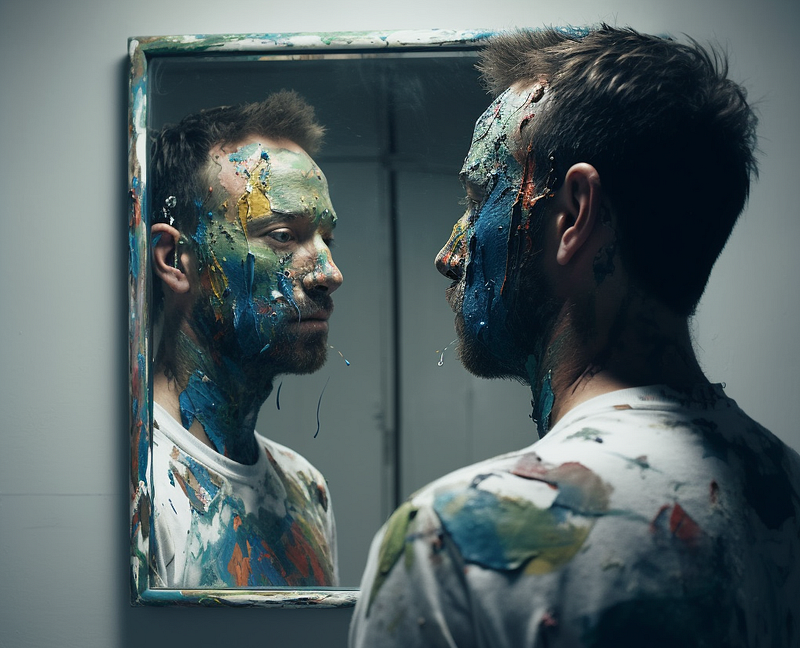
To make sure it wasn’t too easy (and to give them a fighting chance), the pseudonym I used when I submitted was “Arthur Fischel Photography”.
(Try saying that name with marbles in your mouth. It’s a dead giveaway!)
It was chosen by the BBC as one of the “striking images from our readers”.
The BBC gallery it’s featured in has received 67.5K views on X/Twitter, and my image is the first result on Google image search for the current theme.
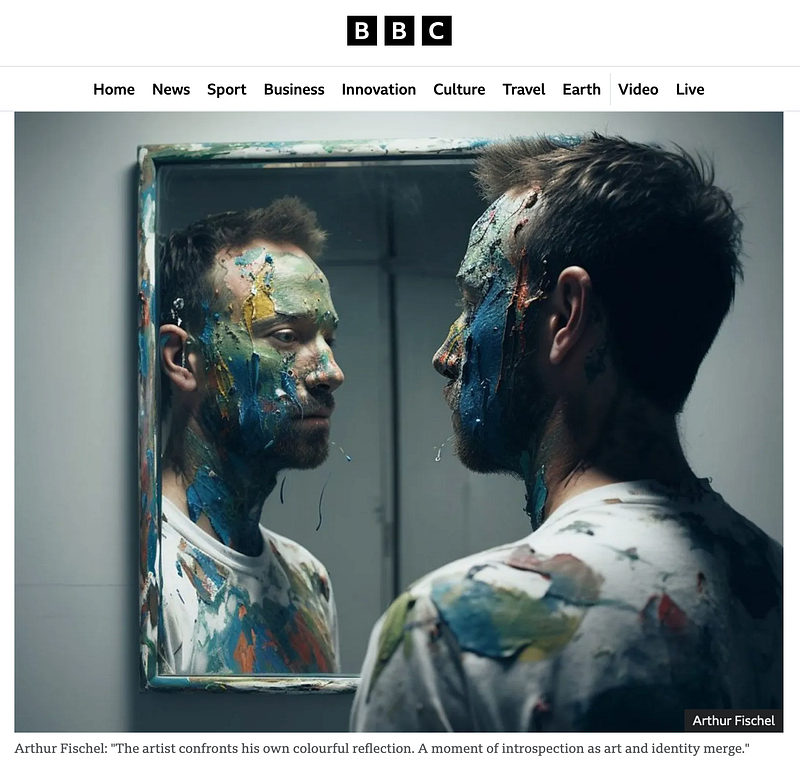
You’ll notice the caption confronts notions of “Art and Identity”, and lays the groundwork for the image as a masquerade, a deceptive reflection. As he confronts his painted smeared reflection, the lines between the artist and art blur, urging the observer to ponder artifice versus authenticity.
That’s the message I intended in this image, ostensibly captured by Fischel.
My aim was to slip an AI-generated image into the bastion of credibility and see if it could not only survive but thrive under the scrutiny of a discerning editorial team. But it was also more than a mere prank.
This wasn’t just about bamboozling the broadcasting giant, but whether AI images can be considered “art”.
In Defense of AI: Finding Art in the Machine
AI art gets a lot of flack as being soulless and lacking human connection. I understand why technology can seem that way at first. We felt it about CGI, although the heartfelt results of Pixar movies belie that initial assumption.
I agree that many people approach prompting AI images with an assembly line coldness with no human touch. But this image mattered to me when I generated it with Midjourney. I worked creatively to get this exact result, with hundreds of iterations and tweaks to prompts until it showed what I saw in my mind’s eye. Michelangelo said that sculpting was about freeing the statue hidden within the marble, and that’s what this felt like for me.
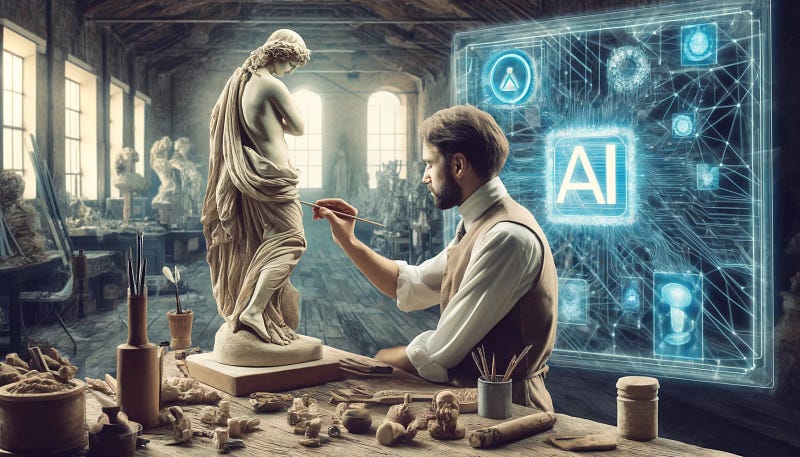
(In fact, marble is an apt comparison as the mechanics behind the magic is that AI art generators work like image restorers on the random noise of the seed image; the knack is in convincing it the image you want already exists)
This wasn’t simply about me duping a renowned institution for April 1st. I got to issue a challenge to redefine the essence of artistic value. Does prior knowledge of the artificial origin of an AI artwork diminish its legitimacy or impact? Can AI-generated art evoke the same emotional resonance and critical acclaim as a photograph taken by a human? It would be interesting to know how BBC readers might respond, if they knew the ultimate reveal.
The Verdict: AI Art in the Eyes of the Beholder
Objectively, my AI image was critically appraised and appreciated by a picture editor, and published by the BBC as a “striking image from our readers”. So, what captivated the BBC’s photo team? Was it just the AI’s technical prowess, my creative direction, or a symbiotic blend of both?
Perhaps I’m simply fooling myself, but I suspect that art might lie in the shared space between creator and creation, irrespective of the medium.
👏 Amused? Enlightened? Entertained?? Medium rewards writers through your applause. Your claps keep my articles coming! Here’s a tip: if you want to clap 50x, press and hold the clap button to save your fingers. Thank you!
Who is Jim the AI Whisperer?
Jim the AI Whisperer offers private training on how to use AI generators to create visuals, as well as how to improve AI output for compelling content.
Let’s Connect!
If you’re interested in personal coaching or hiring my services, feel free to contact me. I’m also available for podcasts, interviews, and more. And if you’re keen on supporting my work, check out my Buy Me a Coffee page.

Stay Updated and Engaged
Want to stay on top of the latest about AI? Subscribe to receive an email whenever I hit publish. I keep it informative, engaging, and a step ahead.


