avatarAvi Kotzer

Free AI web copilot to create summaries, insights and extended knowledge, download it at here

3166

Abstract

mw.png"><figcaption>Credit: merriam-webster.com</figcaption></figure><p id="3c37">So, an <b>aphaeresis</b> is a grammatical circumcision at the beginning of a word.</p><p id="ef65">Perhaps one of the best-known aphaereses is the American folk song (not nursery rhyme) “The Wheels on the Bus”, published by Verna Hills in 1939. The original <a href="https://en.wikipedia.org/wiki/The_Wheels_on_the_Bus">lyrics</a> were different from many of the versions sung today, including this one, which seems to explore an abstract, convoluted plot full of dystopian symbolism. (We are <i>all</i> animals! <i>We</i> are the animals!)</p> <figure id="a3d9"> <div> <div> <img class="ratio" src="http://placehold.it/16x9"> <iframe class="" src="https://cdn.embedly.com/widgets/media.html?src=https%3A%2F%2Fwww.youtube.com%2Fembed%2Fe_04ZrNroTo%3Ffeature%3Doembed&amp;display_name=YouTube&amp;url=https%3A%2F%2Fwww.youtube.com%2Fwatch%3Fv%3De_04ZrNroTo&amp;image=https%3A%2F%2Fi.ytimg.com%2Fvi%2Fe_04ZrNroTo%2Fhqdefault.jpg&amp;key=a19fcc184b9711e1b4764040d3dc5c07&amp;type=text%2Fhtml&amp;schema=youtube" allowfullscreen="" frameborder="0" height="480" width="854"> </div> </div> </figure></iframe></div></div></figure><p id="af87">Next up, <i>syncope</i>. As you can see, this word also has very different meanings depending on whether you’re making a medical diagnosis or a grammatical one.</p><figure id="c7c2"><img src="https://cdn-images-1.readmedium.com/v2/resize:fit:800/1*ryzaFPmUksWiqJOnkwDvcA.png"><figcaption>Credit: merriam-webster.com</figcaption></figure><p id="774d">In other words, a <b>syncope</b> is a grammatical circumcision down the middle. The most famous linguistic syncope in the English language? Well, this one is certainly a strong candidate:</p><figure id="83e8"><img src="https://cdn-images-1.readmedium.com/v2/resize:fit:800/0*VYIIbqOj44GcU2Gl.jpg"><figcaption></figcaption></figure><p id="94fc">I remember as a kid it took me forever to put two and two together and realize that the Wor-ces-ter-shire sauce I was <b>reading</b> was the exact same as the Woo-ster-shire sauce I was <b>hearing</b> other people talk about.</p><p id="f9e1">As for why this particular syncope exists, I’ll let Mignon Fogarty, the wonderful Grammar Girl, explain that to you. And you get the option to listen to, read, or listen while you read her explanation.</p><div id="bcc1" class="link-block"> <a href="https://www.quickanddirtytips.com/education/grammar/why-is-worcester-pronounced-wooster"> <div> <div> <h2>Why Is 'Worcester' Pronounced 'Wooster'?</h2> <div><h3>I lost the name of the person who asked me why we call the fermented sauce we use in Caesar salad, deviled eggs, and…</h3></div> <div><p>www.quickanddirtytips.com</p></div> </div> <div> <div style="background-image: url(https://miro.readmedium.com/v2/resize:fit:320/0*zCRm8zeHAfoay2N9)"></div> </div> </div> </a> </div><h2 id="406

Options

e">En español</h2><p id="4592">As I mentioned earlier, Spanish has an interesting way of using <i>apocopes</i>. Some adjectives and adverbs lose the final vowel or even the entire final syllable when they go before a noun. This happens a lot with the masculine singular form, but is not exclusive to it. (In Spanish, adjectives commonly go <i>after</i> the nouns they describe, and most nouns are either masculine or feminine — although some can be both, or neuter.)</p><p id="778f">For example, the cardinal number <b>uno</b> (one), when used as an adjective in front of a masculine noun, loses the <b>o</b>. So, one says “una mujer” (one woman), but “un hombre” (one man).</p><p id="b439">Same goes for the ordinal version of that same number: <b>primero</b> (first). It’s “o” also gets circumcised. You say “la primera mujer” (the first woman), but “el primer hombre” (the first man).</p><p id="383a">The adverb <b>tanto</b> means “so much”. But it drops the syllable <b>to</b> when modifying any adjective or adverb, be they masculine or feminine. So if your woman and man in the previous examples are both beautiful, you would use <b>tan</b> in either case: “tan hermosa” or “tan hermoso”.</p><p id="606a">The word <b>grande</b> (big/great) is an interesting case. It not only drops the final syllable <b>de</b> when preceding a noun (masculine or feminine), but also changes meaning. So, if you’re talking about a “hombre grande”, you’re referring to the large size of the man, but if you say “gran mujer” you’re commenting on the greatness of the woman.</p><p id="38b4">What can I say? I guess the editors of the Spelling Bee didn’t know enough Spanish. Why else did they decide that<i> apocope</i> is a <a href="https://www.merriam-webster.com/words-at-play/dord-a-ghost-word"><b>dord</b></a>?</p><p id="cf32">You can check out my previous entry on another <b>dord </b>here:</p><div id="b47f" class="link-block"> <a href="https://readmedium.com/polynya-8ddeccb496be"> <div> <div> <h2>Polynya</h2> <div><h3>Ice, ice, everywhere… nor any drop to drink!</h3></div> <div><p>medium.com</p></div> </div> <div> <div style="background-image: url(https://miro.readmedium.com/v2/resize:fit:320/0*nUNYGoyA0SF6XNA-.jpg)"></div> </div> </div> </a> </div><p id="8b69">*What the heck is a <b>dord, </b>you ask? Here’s the answer:</p><div id="b05e" class="link-block"> <a href="https://www.merriam-webster.com/words-at-play/dord-a-ghost-word"> <div> <div> <h2>'Dord': A Ghost Word</h2> <div><h3>One of the questions people like to ask lexicographers is this: Can you sneak something into the dictionary? Can you…</h3></div> <div><p>www.merriam-webster.com</p></div> </div> <div> <div style="background-image: url(https://miro.readmedium.com/v2/resize:fit:320/0*d0TdcPYnHA0k5M25)"></div> </div> </div> </a> </div></article></body>

Apocope

Let’s learn about this phonological circumcision
Today’s New York Times Spelling Bee letters:
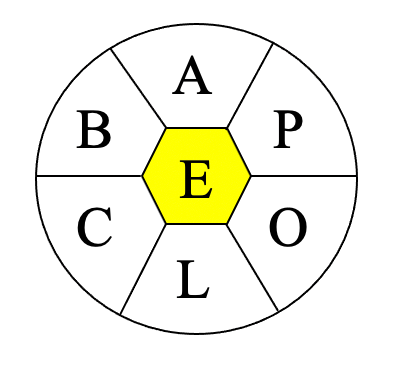
Art: Iva Reztok

A, B, C, L, O, P, and center E (all words must include E)

Merriam-Webster says…
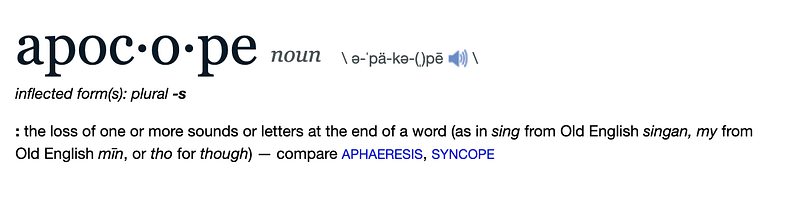
Credit: merriam-webster.com

Silly little dictionary! Don’t you know apocope can’t possibly be a word if the New York Times says it ain’t?

For further fascinating facts, check out the Spelling Bee Master.

What’s your favorite dord* from today’s puzzle?

My Two Cents

As a Spanish speaker, apocope is a word I’m very familiar with. Spanish grammar requires its use in certain cases, unlike English, in which the apocope is always optional. It’s also a fun word to say in both languages — although it sounds slightly more musical to my ears in English.

The dictionary explains that the word apocope comes from Late Latin, from the Greek apokopē, literally, “cutting off”, from apokoptein, “to cut off”, from apo- + koptein to strike, cut off.

We get it. The apocope is a grammatical circumcision of sorts.

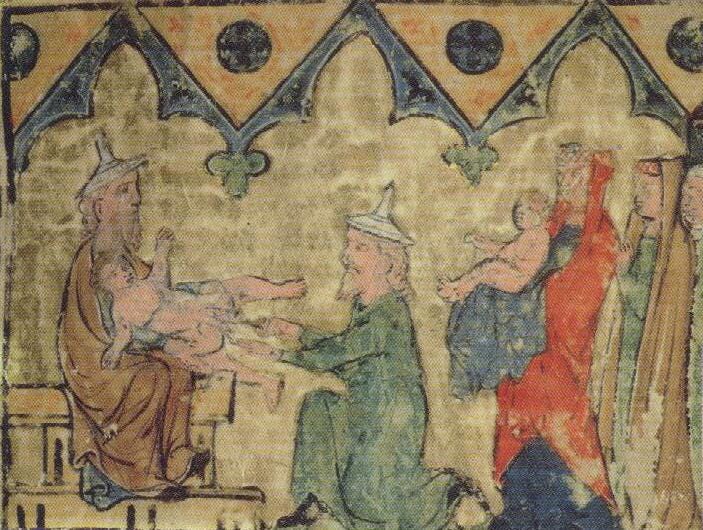
Hence the photo at the top of today’s column: “Isaac’s Circumcision”, from the Regensburg Pentateuch, circa 1300.

In English

There is a field known as historical, or diachronic, linguistics, which studies the evolution of language over time. Certain words we use in English today are apocopes from Old English. The dictionary’s example of sing coming from singan is one. The word love from lufu is another example. Although love does contain the final vowel, it’s silent.

An interesting case is tho from though. Here the vowel-consonant combination ugh is lost in the spelling, but the change is almost imperceptible in the pronunciation.

Now, because Merriam-Webster suggested comparing apocope with aphaeresis and syncope, I did. (As an aside, don’t confuse aphaeresis, a grammatical term for loss of sounds with apheresis, a medical term for loss of blood — although the dictionary indicates the latter spelling can be used for both definitions.)
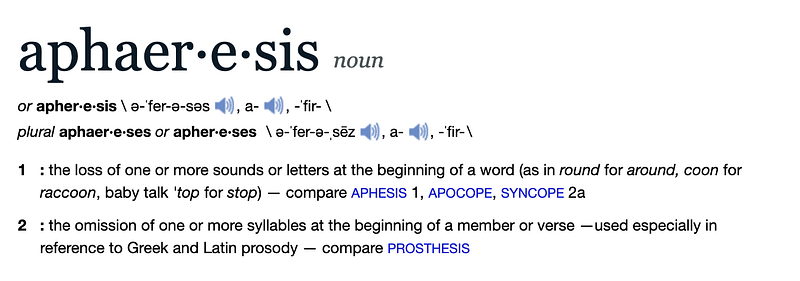
Credit: merriam-webster.com

So, an aphaeresis is a grammatical circumcision at the beginning of a word.

Perhaps one of the best-known aphaereses is the American folk song (not nursery rhyme) “The Wheels on the Bus”, published by Verna Hills in 1939. The original lyrics were different from many of the versions sung today, including this one, which seems to explore an abstract, convoluted plot full of dystopian symbolism. (We are all animals! We are the animals!)

Next up, syncope. As you can see, this word also has very different meanings depending on whether you’re making a medical diagnosis or a grammatical one.
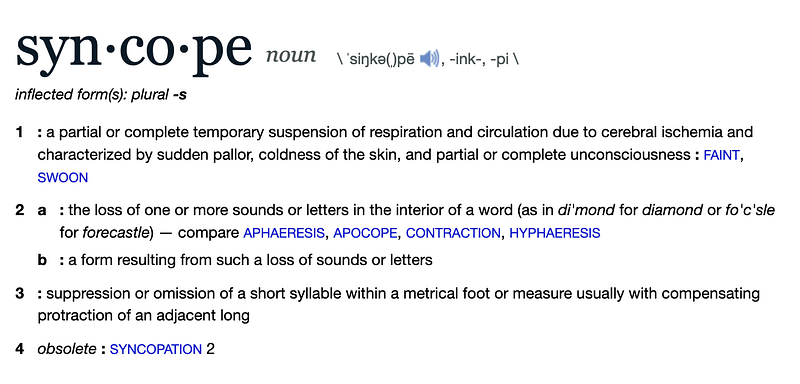
Credit: merriam-webster.com

In other words, a syncope is a grammatical circumcision down the middle. The most famous linguistic syncope in the English language? Well, this one is certainly a strong candidate:

I remember as a kid it took me forever to put two and two together and realize that the Wor-ces-ter-shire sauce I was reading was the exact same as the Woo-ster-shire sauce I was hearing other people talk about.

As for why this particular syncope exists, I’ll let Mignon Fogarty, the wonderful Grammar Girl, explain that to you. And you get the option to listen to, read, or listen while you read her explanation.

En español

As I mentioned earlier, Spanish has an interesting way of using apocopes. Some adjectives and adverbs lose the final vowel or even the entire final syllable when they go before a noun. This happens a lot with the masculine singular form, but is not exclusive to it. (In Spanish, adjectives commonly go after the nouns they describe, and most nouns are either masculine or feminine — although some can be both, or neuter.)

For example, the cardinal number uno (one), when used as an adjective in front of a masculine noun, loses the o. So, one says “una mujer” (one woman), but “un hombre” (one man).

Same goes for the ordinal version of that same number: primero (first). It’s “o” also gets circumcised. You say “la primera mujer” (the first woman), but “el primer hombre” (the first man).

The adverb tanto means “so much”. But it drops the syllable to when modifying any adjective or adverb, be they masculine or feminine. So if your woman and man in the previous examples are both beautiful, you would use tan in either case: “tan hermosa” or “tan hermoso”.

The word grande (big/great) is an interesting case. It not only drops the final syllable de when preceding a noun (masculine or feminine), but also changes meaning. So, if you’re talking about a “hombre grande”, you’re referring to the large size of the man, but if you say “gran mujer” you’re commenting on the greatness of the woman.

What can I say? I guess the editors of the Spelling Bee didn’t know enough Spanish. Why else did they decide that apocope is a dord*?

You can check out my previous entry on another dord* here:

*What the heck is a dord, you ask? Here’s the answer:

Spelling Bee
Language
Grammar
Spanish
Culture
Recommended from ReadMedium