avatarAvi Kotzer

Free AI web copilot to create summaries, insights and extended knowledge, download it at here

3011

Abstract

escribes it thus:</p><blockquote id="347a"><p>“The <i>aoudad</i> stands about 102 cm (40 inches) at the shoulder. It has a fringe of long, soft hair hanging from its throat and forequarters and has semicircular horns that curve outward, back, and then inward over the neck. Both fringe and horns are more pronounced in the male. The <i>aoudad</i> occurs in dry, mountainous, or rocky country and lives in small family groups. It can go without water for about five days. When threatened, the <i>aoudad</i> stands motionless and is concealed by its tawny brown coat, which blends in with the surrounding rocks.”</p></blockquote><p id="d716">I’m not sure standing motionless is the best strategy when your head has these big horns:</p><figure id="b170"><img src="https://cdn-images-1.readmedium.com/v2/resize:fit:800/0*JmxekAk6eIkQ05Tv.jpg"><figcaption>Photo by Krzysztof Kozłowski</figcaption></figure><p id="bd3c">Plus, this guy’s “tawny brown coat” doesn’t seem to be doing a good job of blending in against the gray rocks in the background. Then again, I’m not sure which predators they face. I do think any animal willing to climb up rocky crags to hunt these non-sheep is not going to be deterred by them “not moving” as a defense.</p><p id="704b">And that’s probably why the guy in the above photo ended up like this:</p><figure id="267e"><img src="https://cdn-images-1.readmedium.com/v2/resize:fit:800/0*mGAxqqcp6R6YZJsj.jpg"><figcaption>Photo by Polyoutis</figcaption></figure><p id="3958">I know, it’s a horrible thought. To cheer you up, I offer this photo of a cute young <i>aoudad</i>.</p><figure id="8c21"><img src="https://cdn-images-1.readmedium.com/v2/resize:fit:800/0*FIc1B0gOJsFf8h7d.jpg"><figcaption>Photo by Matěj Baťha</figcaption></figure><h2 id="4c90">A story of love and regret</h2><p id="6dac">In Spanish, the <i>aoudad</i> goes by several names: <b>arruí</b>, <b>arrui</b>, <b>muflón del Atlas</b>, and<b> carnero de berbería.</b></p><p id="3f7b">As I mentioned earlier, the species is native to North Africa. In 1970, Spain decided it might be a good idea to bring some <i>aoudads</i> over, as demand for big game hunting was on the rise (a general trend in several European countries since the mid-20th century).</p><p id="1ff0">The <i>aoudad</i> was initially bought over to the Murcia region (southeastern Spain); animals confined in the Casablanca Zoo and the Frankfurt am Main Zoo were chosen for this important mission of being hunted and killed.</p><p id="981f">What could possibly go wrong with that?</p><p id="baaa">The abundance of food, the absence of predators, and its high birth rate determined the <i>aoudad</i>’s rapid expansion in a very short time. Turns out not so many Spaniards were keen on climbing tall mountains to hunt a goat when they could goat meat at the local market. Either that, or they just had really bad aim.</p><p id="8321">Well, the <i>aoudad</i> happily started expanding to other regions of the country. When the Spanish government realized how q

Options

uickly this not-a-sheep reproduced and colonized and threatened native species, they decided to try to ban the animal. I assume it took only 43 years, since the decree is from 2013. Here’s the police file on this dangerous goat-like creature… born in 1777?</p><figure id="f909"><img src="https://cdn-images-1.readmedium.com/v2/resize:fit:800/1*FCr3evpW3H3u3BhoHV3YxA.png"><figcaption></figcaption></figure><p id="dccd">Hmmm… perhaps this is Spain’s version of the <a href="https://www.seeker.com/chupacabra-mystery-solved-1765132218.html">chupacabras</a>. But chupacabras means “goat sucker”. This gets weirder and weirder.</p><p id="158f">However, a 2018 study focused on the region of Murcia and its surroundings indicated the <i>aoudad</i>’s low negative impact and questioned its status as an invasive species. But the same author had previously and together with other researchers declared that the <i>aoudad</i> posed a threat to the native plant life of the area. And even before that, a different study (2007) even recommended the eradication of <i>aoudad</i>.</p><p id="7844">Meanwhile, even without any more imports, the <i>aoudad</i> continues to flourish in the southern areas of Spain.</p><p id="0b83">That’s about it for today. Okay, okay… one more cute picture:</p><figure id="d05e"><img src="https://cdn-images-1.readmedium.com/v2/resize:fit:800/0*2tCyzwWewont5q8g.jpg"><figcaption>Photo by Rei</figcaption></figure><p id="6b37">And my rant: even though the <i>aoudad</i> clearly exists, the editors of the Spelling Bee decided that this word was a <a href="https://www.merriam-webster.com/words-at-play/dord-a-ghost-word"><b>dord</b></a><b>.</b></p><p id="0b3a">You can check out my previous entry on another <b>dord </b>here:</p><div id="8489" class="link-block"> <a href="https://readmedium.com/apophony-b7b1560539b6"> <div> <div> <h2>Apophony</h2> <div><h3>a, e, i, o, u… and sometimes y</h3></div> <div><p>medium.com</p></div> </div> <div> <div style="background-image: url(https://miro.readmedium.com/v2/resize:fit:320/0*BYijW1XGkMukG5SL)"></div> </div> </div> </a> </div><p id="daf4">*What the heck is a <b>dord, </b>you ask? Here’s the answer:</p><div id="5939" class="link-block"> <a href="https://www.merriam-webster.com/words-at-play/dord-a-ghost-word"> <div> <div> <h2>'Dord': A Ghost Word</h2> <div><h3>One of the questions people like to ask lexicographers is this: Can you sneak something into the dictionary? Can you…</h3></div> <div><p>www.merriam-webster.com</p></div> </div> <div> <div style="background-image: url(https://miro.readmedium.com/v2/resize:fit:320/0*V6SJHitVSVkfDucX)"></div> </div> </div> </a> </div></article></body>

Aoudad

What has four vowels and two consonants? This wild non-sheep.
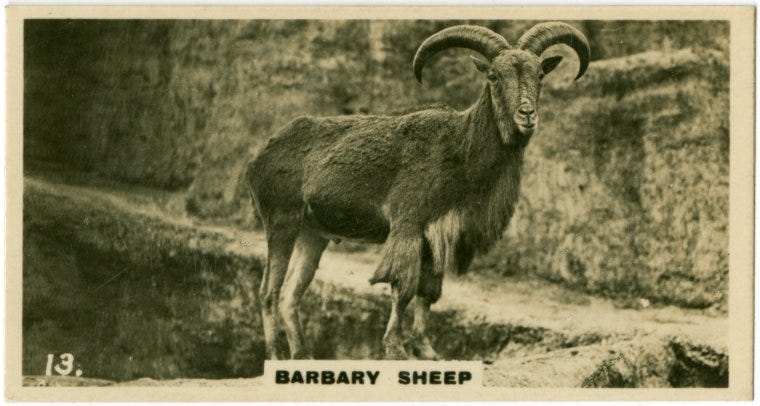
Credit: London Zoo

Today’s New York Times Spelling Bee letters:
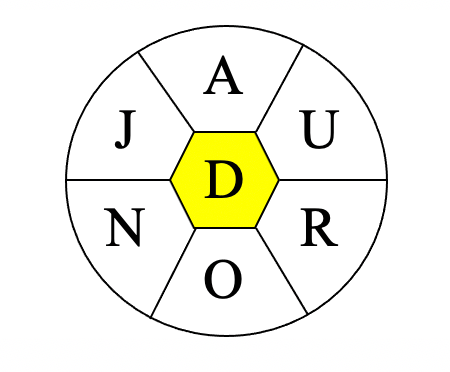
Art: Iva Reztok

A, J, N, O, R, U, and center D (all words must include D)

Merriam-Webster says…
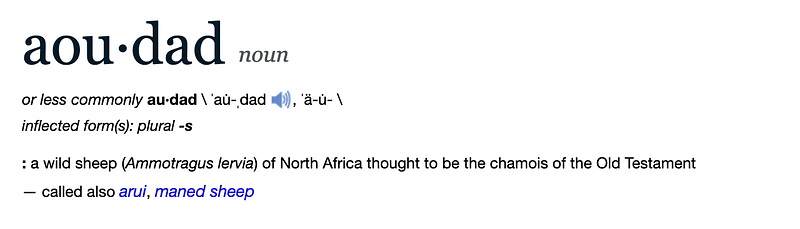
Credit: merriam-webster.com

Silly little dictionary! Don’t you know that aoudad can’t possibly be a word if the New York Times says it ain’t?

For further fascinating facts, check out the Spelling Bee Master.

What’s your favorite dord* from today’s puzzle?

My Two Cents

The Barbary sheep, scientifically known as Ammotragus lervia, is a type of caprid that is believed to have come from the mountains of North Africa, although it has been introduced to countries such as the United States, Mexico, and Spain. And by introduced I don’t mean they were formally presented to each other. The aoudad was “imported” into those countries for specific reasons… reasons that may have backfired, especially in Spain.

What is a caprid, you may ask. Yes, you may! Well, Caprinae is a subfamily of the bovids — cloven-hoofed, ruminant mammals — that includes antelope, sheep, goats, buffalo, and cattle, among others. Caprids, or caprines, are generally referred to as “goat-antelopes”. They include such exotic animals as the takin, or gnu goat.
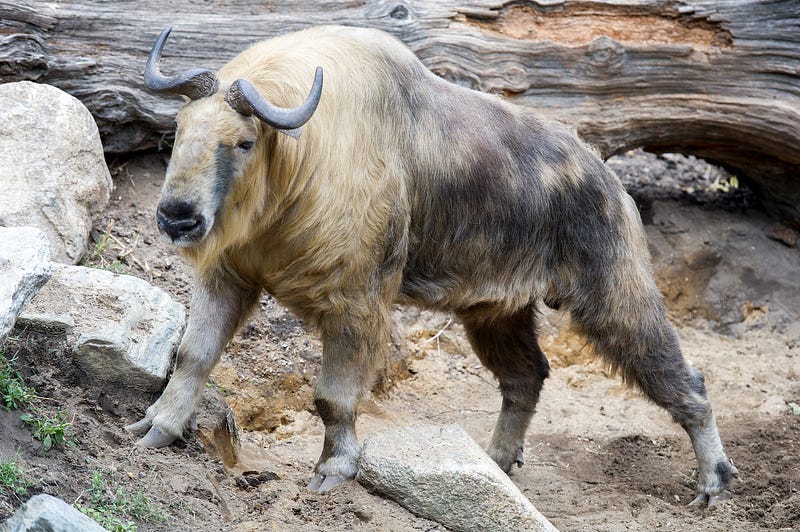
Photo by Eric Kilby from Somerville, MA, USA

No sheep for you!

The dictionary explains that aoudad in English comes from the French aoudad, itself from the Berber audad. Which is not a very creative chain of etymological events, I’m afraid.

Here’s something more helpful: to pronounce aoudad, think of what you used to say as a kid after your father smacked you lightly on the head whenever you did something stupid (which was daily). Ow, dad.

Although the ow, dad… I mean, the aoudad is often called a sheep, genetic tests have shown that is more closely related to goats.

The Encyclopedia Britannica describes it thus:

“The aoudad stands about 102 cm (40 inches) at the shoulder. It has a fringe of long, soft hair hanging from its throat and forequarters and has semicircular horns that curve outward, back, and then inward over the neck. Both fringe and horns are more pronounced in the male. The aoudad occurs in dry, mountainous, or rocky country and lives in small family groups. It can go without water for about five days. When threatened, the aoudad stands motionless and is concealed by its tawny brown coat, which blends in with the surrounding rocks.”

I’m not sure standing motionless is the best strategy when your head has these big horns:
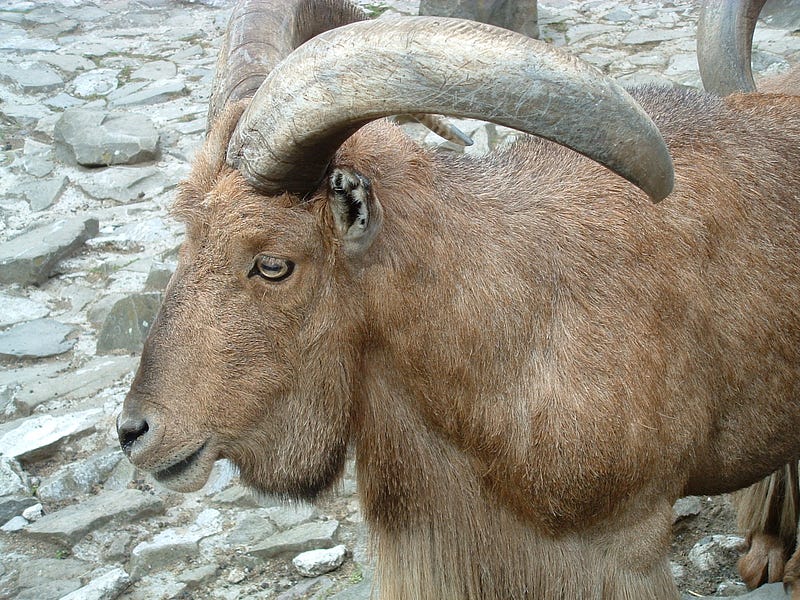
Photo by Krzysztof Kozłowski

Plus, this guy’s “tawny brown coat” doesn’t seem to be doing a good job of blending in against the gray rocks in the background. Then again, I’m not sure which predators they face. I do think any animal willing to climb up rocky crags to hunt these non-sheep is not going to be deterred by them “not moving” as a defense.

And that’s probably why the guy in the above photo ended up like this:
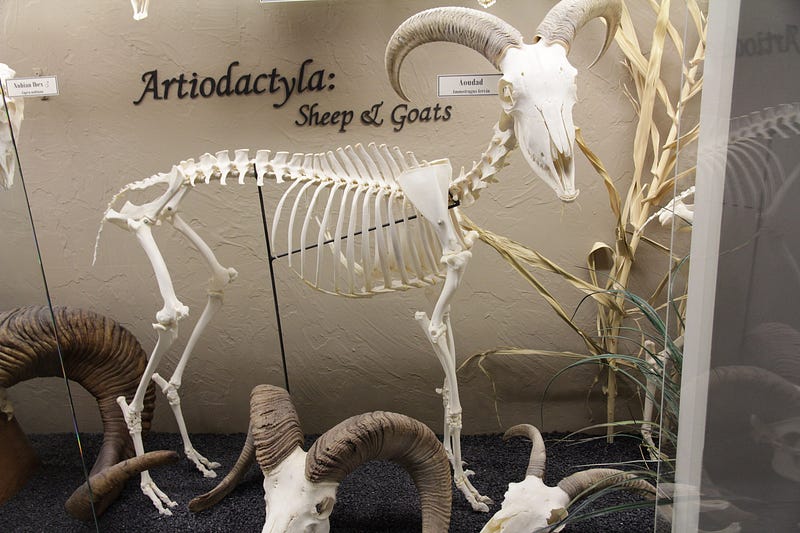
Photo by Polyoutis

I know, it’s a horrible thought. To cheer you up, I offer this photo of a cute young aoudad.
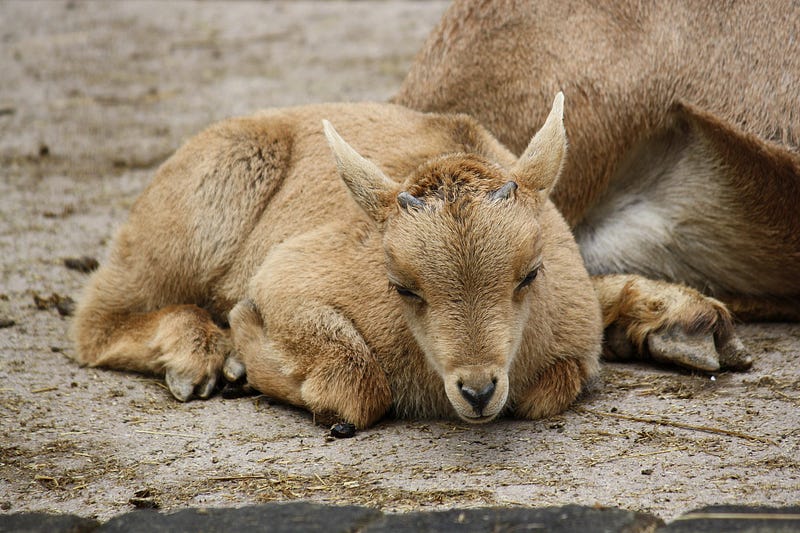
Photo by Matěj Baťha

A story of love and regret

In Spanish, the aoudad goes by several names: arruí, arrui, muflón del Atlas, and carnero de berbería.

As I mentioned earlier, the species is native to North Africa. In 1970, Spain decided it might be a good idea to bring some aoudads over, as demand for big game hunting was on the rise (a general trend in several European countries since the mid-20th century).

The aoudad was initially bought over to the Murcia region (southeastern Spain); animals confined in the Casablanca Zoo and the Frankfurt am Main Zoo were chosen for this important mission of being hunted and killed.

What could possibly go wrong with that?

The abundance of food, the absence of predators, and its high birth rate determined the aoudad’s rapid expansion in a very short time. Turns out not so many Spaniards were keen on climbing tall mountains to hunt a goat when they could goat meat at the local market. Either that, or they just had really bad aim.

Well, the aoudad happily started expanding to other regions of the country. When the Spanish government realized how quickly this not-a-sheep reproduced and colonized and threatened native species, they decided to try to ban the animal. I assume it took only 43 years, since the decree is from 2013. Here’s the police file on this dangerous goat-like creature… born in 1777?
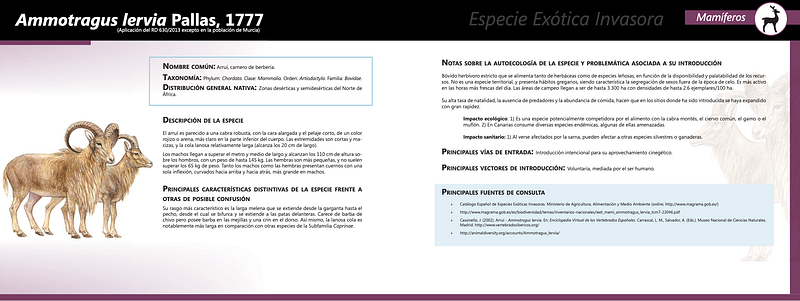
Hmmm… perhaps this is Spain’s version of the chupacabras. But chupacabras means “goat sucker”. This gets weirder and weirder.

However, a 2018 study focused on the region of Murcia and its surroundings indicated the aoudad’s low negative impact and questioned its status as an invasive species. But the same author had previously and together with other researchers declared that the aoudad posed a threat to the native plant life of the area. And even before that, a different study (2007) even recommended the eradication of aoudad.

Meanwhile, even without any more imports, the aoudad continues to flourish in the southern areas of Spain.

That’s about it for today. Okay, okay… one more cute picture:
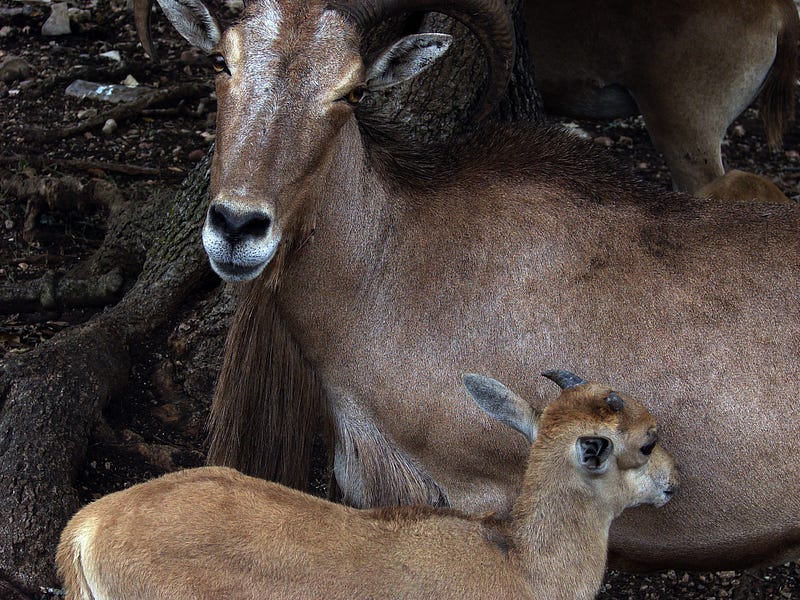
Photo by Rei

And my rant: even though the aoudad clearly exists, the editors of the Spelling Bee decided that this word was a dord.*

You can check out my previous entry on another dord* here:

*What the heck is a dord, you ask? Here’s the answer:

Spelling Bee
Language
Spain
Animals
History
Recommended from ReadMedium