
Aoshima — Japan’s cat island with more furries than people!
For most, Japan is primarily associated with sushi, manga and cherry blossoms in bloom. Few people know, however, that this Western Pacific country is home to an island of cats, which, as the name suggests, has been dominated by furries.
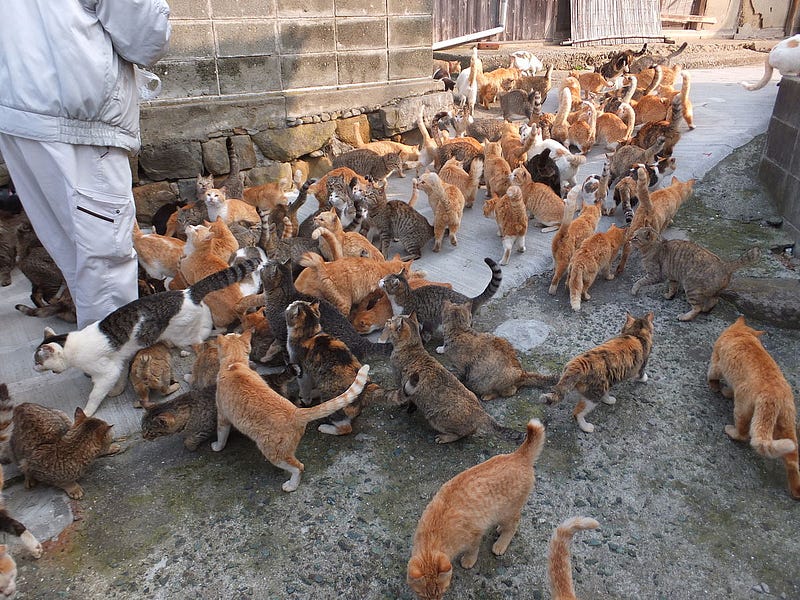

Aoshima, better known as the cat island, is a real paradise for all purring feline lovers. Some people find it hard to believe, but the population of furries is several dozen times bigger than the number of people living there. Check what else we know about this unique place where cats rule and share.
Where is Aoshima located?
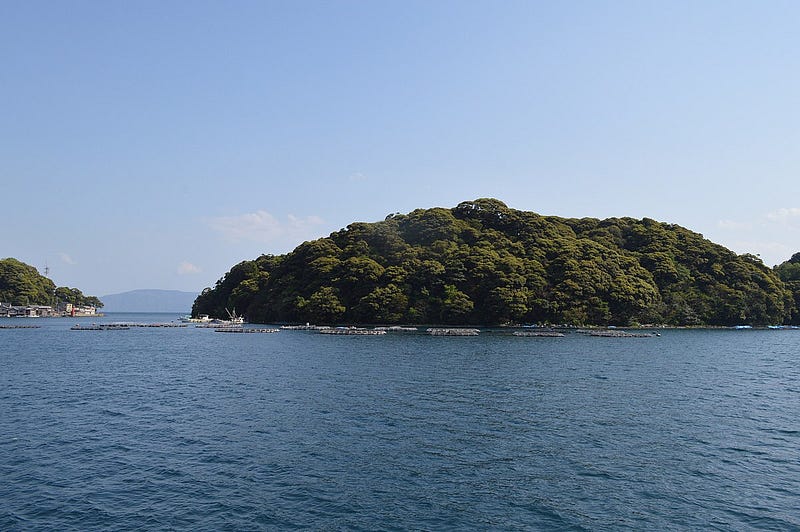
Aoshima is located in Ehime Prefecture, northwest of the coast of Sikoku, one of Japan’s four main islands. It is only 1.5 km long and less than 0.5 km² in area. The residents of this small area are exclusively retirees. They share the island with hundreds of cats running free in all corners of the island. The favorite place for the animals, however, is the harbor, where life mainly takes place. Twice a day a ferry comes to the coast to bring supplies and tourists.
.jpg)
Aoshima: history
Cat Island still had 900 inhabitants in the 1940s. They were mainly engaged in fishing. Some worked in Sikoku. Fishing in the sea, however, began to deal with large corporations, so that fishermen from Aoshima lost their source of livelihood. As a result, many families were forced to leave for the cities in search of income. There are only a few dozen people left on the island, mostly elderly. However, every year there are less and less of them.
Currently, the average age of the islanders is over 75. As reported in the Japanese press, in 2013 Aoshima had 50 residents. Five years later, there were only 13. According to information reported by the daily Asahi Shimbun, there are only 6 people left on the island in 2019. They live with about two hundred cats. Most of the animals have reproduced uncontrollably for years. Only a fraction were spayed or neutered. In 2018, the authorities decided to put an end to this. Almost all the quadrupeds were trapped and sterilized. The operation was avoided by 10 cats that were hidden at home by an island resident who opposed the neutering program.
How did the “takeover” of Aoshima by cats come about? The animals were brought there to hunt mice that were destroying fishing boats. Once the rodent infestation was eradicated, they remained on the island and continued to breed. With no predators or other dangers to threaten them in that area, their numbers continued to grow. When more people lived on the island, the prevalence of cats was not as apparent. Today, there are 35 animals per islander.

Aoshima: visiting, getting there
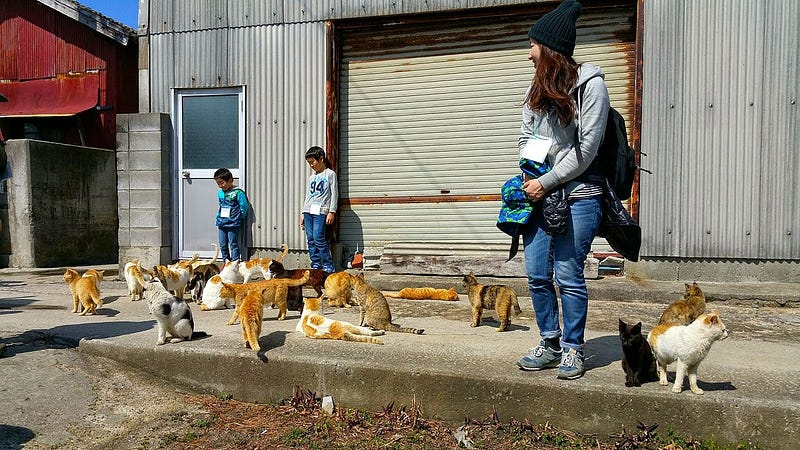
The Cat Island in Japan seems like the perfect vacation spot for all animal lovers. However, there aren’t many attractions on this island other than the ubiquitous purrs. There is a small fishing village on Aoshima where there is a cat cafe run by one of the locals. Other islanders are not very keen on tourism. They mainly want peace and quiet and do not want to make money on visitors.
More troublesome than tourists are cats themselves, which destroy home gardens and constantly demand food. On the island there is a shortage of natural prey and the locals cannot feed them, which makes them hungry all the time. For this reason they crowd the harbor and wait for ferries that bring tourists to feed them. It does not take much to satisfy them — they will eat almost anything they get. Cats are semi-wild, but in search of food they bend to strangers. They know that an incoming ship means another portion of snacks for them.
The ferry trip to Aoshima from the town of Nagahama located on the Sikoku coast takes about 30 minutes. It is best to arrive on the island for a day, as there are no accommodations, restaurants, souvenir stores or even vending machines. You can do your last shopping before arriving in Nagahama. The ferry runs twice a day — morning and afternoon. Take into account that returning from the island may not be easy. Cruises are sometimes cancelled unannounced due to the weather. Sometimes there are not enough seats on the small ship. Tickets cannot be booked in advance and are sold on a first-come, first-served basis.
It takes no more than two hours to explore the small land. In addition to the cats, you can see a temple and 88 Buddha statues on it. The number is a reference to the pilgrimage route around Sikoku. Other than that, there are not many places to visit on the island. Most of the buildings are abandoned and neglected, a direct result of the ongoing depopulation.
Tourists point out that the problem when visiting Aoshima can be the intense smell of animals, strongly noticeable especially on hot days. The heat also causes cats to seek shelter and be reluctant to come out into the full sun. Consequently, it is best to plan a visit to the island during the cooler season.

Aoshima: what kind of cats live there?
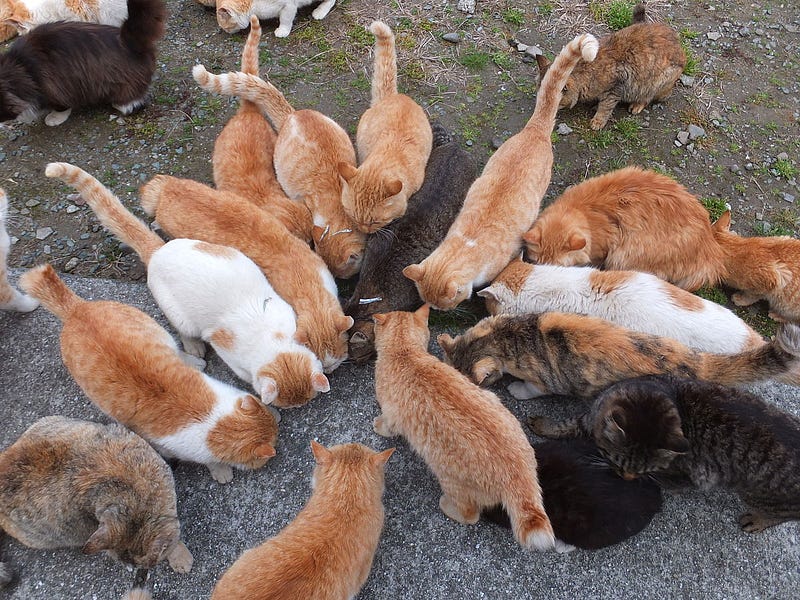
Cats are particularly beloved in Japan, so it is no wonder that Aoshima is popular despite the lack of tourist infrastructure. The quadrupeds that live there are ordinary rooftop cats, but this does not matter to their lovers. Most of the cats on the island are related to each other, which can be seen in their coloration. Most of the cats there have red or red and white fur. Some are brindle. Some of the animals have short tails, which is the result of a genetic mutation passed on from generation to generation.
There is a special zone on the island, where it is allowed to feed the quadrupeds. Food “for later” can be left for them in the harbor waiting room. In the past, cats lacked proper veterinary care, which meant that the health of many of them was not the best. The biggest problem was catarrh threatening especially new born kittens. Nowadays the cats still struggle with some diseases but the authorities try to take care of their good condition. This has become much easier since sterilization, which has kept the number of new cats down.
Japan’s cat islands
Although Aoshima is the most popular, the Cherry Blossom Country is famous for several other places where more cats than people live. One of them is Tashirojima, an island in the Pacific Ocean located off the Oshika Peninsula. It is inhabited by less than 100 people, mostly retirees, and five times as many furries. Interestingly, the pets were brought to the island for the same purpose as on Aoshima, namely to fight the mouse infestation. The rodents were a huge threat to the morose silkworm, from whose cocoons the local people produced silk.
In 2016, a documentary film was made titled “Cat Heaven Island” directed by Landon Donoho telling the story of the daily lives of Tashirojima residents and their furry friends.
Cool that you made it to the end of this article. I will be very pleased if you appreciate the effort of creating it and leave some claps here, or maybe even start following me. Thank you!