
MENTAL HEALTH
Anxiety — The Word You Don’t ‘Hear’ Anymore
It is used so often; I fear it has lost its meaning
May is Mental Health Awareness Month, which has been observed in May in the United States since 1949; promoting awareness, conversation, understanding, and screenings.
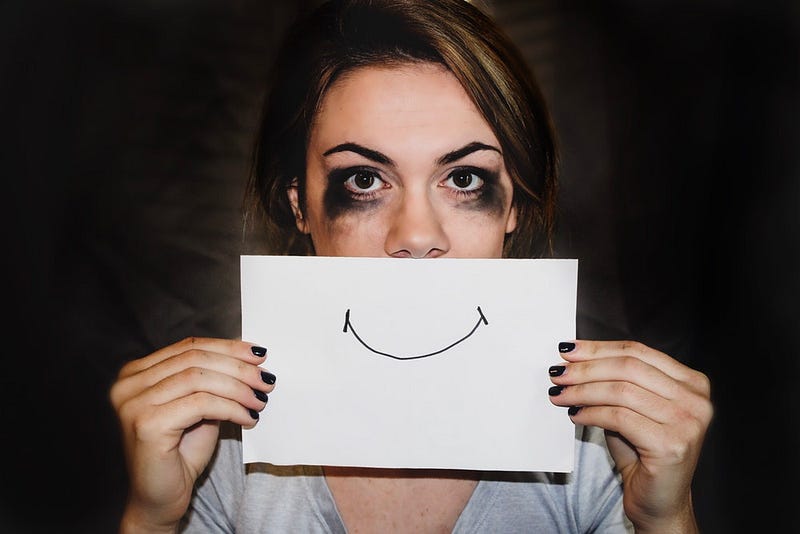
It seems we hear “I have anxiety” so often that the terminology has lost its meaning. We have become numb to the understanding of just how crippling uncontrolled anxiety can be.
As a small child, I had terrible anxiety; which has carried over into my adulthood with a vengeance. I remember fearing the most mundane things:
- Going to school — I had a crippling sinking feeling in my stomach every time our car snaked its way up the narrow ascending road that led to my elementary school.
- Opening doors — I was a very small child and doors, especially the ones at my school, were very heavy. I’d wait for someone else to open them and sneak through before they closed.
- Being terribly afraid of being called on in school, getting in trouble, or having to speak in front of the other kids. Approaching my teacher to speak or ask a question.
- Playground and Physical education activities — I was a very tiny child (I weighed 24 1/2 lbs in the first grade!) so I could not compete with the other children physically. The feeling of being “on the spot” with everyone looking at me trying to run fast enough or kick the ball hard enough — caused me great anxiety. I hated P.E. and participating in sports activities throughout my school years.
- Being kidnapped — I was terribly afraid of this and had anxiety about white vans. I was afraid to walk past them in parking lots for fear someone would pull me inside. Today the fear is a fear of rape, or that someone will put me into the trunk of a car.
- Vomiting — I still have an irrational fear of this. The technical term is Emetophobia.
- Making or answering phone calls — to date I still will avoid having to call people, especially places of business.
- Car crashes — I still have a gripping fear over driving on the interstate or in heavy traffic.
- Losing people — I imagined (and still do) extremely graphic ways I’d find a loved one dead (suicide seemed to be high on the list of how they would die) and I’d then imagine in great detail the funeral (I still do this. I am actually not sure if the funeral part happened in my childhood or if it developed later on.)
- Fear the house would burn down — I pictured our family escaping or trying to escape, all our things destroyed.
- Fear of going underwater with my head, drowning, swimming activities if I could not have the bottom to stand on or a trusted source near me to grab onto. Because of this, I didn’t learn to swim in water deeper than my height until I was well into my teens.
- A phobia developed in my adulthood — Orthopterophobia, as it is called, fear of crickets or grasshoppers (in my case, specifically and only referring to camel crickets.) I wrote about this!
- Fear of bedtime/going to sleep — I had terrible insomnia (still do) and these quiet, dark moments were prime time for the “anxiety playbook” to play on a loop in my head. I was very imaginative in this regard.
These are just a few things I remember. I didn’t know until my adulthood that while most children experience anxiety when put into uncomfortable situations, most do not have the intense, foreboding, sick-to-your-stomach fear that I had growing up.
A few other articles to open in new tabs…
I am not most people, and yet there are so many of us. Generalized Anxiety Disorder, phobias etc. We suffer often in silence, for fear that others will not understand:
Most people are not stricken by fear the moment someone says their stomach hurts. I am 45 years old and I still have incredible anxiety over vomiting. It has made me feel like a terrible parent when my children were sick and this impaired me from caring for them fully. I’d make soup, ginger tea, bring it to them. Stand outside the door and sob while they were sick…Lysol the entire house, lay awake at night ruminating over every tummy gurgle or sound from down the hall. Feeling guilty.
Emetophobia is a phobia that causes overwhelming, intense anxiety pertaining to vomiting.
Factors that may have contributed to my anxiety disorder(s):
- genetics
- an event of molestation by a stranger when I was 4–5 years old (more on this A Poetic Response to …)
- going off to school while both parents and all the other siblings were still at home (I was the oldest child and Dad worked at home at the time.)
- electrocuting myself as a toddler (this is a story all by itself)
For most people that experience anxiety, it is a normal response to a stressful experience. It is normal to feel these “butterflies” raging in your stomach when you have a job interview, or go on a date, or have to give a speech.
You should not feel them standing in line, waiting to be at the register where anxiety grabs you by the throat waiting for the card to clear, in sheer panic over the money exchange. (I still have “check-out” anxiety, but I am working on it and making good progress here.)
You should not feel them when you look at the mail and see a bill. Some days I am literally unable to open the mail.
You should not have a crippling fear while driving on the interstate, panic rising with every sound of a passing car or those terrifying transfer trucks, and have the thought form solidly in your mind “What if I have to throw up? On no. I can’t get over. What am I going to do?” Then comes the full-blown panic attack.
Speaking of panic attacks — I know that we’ve become, as a society, kind of dismissive when we hear the word “anxiety”, but we have also grown suspicious and callous toward anyone saying that they have had panic attacks.
Let me explain something here:
You feel like you are dying.
I am not exaggerating. People go to the hospital thinking they are having a heart attack.
For me, the chest pain isn’t so terrible, or at least my focus is elsewhere. Sweat, shaking, a sinking feeling inside of me accompanied by a rising “flash of heat” through my body — and then I am choking to breathe. In short, it is terrifying and painful.
Some people actually scream while having them or cry uncontrollably.
I have done the latter — although once in the hospital for a migraine I was given intravenous Benadryl which cause a severe panic attack — I wanted to scream. And run. And scratch my skin to open up the veins and bleed out the poison they put in me that was surely going to make me DIE! No more of that stuff in my veins, please.
Do not dismiss the gripping, emotionally paralyzing effects that anxiety can have on a person’s life. Understand the treatment is complicated and sometimes takes a year or more to “test” new medications and find one that works, without exacerbating the situation.
Understand that the pain you cannot see does not mean that it is not real.
Anxiety is a real thing. A real. Painful. Scary. Confusing. Isolating. Thing.
There is so much more to this topic than the brief bits I have included for this article. If you have been dragging your feet about getting some help, please re-consider. You do not have to live in this state of disruption in your life! I have learned a lot about my Generalized Anxiety Disorder and Panic Disorder over the years and there are ways to cope, to meet it head-on, to take really good care of yourself and listen to your body. To breathe. Just. Breathe.


