
Another Weekend Of Animal Crossing (Part 2). A Time Portal Back To 1950s and 2013.
A recent conversation with Maria Rattray ignited the spark for this story.
Maria Rattray wrote a story recently on chicken feet bone broth. It is a fascinating story worth recommending.
I was surprised that Maria and her family consume chicken feet bone broth. Honestly, I thought this is a Chinese food-culture thing, but I proved myself wrong very quickly.
I fell prey to cultural stereotypes.
It is a false assumption that only a certain ethnic group consumes animals from nose to tail. In fact, context is everything, and circumstances drive everything.
I have 2 stories to share about complete animal consumption. The first one is a story about my mum’s environment growing up in the 1950s. The second story is my personal experience while on vacation in Mongolia.
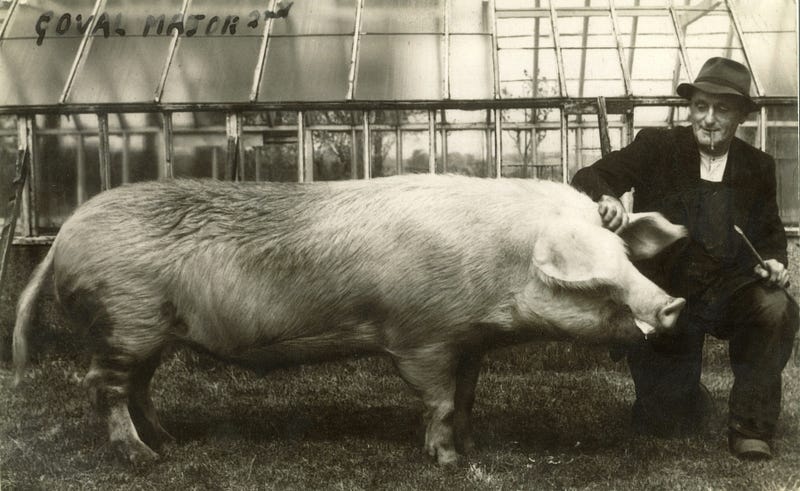
My mum grew up equating pork with meat. Her dad is a pig farmer, and my mum lived in a world of abattoirs, pig farms, and butcher houses.
Homework was secondary. My mum gets hit on her palm if she did not do her homework. She can live with that pain.
Pig-rearing is everything. If the pig she is in charge of dies before it reaches the abattoir, it means the entire clan has nothing to eat for 2 days. The health of the pig ensures the survival of her younger siblings until the age of reason.
Household income drives behavior. It is difficult for us to imagine the environment my mum grew up in. I am born in the 1980s, and I played with swings and slides in an urban neighborhood. I never saw a pig grunting in front of me. Okay, I never heard one as well.
Imagine the disconnect between the millennials and my mum’s generation.
Let me get back to the realities that confront my mum and her family.
They did not have money to consume a wide variety of food (and meat, for that matter) beyond pork. When the family runs out of food, my granddad would head to his pig farm and grab one to feed his family. It was the primary means for day-to-day survival.
Needless to say, they treasured every inch of the pig. Over the years, the clan learned different ways to cook various parts of the pig in compensation for monotonous food choices.
We are talking about the 1950s here. Anything goes so long as our clan survives.
And then, we have to go beyond the Chinese community too.
I visited Mongolia in 2013. It is a land-locked country with farming activities predominantly focusing on gregarious undulates. Chickens and ducks are scarce.
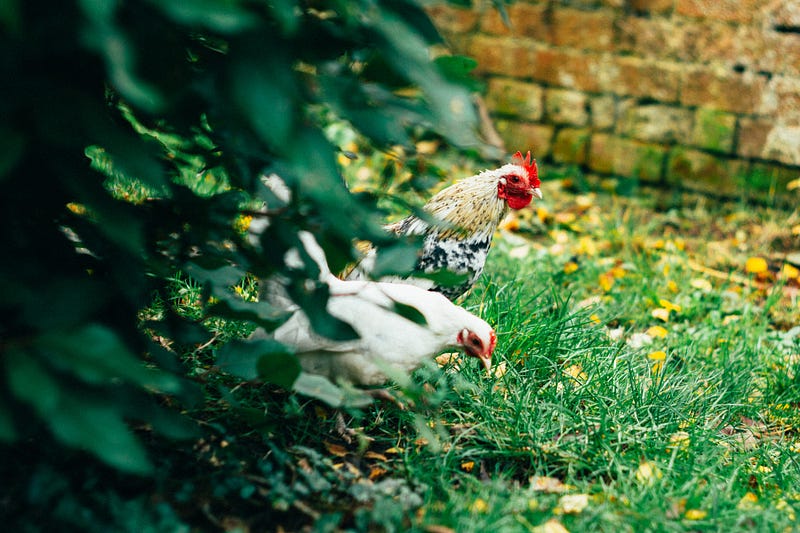
When I visited a lake-town off Ulan Baatar, I was forced to go on a plant-based diet (there isn’t such a term back then) for the first week. I did not want to eat mutton, beef, and yak meat served on my plate. My nose pushed me away when the smell is detected.
Then I exploded. I wanted comfort food! So I requested the lake resort for one. I asked them nicely if they are willing to serve me a local chicken dish. I smiled a wide grin when they obliged.
I never knew my request was a tall order. I never knew that getting a bird added stress to the kitchen staff. What a frog in the well!
I learned from the concierge that one of the kitchen staff had to bike out to the town market to buy one (120km away, thereabouts). They had to dispatch one of their senior staff to purchase the bird because only the experienced ones know where to find the feathered stock.
Oh, and only the senior kitchen staff knows how to choose them for cooking purposes.
Wow.
Of course, I was delighted. However, my meal preferences for the rest of the stay have been set. The kitchen served me different portions of the chicken for my remaining stay. Yes, I ate one entire bird during my stay!
It was then, I found out that chickens are really rare in Mongolia. And because of that, they were expensive. That is why the resort kitchen ensured that there was no wastage in terms of bird consumption!
I happened to be the fortunate one that week because no other lodge dwellers wanted to share the bird dish. They are fellow Mongolians traveling around their country, and they prefer to have hoofed animals on their plates. I, on the other hand, prefer feathers to hoofs.
They cast weird stares at me when I was happily devouring the bird. It did not bother me. I was pleased with the bird and the lodge services.
My Take.
I love to think that circumstances drive what we do. We are standing on the shoulders of our previous generation when it comes to enjoying the progress made by our civilization.
In the early part of the past century, people worry about survival. Therefore, they channel their life energy to ensure that their offspring survives. Today, as we speak, people in the third world are doing what they can to ensure survival.
There will come a day where they arrive at where we are. They will start chiming about climate change and excessive methane production due to farming practices. Yes, they will. It takes time.
And maybe before that, we need to extend our empathy towards apparent backward practices such as consuming the entire animal of their choice.
You know, oat milk and protein shakes can be expensive for families trying to survive with what they have in their wallets.
Aldric
For the matter of full disclosure — My mum and I are Singaporeans. Our race is Chinese. Our nationalities are not. We are exposed to a mixed-bag of cultures growing up. Take, for instance, western fried food, Malay belachan stew, and others. Our unique culture is we mix everything into one plate.
Related Story from the Author.
About the Author:
As a content contributor, I write my observations from daily life and my business exposure.
Because our life experience is the bedrock of our unique perspectives.


