avatarAvi Kotzer

Free AI web copilot to create summaries, insights and extended knowledge, download it at here

2823

Abstract

lants and in the fatty tissues of plant-eating animals”.</p><p id="a1d9">If you’re thinking this word sounds a lot like carrot, that’s because the <b>orange</b> vegetable’s Latin name (<i>carota</i>) was used as a root to create that scientific term. Carotene is what gives Bugs Bunny’s favorite snack its color. Sweet potatoes, papayas, and orange cantaloupes also have it. So does the orange dry foliage that brings crowds to New England during the fall season.</p><p id="1b0a">The most famous and common carotene found in plants, beta-carotene, is what is known as a provitamin A. In other words, we eat and digest plants, fruits, or vegetables that have beta-carotene and then convert it into vitamin A.</p><p id="2fcc">The pigments in the <i>annatto</i> seeds are technically apocarotenoids, sort of like cousins of the carotenes. But they can’t be converted into vitamin A. They can, however, turn everything they touch into a red-orange mess. That’s why <i>annatto</i> is a convenient food coloring. It’s used to manipulate the colors of butter, cheeses, snack foods, etc. etc. etc. Many British Cheddars and U.S. Colbys contain <i>annatto</i>. Gloucester cheese makers have been using this food dye since the 16th century!</p><p id="f8dc">Not to worry, though. <i>Annatto</i> is much safer than synthetic food coloring compounds. In fact, the FDA considers that any colorant directly derived from <i>annatto</i> does not need certification. Foods colored with it may be labeled as “colored with annatto” or “annatto color.” The European Union has given it the E160b label.</p><h2 id="4c3a">Cheaper by the dozen</h2><p id="18bd">Price per pound (around half a kilo): $5000.</p><p id="c9b2">Yes, five thousand dollars.</p><p id="ba2d">No, I’m not talking about <i>annatto</i>. If it were that expensive, I’m sure the word would have been accepted by the editors of the Spelling Bee.</p><p id="6519">The exorbitant cost mentioned above is for the world’s most expensive spice: saffron. If you’ve ever had an authentic Spanish paella, you’ve probably had saffron.</p><p id="38e0">Since <i>annatto</i> costs about one-thousandth of what that spice does, one can certainly understand why it’s become a very popular alternative. The only problem is, of course, that the flavor is not the same. Also, unlike saffron, annatto is not used directly in food; it’s either made into a paste or dissolved in water.</p><p id="97ab">In the Americas, <i>annatto</i> is also called <i>achiote</i> or <i>onoto</i>. (Having grown up in Venezuela, those are the names by which I’ve always known it.) Its use is very common in the culinary traditions of Latin America, the Caribbean, Vietnam, and the Philippines.</p><figure id="4309"><img src="https://cdn-images-1.readmedium.com/v2/resize:fit:800/1*zWhAU92qQPhbi_etMn1hUA.png"><figcapti

Options

on>Collage from wikicommons images: Iva Reztok</figcaption></figure><p id="478d">As you can see, our medicore collage artist, Iva Reztok, couldn’t be bothered to delete the red squiggly lines under the words <i>gandules</i> and <i>pancit</i>. Which is why we pay him peanuts. Literally. We throw peanuts at him throughout the course of the day; whatever he catches in his mouth he gets to eat.</p><p id="2bd5">On the left is the <i>hallaca</i>, a Venezuelan tamale traditionally made for the Christmas holidays. The <i>arroz con gandules</i> is one of Puerto Rico’s national dishes. <i>Pancit</i> is a Filipino dish usually made from rice noodles, containing shrimp, pork, hard-boiled eggs, and minced green onions.</p><p id="f332"><i>Annatto</i> is also used in a chocolate drink called <i>tascalate</i> from the Chiapas region in Mexico. Interestingly, aside from <i>annatto</i> and chocolate, the drink includes roasted corn, pine nuts, and vanilla.</p><p id="8368">Mmmm… I gotta get myself some of that <i>tascalate</i>. I wonder if it’s exported.</p><p id="8430">So now you know. If you don’t want to pay through the nose (bad pun intended) for the world’s most expensive spice, you should purchase some annatto instead. Except when you go to the market you may have problems asking around for it. And that’s because the editors of the Spelling Bee decided that <i>annatto </i>is a <a href="https://www.merriam-webster.com/words-at-play/dord-a-ghost-word"><b>dord</b></a><b>.</b>*</p><p id="d756">Please check out my previous entry on another <b>dord:</b></p><div id="a893" class="link-block"> <a href="https://readmedium.com/piki-48dbaccee77e"> <div> <div> <h2>Piki</h2> <div><h3>A Hopi delicacy I hope to try one day</h3></div> <div><p>medium.com</p></div> </div> <div> <div style="background-image: url(https://miro.readmedium.com/v2/resize:fit:320/0*HpYVurFhuXa8kzk1.jpg)"></div> </div> </div> </a> </div><p id="02e5">*What the heck is a <b>dord, </b>anyway? Here you go:</p><div id="32ae" class="link-block"> <a href="https://www.merriam-webster.com/words-at-play/dord-a-ghost-word"> <div> <div> <h2>'Dord': A Ghost Word</h2> <div><h3>One of the questions people like to ask lexicographers is this: Can you sneak something into the dictionary? Can you…</h3></div> <div><p>www.merriam-webster.com</p></div> </div> <div> <div style="background-image: url(https://miro.readmedium.com/v2/resize:fit:320/0*Uj3xKZQeHpDxK8DL)"></div> </div> </div> </a> </div></article></body>

Annatto

You may have eaten some poor-man’s saffron today
Credit: wikicommons

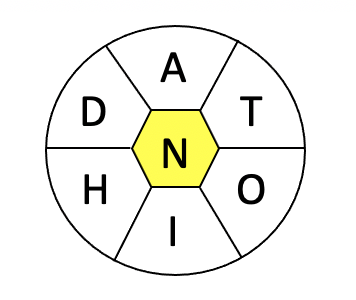
Today’s New York Times Spelling Bee letters:
Art: Iva Reztok

A, D, H, I, O, T, and center N (all words must include N).

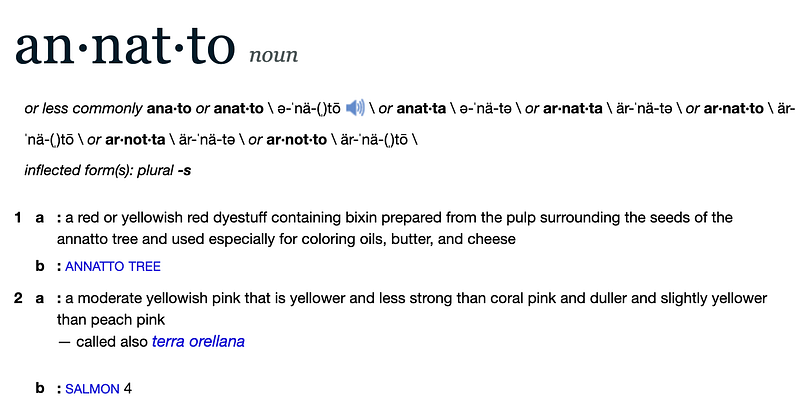
Merriam-Webster says…
Credit: merriam-webster.com

Silly little dictionary! Don’t you know annatto can’t possibly be a word if the New York Times says it ain’t?

Also, for further fascinating facts, check out the Spelling Bee Master.

What’s your favorite dord* from today’s puzzle?

My Two Cents

What do the butters, cakes, cheeses, custards, potatoes, snack foods, breakfast cereals, smoked fish, and sausages that you eat on a daily basis all have in common?

If you guessed they contain a bit of Bixa orellana, well… maybe you should be the one writing today’s article.

But if, like me, you had no clue that our dear Bixa tree even existed until a few minutes ago, don’t worry. She’s just the mother of the seeds from which we obtain an orange-red condiment slash food coloring called annatto.

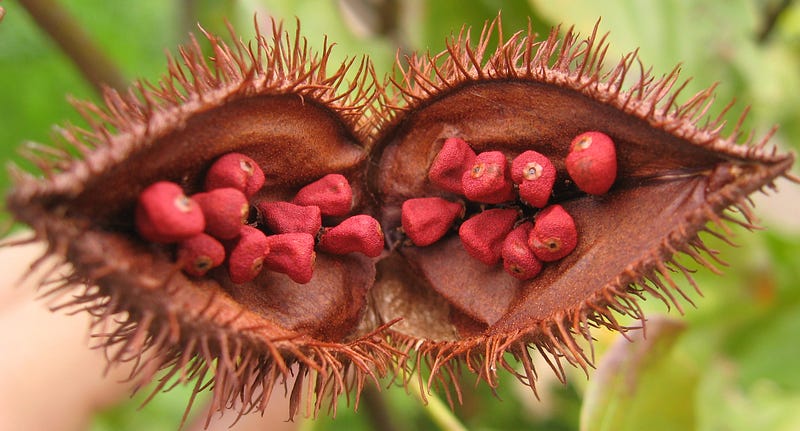
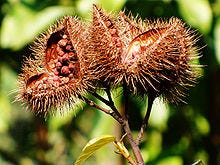
This is the flower of the annatto tree, and the little red things inside are the seeds.
Credit: wikicommons

Am I the only one who thinks it looks like an unshaven muppet eating cranberries?

Most botanists believe the B. orellana tree originated in the tropical regions between Mexico to Brazil, including both countries. It likely first used for indigenous rituals, decorative body painting (still done in Brazil), sunscreen, insect repellent, and as a medicine. Its culinary use is thought to have come later. Spanish and Portuguese explorers spread the word (and the seeds) in the 16th century.

Carotenes

The dictionary explains that a carotene is “any of several orange or red crystalline pigments… commonly occurring in… plants and in the fatty tissues of plant-eating animals”.

If you’re thinking this word sounds a lot like carrot, that’s because the orange vegetable’s Latin name (carota) was used as a root to create that scientific term. Carotene is what gives Bugs Bunny’s favorite snack its color. Sweet potatoes, papayas, and orange cantaloupes also have it. So does the orange dry foliage that brings crowds to New England during the fall season.

The most famous and common carotene found in plants, beta-carotene, is what is known as a provitamin A. In other words, we eat and digest plants, fruits, or vegetables that have beta-carotene and then convert it into vitamin A.

The pigments in the annatto seeds are technically apocarotenoids, sort of like cousins of the carotenes. But they can’t be converted into vitamin A. They can, however, turn everything they touch into a red-orange mess. That’s why annatto is a convenient food coloring. It’s used to manipulate the colors of butter, cheeses, snack foods, etc. etc. etc. Many British Cheddars and U.S. Colbys contain annatto. Gloucester cheese makers have been using this food dye since the 16th century!

Not to worry, though. Annatto is much safer than synthetic food coloring compounds. In fact, the FDA considers that any colorant directly derived from annatto does not need certification. Foods colored with it may be labeled as “colored with annatto” or “annatto color.” The European Union has given it the E160b label.

Cheaper by the dozen

Price per pound (around half a kilo): $5000.

Yes, five thousand dollars.

No, I’m not talking about annatto. If it were that expensive, I’m sure the word would have been accepted by the editors of the Spelling Bee.

The exorbitant cost mentioned above is for the world’s most expensive spice: saffron. If you’ve ever had an authentic Spanish paella, you’ve probably had saffron.

Since annatto costs about one-thousandth of what that spice does, one can certainly understand why it’s become a very popular alternative. The only problem is, of course, that the flavor is not the same. Also, unlike saffron, annatto is not used directly in food; it’s either made into a paste or dissolved in water.

In the Americas, annatto is also called achiote or onoto. (Having grown up in Venezuela, those are the names by which I’ve always known it.) Its use is very common in the culinary traditions of Latin America, the Caribbean, Vietnam, and the Philippines.
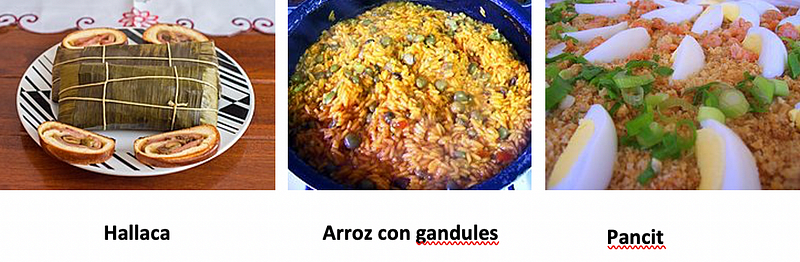
Collage from wikicommons images: Iva Reztok

As you can see, our medicore collage artist, Iva Reztok, couldn’t be bothered to delete the red squiggly lines under the words gandules and pancit. Which is why we pay him peanuts. Literally. We throw peanuts at him throughout the course of the day; whatever he catches in his mouth he gets to eat.

On the left is the hallaca, a Venezuelan tamale traditionally made for the Christmas holidays. The arroz con gandules is one of Puerto Rico’s national dishes. Pancit is a Filipino dish usually made from rice noodles, containing shrimp, pork, hard-boiled eggs, and minced green onions.

Annatto is also used in a chocolate drink called tascalate from the Chiapas region in Mexico. Interestingly, aside from annatto and chocolate, the drink includes roasted corn, pine nuts, and vanilla.

Mmmm… I gotta get myself some of that tascalate. I wonder if it’s exported.

So now you know. If you don’t want to pay through the nose (bad pun intended) for the world’s most expensive spice, you should purchase some annatto instead. Except when you go to the market you may have problems asking around for it. And that’s because the editors of the Spelling Bee decided that annatto is a dord.*

Please check out my previous entry on another dord:

*What the heck is a dord, anyway? Here you go:

Spelling Bee
Language
Food
Culture
Science
Recommended from ReadMedium