
Angus Barbieri, The Man Who Went 382 Days Without Eating
The longest fast ever…
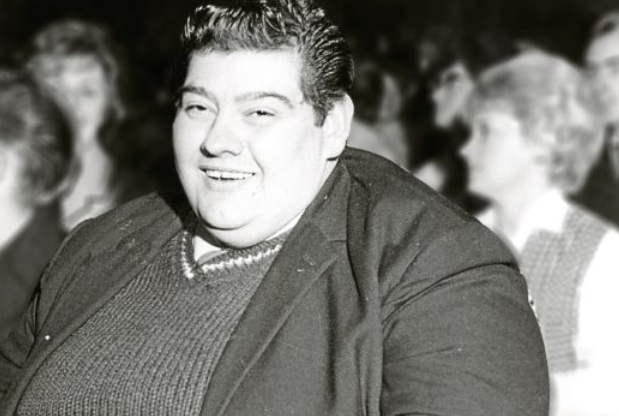
Fasting cures are considered very healthy. They are said to bring numerous health benefits, such as strengthening the immune system, intestinal regeneration, detoxification, and even the cure of cardiovascular diseases, type 2 diabetes, and hypometabolic diseases.
Sounds like there are plenty of reasons to give it a try. However, it is not recommended to go as long as the young man in the picture.
His name is Angus Barbieri. He fasted for a whole year and 17 days, losing 125 kg. Before he went to the University Department of Medicine at the Royal Infirmary of Dundee (UK) in 1965 and told the doctors that he didn’t want to eat anymore, he was overweight and weighed over 200kg. The doctors agreed and supported him in his fasting regimen, regularly checking his blood sugar levels and making sure he wasn’t putting himself at risk. They also prescribed multivitamins, potassium, and sodium.
Of course, in the beginning, it was not expected that the fast would last so long. But Barbieri showed perseverance and did not show any health problems. Week after week and month after month, he took only water, green tea, and black coffee, as well as the supplements prescribed by the doctors.
After 382 days, he finally finished his fast with a boiled egg and a slice of bread. He had reached a weight of 81kg during this time.
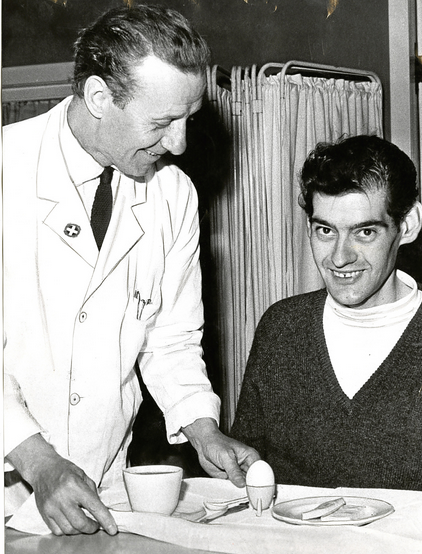
Physical measurements
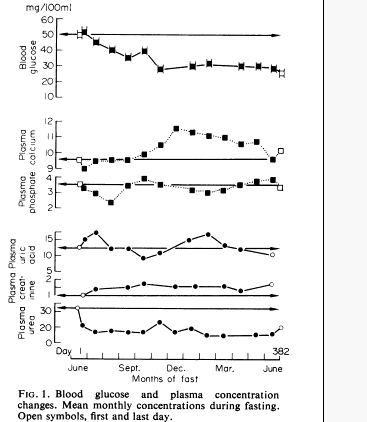
A report on Angus Barbieri’s fasting regimen was published in the Postgraduate Medical Journal. The physical condition during Barbieri’s fast is described as follows:
A 27-year-old male patient fasted under supervision for 382 days and has subsequently maintained his normal weight. Blood glucose concentrations around 30 mg/100 ml were recorded consistently during the last 8 months, although the patient was ambulant and attending as an out-patient. Responses to glucose and tolbutamide tolerance tests remained normal. The hyperglycaemic response to glucagon was reduced and latterly absent, but promptly returned to normal during carbohydrate refeeding. After an initial decrease was corrected, plasma potassium levels remained normal without supplementation. A temporary period of hypercalcaemia occurred towards the end of the fast. Decreased plasma magnesium concentrations were a consistent feature from the first month onwards. After 100 days of fasting there was a marked and persistent increase in the excretion of urinary cations and inorganic phosphate, which until then had been minimal. These increases may be due to dissolution of excessive soft tissue and skeletal mass. Prolonged fasting in this patient had no ill-effects.
Don’t Try This At Home!
Such fasting cures as Barbieri carried out are also associated with risks, which is why they should not be done for so long and in the best case under medical supervision.
If you belong to the following groups, fasting is a huge risk for you, so you should not do it. Pregnant women, dementia patients, nursing mothers, people with eating disorders or liver or kidney diseases.
When approaching a fasting cure, you should keep the following in mind: In the first days, you may experience dizziness, hypoglycemia, and headaches. In order not to lose too many muscles, you should move lightly during the fast.
Thanks for reading!
Wait a second. You should get my articles in your inbox. Subscribe here. Maybe you also want to start writing on Medium yourself and make money. I made $2300 in my second month! You only need a membership for $5 a month. If you sign up with my link, you support me with a part of your fee without additional costs.
I think you will also like these articles: