
Anatomy of a Fall — Film Review
A mysterious death in a courtroom drama unravels the complexities of truth and relationships. An unforgettable cinematic experience that will keep you hooked until the very end.
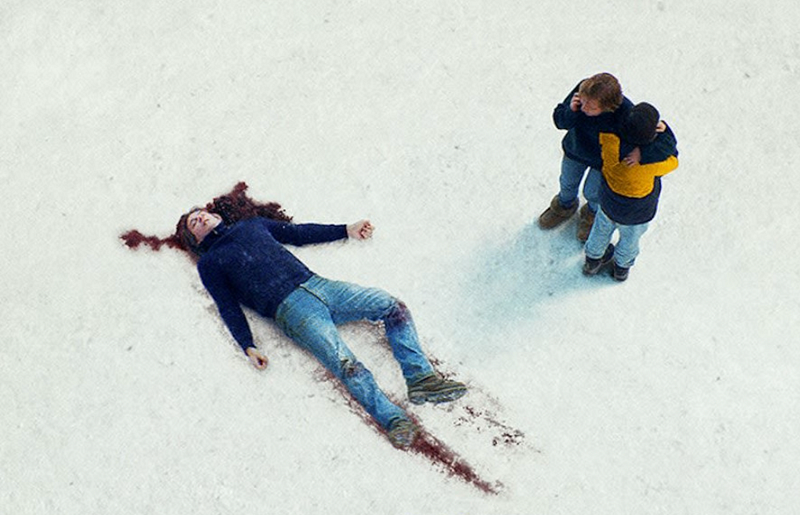
Directed by Justine Triet and co-written with her husband Arthur Harar, ‘Anatomy of a Fall’ (French: Anatomie d’une chute) is a gripping drama-thriller that, while not based on true events, fulfills its promise of delivering a captivating journey.
Intriguing, immersive, and thought-provoking, the film stands out among the 2024 Oscar nominees, securing five nominations including Best Picture, Best Director, and Best Actress.
The story begins with Sandra (Sandra Huller), a successful writer, who finds herself amid a chaotic interview. In the background, her husband repeatedly plays loud music, specifically 50 Cent’s “P.I.M.P.,” causing disruption.
The audience is left wondering whether this was a deliberate attempt to unsettle Sandra or simply a regular occurrence. The noise becomes too much for the interviewer, so they agree to meet again at another time. Sandra then finds herself alone at home with her husband, who remains off-camera. It all seems trivial.
However, events take a dramatic turn when young Daniel (Milo Machado), Sandra’s visually impaired son, returns from his stroll with his furry companion Snoop (Messi) only to stumble upon the lifeless body of the man who played the music earlier — his own father.
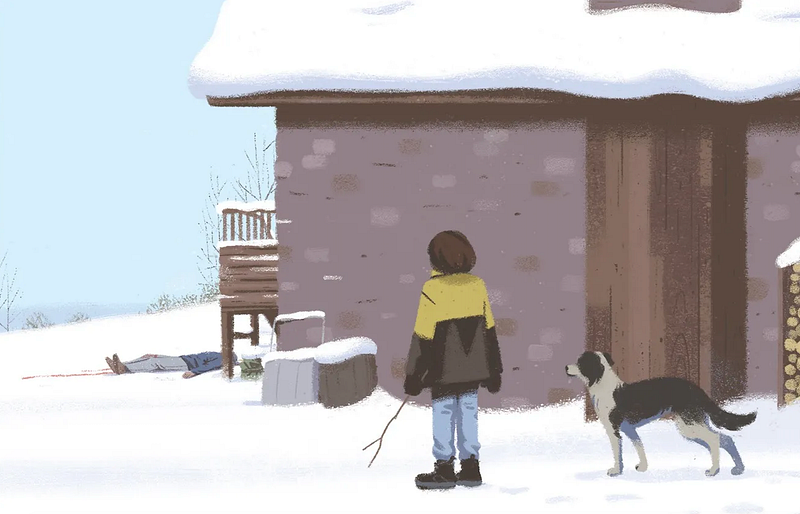
Sandra’s life drastically shifts as she becomes the main suspect, suddenly thrust into the spotlight and confronted with a tense courtroom battle as she tries to prove her innocence in her husband’s death.
Throughout the film, diverse perspectives on Sandra’s relationship with her late husband come to light, while a torrent of revelations unveils hidden truths and emotions.
In the courtroom, both the prosecutor and defense counsel aim to persuade the jury about their own conclusions regarding “did she do it?” However, the truth is far more complex than a straightforward answer, and ‘Anatomy of a Fall’ is an exploration of truth and perception.
Sandra Huller’s compelling performance, alongside a talented ensemble cast, not only captivates but also inspires, adding depth and resonance to each scene.
On the downside, its heavy French dialogue may pose a challenge for some viewers and even interfere with the film’s rhythm. Personally, I don’t find it an issue, not only because English is my second language and I’m accustomed to dealing with subtitles, but also because I firmly believe that the movie’s ideas and themes are so profound and thought-provoking that they can transcend any language barrier.
Expanding beyond its surface narrative, the film prompts viewers to reflect on broader societal and cultural dynamics, illustrating how storytelling can stimulate introspection and challenge our perceptions of truth. It delves into the theme of distorting reality and bending the truth, where facts are twisted to control the trial.
Furthermore, the movie explores themes of guilt: the father blames himself for his son’s disability, while Sandra questions if she pushed her husband too far emotionally, perhaps even physically as some viewers may speculate.
Additionally, the film examines the complexities of relationships, shedding light on how even love can lead to self-destruction. As Sandra reflects, ‘Sometimes, a couple is kind of chaos and everybody is lost’.
It’s a narrative of confusion, where ambiguity reigns and viewers are left to form their own interpretations and spoiler alert, you’ll need to decide for yourself what to believe in the end.
Leave a comment below if you would like to share your thoughts. For more content about Film and TV, check out my articles.
Thank you for your support!!!


