
HEALTH
An Update on My Husband’s Kidney Journey
He took the next step forward with an outpatient surgery

My husband spent a week in the hospital with kidney failure during the first week of September. He’s been going to a local hemodialysis clinic three times a week, for four hours at a time, for almost three months now.
Hemodialysis is a procedure where a dialysis machine and a special filter called an artificial kidney, or a dialyzer, are used to clean your blood. Source
Dave’s had to adjust his work schedule to accommodate that 12 hours a week spent at the clinic. He’s used donated sick leave, worked from home, and gone into the office. Thankfully, his supervisors are willing to work with him.
He texts me observations about some of the people in the clinic with him. One person collapsed during the weigh-in, and another had to be taken to the hospital in an ambulance for severe stomach pain. At 43, he’s the youngest person there.
I’ve joined him for monthly meetings at the clinic with the nephrologist, or kidney doctor, and nurses. They’ve told us his labs are good, and their goal is to get him ready for peritoneal dialysis, which is done at home instead of at a clinic. They want him to be able to go back to work full-time as soon as possible.
According to the Mayo Clinic,
Peritoneal dialysis (per-ih-toe-NEE-ul die-AL-uh-sis) is a way to remove waste products from your blood when your kidneys can’t adequately do the job any longer. This procedure filters the blood in a different way than does the more common blood-filtering procedure called hemodialysis.
During peritoneal dialysis, a cleansing fluid flows through a tube (catheter) into part of your abdomen. The lining of your abdomen (peritoneum) acts as a filter and removes waste products from your blood. After a set period of time, the fluid with the filtered waste products flows out of your abdomen and is discarded.
Peritoneal Dialysis will allow him to travel for work since it won’t require advance reservations in remote areas. Dialysis clinics are found almost everywhere, but it would be a hassle and a large time commitment.
Outpatient Surgery
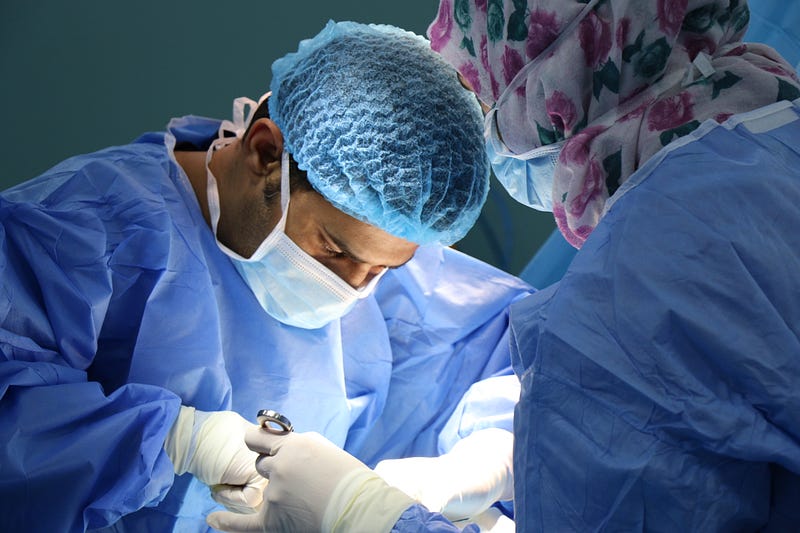
I took the day off work so I could be at the hospital during Dave’s surgery. The doctors were replacing his hemodialysis catheter (they were afraid it was getting infected or blocked), repairing his umbilical hernia, and inserting the catheter for peritoneal dialysis.
We arrived at the hospital in Reno at 10 a.m. for check-in, and his surgery began at 12 p.m. I was given his “patient tracking number” so I could watch the screen in the waiting room for updates on his progress.
An hour and a half later, he was moved to the first recovery room. Thirty minutes later, he was moved to the second recovery room, where he would get dressed so they could bring him downstairs. At 2 p.m., I got a phone call telling me that I should go downstairs and start warming up the car by 2:30 p.m.
They were a little early, and we ended up riding the elevator together to the first floor. I brought the car around front, and the nurse brought him outside. She gave me instructions, letting me know that the anesthesia affected dialysis patients differently and he would be out of it for the next day or so. I’d have to drive him to and from his next dialysis appointment.
I drove Dave home from Reno, dropped him off at the house, then went to Walmart to pick up his pain prescription. He spent the rest of the afternoon and evening in bed with the door shut so the dogs wouldn’t bother him. He was in a lot of pain. He was also afraid the dogs would try to lay on his stomach or chest.
“You’re holding it together really well…”

I’ve heard over and over from different people that I’m handling this really well. One coworker has told me several times that he’d be a wreck if he had to watch a loved one go through something like this.
Even my supervisor told me she’s noticed that I’m able to compartmentalize things (I never thought about it like that), so I’m able to still do my job while all of this is going on.
I don’t know what I’m supposed to think or how I’m supposed to feel about everything that’s been happening. The truth is, I have more peace now than I’ve had during the past several months.
We now know why my husband was so sick all summer. We know what steps we need to take for him to get better. He’s responding well to the hemodialysis, except for a couple of side effects. His doctor and nurses are happy with his labs for the most part. He gets regular bloodwork done. His health is being monitored for the first time in years. When something doesn’t look right, they let him know.
During the week Dave was in the hospital and during the first week after, when I returned to work, the anxiety and stress were crushing. There were times when it was hard to breathe, let alone do my job properly while at the same time taking care of myself, the dogs, and the house. I’ve never been more thankful that I have a fun and flexible work environment that makes it easy to be there, especially when life outside of work is beyond stressful.
I’m also thankful to Terry L. Cooper for reaching out and letting me know she was there if I needed to talk. For some reason, our phones refused to text each other, but we communicated via email and Twitter’s DMs.
Moving forward

I know that both of us can and should take better care of ourselves with diet and exercise, but at least Dave’s health has been slowly improving. Things are moving forward.
Because she repaired his hernia and inserted his peritoneal dialysis catheter at the same time, the doctor decided to let him heal for four weeks instead of the two weeks they normally wait. Peritoneal dialysis introduces fluid to the abdomen, which adds pressure to the whole area.
Once he is healed from the surgery, Dave will begin training for the peritoneal dialysis. We will have to rearrange the house to accommodate the equipment and create as sterile an environment as possible. Infection will always be a concern.
Since he is young-ish and physically able, he will be able to do everything on his own, without assistance. I will still be there to learn how to help, just in case.
A kidney transplant is still down the road. The social worker told us it could be several years, or we could have a few days notice. We will have to be flexible and able to travel with short notice, which will bring its own set of difficulties.
For now, though, Dave’s taken the next step, and we’ll have to wait and see what the future brings.
Here’s the full story about Dave’s end-stage renal failure diagnosis:


