
LIFE
My Husband Spent a Week in the Hospital With Kidney Failure
He will eventually need a kidney transplant
The words “end stage renal failure” were not what I was expecting the doctor to say, especially about my 43-year-old husband. Simply put, his kidneys had stopped working.
Dave hadn’t been well for over six months. Back in March, he noticed his ankles would swell after he’d been sitting for extended periods of time. For example, he noticed the swelling when he drove from Carson City to Las Vegas, which was a six-hour drive.
At first, he ignored it. It was only happening once in a while. At the time, there were no other symptoms.
As spring turned to summer, Dave noticed that he was having a hard time maintaining his energy levels. His legs felt weaker over time, and sometimes he had a hard time breathing. We went on a few mountain bike rides in March and April, but he needed more breaks than normal.
His shortness of breath led to a constant, irritating dry cough. Low energy turned to fatigue. He was barely going to work.
We tried to get outside on our days off, walking the dogs and exploring, but those trips grew further apart. I started getting out more on my own, hiking and riding my bike.
Over the summer, he experienced the following symptoms (some new, some worsening):
- Extreme fatigue and muscle weakness
- Fluid accumulation in his abdomen and ankles
- Shortness of breath and coughing
- daily nausea, vomiting, diarrhea
- Weight loss (15+ pounds)
- Brain fog
- Pale skin
- Trouble urinating
- Consistent high blood pressure (an ongoing issue)
I was constantly pushing him to go to the doctor. I told him daily that I could look at him and see that something was wrong. He didn’t want the medical bills, and thought that somehow he would “snap out of it,” and his symptoms would go away on their own.
“Go to the Emergency Room”
Finally, I got Dave to call and make a doctor appointment. He found a doctor in our network who focuses on treating the whole person, not just their symptoms. His appointment was Wednesday, September 7.
He went into the appointment with a list that I’d written out. I’d listed his symptoms over the last six months or so, and had almost filled a full sheet of paper. His doctor told him, “You have a lot going on!” Dave also let him know about his horrible diet, which consisted of a lot of fast food since he traveled so much for work.
He also knew he’d had high blood pressure for several years, and wasn’t doing anything to manage it. He didn’t like the side effects from his prescriptions, and some of them didn’t work anyway.
After the appointment, Dave and I walked next door so he could get his blood drawn for labs.
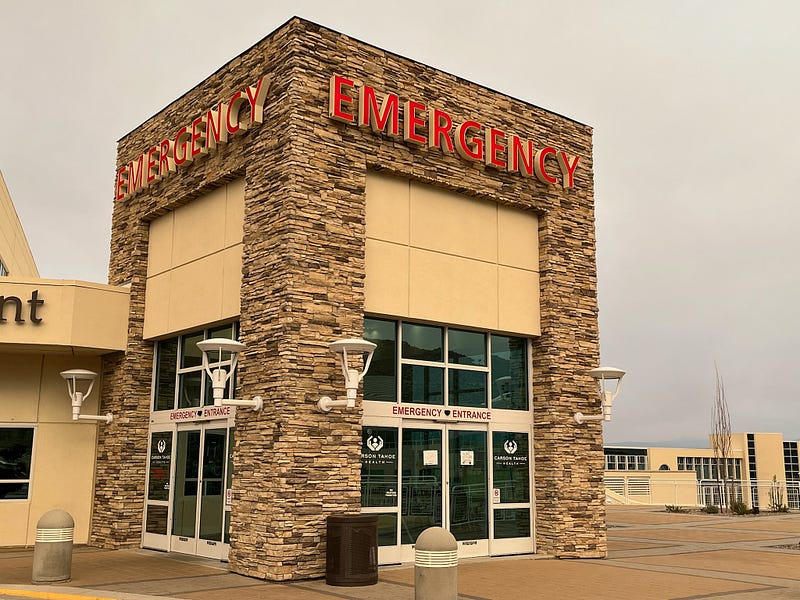
The next day, Dave went to work, but he called me a couple hours later to tell me that his doctor called and wanted him to go to the Emergency Room immediately. His bloodwork indicated a medical emergency. He had other numbers that were “concerning,” but they would have to wait.
Lab Results
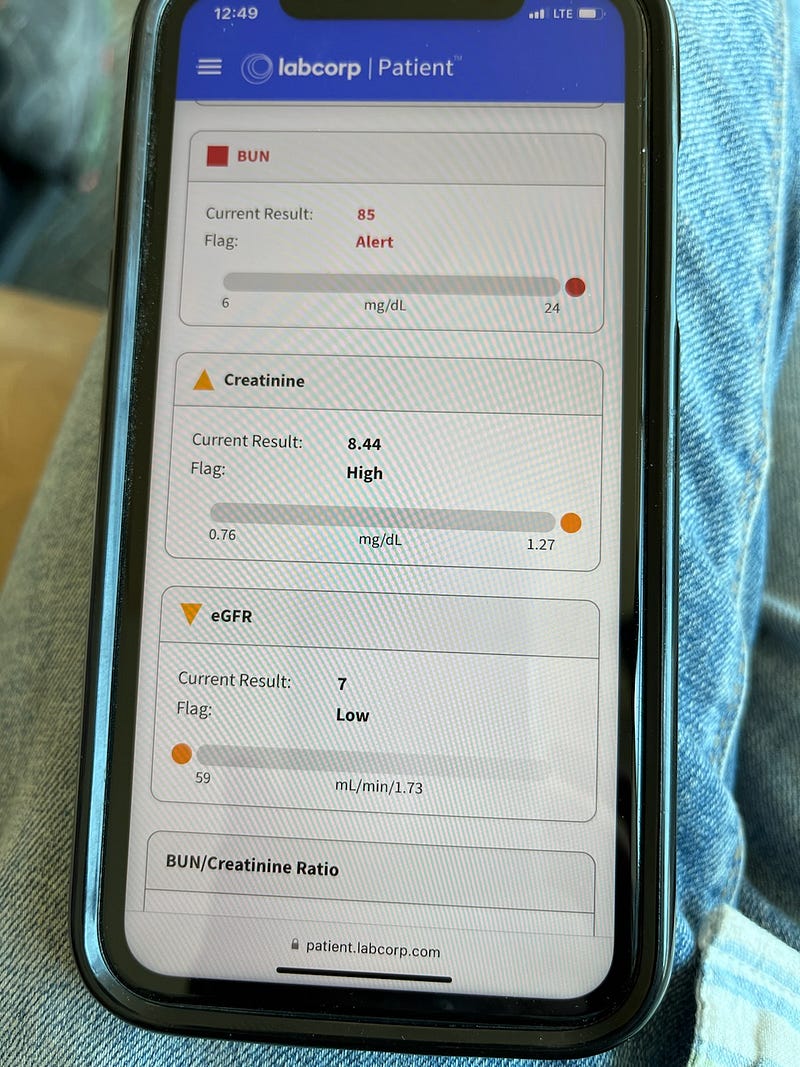
After we checked into the Emergency Room, we waited for quite a while before we got into a room for more tests and treatment. I took screenshots of his lab work and googled them (that’s really not a good idea when you’re already stressed).
A BUN test can reveal whether your urea nitrogen levels are higher than normal, suggesting that your kidneys may not be working properly.
A creatinine test is a measure of how well your kidneys are performing their job of filtering waste from your blood.
Estimated Glomerular Filtration Rate (eGFR)
Your kidneys filter your blood by removing waste and extra water to make urine. The glomerular filtration rate (GFR) shows how well the kidneys are filtering.
All three of the above tests were off the charts, indicating renal failure. His kidneys weren’t able to do their job of filtering waste and excess fluid, expelling them from his body. No wonder he’d been feeling so sick!
Dave was admitted to the Intensive Care Unit (ICU) Thursday evening. His blood pressure in the ER was up to 260/150, which is extremely high — much higher than our “normal” blood pressure, 120/80.
The ER nurse started swearing. “Holy Sh*t!” He wasn’t responding to the treatment. They tried several medications before they found a drug that would lower his blood pressure into an acceptable range.
He was admitted into the ICU, not because he was a typical ICU patient, but because they had the equipment that would allow them to more closely monitor both his blood pressure and one specific medication that was administered through an IV drip.
Dialysis Begins
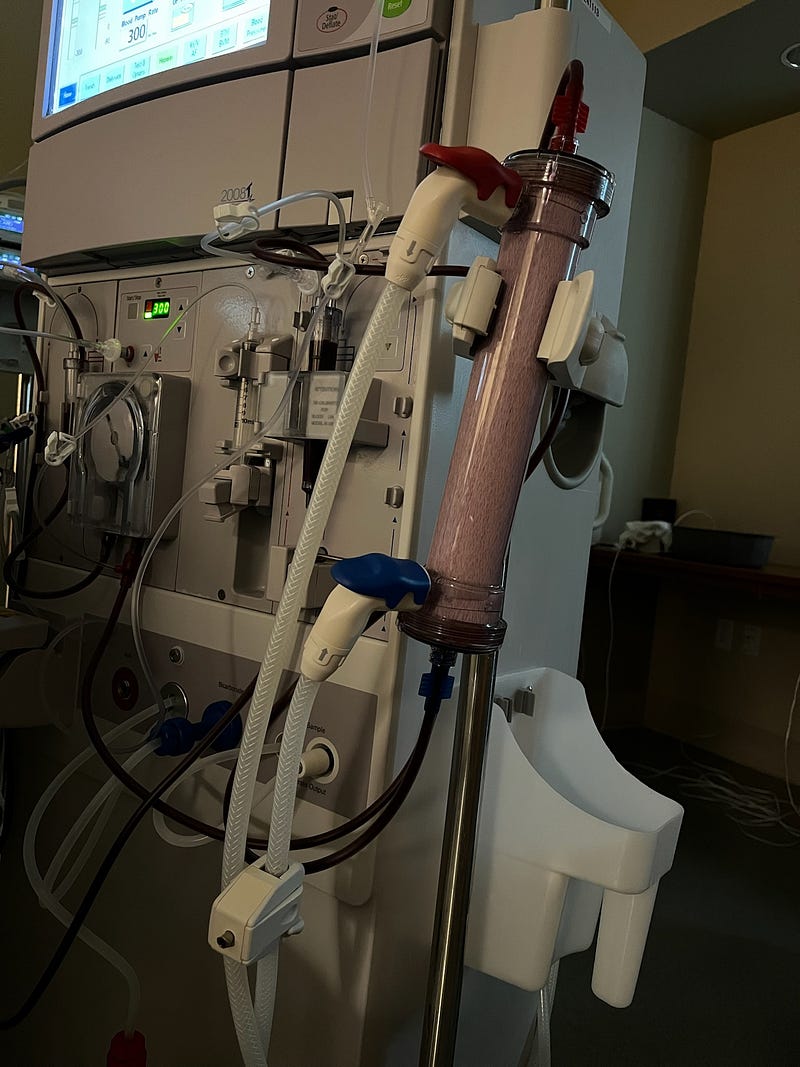
On Friday morning, a kidney doctor came into the room to go over his diagnosis and treatment plan.
It’s a good thing I was sitting there with him, because once Dave heard the words “end stage renal failure,” he quit listening. He was also worried about the hospital stay, which at that point was going to be over the weekend, with a kidney biopsy happening on Monday.
He’d already ordered lunch, but the doctor told him not to eat anything until his catheter was inserted. They were planning to insert a Hemodialysis Catheter into his neck in the afternoon. He would be able to eat after the procedure and either before or after his dialysis treatment, but not during.
When I told him he should call and cancel his lunch order, he asked why. I repeated what the doctor said. He hadn’t heard any of that information!
Dave responded well to his first few dialysis sessions. He did get cold during the treatment, which seems to be normal since the patient’s blood is taken outside of the body while it’s being filtered.
I don’t quite understand how it all works yet, but I’m sure I’ll learn more about the process over time.
“I Feel 100% Better!”

Dave was discharged from the hospital on Thursday, September 15. He now needs to schedule dialysis three times a week, even when he’s traveling. If he has to have it long term, he should eventually be able to do it at home while he’s sleeping, with proper training and a designated pet-free room (don’t tell Charlie and Sunny…).
He has prescriptions for three blood pressure medications, a phosphate binder, and a vitamin D supplement. He’s in the process of scheduling a doctor appointment to go over everything, including all of his new medications.
We now have a new diet to follow. Dave has to avoid foods high in sodium, potassium, and phosphorous. So far it looks pretty easy, consisting mainly of unprocessed protein, vegetables, and white rice. He can have limited beans and white pasta, but he can’t have tomato sauce. He is also allowed white bread sandwiches like tuna, chicken, or egg salad.
The biopsy results showed a lot of scar tissue. Years of high blood pressure had damaged his kidneys, so eventually he will need a kidney transplant. The doctor said that even if he’s able to get away from dialysis treatments, he will always have to follow a strict diet for chronic kidney disease.
Lesson Learned
I told my husband that I thought he’d almost waited too long to go to the doctor. His kidneys were barely working. As a result, he was very sick.
He’d felt sick and had known something was wrong for months, but he didn’t want to go in. We had very few bills, and he didn’t want to gain any medical bills. We’ve got good insurance, but we’re still going to have medical bills at this point. If he’d caught the problem early enough, he might not have needed to visit the ER or stay in the ICU.
It’s important to pay attention to our health, stay active, and take care of ourselves as much as possible. If we feel like something is wrong, it’s a good idea to get it checked out, just in case.
My husband is planning to keep a strict diet, schedule his dialysis appointments, get regular labs, and communicate with his doctor.
I know this isn’t how he wanted to get healthy, but he learned the hard way how important it is to take care of his health.


