
An unusual “black earth” from the Amazon is nearly 3,000 years old. It is a miracle weapon, scientists say
How to make cleared forests grow back as quickly as possible? The answer may lie in terra preta: super-fertile soil from the Amazon basin. This fantastic “black soil” was created over thousands of years thanks to human activity.
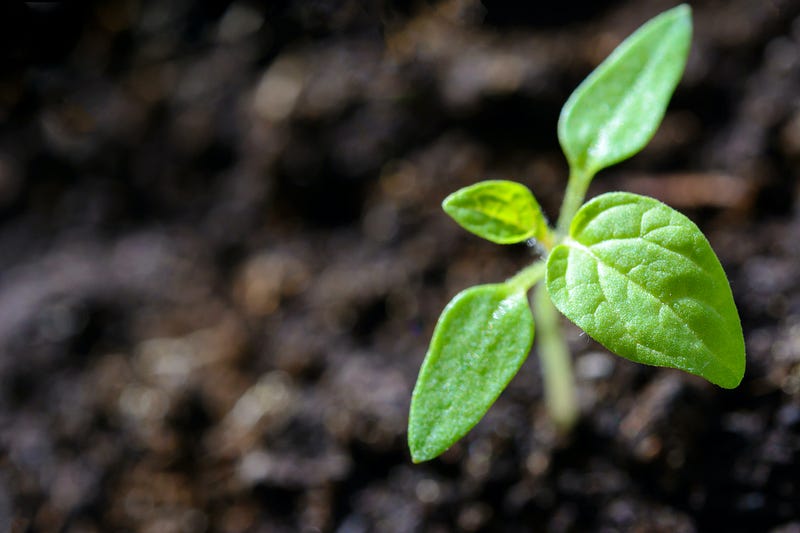
The Amazon is disappearing at a rapid pace. Since the 1970s, we have lost as much as 18 percent of the rainforest there. That’s an area of 800,000 sq. km. That is, almost three times the size of Poland’s territory. Most of this land has been converted to pasture.
What about doing to make the deforested area grow trees back quickly? This question applies not only to South America, but to the whole world. Scientists from Brazil’s University of São Paulo have come up with an interesting answer. According to them, the miracle weapon in the fight against deforestation is a soil called terra preta.
Terra preta, also known as black soil, is an extremely fertile soil type found in the Amazon basin. Its existence is due to the indigenous inhabitants of the region: the Indians who inhabited the Amazon during the pre-Columbian period. It was they who possessed the secret of soil fertilization. Although it dates back several thousand years, it can be very useful in the present.
How the most fertile soil of the Amazon was created
Amazonian soils are poor. Worse, once deforested, they quickly become depleted. The people who lived in this area several thousand years ago had to find a way to develop agriculture. And they found one. They learned to fertilize the land they cultivated. For this, they used animal manure, waste, compost, fish bones, broken clay pots. And above all — charcoal.
The work repeated by successive generations resulted in the formation of terra preta land in the Amazon basin. Its characteristic feature is a very dark, almost black color. This soil was formed roughly between 450 BC and 950 AD. In some places its layer is up to two meters thick.
Terra preta idea to reforest the Earth
How can terra preta help the whole Earth? A careful analysis of its composition will clarify what exactly makes it so fertile.
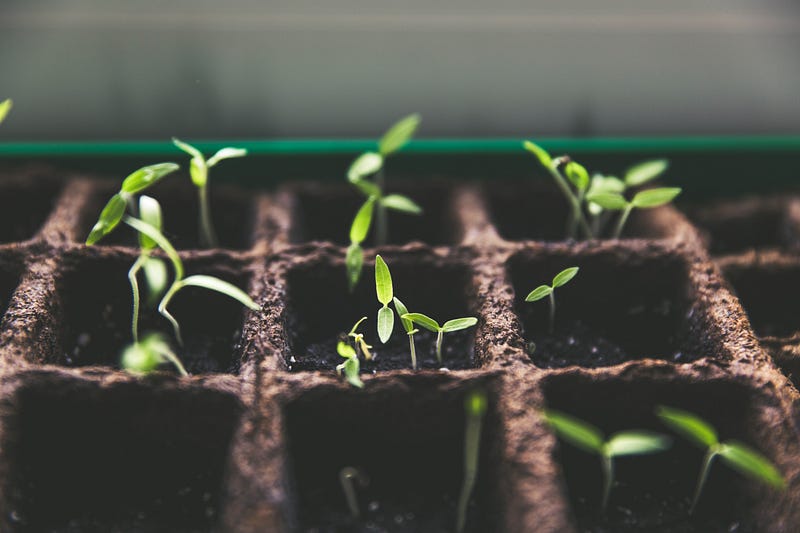
Scientists performed a series of experiments using three types of soil. These were terra preta, a mixture of black earth and ordinary earth, and ordinary earth. The scientists prepared containers with these three types of soil.
First, they planted Urochloa brizantha grass in all of them. This is a plant commonly grown for fodder. After 60 days, they cut the grass, leaving the roots. In this way they obtained an imitation of soil ready for reforestation.
Growing trees
The seeds of three types of trees were then placed in the containers thus prepared. These were Cecropia pachystachya, Peltophorum dubium and Argentine cedar (Cedrela fissilis). The researchers let them germinate and grow for three months. After this period, they assessed the height, weight and rooting of the small trees.
Terra preta proved to be ideal for all the plants. Eight times more grass grew on the pure black soil than on ordinary soil. The trees subsequently planted there were much taller. The cedar and P. dubium were three and six times taller, respectively, than when they grew on ordinary soil. The C. pachystachya tree did not grow at all, either on ordinary soil or on the mixture. It only germinated on pure terra preta.
The researchers then examined the composition of all the substrates. Even the terra preta used earlier remained the most fertile. It had several times more potassium and other micronutrients than the other substrates.
The researchers also looked in detail at black soil microorganisms. In it, they found several families of bacteria that have proven particularly effective at converting soil components into nutrients taken up by plants.
A way to reforest the earth
The researchers are under no illusions: terra preta soil in the Amazon is too scarce to be used on a larger scale to reforest the Earth. It is estimated that it can be found in a maximum area of about 20,000 sq. km. However, having learned its secrets and chemical composition, it will be possible to prepare its artificial counterparts.
“It took thousands of years for terra preta to form. If we started using it, it would take another thousands of years before it would regenerate, warns Dr. Siu Mui Tsai, lead author of the paper. — Therefore, we recommend not to use terra preta, but to copy its special features and use them for ecological purposes,” the researcher adds.
Source: phys.org, Frontiers in Soil Science
Cool that you made it to the end of this article. I will be very pleased if you appreciate the effort of creating it and leave some claps here, or maybe even start following me. It would be nice if you also left a tip! Thank you!