avatarErie Astin

Free AI web copilot to create summaries, insights and extended knowledge, download it at here

3775

Abstract

visit churches I am filled with a love for humanity. Such imagination and sense of hope, to build structures that soar to the sky, that evoke awe and set the spirit to dreaming.</p><figure id="2952"><img src="https://cdn-images-1.readmedium.com/v2/resize:fit:800/1*[email protected]"><figcaption>Rainbow stained glass windows. Photo credit: <a href="undefined">Erie Astin</a></figcaption></figure><p id="f884">Judging by the stained glass windows, the builders of this church dreamt of rainbows. The colors give the interior a startlingly different feel to what I was expecting.</p><p id="f14e">Given the style of the art, I would have expected stained glass of the type found in ancient European churches — not these modern rainbows.</p><p id="cdb0">The resulting clash is surprising, but pleasing.</p><figure id="faf6"><img src="https://cdn-images-1.readmedium.com/v2/resize:fit:800/1*[email protected]"><figcaption>Altar with a teepee. Photo credit: <a href="undefined">Erie Astin</a></figcaption></figure><p id="10c0">Another unanticipated touch sits on one of the side altars. Above the candle offerings is a teepee, a nod to the Native American culture of the reservation.</p><p id="df74">You certainly won’t see this combination of Renaissance-style art and indigenous culture anywhere in Europe.</p><figure id="a0cf"><img src="https://cdn-images-1.readmedium.com/v2/resize:fit:800/1*[email protected]"><figcaption>Altar with a teepee. Photo credit: <a href="undefined">Erie Astin</a></figcaption></figure><p id="9691">I found the addition of the teepee touching. People must feel welcome in the places where they worship. This flair of local culture makes the church seem more open and approachable than it would be on its own with all this grand art floating above congregants’ heads.</p><p id="ce5c">I wonder if the majority of worshipers here are from the reservation, or if they come from the nearest big town, Missoula, choosing this one over other Catholic churches because of the opportunity to gaze at the fine art during the sermon.</p><figure id="4bc2"><img src="https://cdn-images-1.readmedium.com/v2/resize:fit:800/1*[email protected]"><figcaption>The front of the church. Photo credit: <a href="undefined">Erie Astin</a></figcaption></figure><p id="f793">The front of the Mission Church is a riot of color and texture. Look at that beautiful gold decoration around the scenes of the Crucifixion and the Last Judgment behind the altar.</p><figure id="72f3"><img src="https://cdn-images-1.readmedium.com/v2/resize:fit:800/1*[email protected]"><figcaption>“The Last Supper” bas-relief. Photo credit: <a href="undefined">Erie Astin</a></figcaption></figure><p id="8ebd">On the front of the altar is a bas-relief in marble depicting the Last Supper. The figures’ robes are rich in color, like silk ready to touch. I was tempted to run my fingers over it and feel the faces of the apostles.</p><p id="33b8">How lucky are those worshipers who get to sit in the front pew every Sunday staring at that piece of art!</p><figure id="8758"><img src="https://cdn-images-1.readmedium.com/v2/resize:fit:800/1*[email protected]"><figcaption>The rear of the church. Photo credit: <a href="undefined">Erie Astin</a></figcaption></figure><p id="6035">A look toward the rear of the church reveals its beauty and simplicity. The art is gorgeous, complex, but the pews and windows are modern.</p><p id="6d01">I sat in one of those pews for awhile just to enjoy the silence. The priest/caretaker popped in and out, but apart from his unobtrusive presence, my mom and I were alone.</p><p id="ec22">The silence and solitude helped quiet my mind from its everyday anxieties. I’m having surgery soon and

Options

the worry eats at me, stretching my nerves to the breaking point.</p><p id="ed56">For just a few minutes in St. Ignatius Mission, I could breathe deeply again.</p><figure id="7f28"><img src="https://cdn-images-1.readmedium.com/v2/resize:fit:800/1*[email protected]"><figcaption>Painting of an Indian chieftain inside the church. Photo credit: <a href="undefined">Erie Astin</a></figcaption></figure><p id="9e67">Too soon, it was time to exit. As I neared the door, I noticed another local touch: a painting of an Indian chieftain, his robes a glorious red.</p><figure id="8523"><img src="https://cdn-images-1.readmedium.com/v2/resize:fit:800/1*[email protected]"><figcaption>Houses of the Providence Sisters, built in 1864. Photo credit: <a href="undefined">Erie Astin</a></figcaption></figure><p id="a730">I must say, though, that these nods to local tribal culture cover up a dark history.</p><p id="320d">Outside are the houses of the Providence Sisters, the first house built in 1864. These Sisters were the nuns who were in charge of the St. Ignatius Mission School for decades.</p><p id="90b8">The Providence Sisters exhibit paints a rosy picture of the Mission School, explaining how it forged a cooperative relationship with the Salish and Kootenai tribes and helped hundreds of kids get a decent education.</p><p id="c63c">But as the scandal involving residential schools for indigenous children in Canada revealed, tribal schools weren’t all fun and games.</p><p id="f019">The Salish and Kootenai tribes were forced off their land and moved north to the reservation that includes present-day St. Ignatius. Young children moved away from their families to attend the residential Mission School, which taught only in English and sought to assimilate students in American culture.</p><p id="d206">It’s hard to equate the glorious art of the Mission Church with the culture whitewashing of the school. Spiritual places are complicated — vessels of the light, but also of the darkness.</p><p id="d755"><b>Thanks for reading, and thank you to the editors at <i>Globetrotters</i></b> (<a href="undefined">JoAnn Ryan</a>, <a href="undefined">Anne Bonfert</a>, <a href="undefined">Jillian Amatt — Artistic Voyages</a>, <a href="undefined">Adrienne Beaumont</a>, <a href="undefined">Michele Maize</a>) <b>for running a great publication.</b></p><p id="96d3"><a href="undefined">Tim Ward, Mature Flâneur</a> explores Japanese spiritual beliefs on his visit to Kyoto:</p><div id="3bcb" class="link-block"> <a href="https://readmedium.com/meandering-through-old-kyoto-b76f45188c09"> <div> <div> <h2>Meandering Through Old Kyoto</h2> <div><h3>Beauty, history, miracles</h3></div> <div><p>medium.com</p></div> </div> <div> <div style="background-image: url(https://miro.readmedium.com/v2/resize:fit:320/1*[email protected])"></div> </div> </div> </a> </div><p id="669d"><a href="undefined">Serhii Onkov</a> finds a beautiful monastery on a summer eve:</p><div id="89eb" class="link-block"> <a href="https://readmedium.com/magic-and-holiness-of-the-summer-evening-fd7e4068d9fa"> <div> <div> <h2>Magic and Holiness of the Summer Evening</h2> <div><h3>Walking around the old monastery</h3></div> <div><p>medium.com</p></div> </div> <div> <div style="background-image: url(https://miro.readmedium.com/v2/resize:fit:320/1*byEmdou5veMxC2DoiXsgmg.jpeg)"></div> </div> </div> </a> </div></article></body>

An Old Italianate Church on a Montana Indian Reservation

My visit to the stunning St. Ignatius mission
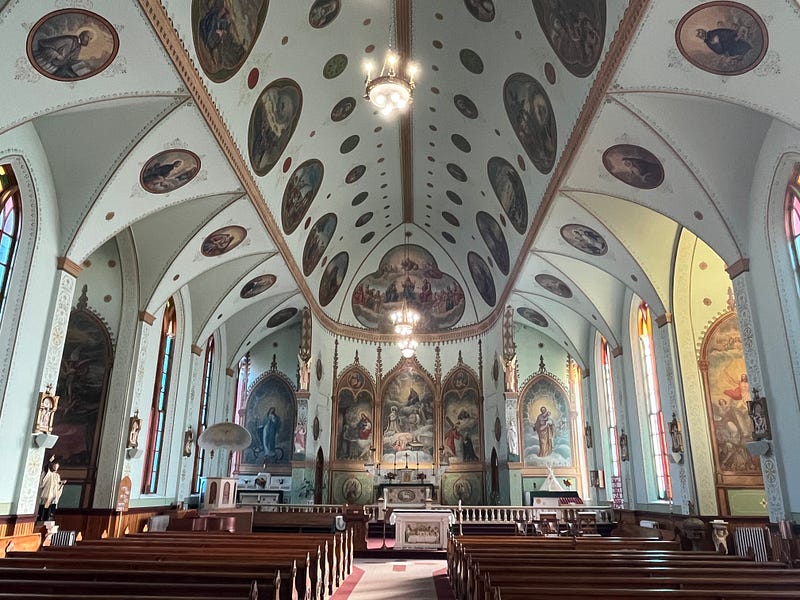
Inside St. Ignatius Mission Church. Photo credit: Erie Astin

On a crisp, cold November morning, my mom and I drove an hour from our home to visit the 19th-century Mission Church in St. Ignatius, Montana.

I’ve been itching to travel to new places, but international travel isn’t possible for me at the moment. I’m left with the unquenchable urge to stretch my mind, get out of my routine, see things I don’t ordinarily see.

That’s where the St. Ignatius Mission comes in. I’d been there before, but not for many years. I only had a hazy remembrance of its astounding artwork, which was similar to some of the neoclassical churches I’d visited in Italy.

I have a craving for Italy. In 2025 — hopefully — my mom and I will visit the Naples area and the Amalfi Coast.

In the meantime, what could be better than a place that reminds me of Italy?
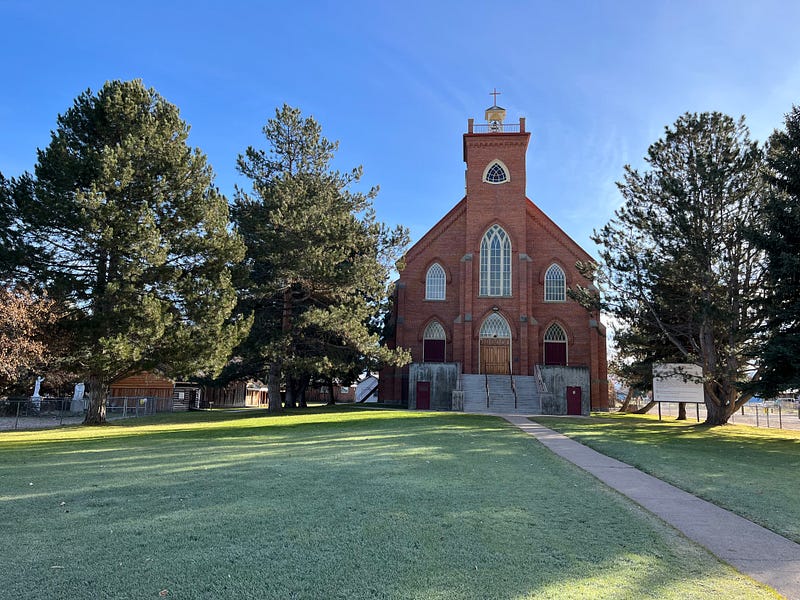
St. Ignatius Mission. Photo credit: Erie Astin

St. Ignatius Mission, built in the early 1890s, sits on the Flathead Indian Reservation, the northwestern Montana home of the Salish and Kootenai tribes.

Because this reservation was opened up to white settlers in 1910, it’s not the stereotypical “poor” Indian reservation. The settlers valued money-making and took advantage of the prime farmland and outdoor tourism opportunities.

I lived on this reservation for a year and a half when my dad first started working as a physics professor at the tribal college there. We later moved, but he ended up working there for over twenty years, helping students launch satellites, weather balloons, and even gain internships and permanent jobs at NASA.
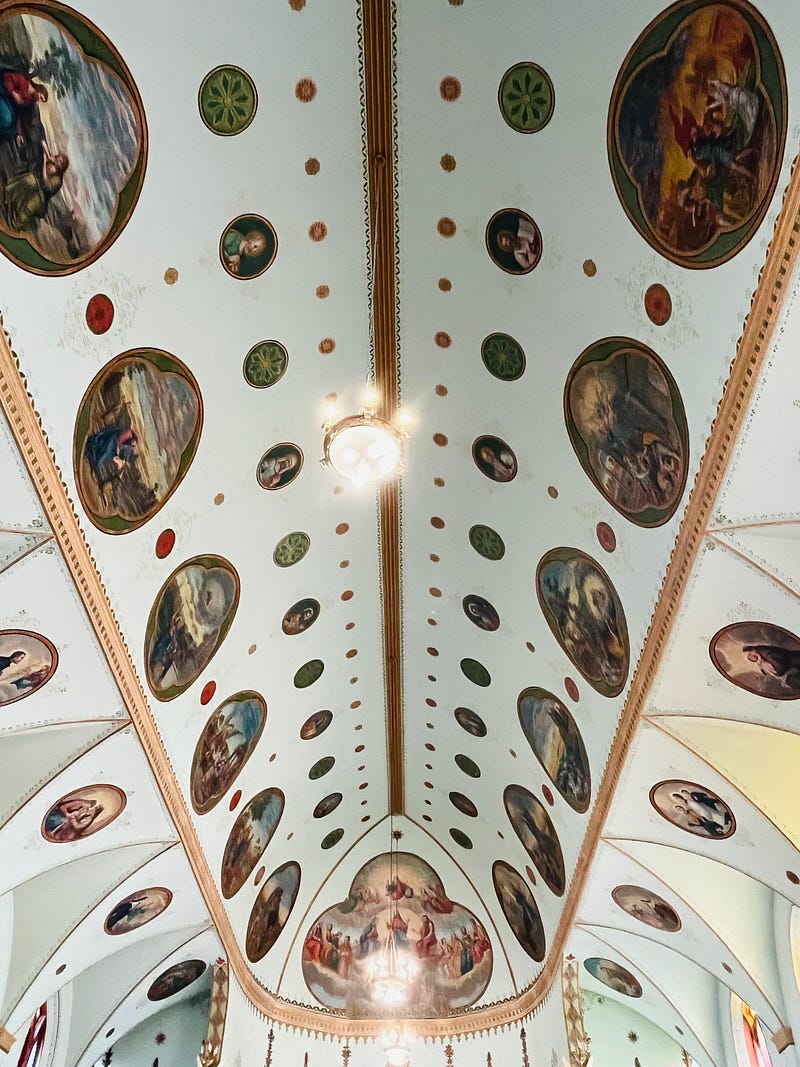
The magnificent ceiling. Photo credit: Erie Astin

When I stepped inside the Mission Church, the first thing I noticed was the spectacular ceiling, which stretched on and on. Most of its circular paintings on depicted scenes from the life of Christ, with one notable exception.
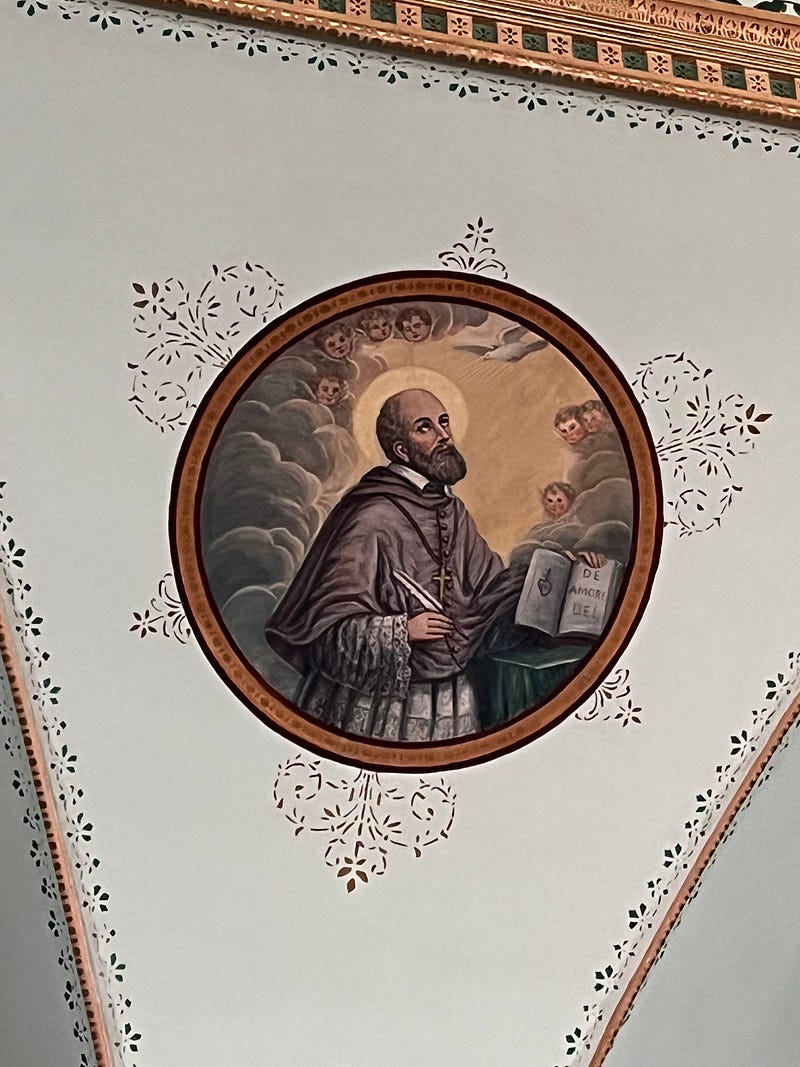
Image on the ceiling of St. Ignatius of Loyola. Photo credit: Erie Astin

My eye was drawn to one of the ceiling paintings because, unusually for the setting, it was not about Christ at all. Instead, it was a depiction of St. Ignatius of Loyola, patron saint of the mission.

He held an open book and a quill pen, indicating his Jesuit order’s commitment to scholarship.

I took a photo of him not just because I was in his church but because the image spoke to me.

I value books and learning. Indeed, I got undergrad and graduate degrees in four different subjects because I wanted to study as many of the humanities as possible, exposing myself to the great ideas of the past so I could create my own ideas.

The Latin phrase in the book St. Ignatius is holding says, I think, “for the love of God.”

As a non-believer, when I visit churches I am filled with a love for humanity. Such imagination and sense of hope, to build structures that soar to the sky, that evoke awe and set the spirit to dreaming.
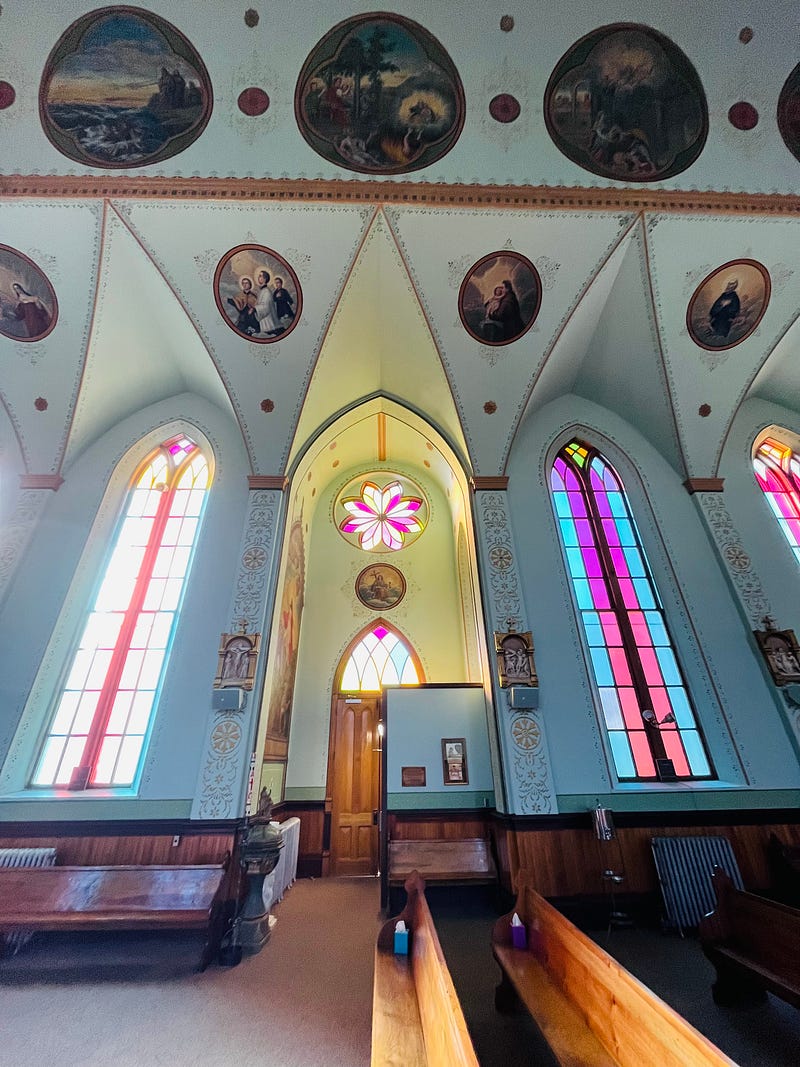
Rainbow stained glass windows. Photo credit: Erie Astin

Judging by the stained glass windows, the builders of this church dreamt of rainbows. The colors give the interior a startlingly different feel to what I was expecting.

Given the style of the art, I would have expected stained glass of the type found in ancient European churches — not these modern rainbows.

The resulting clash is surprising, but pleasing.
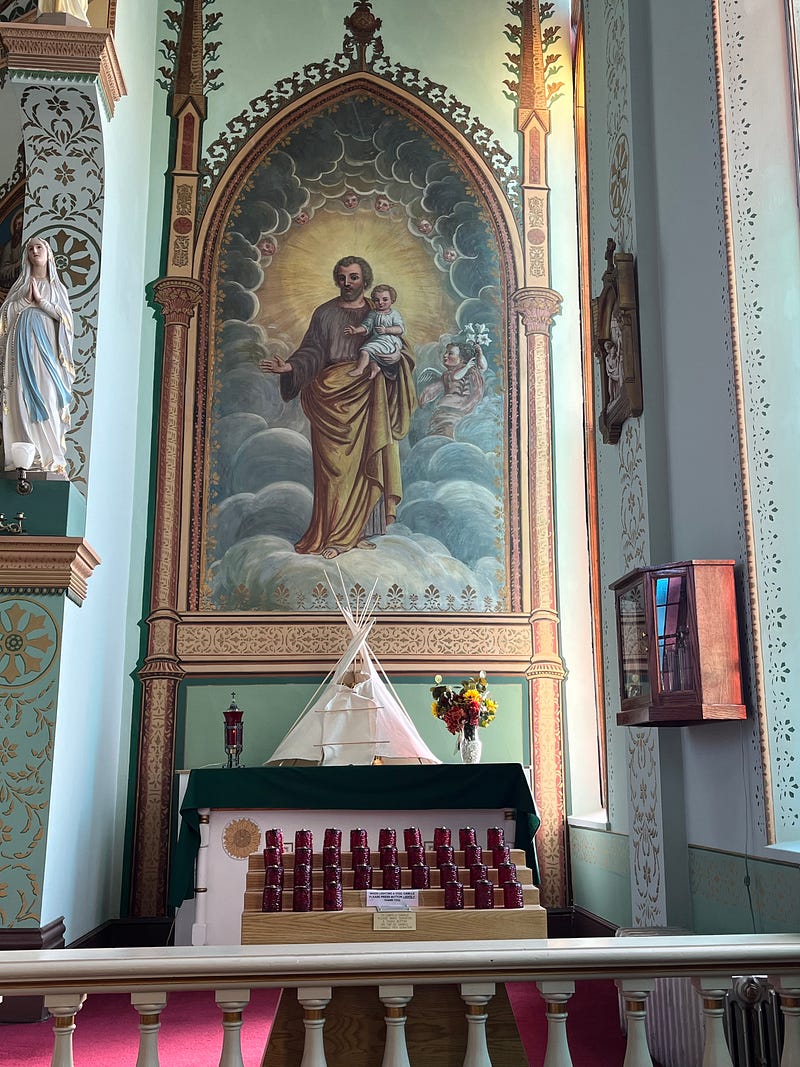
Altar with a teepee. Photo credit: Erie Astin

Another unanticipated touch sits on one of the side altars. Above the candle offerings is a teepee, a nod to the Native American culture of the reservation.

You certainly won’t see this combination of Renaissance-style art and indigenous culture anywhere in Europe.
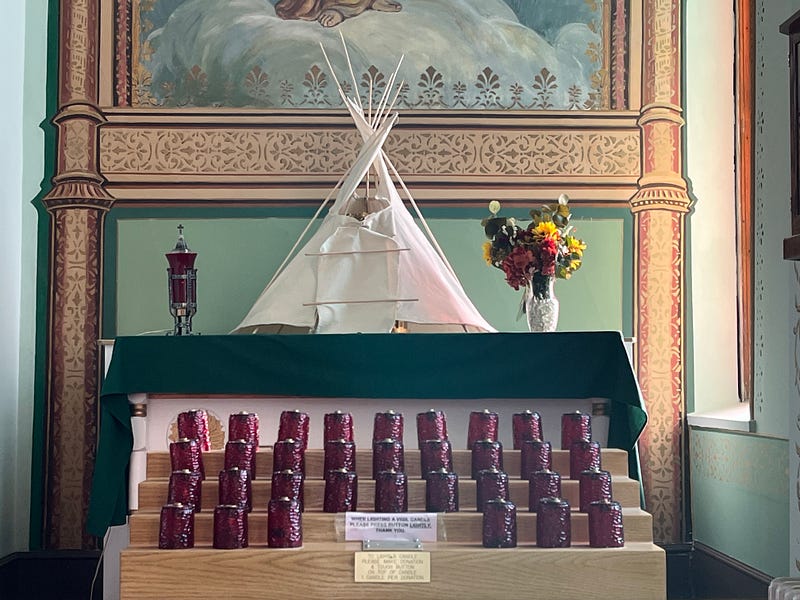
Altar with a teepee. Photo credit: Erie Astin

I found the addition of the teepee touching. People must feel welcome in the places where they worship. This flair of local culture makes the church seem more open and approachable than it would be on its own with all this grand art floating above congregants’ heads.

I wonder if the majority of worshipers here are from the reservation, or if they come from the nearest big town, Missoula, choosing this one over other Catholic churches because of the opportunity to gaze at the fine art during the sermon.
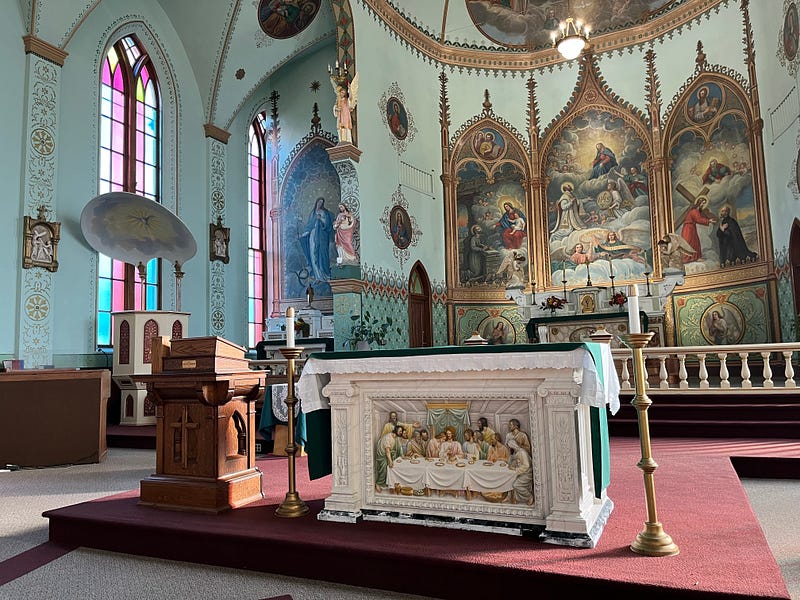
The front of the church. Photo credit: Erie Astin

The front of the Mission Church is a riot of color and texture. Look at that beautiful gold decoration around the scenes of the Crucifixion and the Last Judgment behind the altar.
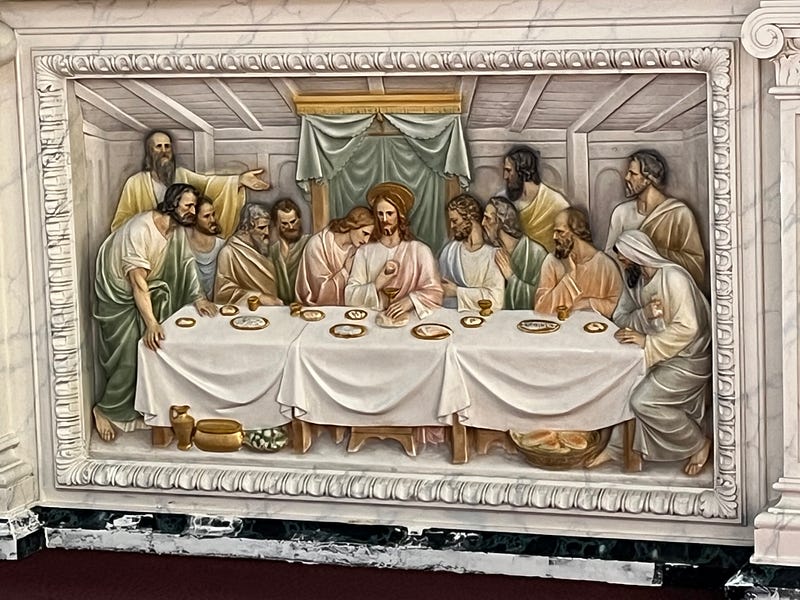
“The Last Supper” bas-relief. Photo credit: Erie Astin

On the front of the altar is a bas-relief in marble depicting the Last Supper. The figures’ robes are rich in color, like silk ready to touch. I was tempted to run my fingers over it and feel the faces of the apostles.

How lucky are those worshipers who get to sit in the front pew every Sunday staring at that piece of art!
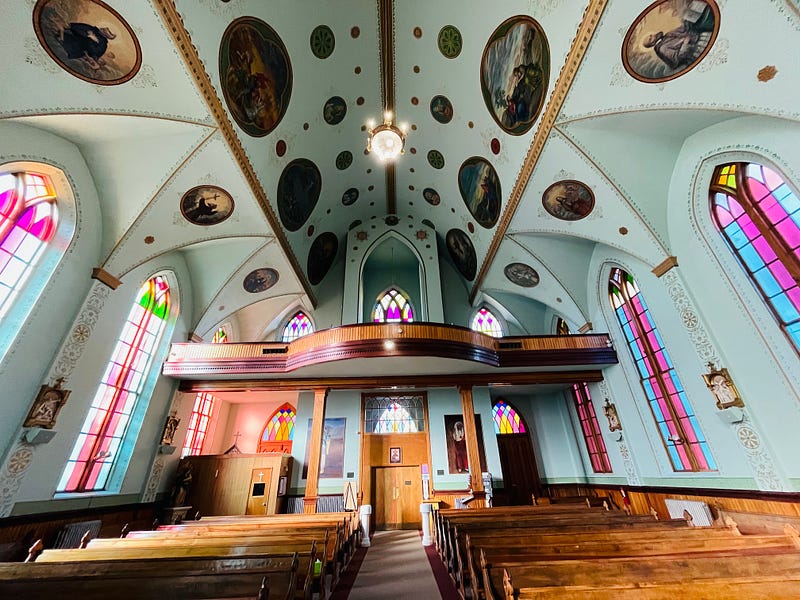
The rear of the church. Photo credit: Erie Astin

A look toward the rear of the church reveals its beauty and simplicity. The art is gorgeous, complex, but the pews and windows are modern.

I sat in one of those pews for awhile just to enjoy the silence. The priest/caretaker popped in and out, but apart from his unobtrusive presence, my mom and I were alone.

The silence and solitude helped quiet my mind from its everyday anxieties. I’m having surgery soon and the worry eats at me, stretching my nerves to the breaking point.

For just a few minutes in St. Ignatius Mission, I could breathe deeply again.
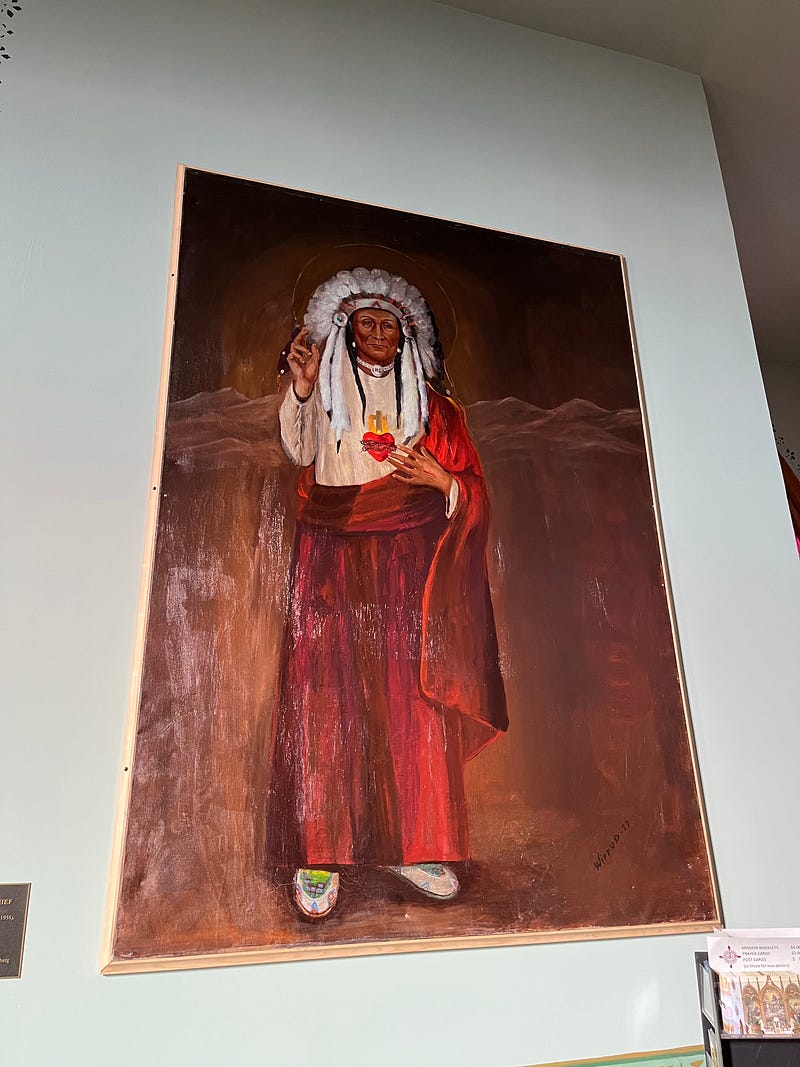
Painting of an Indian chieftain inside the church. Photo credit: Erie Astin

Too soon, it was time to exit. As I neared the door, I noticed another local touch: a painting of an Indian chieftain, his robes a glorious red.
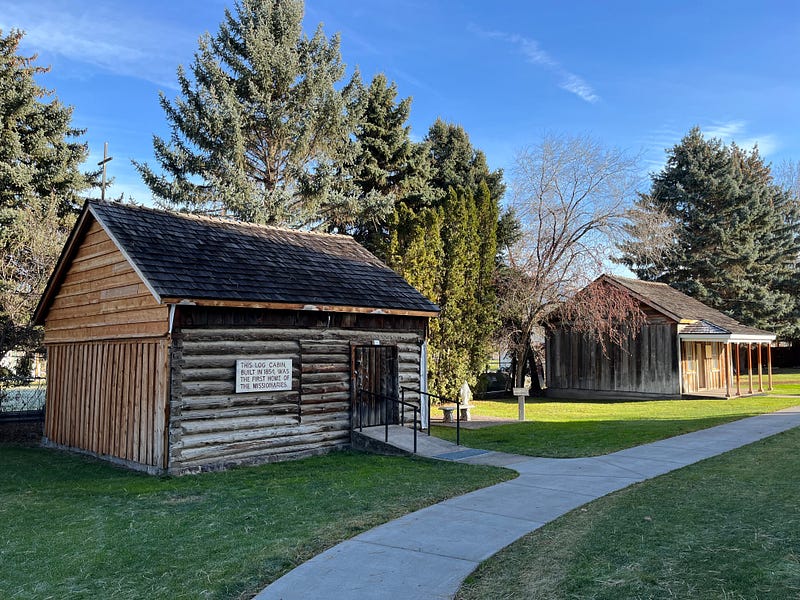
Houses of the Providence Sisters, built in 1864. Photo credit: Erie Astin

I must say, though, that these nods to local tribal culture cover up a dark history.

Outside are the houses of the Providence Sisters, the first house built in 1864. These Sisters were the nuns who were in charge of the St. Ignatius Mission School for decades.

The Providence Sisters exhibit paints a rosy picture of the Mission School, explaining how it forged a cooperative relationship with the Salish and Kootenai tribes and helped hundreds of kids get a decent education.

But as the scandal involving residential schools for indigenous children in Canada revealed, tribal schools weren’t all fun and games.

The Salish and Kootenai tribes were forced off their land and moved north to the reservation that includes present-day St. Ignatius. Young children moved away from their families to attend the residential Mission School, which taught only in English and sought to assimilate students in American culture.

It’s hard to equate the glorious art of the Mission Church with the culture whitewashing of the school. Spiritual places are complicated — vessels of the light, but also of the darkness.

Thanks for reading, and thank you to the editors at Globetrotters (JoAnn Ryan, Anne Bonfert, Jillian Amatt — Artistic Voyages, Adrienne Beaumont, Michele Maize) for running a great publication.

Tim Ward, Mature Flâneur explores Japanese spiritual beliefs on his visit to Kyoto:

Serhii Onkov finds a beautiful monastery on a summer eve:

Travel
Monthly Challenge
Photography
Globetrotter
Montana
Recommended from ReadMedium