
An Interview with Shanna Loga
Getting to know your quirky Age of Empathy editor
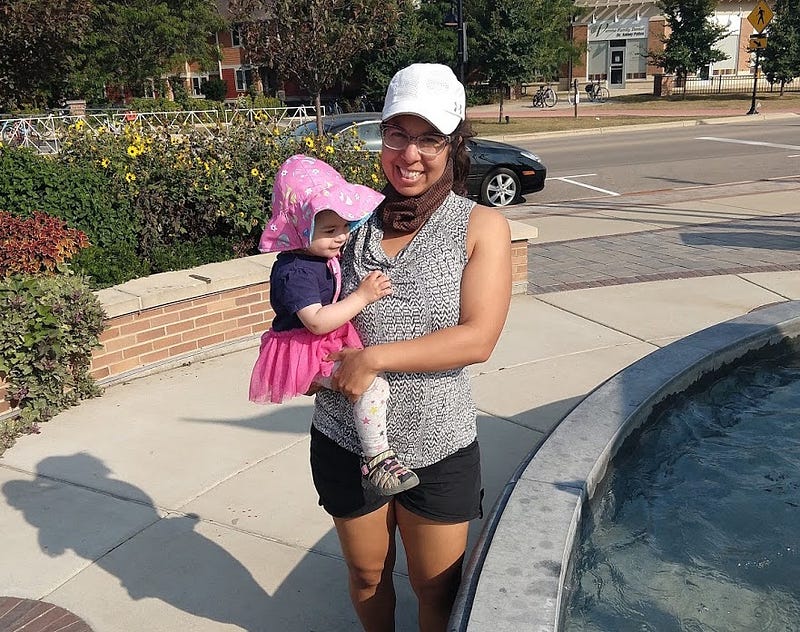
I met Shanna two months ago on Facebook when I read one of her articles. I remember a specific piece of hers where she had the courage to admit she made a mistake — you don’t really find that too often — I was lured in.
That article opened the door to our friendship. My interactions with Shanna since then always leaves me with a smile. She is encouraging, humble, and insightful. Wait till you get to the end of this article — you’ll see just how special she is.
So, when Aimée Gramblin asked us writers in Age of Empathy to interview another writer in the community, my mind went straight to Shanna. I had to take the opportunity to write about her.
So let’s get into Shanna! But first —
Fun-fact: Shanna’s name is pronounced Shawna.
(Am I the only one who got this all wrong? — Sorry, Shanna! Thanks for letting us know, Aimee!)
Introduction
Shanna describes herself as a private, intense, loyal, and loving person. She loves her daughter to the moon and back. She hates that I’m writing this biography about her and that people will read it!
Career and education
What is your career and educational background?
I call myself a multi-potentialite because I’ve worn several different hats in my professional life. After earning a BA in English Literature and Communication Arts from The University of Wisconsin-Madison, I joined the Peace Corps where I served for two years as a Youth Development Volunteer in Morocco.
When I returned to the US, I served an additional two years in Youth Development with the Boys & Girls Club in my hometown. With an interest in making greater systemic change, I went to Carnegie Mellon University and earned an MS in Public Policy and Management. After that, I worked in education policy for The University of Wisconsin-Madison and then in social welfare policy with The National Council on Crime and Delinquency.
After experiencing some frustrations with working in public policy, I left the field for education. I worked as an Academic and Career Counselor at a local college for three years.
When my daughter was born, both she and I suffered through conditions (hers physical, mine mental health), and the college I worked for canceled the academic program I supported, so I left the workforce. After a long struggle with postpartum depression, I’m now working through it and I am a writer. I have been contributing to Medium and blogs like Introvert, Dear since May 2020.
Shanna discusses writing
When did you first realize you wanted to be a writer?
When I was in third grade, I wrote a story called “Miss Sweetheart Mouse.” I don’t remember what it was about, but I do remember that my teachers, parents, and peers seemed very entertained by it. I thought, “This is pretty cool. I could do this some more!”
How long does it take you to write an article?
It really depends. If it’s an article that requires a lot of research, it can take me a long time to process and synthesize the information. It can take several days. For personal essays, they come more quickly — sometimes only a few hours. In general, I’m a slow writer. If my brain were a coffee maker, it would be a French press. I can think of rich ideas, but it usually takes a while.
How long does it take you to edit an article?
Again, it depends. If the writing is dense, it can take me days. I’ve also started using Hemingway Editor and WordCounter, which have both sped up and slowed down the process as I find more things to tweak and improve.
What’s your favorite part of the writing process?
I love the point when I’ve gotten all my ideas out on the page and my article is 80% there. After that, it’s a matter of refining and fine-tuning. Sometimes, I think of it as sculpting. It’s the point in the process where everything is carved out and you just need to go back to add details like wrinkles and veins.
I also love getting lost in writing — the creative flow, as it were.
What’s your least favorite part of the writing process?
There’s a point in the editing process where I feel like I’m in danger of spiraling into overediting and overthinking. As a recovering perfectionist, I’m learning to go to the point of “this is as good as I can get it” without tipping over into “this is horrible why am I publishing it anyway?”
What inspires you to write?
My daughter is my main inspiration. I’ve loved writing for a long time, but was too scared and insecure to pursue it. Having her in my life reminds me of how precious it is. Life is so short and I wasted too much of it in fear. Now I’m writing like I’m running out of time! Also, I want to be the best person I can for her, and for myself. That means boldly pursuing my dream of writing and facing my fears head-on.
Where do you get your ideas for writing from?
From day-to-day life and from reading. There’s a lot of amazing writing on Medium, but I also try and balance it with reading outside of Medium as well. I love the free e-books from the library and I’m a sucker for the classics and anything in society, culture, or personal development. I also love listening to podcasts like Armchair Expert, Beautiful Writers, and almost any show on National Public Radio.
What does your family think of your writing?
My husband is incredibly supportive. He watches our daughter for much of the weekend so that I have the time and headspace to write. He doesn’t read my writing — he’s a software engineer with little interest in what I write, but he always listens when I’m frustrated or when I have news to share. He knows that writing makes me happy and he likes to see me happy, which is wonderful.
My daughter is still too young to know anything about my writing (she’s 18-months-old), but she’s gotten used to seeing me at my laptop for hours each day. As long as she’s entertained, either by herself or with her Dada, she’s a happy camper!
My dad, stepmom, and mom-in-law are also supportive, read, and comment on the articles I share on Facebook. My dad is a writer as well, so I think he gets it.
My mom is ambivalent about my writing. For her, writing isn’t writing unless it’s read by millions of people and brings in thousands of dollars. I think she’s worried about it side-tracking me from a “real career.” She calls my writing “your little articles” and made remarks like, “I thought you only wrote about Black Lives Matter.” She has a very black and white definition of what success is — it means degrees, money, and recognition. I’ve come to terms with the fact that my pursuit of writing disappoints her.
What do you think makes a great story?
When you finish reading a great story, something stays with you. Whether it’s a new idea, or the words, or a feeling, it lingers. That’s what I hope for with my articles— that you finish reading them and a little part of them stays with you.
Where do you see yourself one, five, and ten years from now with your writing?
I think of writing as just as much of a skill as an art and I want to keep improving. I want to look back on what I’ve written today and think, “Wow, look how far I’ve come!”
In terms of concrete goals, I would love to publish a book someday. In truth, I’m really taking this writing thing day-by-day. Since I’m so new to having a daily practice, I’m worried about putting undue pressure on myself with lofty goals. If in one, five, or ten years I’m still writing daily, improving, and enjoying the process, I’ll consider that a win.
Do you have any suggestions for helping others become better writers?
Practice and remember that writing is a skill. It’s not that some writers are good and other writers are bad and there’s no room for improvement. Approach it with a growth mindset.
Learn from the wisdom of writers you admire — either engage with them through writing groups or read their works or be inspired through their words.
Remember why you love writing. Just having the opportunity now to reflect on why I am passionate about writing makes me love it even more!
What do you like to do when you aren’t writing?
I like to watch campy shows like What We Do in the Shadows or The Office with my husband. I like jogging — okay, not when I’m actually jogging, but the feeling afterward. I love cooking with my daughter — she’s a great sous chef and it’s such a fun experience to watch her interact with food.
Shanna’s favorite quotes:
It is never too late to be what you might have been. — George Eliot (disputed)
Follow your bliss and the universe will open doors for you where there were only walls. — Joseph Campbell
Don’t be kind of bold. Be bold. — William Zinsser
Everyone longs to be loved. And the greatest thing we can do is to let people know that they are loved and capable of loving. — Fred Rogers
Some of Shanna’s stories
What do you want people to remember after reading this interview?
That I love writing, that I feel blessed to be part of this wonderful community of writers, and that it’s never too late to follow your dreams.
You can catch more of Shanna on her website, on Facebook, or on Twitter!
And that’s all folks!

Thank you for reading! 💛 Buzz with Bee! Twitter/ Facebook/Instagram
Gratitude
Thank you Shanna for being so willing to do this interview. You are awesome! ❤️ Thanks to AOE for encouraging us to write an interview of a fellow writer!