
An Essential Read: The Ragged Trousered Philanthropists
Reviewing a unique work of political fiction that makes the case for the eradication of capitalism

It’s been said that classics aren’t fit for the modern age. Arguments against their relevance state many were only given “classic” status because that was the best on offer, in an age dominated by white, male authors.
It is true that some are more worthy than others, but each should be placed within their context. We are now blessed with living in a literary world of authors with greater diversity, but this does not mean we should ignore what the classics have to offer.
When we view classics in this vein — they become far more dimensional.
I have been recommended The Ragged Trousered Philanthropists for as long as I can remember. It’s been a long time since I have read a classic which is so relevant. Covid-19 in Britain has fuelled political rhetoric about jobs, employment rights, safety in the workplace, and how we value workers.
Ragged Trousered Philanthropists, although written over a hundred years ago, draws upon issues we are still facing. As NHS workers at the start of the pandemic lacked PPE, and many nurses were subject to pay cuts before the pandemic, I can’t help but think that British society still undervalues essential workers.
There is a persistence of snobbery surrounding jobs — where CEO’s and lawyers are valued more than cleaners, teaching assistants and retail workers. Tressell discusses this through the perspective of white, working-class construction workers that kept the economy running in the early twentieth century.
Additionally, at the forefront of this book is the notion that poverty and inequality are created, and is a political choice. We know more than ever, that the politics of austerity between 2009–2020 was a choice. Endless people did not need to suffer for the upholding of an ideological agenda and the importance of an individualistic society.
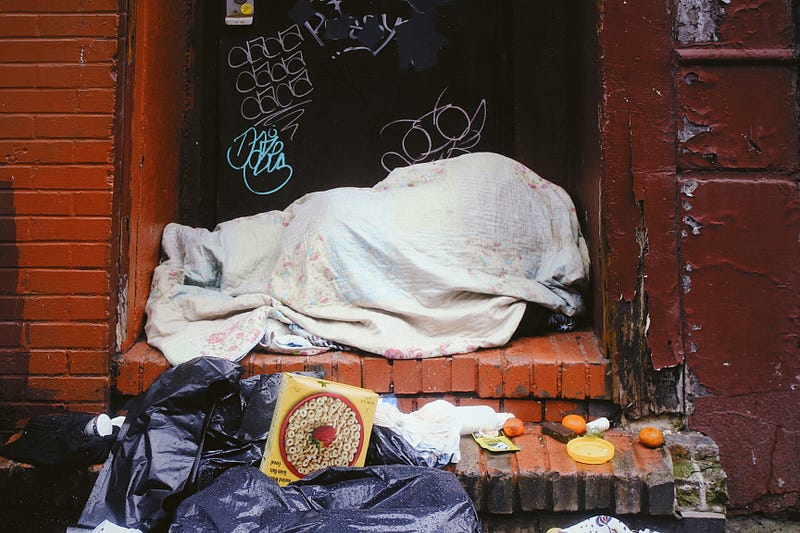
From the re-housing of the homeless in the pandemic to the provision of the furlough scheme to protect workers — we know that the previous decade of cuts was unnecessary. The Tory party always had the capabilities to make people’s lives better — but they chose not to. And it is in the damning discovery that Covid-19 disproportionately impacts black and ethnic minority groups, that we know our society is still inherently unequal.
Ragged Trousered Philanthropists was written between 1906–1910, and may seem like a lifetime away. But its portrayal of the necessities of a socialist system, make it relevant. Many hope that the experience of Covid-19 will create the pathways to a new world. One where despite the dominance of the capitalist system, we realise in fact, it is vulnerable and subject to failure.
Brutal forecasts in Britain are telling us to prepare for the worst recession in decades — and this is proof of a system not fit for purpose. Economics aside, one hopes the aftermath of this pandemic will result in a society where people have more respect for each other. But fundamentally, where everyone has equal access to the necessities of life — a message which overrides Tressell’s book.
Tressell died before the first edition of his book was published, but he was a painter-decorator himself. It can be said that through one of the main characters, Owen (the socialist advocate), he drew a lot from his own experience.
Above all, this is a work of political fiction which aims to shed light onto a broken capitalist system and how it dammed the white, working-class into a cycle of endless poverty. The book is known for its ability to cross generations despite it springing from a very definitive historical moment.
The Edwardian era can be seen as a transition period — although reaping the benefits of industrialisation, it was a society still stagnated by poverty.
Politically, it was diversifying, with the rise of socialism in the 1880s and the first independent Labour Party in 1893. But individuals recognising their unjust conditions is at the heart of this book, and this is the constant struggle of the outspoken socialist, Owen, as he aims to convince his fellow workers, that they do not have to suffer to simply have a livelihood.
The novel is told through the perspective of various workers who are employed by the same authoritarian, capitalist boss, Hunter. Some are more susceptible to the socialist cause than others (Philpot and Barrington for example) but the vast majority are blind to their poverty.
In writing this, Tressell aimed to capture the struggles and realities of working-class life.
The title refers to the ironies and false class consciousness that the workers embody. They believed that in just doing their work, they were doing a great thing by contributing to the capitalist system. In their minds they are ‘philanthropists’ but in reality, they keep alive a system that only goes against them, and their fate would always remain unchanged, hence the reason they will remain “ragged trousered.”
The main argument put forward by Owen is that poverty and the capitalist system that upholds it is nothing but a political choice. Owen argues money and wealth are constructs, and without money, poverty wouldn’t exist. This has to be understood within the specific historical context. However, I could not ignore its shocking relevance to understanding Britain today, and the rest of the world.
Capitalism has failed globally. Wealth inequality soars in some of the richest countries in the world, all the while, these same countries have shocking levels of its population who are homeless, unemployed and on food banks. Additionally, we also know that austerity was a political choice, justified in the name of recovering the economy from the 2008 global recession. But at what cost?
In Jeremy Corbyn’s bid for Prime Minister in 2017, he put forward one of the boldest socialist agendas seen since Michael Foot and was just shy of 2,000 votes away from becoming Prime Minister. This suggests a moment where the British people were veering against the politics of austerity, however, Boris Johnson’s popularity ratings still remain high.
The re-housing of the homeless during the pandemic is literal proof that homelessness was a political choice.
It’s all well and good having national wealth, but what’s the point in an economy that only exists to serve the minority, and could be the catalyst for ending people’s lives prematurely in the middle of a pandemic.
These modern-day illustrations serve to reinforce the idea that Tressell’s world and struggles are not dissimilar to our own.
In Owen’s explanation of poverty, the workers have a hard time believing it is manufactured, and under the system of socialism, they could all have better lives. This illustrates just how institutionalised the unequal society had become in Britain. Even when struggling to provide food for their children, workers could justify their conditions and be complacent.
Most characters in the novel subscribe to this idea of, “false pride” embodied in the false class consciousness — this blinds them to their realities and hope of a better world.
This phenomenon is still prevalent in British society today. In the last election, the Tory party managed to win the votes of many working-class constituents, particularly in the North of England. The Tory’s in the national consciousness are known as the party of the economy, and voters believe that life will naturally improve because of their governance.
However, improving an economy constrained by a capitalist system will never benefit them, as they will never get the share of the nation’s wealth they deserve. Thus, this is the fundamental flaw in capitalism that dominates Tressell’s world, as much as it does our own.
Moreover, it is the prevalence of the capitalist system in the book that means all forms of work are never treated equally. Work that generates more wealth is considered more important than the physical labour that pays workers very little. This is commented on throughout, and it is argued through a socialist frame that all work is,
“a necessary and indispensable part of the whole: therefore everyone who has done his full share of necessary work is justly entitled to a full share of results.”
Indeed, during the Covid crisis, we have seen how jobs are treated with various amounts of respect. It has seen the return of the “unskilled” workers versus the “skilled workers’’ rhetoric as if not having a predetermined skill makes you less valuable.
An additional undercurrent, seemingly relative to the Covid crisis, is the sheer lack of workplace safety. Difficulties faced by workers then and now are hugely different, but the fact they persist is significant. When going to work, everyone should be guaranteed safety.
Workers are kept in damp and cold places; but the 1901 Health Act put into legislation that workplaces needed to be an ‘adequate’ temperature, however, it was a different matter altogether whether bosses adhered to this. Bert, a small child who works for Hunter’s firm, is too scared to have a fire at work in case the boss tells him off — it is a battle to simply make sure he doesn’t freeze to death.
Owen has severe tuberculosis, an airborne disease similar to Covid-19, which gets worse as the novel goes on. Tuberculosis in the early twentieth century was largely a disease of the poor.
Due to living in overcrowded, damp and cold conditions, poorer members of society were far more susceptible to the disease. Owen makes himself go into work despite his crippling health which grows more fragile by the minute. However, he doesn’t have a choice. With no sick pay and not being able to afford medical care, there is nothing he can do but hope it will go away on its own.

Today, we know that from reports, Covid-19 disproportionately affects BME communities, who are more likely to live in overcrowded accommodation than white counterparts, due to systemic, racial, economic inequality.
Additionally, NHS workers not having adequate PPE protection is another example of a colossal, government failure.
Sheer lack of funds, preparation and foresight meant that a considerable amount of NHS workers died as a result of catching the virus — simply by doing their job. A huge amount of these were from BME backgrounds, yet the government still fails to admit their mistakes.
In the modern world, our safety at work should be guaranteed. Unfortunately for many NHS workers, this was not the case. Thus, at the forefront of this book is a revealing portrayal of workplace inadequacy and lack of safety. Whilst our conditions are of a vast improvement today, the government’s handling of the pandemic highlights just how imperative it is to guarantee we are all safe at work.
It would be easy to brush this book off as another ‘classic’ that bears no resemblance to our current world.
Indeed, Edwardian poverty may feel a million worlds away from our own. However, their society, as much as our own, was still plagued by a political system that was failing the most vulnerable.
Covid-19 has raised a lot of questions about workplace safety, sick pay and how we place different types of value on professions. At the heart of this novel is the critique of the capitalist system and how it naturally creates inequality.
In the post-Covid age, one can only hope the strings holding this system together will start to unravel. Only when this process is complete, will we have the chance of a better society that fulfils Owen’s vision of a brighter future, the one that Tressell pictured when writing all those years ago.
This is a brilliant work of political fiction, set amongst a specific climate and part of the history of working-class Britain.
Although its insight is inherently valuable, it is not without weakness. Tressell was viewing working-class life only through the lens of white working-class men and gave little accountability for the women who struggled too, and of course, race isn’t even mentioned.
Despite this — what is important is that we cannot judge his portrayal via our own eyes, but use it as a window in which to view the past. It has limitations, but this does not render it irrelevant to shed light on our current society.
The cuts of the past decade should have no place in the society that is to be reborn in the aftermath of the pandemic. To dismantle the ancient inequalities of race, class, gender and disparity of access, we have to start with realising we have a system not fit for purpose.
In a way, Tressell ends on a positive note, the death of Hunter serves as a symbolic ode to the death of capitalism itself. One can only hope that when our crisis is over,
“Mankind [will awaken] from the long night of bondage and mourning and [arise] from the dust wherein they had lain prone so long.”


