
An Aspiring Psychotherapist’s Review of 7 Cups

After perusing online for various psychological and mental health resources as an aspiring therapist, I’ve stumbled upon 7 Cups (formerly known as 7 Cups of Therapy). 7 Cups is founded by licensed psychologist Glen Moriarty. Founded and launched in 2013, 7 cups has drawn in 29 million unique visitors and contains over 300, 000 trained listeners from over 189 countries.
7 Cups is a free, anonymous and confidential online support network for people in need. When you check into the site, the person who reaches out to you (or you to them) are called listeners. The other individuals you can reach out to our licensed therapists.
- Active listeners are volunteers who undergo online training in active listening to help those with varying scenarios, such as, depression, anxiety, loneliness, etc. This is a free service.
- Licensed Therapists are specifically trained and educated to provide counselling and therapy services, individual specialized interventions and plans. This is NOT a free service.
How Does 7 Cups Work?
Let’s say you’re undergoing depression, having work problems, and you feel that your parents don’t love you at the moment. You might find yourself logging onto 7 Cups from either your phone or computer.
From there, you are assigned (or you can create) a random username where you can chat with a Listener. The Listener might pick you from a roster list of people waiting for the queue, or maybe you decided to reach out to them because their little bio page looked fascinating.
The Listener could be a mental health professional or just someone with a vested interest in mental health. All conversations are private and can be deleted afterward.
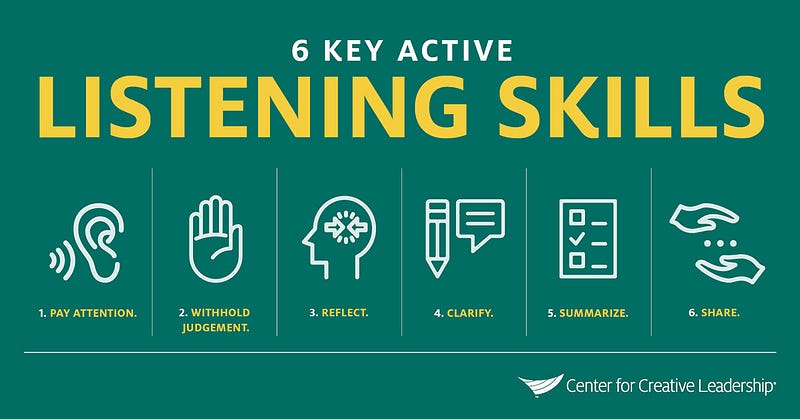
The goal of the listener is to not necessarily cure your problems. The goal of the listener is to provide a reliable shoulder to cry on, a source of genuine validation, de-escalation of your current situation, and a means of getting you to think about a situation/problem differently. In other words, we’re literally utilizing active listening training. If you’d like to read more about active listening, I’ve provided a link and image from the Centre of Creative Leadership.
What I particularly like about 7 Cups is that people can reach out to one another, pretty much like texting your friends. You can drop in, speak to another listener and engage in some of the website’s positive reinforcement activities, which reminds me suspiciously of a game. For example, if you participate a lot in chats, post in the forums, and have a tendency to “like” a lot of posts on your feed, you are designated a growth path with points for each level. (For privacy reasons, I can’t share screenshots).
Personally, I’ve used the site as a Listener only, so I’ve had quite a few recurring drop-ins from different people. I’ve noticed that most people just need a place to vent without judgement, someone to help them brainstorm other ways of approaching or resolving a problem, tips on time management/organization, someone to verify that they did the right thing, and a professional friend.
How Credible is 7 Cups?
I’m aspiring to become a psychotherapist or psychologist at some point in my life. It’s a very long-term goal so the plan is to just work for a while in another field before jumping onto the full psychology experience. (Where I live, a clinical/counselling psychologist requires the Ph.D. and I am doing my MA right now).
I think the website is pretty good for venting out about your problems and making sense of things. I worry about long-term visitors, who might feel the need to replace a fully licensed psychologist/psychotherapist with someone who is an active listener.
On the upside, 7 Cups have been slowly expanding their business model to include professional therapy services. As mentioned earlier, these individuals are highly trained (have multiple credentials, clinical experience, and ongoing training) and are certified in their profession.
Traditionally, you would need to commute to their private practice or clinic, and have to pay a pretty high sum per hour (possibly $100–200 per hour) and may be eligible for insurance coverage or sliding scale. While 7 Cups doesn’t publicly disclose the costs for their certified professionals, I have been told by users that what you’re paying per month is highly competitive to what you would pay per in-person (traditional) session.
Therefore, I am inclined to think the money would be worth it — however, if you’re really worried, a good alternative would be to see the listener on the site and see a therapist in your local area.
If you or someone you know needs to talk to someone, sites like 7 Cups could definitely be helpful.
For similar articles from the author, please visit:


