
Spirituality and Geology
America’s Holy Land
Loving rocks on Turtle Island
I have always been a rock freak. As a kid I was always picking up rocks from the ground to examine them. The really cool ones I would put in my pocket and take them home. This irritated the heck out of my mother but that is not why I did it. I just loved rocks.
Looking back at my childhood love of rocks I now see how appropriate it was that for around five years in my mid to late thirties I ended up working as a stonemason. I got to build things out of rock; rock walls, stone steps, flagstone patios, stone fireplaces, decorative waterfalls, and such. I loved it. I spent my days with rocks in my hands. Of course they were rocks that were way too big to put in my pockets but I still managed to bring some home with me — to the mild irritation of my wife.
But then my little family and I moved away from New Mexico (also known as, The Holy Land). We moved to Colorado and I must say that the rocks in Colorado are very, very different than the rocks in New Mexico. But it did not matter much because I had made the decision to shift my life focus away from rocks towards books. Rocks and books are my thing.
When I was not working in my bookstore I was often out in nature taking long walks and hikes with my four-legged wife. My wolf-dog had no interest at all in rocks but I was always scanning the ground for cool rocks like I did when I was a kid. I was particularly looking for good skimmer rocks. I wanted to teach my daughter how to skim a rock across the surface of a lake. (That is something all fathers want to do, right?)
Sadly, but not surprisingly, my daughter had no interest in skimming rocks across the surface of a lake and no interest in rocks. I learned that females just do not get as excited by rocks as I do — unless, of course, the rock happens to be a diamond.
Normally when I get fascinated by something I go into research mode and learn what I can about that something. I try to hold on to my childhood gift of curiosity but I eventually realized that not once in my entire life have I ever taken a course in geology. That is the study of rocks, isn’t it? I have always loved rocks and I worked with rocks yet I never took a single class in geology.
Until yesterday…
In a recent story (Shirley MacLaine’s Beard) I wrote about a dream I had in which Shirley MacLaine made a guest appearance. In another recent story (A Little Dolphin Story) I wrote about my obsession of wanting to live in Santa Fe, New Mexico.
In writing those stories I must have sent out some messages into the infinite field of infinite possibilities that resulted in experiencing some synchronicities yesterday. Or something like that.
I should point out that Shirley MacLaine happens to live in Santa Fe, New Mexico (she also owns a ranch near Abiquiu about an hour north of Santa Fe very near where Georgia O’Keefe used to live). Well, yesterday afternoon I stumbled across a video interview with Shirley so I watched it. (I can listen to Shirley talk for hours.)
The interviewer mentioned that Shirley was a world traveler and had been to so many different cities across the globe. He then asked her why she settled in Santa Fe. What was it about Santa Fe that drew her there?
Shirley replied, “Because Santa Fe is the most spiritual city on the planet.”
Shirley and I are in total agreement about that.
After the interview ended another video interview with Shirley popped up and this interview took place in Shirley’s house in Santa Fe. Of course I had to watch it. In this interview she was giving a tour of her house to the interviewer. She said that her house was exactly 8,000 feet in altitude. Since the altitude of downtown Santa Fe is 7200 feet this meant that her home was up in the hills just above Santa Fe in the Sangre de Cristo Mountains where so many other millionaire’s homes are. I’ve done stone work up in that exclusive neighborhood.
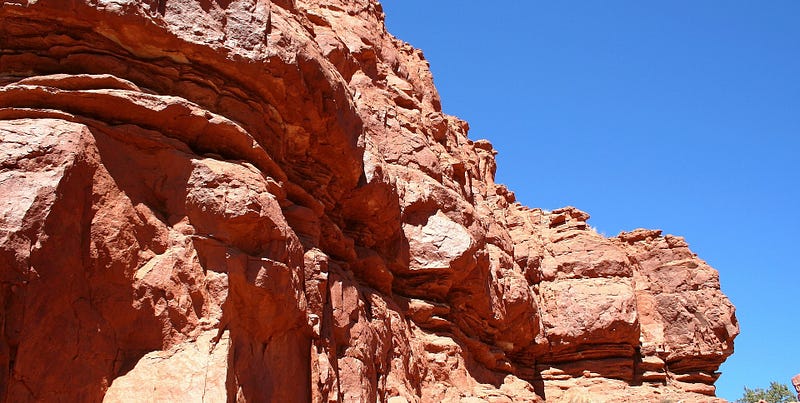
At one point Shirley took the interviewer into a very large room that she called her den. (My current entire apartment could fit inside her den with room to spare.) One side of the den was comprised of nothing but very large windows. The cameraman went up to the windows to show the view Shirley had out those windows. It was a gorgeous panorama of the expansive Rio Grande Rift Valley and, across the valley to the sacred Jemez Mountains (where the above photo was taken).
Back when I worked as a stonemason I lived in the hills of the western flank of the Sangre de Cristo mountains a bit farther north from Shirley’s house (where there were no millionaire homes). In that home I had two large windows in my living room that looked out over the Rio Grande Rift valley at the Jemez Mountains! My home was not worthy of any video tour but I had very close to the same view as Shirley has. How cool is that?
So anyway, seeing the view Shirley MacLaine has from her home reminded me of the view that I used to have which reminded me of the sacred Jemez Mountains which reminded of when I used to work as a stone mason which reminded me of my profound love of rocks. (Thanks, Shirley.)
This sequence of synchronicities also led me to take a six-part video course on the geology of the Jemez Mountains and the Valles Caldera. I inadvertently learned more about geology than I’ve known my whole life. Again, thanks Shirley.
Very, very slowly, Northern New Mexico is splitting apart. The Earth’s crust is cracking open in what is called the Rio Grande Rift. The Rio Grande River flows down this crack. Everything to the east of the Rio Grande is moving away to the east and everything to the west of the Rio Grande is moving away to the west.
I always lived on the east side of the Rio Grande crack up in the majestic Sangre de Cristo mountain range. Although I did some stonework in Santa Fe and other places to the east, I did most of my stonemason work on the west side of the Rio Grande in the sacred Jemez Mountains. I mentioned that the rocks in the Jemez are very different than the rocks in the Sangre de Cristo. This is because the Jemez Mountains are volcanic.
I normally hate commutes to work but the almost one-hour drive from up in the Sangre de Cristo Mountains down into the valley then across the Rio Grande and up into the Jemez Mountains has got to be one of the most picturesque commutes anywhere.
To the east, the majestic Sangre de Cristo mountain range is tall and narrow and very, very old. It is the longest contiguous mountain range in the lower 48 states, beginning just south of Santa Fe and stretching all the way into central Colorado. The range has plenty of 13,000 and 14,000 foot snow-capped peaks. (In Spanish, the name, Sangre de Cristo means, ‘blood of Christ.’) I have lived on the flanks of the Sangres (as locals call them) eight different times in eight different places. They were all on the western side of the mountains.
To the west, the Jemez are not long and narrow and none of the peaks are taller than around 11,000 feet. Instead, the Jemez Mountains are circular. The mountain range is essentially the rim of an ancient super volcano. In the middle of this circular mountain range is the Valles Caldera, the second largest volcanic caldera in America behind Yellowstone. When one drives over the rim of the Jemez Mountains into the caldera it is like entering a veritable garden of Eden.
The caldera is a vast sea of lush grass and forests over 8,000 feet in altitude with occasional small hills that are the remnants of volcanic vents. It is a fairly pristine space with only a few small roads leading into it and very little sign of human habitation. Just like with Yellowstone, the wildlife is abundant and incredible.
All indigenous people who have ever lived in or near the Jemez consider this place to be extremely sacred. I once drove through the caldera on my way back from the Harmonic Convergence in Chaco Canyon to the west where I had a profound mystical experience. I won’t go off on that tangent but I will say that throughout the drive through the caldera I kept saying to myself, “Man, this would be a great place to live!”
(No one can live there, though, because, thanks to our government, it is all now protected land.)
The Jemez Mountains and the Valles Caldera were created over a million years ago by two massive volcanic eruptions. The second of these two eruptions was one of the biggest volcanic eruptions this planet has ever experienced. Volcanic debris from this eruption has been found in sedimentary layers as far away as the Texas Gulf Coast.
There have since been at least eight tiny eruptions from within the caldera since that major eruption, the last of which occurred around 50,000 years ago. Geologists still classify the Jemez Mountains as an active volcano zone even though there has been no eruption in 50,000 years. There is still a huge magma chamber underneath the mountains, just as there is beneath Yellowstone.
There is a lot of geothermal energy there. I once went skinny dipping in a mineral hot spring in those mountains and it was the most incredible hot spring experience I’ve ever had — but I won’t go off on that tangent.
On the southside of the Jemez is a narrow canyon that over tens of thousands of years was carved out of the volcanic rock… by water. It is called Frijoles Canyon. It is called that because scientific evidence shows that beans have been grown by humans in that canyon for many thousands of years. Corn and squash had also been grown by humans in that valley for just as long but geologists and historians decided to name the canyon, Frijoles Canyon and the water that runs through it, Frijoles Creek.
What makes Frijoles Canyon special is that within that canyon lie the ruins of a very ancient Anasazi settlement. (They were the first ones to grow beans there.) On either side of the canyon walls are cliff dwellings, something the Anasazi were masters at building. When it comes to sedimentary volcanic rock, the Anasazi were master stone masons. When I first started doing stone work my then partner and I advertised that we did stone work that looked like it had been made thousands of years ago by the Anasazi. (The canyon is now called Bandelier National Monument.)
I once spent a day in Frijoles Canyon during which I had an extreme mystical and past-life regression experience. But don’t worry; I won’t go off on that tangent.
Something else I love about the Jemez Mountains are the Ponderosa pine trees. Ponderosa pine trees are my most favorite of all pine trees. Because the mountains have suffered little to no logging over the years some of the very oldest and tallest Ponderosa pine trees on Turtle Island live there. I once spent a weekend in a particular swath of old growth Ponderosa. I must have hugged a few hundred of them. But there was one tree that I will always remember.
I hugged it but it would have taken at least 6 humans to fully encircle the tree. I cannot even begin to calculate how tall it was but it was the tallest Ponderosa I’ve ever met. After hugging it for a long time I looked up at it and promised it that I would come back again some day to hug it again. The tree probably remembers me but I sure as heck remember it. I can close my eyes and still feel and see it now.
Back when I did stone work in the Jemez Mountains I could feel the totality of the mountains every time I picked up a rock — even though I was ignorant of the geologic identity of the rock.
My favorite rock to work with was a rock called, tuff. I knew the short name of the rock back then but I had no idea that this form of rock was formed by the settling and cooling of a volcanic pyroclastic flow. A pyroclastic flow is what obliterated the town of Pompeii close to two thousand years ago.
I also did not know that there are two kinds of tuff rock; Toledo tuff and Bandelier tuff. Toledo tuff is beige in color while Bandelier tuff is more orange and red in color. Now, thanks to a geology video course, I know that the rock I was most happy about was Bandelier tuff. Volcanic tuff rock is a very malleable rock that can be sculpted and shaped. Toledo tuff came from the very first volcanic eruption that started the formation of the Jemez Mountains and Bandelier tuff came from the second eruption that formed the current profile of those mountains (a far more violent eruption that produced more quartz crystal and potassium and silica than the first eruption).
During my last year in New Mexico I fantasized about becoming a sculptor; a sculptor using Bandelier tuff rock. I was able to build rock walls where the joints between rocks were so tight that you could not fit a dollar bill between the rocks, just like the ancient Aztecs and Mayans and Incas did. I wanted to take that further and sculpt features that told stories about humans and life and the cosmos; that told the story about humankind.
I gave all that up to enter a world of words; of books. Sadly, I have learned that words are far more quickly eroded and washed away than solid rock. They are far more ephemeral and forgettable than the geology of our home.
I remember driving that U-haul truck up towards Colorado. I was on the highway leading north and I was about to enter the canyon leading up to Taos and then up to the San Luis Valley of Colorado to a distant town in the Colorado mountains (still within the view of the Sangre de Cristo Mountains), As I left New Mexico I looked to my left at the last view of the Jemez Mountains that I would see for around thirty years.
As I looked at those magical Jemez Mountains lit up by the morning sun I was profoundly overcome with a feeling that I would see those magical mountains again some day. I was also overcome with a strong feeling that I would eventually die within the shadows of those mountains.
I know without any doubt that I still have a few decades to go before kicking the proverbial bucket but now I know that it is quickly approaching the time that I return home; that I return to the holy land.
I have so much to say, so much to tell, so much to reveal, so much to express in this life. It seems like I have hardly begun to give that which I, at some point in time, agreed to share. I feel like a volcano that is only barely beginning to erupt. I know that my path leads back to that ancient volcano.
Copyright by White Feather. All Rights Reserved. Thanks for reading.
Speaking of New Mexico…