
America Loves Pyramid Schemes So Much We Put A Pyramid On The Dollar
I am obsessed with the new get-rich-quick doc ‘LuLaRich’
America is built on a dream but so are pyramid schemes and multi-level marketing businesses. And that dream, in all three cases, is simple: to make money. Lots of money. The kind of money that others see, point at, and think “I want that.”
Real “look at me” bucks.
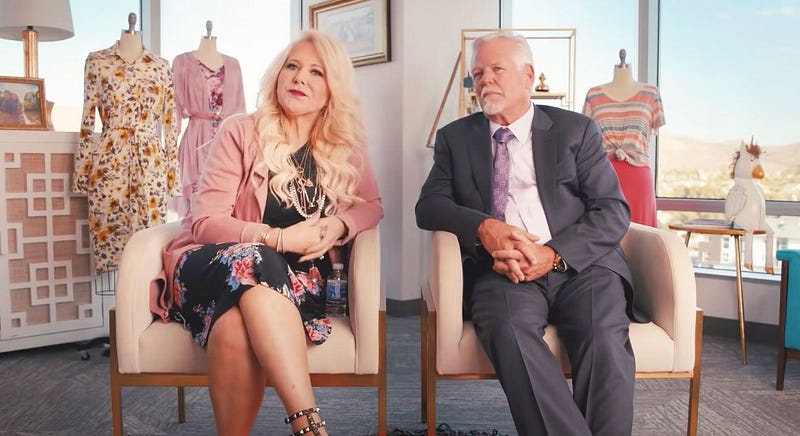
For the past nine years, DeAnne and Mark Stidham, the married cofounders of women’s fashion company LuLaRoe, have been telling thousands of people, mostly moms, how to make that kind of money.
The charismatic and energetic couple preach the gospel of get rich quick with a televangelist’s charms. Step one, join their very cool, very hip company. Next, buy and then sell their merchandise and then, most importantly, convince others to become part of the LuLaRoe community. Repeat.
If you’re lonely or isolated or struggling to make ends meet, it’s an irresistible pitch. But in the end, only a fraction of a percent at the top earn enough to post selfies from their luxury vacations.
In LuLaRich, a four-part docuseries on Amazon Prime, directors Jennifer Furst and Julia Willoughby Nason pick apart an organization that has been credibly accused of being a pyramid scheme, taping scathing interviews with former LuLaRoe consultants, employees, and even a bitter family member who realized that he was part of a company that fed on the people they were in business with.
The documentarians really scored, though, when they were able to get DeAnne and Mark to sit down for a long interview, where they do what they do best, which is bullshit without breaking a sweat.
LuLaRich is part of a recent real-life genre I like to call ‘Capitalism Is Bad,’ which includes movies and series about high-profile scams like the over-hyped Fyre Island Festival debacle that stranded thousands on a beach without food or a way home or the beleaguered rent-an-office startup WeWork, a business once valued at $47 billion. Each of these docs focuses on magnetic leaders luring investors and employees and customers to their doom, like HBO’s The Inventor, which is about Theranos’ founder Elizabeth Holmes and her fake blood test machine.
I don’t know if there are more charlatans now than in the past, but being a con artist sure seems more lucrative than ever.
The late Bernie Madoff is one of America’s greatest crooks, a man whose entire investment firm was exposed as a massive Ponzi scheme, the largest in history actually, worth $64 billion. A Ponzi scheme is, literally, stealing from Peter to pay Paul. Madoff’s wealthy clients would give him their money, and when they want to cash out, he took money from new investors who had paid into his portfolio.
A Ponzi scheme is like a pyramid scheme, only in the latter each investor is empowered to go out and recruit more people. Both will get you thrown in jail, and both seem like totally normal things that happen all the time in the land of opportunity. It’s as if these rackets are a feature, not a bug.
And there are differences between pyramid schemes and multi-level marketing businesses, the first difference being pyramid schemes are illegal. An MLM is legal because there is a product, whether it’s makeup or vitamins or in LuLaRoe’s case clothing adorned with flamboyant patterns, some of them outright stolen from Google Image searches.
But they all have one thing in common, and that is envy. Greed begets greed. This country is full of vulnerable wannabes easily hypnotized, for instance, by a glamourous woman driving a pink Cadillac, a bonus given her to by Mary Kay Cosmetics because she started a makeup business that took off. The winners of MLMs are always visible, their wealth is always on display, they are walking, talking, glittering advertisements for their lifestyle. It’s how they attract newbies happy to look up to them from one level down. These businesses aren’t cheap to launch, either. In the case of LuLaRoe, it costs $5K to buy the inventory you’ll then need to go out and sell.
A successful MLM is made up of downlines and uplines, people hungry to get rich, and those people who recruited them, coached them, and take a taste of what they sell. If you’ve ever seen a gangster movie you know how this works, a low-level soldier shakes a business owner down and kicks a cut up to his capo, who gives a share to the boss.
During this excellent documentary, the Sitdham’s sunny and defiant defense of their business is intercut with them being deposed by Washington State’s Attorney General, which sued LuLaRoe and accused the company of being a pyramid scheme. LuLaRich presents witnesses and evidence that seems to confirm LuLaRoe’s sole reason for being was growing its base of consultants and forcing them to continually pay into the business, even when LuLaRoe sent torn or moldy products that could not be refunded. The doc is breezy but out-to-kill.
LuLaRoe cynically exploited shallow pop feminist terms like “girlboss” and “mompreneur” to inspire women to toil for little to no profit and, of course, social media was the lens through which these women saw what they wanted and sold what they could. The most successful consultants leveraged Instagram expertly and a few of them were pressured to lose weight so they looked the part. In America, looking rich is being skinny. That’s what everyone wants.


