
All You Need To Know About Grass-Fed Beef
It’s more than just hype. Here’s why.
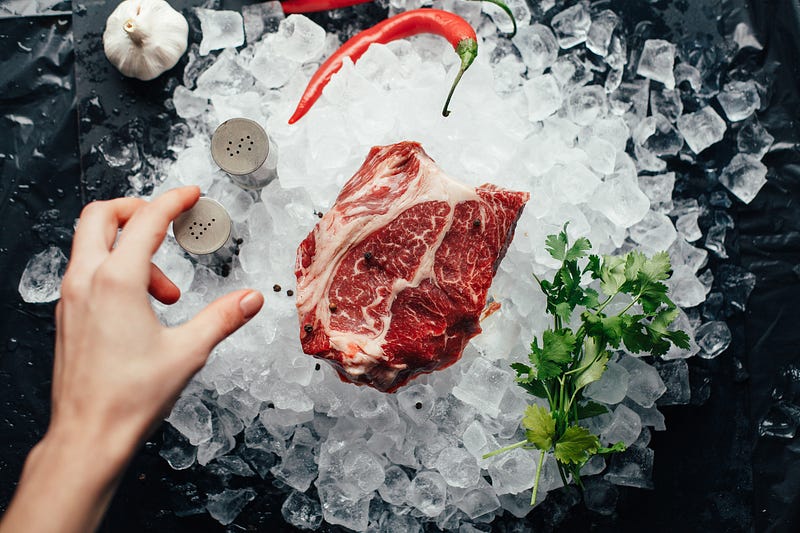
You probably already know that Grass-fed beef costs a couple bucks more per pound than conventional meat. But do you know why? And furthermore, do you know if you’re just paying for some fancy language and a pretty picture of a farm on the label?
When you grow up on a farm like I did, you have a pretty good understanding of the give and take we have with animals we raise for slaughter. Some of my earliest memories are of going to the slaughterhouse with my mom to wrap our own meat.
I sat at the table with a giant roll of freezer tape and a purple stamp pad. As my mom wrapped up the hunks of steak, hamburger and roasts, I taped them shut and then used a rubber stamp to label each package before we took it home and put it in our chest freezer.
It wasn’t until I left home that I realized that most people have never eaten an animal that they raised and cared for since it was a baby. While the meats I had grown up eating were wrapped in white butcher paper, everyone else seemed pretty comfortable eating meats that came in colorful boxes and were pressed into shapes like play-doh.
At first, I was gung-ho about conventional meats — so delicious and cheap! But as I started to pay attention to food recalls and nutrition labels, I became wary of a factory farm system that methodically destroys the planet, people and animals while making us fat and unhealthy.
I devoured books like Fast Food Nation and documentaries like Food Inc. , which convinced me that giving up meat was the only food choice I could live with.
I spent the next twelve years getting my protein from fake meat products like veggie burgers, tofu dogs and rubbery pink plant-based deli meats.
Last summer, a product called the Impossible Burger became popular. Its claim to fame is that it bleeds like real meat. This is sort-of true in that it oozes a fake-blood type substance before charring on the outside and leaving a gooey pink inside that has the consistency of raw cookie dough.
At the same time, my dad had started to raise grass-fed beef.
When I visited him at the farm, I stuck to my guns and ate a fake burger, made in a lab through a series of chemical reactions and dyed to look appetizing. Meanwhile, everyone else ate hamburgers from a cow that had been born, lived and died within a 5 mile radius.
The sun grew the grass and the cow ate the grass. It turned the grass into food that my family was enjoying with ketchup and mustard. The cow’s carbon footprint was as big as the ten minute trip in the trailer to the slaughterhouse and the electricity necessary to keep it cold in the freezer.
Meanwhile, my ‘healthier’ burger was made of a long list of hydrolyzed ingredients that had traveled thousands of miles to make it onto my plate.
You’ve probably guessed — after a long hiatus, I returned to the world of the carnivores. I ate a burger. And it was great.
Since then, I’ve been coming to terms with whether I’ll keep eating meat, or if I’ll go back to vegan chick’n patties and tempeh.
One thing is for sure though, I have learned a lot about grass-fed beef. And I’ve also learned that most people have no idea about why grass-fed beef is a better choice.
So here goes.
Grass-Fed Cows are Healthy Cows
Maybe you’ve heard that cows have four stomachs. The reason for this is so that they can digest foods that are really hard to digest — primarily grass.
On top of that, they have wide, flat teeth that are adapted to grind up blades of grass to make them easier to chew. They even burp up half digested grass and chew it again so they can unlock more nutrients from it.
Most modern-day cows don’t have the luxury of eating grass. Instead, they are fed a high-grain diet that makes them gain weight quickly, but also makes them sick. Grain is like junk food to cows. And the goal of modern agriculture is to feed cows lots of grain so they get fatter and fatter, but then to slaughter them before they get so sick that they die.
Cows that eat the foods they evolved to digest are healthier animals. They have a higher quality of life and have less of a need for veterinary care. They have a better quality of life which requires fewer antibiotics and reduces stress on the animal.
Grass-Fed Cows Use Less Gas
Cows that graze in pastures use a lot less petroleum than cows that eat grain. Most grain comes from corn or soy, which has to be planted, fertilized, harvested, processed and transported to the animals.
Instead of outsourcing all of this food prep to gas-guzzling tractors, grass-fed cows just munch away, grass to mouth. Their poop also returns valuable nutrients to the soil which reduces the need for petroleum based fertilizers. There’s a reason this eat-poop cycle has evolved over millions of years on planet earth: it works.
Grass-Fed Cows are Better for the Environment
A little bit of cow poop is great for the soil. But when you take cows off the pasture and put them in a CAFO, which stands for Concentrated Animal Feeding Operation, they make tons of poop and there’s nowhere to put it.
CAFOs are concrete jungles where thousands of cows are crowded together and fed grain. Their purpose is to get cows fat in the shortest time possible for the smallest amount of money.
Manure runoff from CAFOs can enter waterways and affect drinking water as well as lakes and ponds. When manure enters a waterway, it gets eaten by bacteria, which bloom quickly and then die. The dead bacteria decays underwater which pulls oxygen out of the water and creates hypoxic conditions that can lead to massive fish die offs.
Cows that live on pastures, aren’t as crowded as cows on CAFOs. The ground they graze is permeable, which prevents massive, toxic runoff. Cow pastures provide habitat for birds, insects and many plant species. And plant-filled pastures absorb carbon dioxide from the atmosphere instead of just reflecting back heat, which is what concrete does.
Grass Fed Beef is Healthier for You
Bottom line, the animals and the earth are nice to care about, but the real big deal with grass-fed beef is that it’s just plain better for you.
Since grass-fed cows eat a healthier diet, they are healthier animals in general. When you eat them, they pass those benefits on to you. Grass-fed beef is lower in fat in general, which means it has less calories.
But the real benefit is in the ratio of omega-6 to omega-3 fatty acids. These are the ‘good fats’ that our body needs to stay healthy. But most of us don’t get enough of the omega-3s. Cows that eat only grass produce high levels of omega-3s. As soon as they take that first bite of grain, the cows will switch over and start producing omega-6 instead.
This is why you want to check your labels to see if your meat is ‘grass-fed, grain-finished’ or ‘grass-fed, grass-finished’. The former is better, although both beat out conventionally raised cows hands down.
Grass-fed Beef Tastes Great
After chowing down on thousands of fake meat products across dozens of brands, I feel like I have some credibility when I tell you that grass-fed beef tastes delicious.
I thought it would feel strange to start living the meat life again, but that is not the case. I much prefer thawing out a package of grass-fed hamburger than I do opening the depressing cellophane pouches containing sorry-looking veggie burgers.
If you like reading about cows, check out these other articles I’ve written about these bovine beauties. If you want to know how to find grass-fed beef, read the first one. If you like reading about sex but you’re curious about cows and you’re pressed for time, pick the second one:


