
All the Bible Verses They Tell You to “Follow” Are Made Up
Scholars caught Christianity writing its own rules
When I was a kid they kept telling me that all the rules for life were found in the Bible. If I didn’t obey, God hated me and would send me to Hell.
Later on I looked up facts in Bible scholarship, and realized a different story had been happening. All their favorite Bible passages to cite for the “rules” were made up by the religion itself.
Here’s ten counts on an indictment for religious fraud.
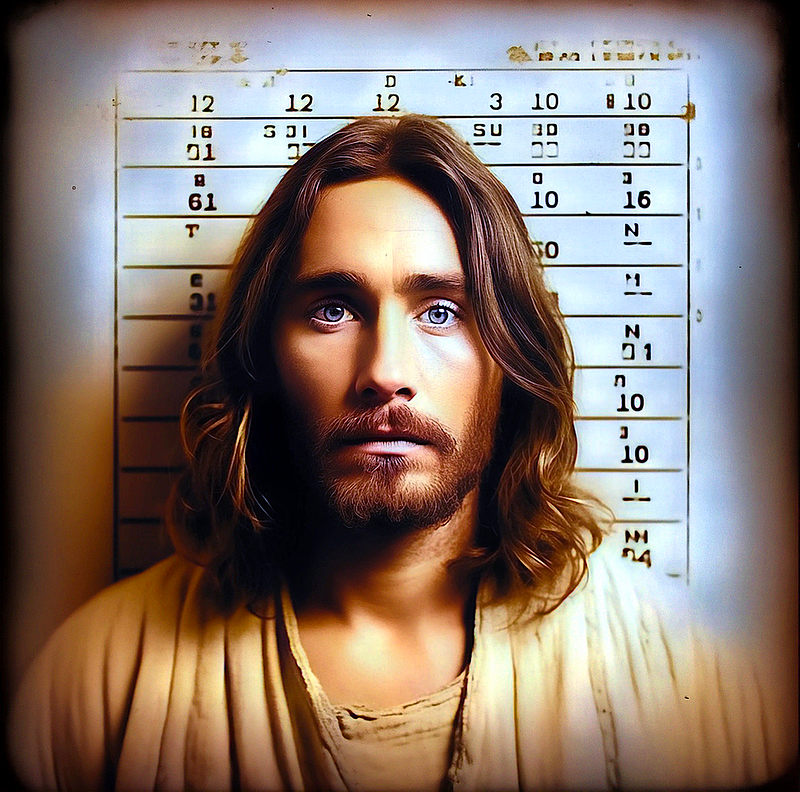
1. Christianity made up that a woman is defined as a “helper”
The way they explain it, God was getting ready to create a women in Genesis 2:18 and says: “I will make a helper suitable for him.”
That set the template on female existence, evidently. They’re to be ‘helpers’ to men. That’s what they say. What they don’t say is that they made it up. As the scholar David Freedman explains, the Hebrew phrase that is translated ‘helper suitable’ is actually the words for ‘rescuer’ and ‘strong’.
How is the woman in Eden a ‘strong rescuer’? It seems confusing. In the story, the first woman doesn’t do much more than reproduce. Although, come to think of it, that ‘rescues’ humanity from extinction.
2. Christians made up that “God hates divorce”
The religion typically forbids divorce and wages war against people who get them. The key reference they’ll invoke is from an unusual corner of the Bible: Malachi 2:16. When the Israelites were in exile and all but enslaved, evidently God was mostly concerned about divorce.
If you’re Christian, you’ve heard it million times: “God hates divorce.”
That the Bible is against divorce is very unclear. There in Deuteronomy 24:1 is a quick procedure for getting one. Divorce is legal in Judaism to this day.
And it turns out that Malachi 2:16 is grossly mistranslated. As the scholar Jack Collins notes, the Hebrew text is so unusual that explaining any one translation will be “torturous.” The translation “God hates divorce,” he adds, is found “only with great difficulty.”
3. They made up God telling parents to hit kids
One of the most common ideas among Christians is that God makes sure parents are spanking their children. Isn’t that clear in Proverbs 13:24?
“Whoever spares the rod hates their children, but the one who loves their children is careful to discipline them.” (NIV)
Here’s facts. In the ancient world, rulers carried ‘rods’ or ‘staffs’ as signs of authority. They’re often seen in the Old Testament, and are basically magical. The rod channels divine power. They’re used for many miraculous scenes, like Moses parting the Red Sea or Elisha raising the dead.
To use the rod is to invoke divine power, not to hit someone.
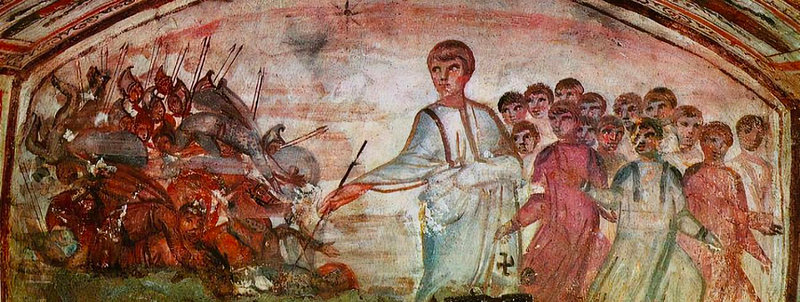
4. Christians made up the fake ban on “lust”
It seems so clear in their translation of Matthew 5:28. If you look at someone and think they’re sexy, Jesus hates you.
“But I tell you that anyone who looks at a woman lustfully has already committed adultery with her in his heart.”
Except the Greek word epithumia does not refer to sexual interest. Typically, epithumia means ‘desire’, as in really wanting anything. Jesus “lusts” in Luke 22:15 — to eat something!
The word epithumia can also translate the Hebrew word for ‘covet’, as used in the Ten Commandments. To ‘covet’ is to want what someone else owns.
If committing ‘adultery’, the woman of Matthew 5:25 is married and seen as property. The context of the verse is the idea of her being owned, as someone else would be trying to take her.
The Bible allows sex with slaves! A man can have vast harems and many wives. Jesus would not be found criminalizing sexual interest itself.
5. Christians made up that women can’t be leaders
It remains one of the great mysteries of human history how this religion managed to war on half of the human race. The Bible gave them no support. The Bible is full of women leaders! And so is life.
A series of passages in the writings of the apostle Paul were deliberately misread and mistranslated to create the illusion of male control. Only in recent years have scholars been taking the case apart. Consider 1 Timothy 3:4, a description of good church leaders. A typical translation:
“He must manage his own family well and see that his children obey him…”
All those male pronouns were added in translation. “In Greek,” as Philip Payne notes, “there is not even one masculine pronoun or ‘men only’ requirement…”
6. They made up the ban on “sexual immorality”
The New Testament has a few uses of the Greek word porneia. It seems to have a context of sexual misbehavior, but no one can figure out what exactly it means. Scholars often say it’s can’t be translated.
Christian scholars do their best with the vagueness. James W. Thompson puts it in 2010: “While porneia means ‘unlawful sexual intercourse,’ in the New Testament it is often ambiguous…”
Silke Petersen explains the result:
“It is a term open for projection of any kind and can denote whatever a person or community does consider not acceptable behavior.”
Christians basically took a very vague word and said it referred to all their own sexual anxieties. And there’s a lot of them.
That porneia refers to people having sex is very much in doubt. As a Greek word it refers to an unauthorized sale of sex. Then it is often used in the Bible of scenes where sex isn’t the issue (Heb 12:16; 1 Cor 10:8, etc.).
There’s hints it means ‘idolatry’, i.e. worship of the wrong deity. A sexual suggestion may come from the idea that God is a ‘husband’, and so rival deities are seen as ‘other men’.
7. Christians made up the idea of sex being “burning”
To look up the long Christian campaign against human eroticism is to find utter absurdities—like when they say sex is a fire that burns you.
That’s how they explain 1 Corinthians 7:9: “But if they cannot contain, let them marry: for it is better to marry than to burn.”
If you listen to Christians, this verse has the apostle Paul telling everyone to try to not have sex, but if the ‘burning’ gets too bad, then marry.
Actually, the context here is prospective candidates for missionary work, and ‘burning’ does not mean they are in sexual frenzy. In the ancient world, ‘burning’ meant that you miss someone. Tombstones in the ancient world had inscriptions like a parent being “burned up” over a child’s death, as in: “father and mother who are burning with grief.”
Paul’s message to prospective missionaries is that they shouldn’t go do that work if they’re going to really miss someone. Christians turned that into a denunication of all human sexual feeling.
8. Christians made up that “purity” means virginity
In the Old Testament, the word “purity” referred to a set of laws that mostly meant you didn’t touch things, like dead bodies, menstrual blood, semen, shit, etc. Scholars think the idea was guard against death.
In the New Testament, ‘purity’ seems to mean an attachment to Jesus, seen as the embodiment of ‘Life’ and the promise of resurrection after death. Here for example is 1 John 3:3:
“All who have this hope in him purify themselves, just as he is pure.”
What never tripped a “purity” violation was sex. And yet that’s what Christians say “purity” means, which became the basis of a ferocious campaign against unmarried sex. It is sheer religious fraud.
9. Christians made up the war on “homosexuals”
It would seem very unlikely that the Bible would issue a ban on ‘homosexuals’ for the simple reason that the concept did not exist. People in the ancient world were often assumed to be bisexual, but exclusive same-sex interest was just not a thing.
And yet we turn to Christian translations of the Bible, and find, at 1 Corinthians 6:9 and 1 Timothy 1:10, God denouncing a modern concept.
But Christians lately like to pretend that an ultra-rare Greek word— ἀρσενοκοῑται or arsenokoitai—meant ‘homosexual’. In reality, the religion had no idea at all what this word means.
I watched the new documentary 1946: The Mistranslation that Shifted a Culture. It studies the exact moment when Christianity declared that arsenokoitai meant ‘homosexual’. Now we find out from archival research: the religion knew it was lying.
10. Christians said “faith” meant you have to believe whatever they tell you
When you grow up Christian, you’re to believe the information you’re given and not think about it! No proof required. No questions! Have faith!
‘Faith’ is explained as you accepting, basically, whatever they say. The scholar Matthew W. Bates did his best in a recent study to explain that “faith” does not have anything close to this meaning.
The Greek word pistis is a term from politics and refers to loyalty to a leader. In a Christian context, Jesus is your “king” and so you have ‘trust’ in him or ‘loyalty’ to him. Bates translates it as ‘allegiance’.
It never meant: don’t think. That was just the religion. 🔶


