
All The Best People I Know Treat Books Like Sex and Wine
The modern fad for productivity shouldn’t apply to art and literature. Slowly and mindfully is always better.

You’re sitting in your favourite armchair, the sun is setting, the birds are singing and the sky is clear. Because this is your dream, a butler comes bearing gifts. An expensive bottle of wine. Red. French. Bordeaux.
A wine that has been aging for the last fifteen years in the cellars of a French farm. A very good year, an excellent vintage. You nod your head, the pouring ceases and the wine is whisked away.
What happens next?
In one world, you swirl the wine, you gently sniff it and take in the flavour. You take a small sip, let it caress your tongue. Let the flavours luxuriate on your pallet — and then you gradually finish it. Enjoying the warm sensations in your throat, chest and stomach.
Slightly intoxicated you might even take the butler to bed. It’s your dream after all.
In another world, you slam the wine back like it’s a shot of sambuca, then do the same with two glasses of white wine, three beers, half a can of cider and a cup of tea. Then you insult the butler, soil yourself, and go to sleep.
Anything can happen. You’re in charge.
In both versions of the dream, the protagonist is drinking. Only in the first is the drink appreciated. Sure, you can use a very good vintage Bordeaux to get yourself steaming drunk — but think how offensive you’re being to the vineyard owners.
And now think about reading a good book.
Society at the moment seems obsessed with productivity. How productive are you being today? How many articles have you read? Hell! How many articles have you written?! This is my 55th today. Keep up, or ship out.
The problem with productivity is that it can only be measured quantitatively. You have to be able to count it. You did 20 press-ups yesterday, today you did 30. You’re 10 press ups more productive. Congrats.
But using the number of times you do something as a measure of how successful you are at it is problematic to say the least. The idea is pervasive in modern society. Who would you consider the most successful of the two imaginary drinkers in the examples above.
What about sex? Which is better? To have multiple sex sessions all very short and to the point, or fewer sessions that are sensual and fun, or maybe just that one that’s utterly mind-blowing.
You get the point, however clumsily I’m trying to make it.
Productivity and reading
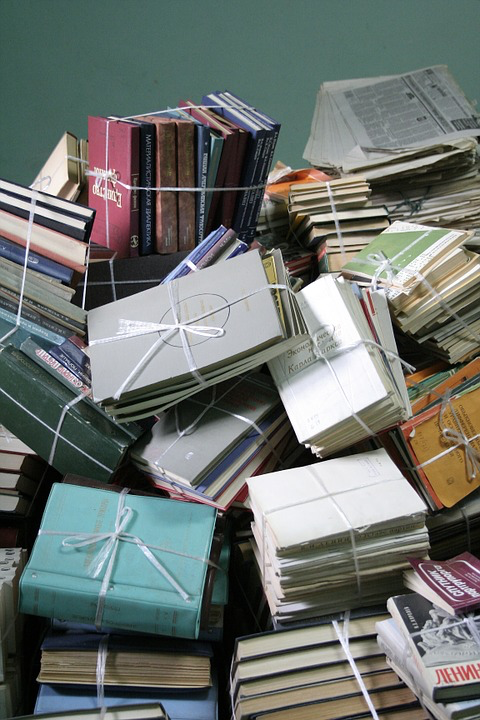
“I’ve read 57 books this year!”
“Oh, were they good?”
“I don’t know. I can’t remember. But I’ve read absolutely loads”
Think about what a work of fiction is. The word work is important here. An author has poured their time, energy and love into a book.
A world generated in one mind, transferred through marks on a page into the mind of another. Reading is as close as we can get to genuine magic. We need to stop applying the rules of productivity to reading.
Too many people read books like they’re back in their teens, doing shots of cheap watered-down vodka on a 2 for 1 student night.
Yes, time on this planet is finite. Yes there is an inexhaustible supply of books. No, you’re not going to be able to read them all. You have to pick and choose. It breaks my heart as much as it breaks yours.
But books are art, you can’t fast forward art. You go back to your favourite songs, your favourite albums. You listen again. If you’re listening to new songs all the time, you’re not appreciating good music. If you’re listening exclusively to new songs on double speed to fulfil a music productivity quota, then you probably need psychiatric intervention.
Imagine how appalled you’d be if your trip to the ballet, opera or theatre was restricted to forty minutes and everyone danced and sung at three times the normal pace. Imagine having to sprint from one end of an art gallery to another, desperately trying to catch a glimpse of everything out of the corner of your eye as it flashes past.
When it comes to art, the time it takes is the time it takes.
And the author will have taken their time. I’ll admit to publishing the odd first draft article on Medium, but I don’t make a habit of it.
My first published play had nine drafts before it was ready. There are millions of words to choose from (and that doesn’t include the tendency of Dahl, Rowling, Seuss, et al making up new ones)
Remember there are an infinite number of possible ways to write a good story.
It takes a long time and a lot of time to whittle down a story from the infinite available possibilities — trust me on that one. A good writer sculpts a story, chipping away at the infinite choice of words until you’re left with a beautiful piece of that will exist forever. A statute made of words.
Perhaps I’m trying to oversell what we do. And perhaps not.
Books are the single most powerful thing humankind have ever invented. Books have the power to change the world. The Bible, The Origin of the Species, The Diary of Anne Frank, The Communist Manifesto.
If the author has taken the time to craft their work for you, then you, in turn, should take the time to read to read it, for them. Possibly re-read it. I wrote about the death of re-reading here.
Books are art. Art takes time.
But I hate reading, I’m a slow reader
Reading slowly is not a measure of reading skill. This is a false understanding of what reading is and what it should be. Skimming your eyes across a page is not reading anymore than terrible fumbled foreplay in the back row of a cinema counts as good sex.
So if you are a slow reader. Own it. People who read slowly shouldn’t feel inferior. Society has a distorted view of what constitutes achievement. In this instance, it is society that is wrong.
If you read slowly, you process more. You’re digesting the words and points. Children read slowly, there are things to learn. People who hurry through books miss the nuances and the subtle choices. The beauty of the language, the flow of the prose. People who speed read are like the second drinker.
Sure, they’re meeting the criteria for drinking liquid, and yeah, they’ll get through a whole lot more than me. But hell… I’d rather drink and read slowly. I’d rather enjoy my wine, I’d rather enjoy my book.
Don’t ask me if I’ve finished either. I’ll finish then when I’m good and ready.
I have always been sad when a good book ends. It was unbearable when I was a child. I had mini-grief. Now when I get to the end of a good book it is simply sad. I suspect productive people don’t have this, and they’re missing out.
I don’t ever want to lose that feeling.
Books are the shape of our collective narrative. An entire imaginary world gifted from the consciousness of one speck of stardust to the rest of itself.
Something to think about when you have your next glass of wine.
DISCLAIMER: This article was written whilst enjoying a lovely glass of wine (white and dry for the record). All spelling mistakes and philosophical ramblings can be therefore be attributed to the grape and are offered sincerely as a tribute to the almighty god Bacchus.