
Has the Digital Age Killed The Re-Read?
A heart-felt plea on behalf of your favourite forgotten books
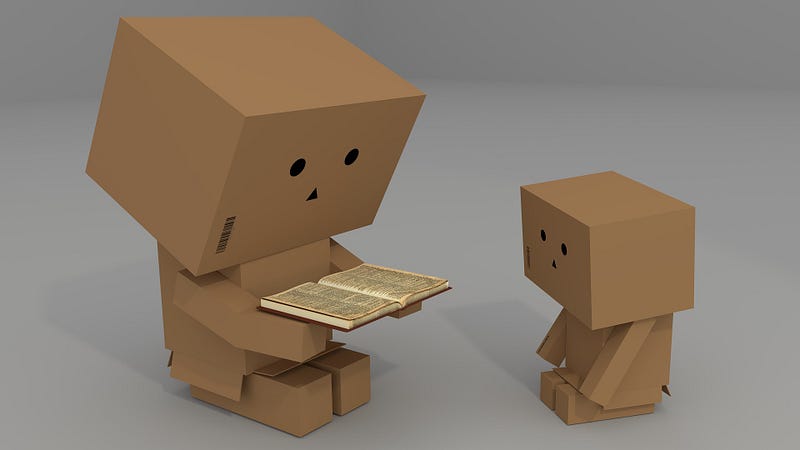
Is re-reading dead? What happens to your favourites in a throwaway consumer culture? Can books survive against what feels like the endless and relentless drudgery of social media?
Am I the only one who wants to scream at the top of my voice when friends and family pick the vapid digital fluff of social media over books day in, day out?
I hope not.
Take a step back with me to the early nineties. It’s the summer of 1994 in fact, a younger version of me is gently closing a book. The Last Battle by C.S Lewis, the seventh and final book in the Chronicles of Narnia. Young me sighs. Gets himself a drink and starts on another book… It’s The Magician’s Nephew, book one in the same series.
He hasn’t read that book for about two and a half weeks.
This younger and slimmer me wouldn’t think twice about finishing a book and then starting it again from scratch. To be entirely honest, that wasn’t the first time that happened either. Over the summer of 1994, a twelve year old me read the Chronicles of Narnia series three times in a row.
How do I know? I kept a diary. Yeah… I was that kid.
I watched the birth of a magical universe in The Magician’s Nephew and I watched the God-Lion Aslan shepherd all the characters (except Susan) out of the universe in The Last Battle. I loved that world. I loved spending time in that world. I loved everything about that world.
As imaginary worlds go, the Fortnite island just can’t compete with Narnia. All the stories that happen there are the same. Most of them are very short. Only 1 out of every 100 ends happily. The odds of survival for the children of Narnia were better, at least 75%.
My tendency to read and re-read has happened less as I’ve aged. You can’t read CS Lewis all day every day much as I’d like to believe that were possible. Plus, as an adult, I’ve never quite gotten over what happened to Susan in the allegory that Lewis penned. It seems I’m not the only one. Neil Gaiman, J.K Rowling and Phillip Pullman have all commented on the Susan Pevensie problem
Despite this, there’s still magic in those books for me though, as I suspect there is in the Harry Potter books or the Northern Lights Trilogy for the generation below me.
Northern Lights has just been adapted for TV. I am ambivalent. I write TV scripts and pitches as part of my day to day life, but I’ve never thought about adapting a classic children’s story into a script format.
Why do I have an aversion to turning books into TV? Simple. Rarely do children watch the TV series and rush out to buy the book as a result. It goes the wrong way. It pulls children away from reading.
Something I don’t think any responsible adult should do.
Having said that, I know that Phillip Pullman has been heavily involved in this adaptation and the books have been out for a long time. Given that there was already a terrible Hollywood adaptation, I think this will go someway to restoring the balance and more children will pick up the books.
The Case for Re-Reading
I’m going to say it. I think we should be re-reading books a lot more than we are. The modern age is creating disposable everything. Flash fiction. Books are fast being replaced by TV shows, films and online gaming.
Books are the first casualty when time is precious, nobody seems to have the time for a good book anymore. And if you do, chances are that you’ll only read it once. From my vantage point everyone seems to be going out for brunch and taking photos of it for social media.
This is despite the fact you can pick up almost brand new books from charity shops. Books that will give you hours and hours and hours of entertainment for less money than a coffee.
I could kit out a small library for the same price as two mochas and an avocado on toast.
Now that I’m a minimalist, I buy my old favourites for less than a pound. I read them. I donate them back. Charity gets money (more than once), I get to temporarily own a book, everyone is a winner.
So why should we re-read?
Firstly, you remember things more clearly the more often you read them. This seems obvious at first, but the effect, is often overlooked. The first reading of a book doesn’t give you very much. You may enjoy it, but it takes a second or third read to synthesise information and encode it into your brain. That’s what all those English literature classes were about at school.
I don’t usually read ‘self-help’ books or articles. I often find them patronising, but if one is recommended by someone I trust, I’ll give it a read. If it resonates I’ll always read it more than once.
Perhaps I’ll read it once or twice a year. Every time you re-read something, you’re encoding it into your brain again. You’re reinforcing the memory. You’re reinforcing the message of the book. If the message of the book gives value and the information is important then re-read.
Strengthen those neural pathways. I would also recommend that you do the same with Medium articles that you resonate with. Save it. Re-read it. Particularly poems. Dig at what the author wants you to get from their work that isn’t immediately obvious from first reading
And you’ve changed…
Your life experience will change how you view the book. Many of the books that I read as a teenager, I understand with greater clarity now. The Psychology of reading is fascinating and it does wonderful things for our brain.
As you engage with characters, the mirror neurones in your brain fire. You feel what the characters feel.
This means that when you return to a book in a different part of your life, you may connect to a different character. An intelligent author will give depth to all the characters they have written, not just the protagonist. That lovestruck teen you sympathised with when you read the book in 1989 might seem petulant and childish on re-reading. The horrible mother character now seems only to want the best for her daughter but deals with the situation in a heavy handed way.
The book is the same book, the words haven’t altered, it’s you that has changed.
When people ask me what’s the best way to become a writer, I reply with one word. Read. Read a lot. Read all the time. Although I wasn’t parented by literature, I was frequently babysat by it. My morality and world view was shaped by the characters I met — I don’t see any reason why that would change. If I feel like my life is in flux or that I’m after some guidance, I’ll go back to those books that helped shape me in the first place.
The last thing I choose to read these days is social media. It doesn’t contain anything of substance. When you’re looking for insight into the human condition, you can do better than a billion boring authors listing mundane thoughts, feelings and actions.
Get off the digital track and go back to your analogue roots.
My favourites
As an adult, I have ZERO guilt about re-reading children’s books. I love a good kids book. I’m not even one of those self conscious people who feels like they need to have a kid in order to justify it. If I liked it, I’ll read it. Only when you return to books as an adult, do you often understand some of the humour that you missed as a child. Now that I’m also a writer by trade do I understand the desire of authors to write on many levels simultaneously.
You’ll find me face down in a Discworld novel for at least some of the year. If you haven’t tried Terry Pratchett, then you really should. He’s an excellent writer. When he died a few years ago, I cried. Not because I knew him, or because I was close with him — but because the world he created was forever frozen in time and the dreams of his characters never fulfilled.
To have this affect on someone over the course of 20 years of reading is pretty impressive. I still haven’t read the last book he wrote. Part of me isn’t ready to do so yet, it will be an acknowledgement that the Discworld is over.
The One Timers
I read them once. I enjoyed them. I’m never going to re-read them. High fantasy books that I didn’t connect with. Autobiographies and fact books that were interesting, history books and some of the books I’d held onto from childhood but didn’t particularly enjoy
When I became a minimalist, I made the mental leap to let go of these books. I love books, so getting rid of them was difficult. But it wasn’t impossible. I just had to convince myself that I was releasing them to a better place and that they would find someone who loved them more than I did.
The Almost Books
There were books on my shelf that I always thought I would get round to reading, but that were overlooked time and time again. That copy of War and Peace. The James Joyce. Middlemarch. Books that I was kidding myself I’d read. They would eye me jealously as I reached past them and plucked out The Hitchhikers Guide to the Galaxy (A trilogy in five parts) time and time again.
I have discovered something about myself though. I may not select these books to read, but I can select them to listen to. The classics form an integral part of my Audible collection. Discovering audiobooks has opened up a world of re-reading for me.
I used to be one of those people that only has ONE book on the go at any one time. I can’t multi-task when it comes to reading but I can when it comes to listening. If I’m walking, I’ll have a modern book. If I’m in the car, a comedy or an autobiography, If I’m winding down for the evening, a lengthy classic novel.
What about you?
How many times do you read a book? Do you find yourself going back to the same ones time and time again? Do you ever re-read a book as soon as you’ve finished? Which books call to you like an illicit lover? Which ones are your guilty pleasure?
Speaking to non-writer friends of mine, they tend to re-read self help books. Things that are written specifically to motivate them. They might enjoy fiction, but they rarely seem to re-read it.
I guess this is a judicious use of time in a fast paced world. You shouldn’t re-read anything when the supply of new books may as well be infinite. My deat bed regrets will include the frustration at not being able to read absolutely everything.
There just isn’t time and that doesn’t feel fair.
Whether you choose to re-read old books or not is up to you. I’ve made the case for doing it. My adult life is much like my life as a child; surrounded by stories. I am always happiest when I’m a guest in someone else’s universe, or creating my own for actors to play in and audiences to enjoy.
Perhaps I will update my reading habits for the modern age and listen to the entire chronicles of Narnia three times over the course of summer 2020.
It sure beats reading idiots on twitter, or scrolling past a hundred pictures of avocado on toast.


