e institution presents the history of Alexandria from the times preceding its foundation by the famous ancient conqueror, Alexander the Great, to the Ptolemaic, Roman, and Byzantine periods. Various aspects of daily life, culture, science, art, sports, religious beliefs, and the city’s traditions are showcased.</p><blockquote id="eb28"><p>“We changed the entire museum concept, but we preserved its unique character. Its hallmark remains the distinctive neoclassical façade and several (the most interesting — Ed.) objects in the museum’s valuable collection,” said Moamen Othman, the head of the museum sector at the Supreme Council of Antiquities.</p></blockquote><p id="6c3b">Othman explained that the exhibition scenario was completely altered to make the presented content more accessible to the public. New thematic sections were also created.</p><p id="11f1">Walls in each part of the museum are painted in different colors to distinguish each historical era. For instance, royal blue represents the Ptolemaic period.</p>
<figure id="654f">
<div>
<div>
<img class="ratio" src="http://placehold.it/16x9">
<iframe class="" src="https://cdn.embedly.com/widgets/media.html?type=text%2Fhtml&key=a19fcc184b9711e1b4764040d3dc5c07&schema=twitter&url=https%3A//twitter.com/rashadhelmy6/status/1714675850237338085%3Fs%3D20&image=https%3A//i.embed.ly/1/image%3Furl%3Dhttps%253A%252F%252Fabs.twimg.com%252Ferrors%252Flogo46x38.png%26key%3Da19fcc184b9711e1b4764040d3dc5c07" allowfullscreen="" frameborder="0" height="281" width="500">
</div>
</div>
</figure></iframe></div></div></figure><h1 id="81d1">Underwater Treasures</h1><p id="b593">Off the coast and near Alexandria, archaeologists have been discovering numerous artifacts and structures for years. It turns out that the sea engulfed nearby settlements and buildings over the centuries.</p><p id="aa76">Some of these findings are truly spectacular. The new exhibition, for example, features artifacts from the sunken city of Thônis-Herakleion, retrieved from Abu Qir Bay.</p>
<figure id="89b8">
<div>
<div>
<img class="ratio" src="http://placehold.it/16x9">
<iframe class="" src="https://cdn.embedly.com/widgets/media.html?type=text%2Fhtml&key=a19fcc184b9711e1b4764040d3dc5c07&schema=twitter&url=https%3A//twitter.com/ozarabmedia/status/1712849314941178156%3Fs%3D20&image=https%3A//i.embed.ly/1/image%3Furl%3Dhttps%253A%252F%252Fabs.twimg.com%252Ferrors%252Flogo46x38.png%26key%3Da19fcc184b9711e1b4764040d3dc5c07" allowfullscreen="" frameborder="0" height="281" width="500">
</div>
</div>
</figure></iframe></div></div></figure><h1 id="8ea5">Alexander the Great and His Achievements</h1><p id="9032">Alexandria was one of the most important cities in antiquity within the Mediterranean region. The revamped exhibition aims to showcase its role and significance. Alexander the Great founded it in 332 BCE, but it flourished in the following centuries under the rule of the Ptolemaic dynasty.</p><p id="5985">During this time, the
Options
famous Library of Alexandria and one of the Seven Wonders of the Ancient World, the Pharos Lighthouse, were established. Alexandria’s heyday continued until the 7th century when the capital of Egypt was relocated to Fustat, now within Cairo’s boundaries.</p>
<figure id="1604">
<div>
<div>
<img class="ratio" src="http://placehold.it/16x9">
<iframe class="" src="https://cdn.embedly.com/widgets/media.html?type=text%2Fhtml&key=a19fcc184b9711e1b4764040d3dc5c07&schema=twitter&url=https%3A//twitter.com/rogueclassicist/status/1712787289749815623%3Fs%3D20&image=https%3A//i.embed.ly/1/image%3Furl%3Dhttps%253A%252F%252Fabs.twimg.com%252Ferrors%252Flogo46x38.png%26key%3Da19fcc184b9711e1b4764040d3dc5c07" allowfullscreen="" frameborder="0" height="281" width="500">
</div>
</div>
</figure></iframe></div></div></figure><h1 id="5203">Discoveries in Alexandria</h1><p id="03b0">Alexandria was a significant center of learning in the eastern Mediterranean. In 2004, researchers announced the discovery of a large complex of well-preserved lecture halls from the late antiquity (5th-7th century CE) in the central part of Alexandria at the archaeological site of Kom el-Dikka.</p><p id="e972">These are the only surviving ruins of an ancient university in the Mediterranean region. They are now accessible to visitors in the Archaeological Park, established in collaboration with archaeologists and conservators.</p><div id="5a2c" class="link-block">
<a href="https://readmedium.com/the-worlds-spiciest-pepper-as-recorded-in-the-guinness-book-is-so-hot-that-it-can-potentially-8c16c61a841c">
<div>
<div>
<h2>The world’s spiciest pepper, as recorded in the Guinness Book, is so hot that it can potentially…</h2>
<div><h3>Just one drop of its sauce can make an entire dish extremely spicy. This is how the world’s spiciest pepper works…</h3></div>
<div><p>medium.com</p></div>
</div>
<div>
<div style="background-image: url(https://miro.readmedium.com/v2/resize:fit:320/1*cz8LCWbH1KTaJlZDLDnWfw.jpeg)"></div>
</div>
</div>
</a>
</div><h1 id="4717">Attention all readers!</h1><p id="bb38"><b><i>As content creators on Medium.com, we face minimal compensation for our hard work. If you find value in my articles, please consider supporting me on my “<a href="https://www.buymeacoffee.com/oconnel">Buy Me a Coffee</a>” page. Your small contributions can make a big difference in fueling my passion for creating quality content. Thank you for your support!</i></b></p><figure id="1057"><img src="https://cdn-images-1.readmedium.com/v2/resize:fit:800/0*Pm9TOr-5svmNuuXB.png"><figcaption><a href="https://www.buymeacoffee.com/oconnel">https://www.buymeacoffee.com/oconnel</a></figcaption></figure><figure id="71ef"><img src="https://cdn-images-1.readmedium.com/v2/resize:fit:800/0*KJc52P2X8j4VSRWK.png"><figcaption><a href="https://www.buymeacoffee.com/oconnel">https://www.buymeacoffee.com/oconnel</a></figcaption></figure></article></body>
Alexandria’s Greco-Roman Museum Reopens After Two Decades.
Alexander the Great and Cleopatra are among the heroes featured in the exhibitions in Egyptian Alexandria. The Greco-Roman Museum has undergone renovations for almost two decades. The new exhibitions are impressive.
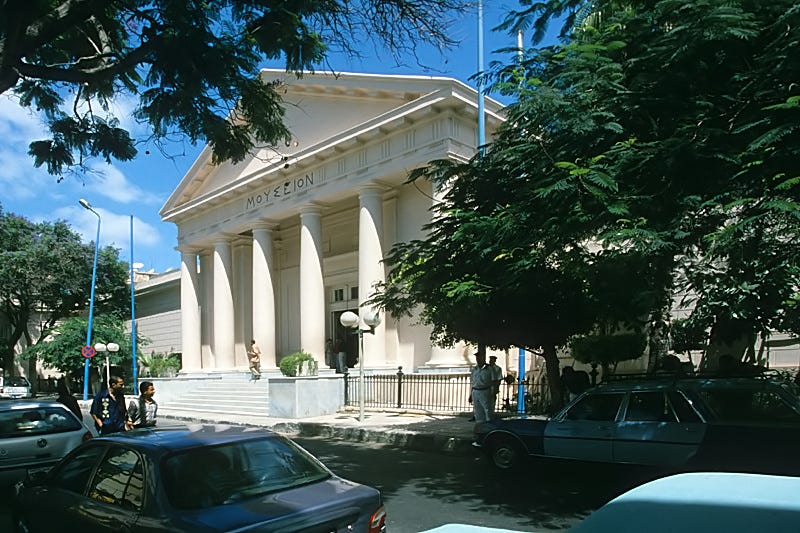
The Greco-Roman Museum was established in 1891 by the Italian archaeologist Giuseppe Botti. It is currently housed in a beautiful building with a neoclassical façade and a frontispiece bearing the Greek inscription “MOYΣEION” (MOUSEION). The collection includes about 40,000 artifacts dating from the 7th century BCE to the Ottoman era in the 19th century. Only a few thousand of them are displayed in the permanent exhibitions.
Museum Integrated into Egypt’s Policy
In mid-October, the Greco-Roman Museum was officially opened after nearly 20 years of renovation. Its facade was hidden behind scaffolding and green cloths. The opening ceremony was attended by the Prime Minister of Egypt, Mostafa Madbouly.
In his assessment, the museum will become a new tourist attraction in Alexandria, aligning perfectly with the country’s policy to revitalize both archaeological sites and museum institutions.
A New Museum Tour
The exhibitions are located on two floors. The museum tour route and the layout of the exhibits have undergone a complete change. The institution presents the history of Alexandria from the times preceding its foundation by the famous ancient conqueror, Alexander the Great, to the Ptolemaic, Roman, and Byzantine periods. Various aspects of daily life, culture, science, art, sports, religious beliefs, and the city’s traditions are showcased.
“We changed the entire museum concept, but we preserved its unique character. Its hallmark remains the distinctive neoclassical façade and several (the most interesting — Ed.) objects in the museum’s valuable collection,” said Moamen Othman, the head of the museum sector at the Supreme Council of Antiquities.
Othman explained that the exhibition scenario was completely altered to make the presented content more accessible to the public. New thematic sections were also created.
Walls in each part of the museum are painted in different colors to distinguish each historical era. For instance, royal blue represents the Ptolemaic period.
Underwater Treasures
Off the coast and near Alexandria, archaeologists have been discovering numerous artifacts and structures for years. It turns out that the sea engulfed nearby settlements and buildings over the centuries.
Some of these findings are truly spectacular. The new exhibition, for example, features artifacts from the sunken city of Thônis-Herakleion, retrieved from Abu Qir Bay.
Alexander the Great and His Achievements
Alexandria was one of the most important cities in antiquity within the Mediterranean region. The revamped exhibition aims to showcase its role and significance. Alexander the Great founded it in 332 BCE, but it flourished in the following centuries under the rule of the Ptolemaic dynasty.
During this time, the famous Library of Alexandria and one of the Seven Wonders of the Ancient World, the Pharos Lighthouse, were established. Alexandria’s heyday continued until the 7th century when the capital of Egypt was relocated to Fustat, now within Cairo’s boundaries.
Discoveries in Alexandria
Alexandria was a significant center of learning in the eastern Mediterranean. In 2004, researchers announced the discovery of a large complex of well-preserved lecture halls from the late antiquity (5th-7th century CE) in the central part of Alexandria at the archaeological site of Kom el-Dikka.
These are the only surviving ruins of an ancient university in the Mediterranean region. They are now accessible to visitors in the Archaeological Park, established in collaboration with archaeologists and conservators.
As content creators on Medium.com, we face minimal compensation for our hard work. If you find value in my articles, please consider supporting me on my “Buy Me a Coffee” page. Your small contributions can make a big difference in fueling my passion for creating quality content. Thank you for your support!