
Alee
The New York Times has an identity crisis

Today’s New York Times Spelling Bee letters:
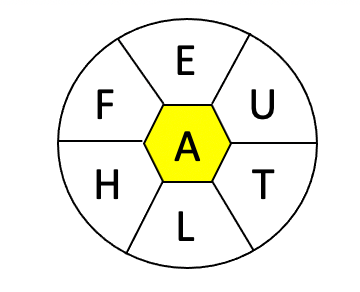
E, F, H, L, T, U, and center A (all words must include A).
Merriam-Webster says…
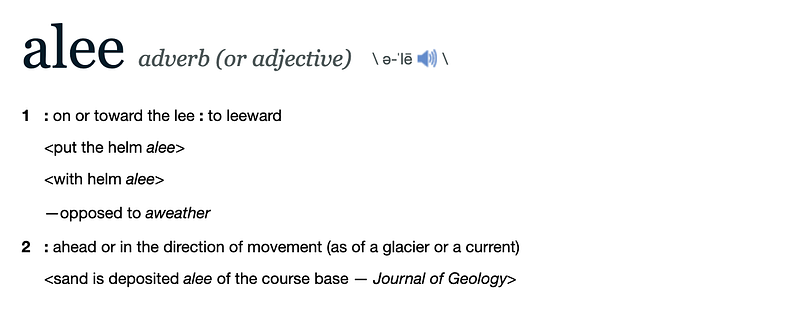
Silly little dictionary! Don’t you know alee can’t possibly be a word if the New York Times says it ain’t?
Wait a minute!
The New York Times does say it’s a word… in the crossword puzzle! So what’s going on? Keep reading to find out.
Also, for further fascinating facts, check out the Spelling Bee Master.
What’s your favorite dord* from today’s puzzle?
My Two Cents
I would venture to guess that the Spelling Bee is not the most popular game that the New York Times offers its readers. I could be wrong, but I think the crossword puzzle is probably number one. It comes in two versions, by the way: regular and decaf.
Just kidding.
Alongside the daily crossword offering (which increases in difficulty from Monday to Saturday), there is a smaller one called The Mini, which provides a quick fix for those who don’t want to spend more than a minute or so filling a grid based on clues.
The Times also provides a few more variations of crossword-type puzzles, such as the Acrostic, the Cryptic Crossword, a themed Monthly Bonus, and one called “A Little Variety”. The other games offered are the following:
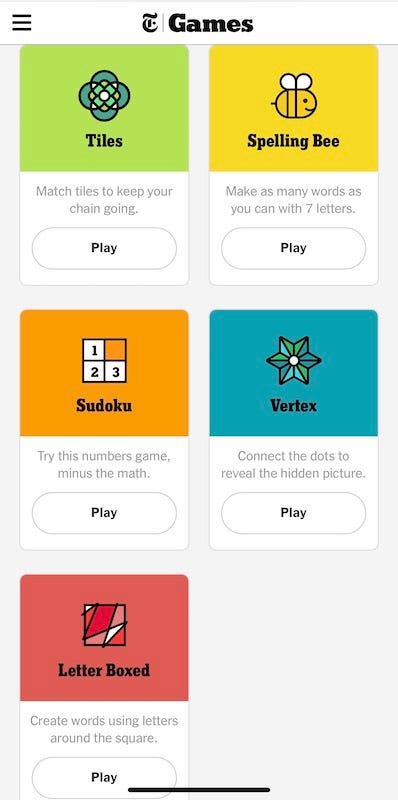
As you can see, there’s a nice, varied assortment for you if you don’t really care for crossword puzzles.
I do, and I’m a regular solver of the daily puzzle, plus I love to play the Spelling Bee (in case you hadn’t already noticed from the dozens of articles I’ve written about it).
Alee is not a Lee
The name Lee has nothing to do with the word lee, at least not as far as their roots are concerned. According to some sources, the surname Lee was what’s known as a placename, meaning it originated from a geographical locality. In this case, leah, an Old English word meaning woodland. The given name Lee derived from the surname. Here are a few examples of what I’m talking about:
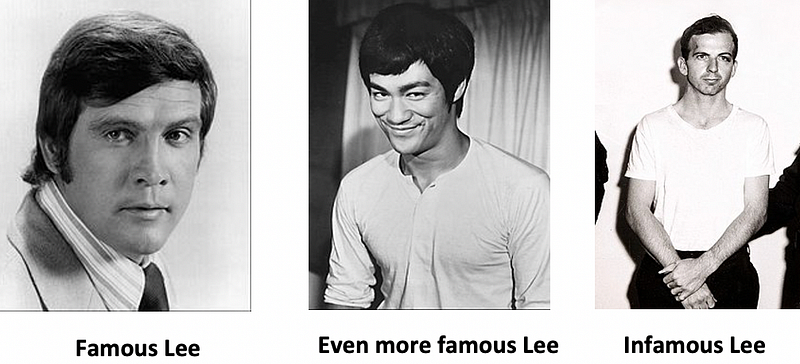
Interestingly enough, Lee Majors (kids, the one on the left) shares a name with Lee Harvey Oswald (the one on the right). Majors was born Harvey Lee, but I can pretty much guess why he dropped the “Harvey” like a hot potato after November of 1963.
The word lee refers to a “protecting shelter” or “the side (as of a ship or mountain) that is sheltered from the wind and provides shelter from it”. It can be traced back etymologically as follows: Middle English le, lee, from Old English hleo, going back to Germanic hlewa- “protected place, shelter”, also Old Saxon hleo “protection, covering”, Old Frisian hlī, and Old Norse hlé “lee side (of a ship)”.
The prefix a- has several meanings, but the one that concerns us today is “in” or “in (such) a manner”.
So a- + lee = “in protecting shelter” or “in such a manner as to be sheltered”, for example.
Other words that have the a- prefix and are accepted by the Spelling Bee puzzle include aloud, aloof, afoot, asunder, and asleep. The entire list is longer, of course.
Shortz vs Chen
Will Shortz is the famous editor of the New York Times crossword puzzle. Jeff Chen is the (probably) lesser-known editor of the Spelling Bee puzzle.
They are both logophiles. At least, I choose to assume they are, given their professions.
But they can’t seem to agree on what constitutes a word.
Alee is a great example. The crossword puzzle regularly features it. Below is a recent example from February 18 of this year, barely two weeks ago:
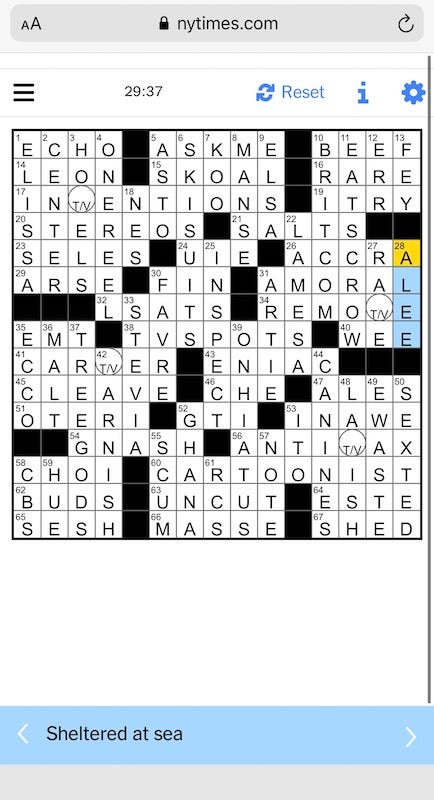
You can tell it it’s the same alee, too, and not Bruce or Oswald or Majors. Because the clue at the bottom gives it away! “Sheltered at sea”. Cleary Will Shortz has no quibbles with it.
In fact, alee is a pretty popular word for the constructors of the Times crossword puzzles. How do I know that? Thanks to a very useful web site called xwordinfo. Among its many useful features is a list of the words used as answers according to frequency.
In the Will Shortz era (which began in 1993), alee has appeared 264 times and is listed as the 84th most common word. In all-time appearances it ranks even higher, at number 30.
But the Spelling Bee keeps rejecting it, time after time. Trust me, I’ve been typing in alee for a few years now. Rejected. Every. Single. Time.
I’m so frustrated I even wrote a little ditty about it:
What’s the deal with alee? Isn’t it a word, clearly? Jeff Chen, please tell me, why that you can’t see?
Maybe that will be enough to convince Mr. Chen that he should include alee in future editions of the Spelling Bee, and not consider it a dord.*
Please check out my previous entry on another dord:
*What the heck is a dord, anyway? Here you go: