
Alchemic(al)
The Gnostics call foul on this snub
Today’s New York Times Spelling Bee letters:
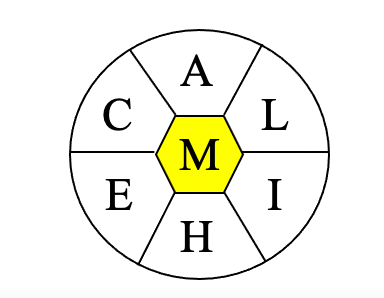
A, C, E, H, I, L, and center M (all words must include M).
Merriam-Webster says…
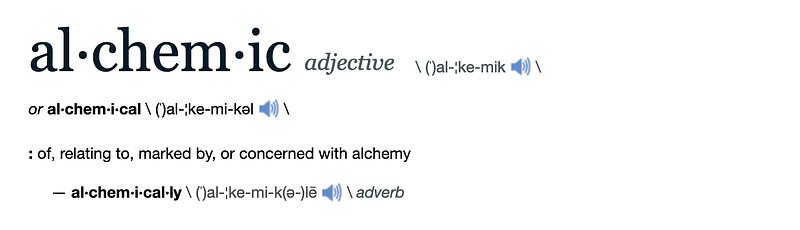
Silly little dictionary! Don’t you know that alchemic(al) can’t possibly be a word if the New York Times says it ain’t?
For further fascinating facts, check out the Spelling Bee Master.
What’s your favorite dord* from today’s puzzle?
My Two Cents
Today we have a repeat of what happened in yesterday’s game: there is a pangram that is not considered a valid word. Actually, there are at least two, because they are variations of the same term, our word of the day: alchemic and alchemical. In case you didn’t read yesterday’s article, here’s a quick refresher on pangrams:
In Spelling Bee lingo, a pangram refers to any word that contains all seven letters of the puzzle at least once. The rules of the game allow letters to be used more than once in words. So alchemic is a pangram because it contains each of today’s letters (a, c, e, h, i, l, m) at least once, with the letter “c” appearing twice. Alchemical is also a pangram, with repeating letters “c”, “a”, and “l”.
Pangrams are worth at least 14 points by the rule of the game (one point per letter plus a bonus of seven for getting a pangram). That’s why it’s so frustrating when pangrams are not accepted.
Today’s rejection is extremely annoying. Chemical is accepted (also a pangram, and the one valid one today), but alchemical isn’t? Or even alchemic, the more common version according to the dictionary. That makes no sense!
Phil Stone
According to Merriam-Webster, the origin of the term alchemy comes from “Middle English alkamie, alquemie, from Middle French or Medieval Latin; Middle French alquemie, from Medieval Latin alchymia, alchimia, from Arabic al-kīmiyā’ the philosopher’s stone, the alchemy, from al the + kīmiyā’, from Late Greek chēmeia, probably alteration of chymeia, probably from Greek chyma fluid, from chein to pour — more at found (to melt).”
Don’t worry, I’m not gonna quote the entry for found. The point is that the word alchemy gained most of its traction and fame from the Arabic term. the Arabic definite article al- means “the” and the Greek “chyma” combine to mean “the process of transmutation by which to fuse or reunite with the divine or original form”. That sounds a bit long, but it’s what Wikipedia claims. Which is one of the many reasons why it’s always good to double-check information you find on Wikipedia.
When I hear alchemy, my mind pictures one of two things: (1) an old medieval Merlin look-alike trying to transform lead into gold (2) one of my favorite live albums. More about that second thought one later.
In reality, alchemy was practiced not only in Europe and the Middle East, but also in Africa and China. In fact, in my 9 to 5 I recently wrote a short story about the discovery of gunpowder, which began as an alchemist effort to find the elixir of life. The discoverer of gunpowder — there’s some debate as to who it was — sorta kinda ended up creating the exact opposite of what they were seeking.
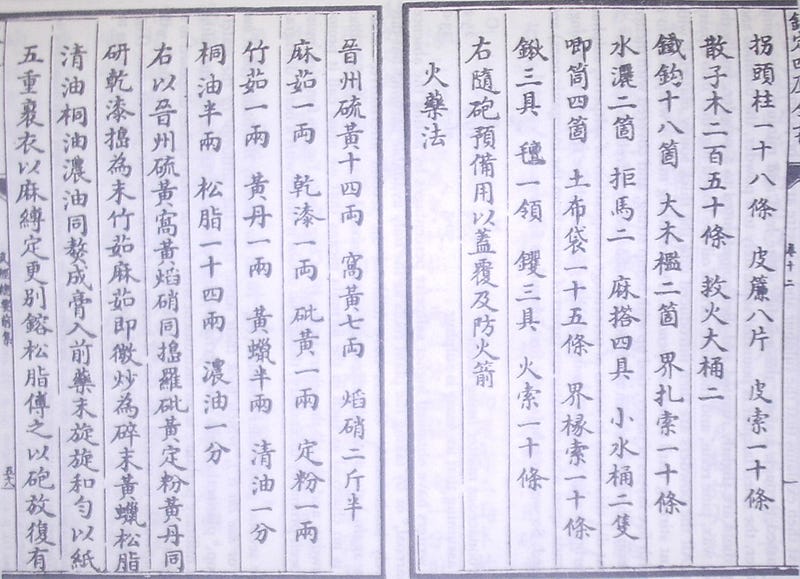
Above is the earliest known written formula for gunpowder, published in the Wujing Zongyao, a Chinese military handbook written from around 1040 to 1044. Currently available at Amazon for only $258 million. (It’s those crazy Amazon algorithms that drove the price up.)
In Europe they claim to have an exact date for when alchemy arrived: February 11, 1144. That’s when Robert of Chester finished translating the Book of the Composition of Alchemy from the Arabic. I’m not sure whether he did so in the morning, the afternoon, or the evening.
Alchemists did seek to turn certain lower-class metals (lead, iron, nickel) into higher-class gold or silver. However, this process, called chrysopoeia (or argyropoeia in the case of silver,) was not the only subject matter they studied. Some of their other endeavors were:
▹ the creation of an elixir of immortality
▹ the discovery a panacea, or a remedy that could cure any disease
▹ the development of an alkahest, or universal solvent
▹ the perfection of body and soul through gnosis and/or working on the creation of the philosopher’s stone.
The philosopher’s stone was a cornerstone (bad pun intended) of alchemy, especially in Europe. That’s because it gave its user magical powers that covered all of the bases mentioned in the list above. The highest-prized ones being, of course, rejuvenation & immortality, and the “Midas touch”.
Hmmm. Maybe Auric Goldfinger, Bond’s nemesis, was an alchemist.
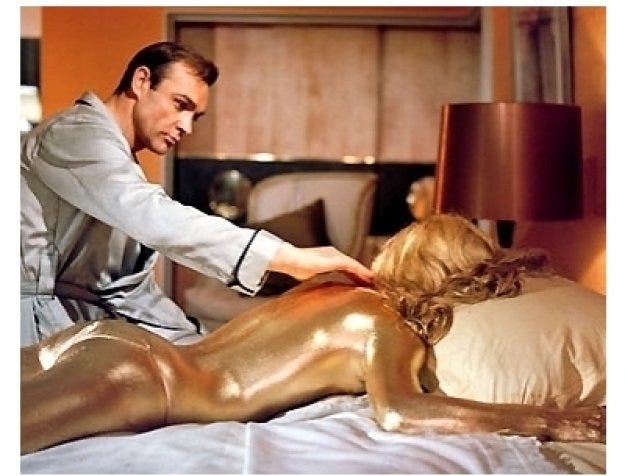
Bond is probably thinking he needs to get his hands on that philosopher’s stone before all the other women he sleeps with also become unavailable.
Today the term “philosopher’s stone” is best known as part of the title to the first Harry Potter novel. In the UK, that is. In the United States, Scholastic changed the name of the book to Harry Potter and the Sorcerer’s Stone. I guess they didn’t want to scare off children — and adults — by mentioning the “ph” word.
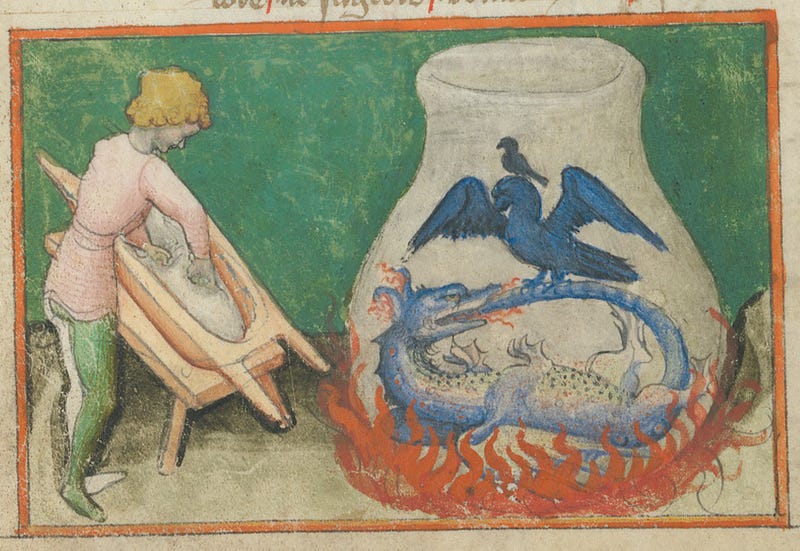
An important symbol in alchemy is the ouroboros or uroboros, the serpent/dragon eating its own tail. It appears in the photo at the beginning of the article, which is part of the 15th-century alchemical book Aurora consurgens. Here is another version of the uroboros:
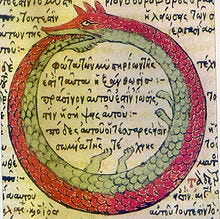
This creature symbolizes the “circle of life”, which was not invented by The Lion King, despite what Disney fans claim on twitter. There are also other interpretations, like the transmigration of souls, fertility, and a bizarre phallic-womb relationship between the tail and the mouth.
Okay, then… time to move on.
Critical inlets
Alchemy is British rock band Dire Strait’s first live album, released on March 16, 1984. Its official title is Alchemy: Dire Straits Live, and it was recorded at London’s Hammersmith Odeon between July 22 and 23 of the previous year.
Alchemy was released as both a vinyl record and a CD, the first time Dire Straits entered the compact disc market. Now, I have a vague recollection of hearing this was the first CD ever released or the first live CD ever released. (The first one is not true, the second one I don’t know.) There was a “first something” associated with this CD, but maybe I’m suffering from the Mandela effect regarding this factoid.
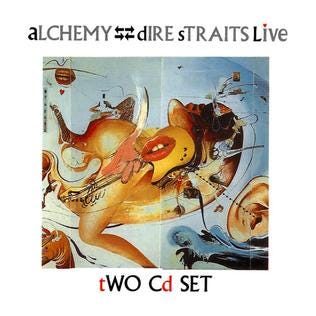
Dire Straits released Brothers in Arms in 1985, which became the first CD to sell more than a million copies and the first to outsell its vinyl version. So maybe that’s what I was thinking about?
As I mentioned earlier, it’s one of my favorite live albums, and brings back a lot of memories about a good friend in university who introduced me to this CD and its wonderful music several years after it came back. I can clearly picture us in his house, going through the song list, my friend highlighting what he thought were the best virtuoso moments: Mel Collins on the sax right before “Tunnel of Love” and during “Two Young Lovers”, and Mark Knopfler’s fingerpicking on “Sultans of Swing”.
I was fascinated by the cover art (part of a painting by Australian artist Brett Whiteley, aptly titled Alchemy 1974) and by the fact that this was a double album — two CDs — that contained all of eleven songs. I had already heard how one compact disc could contain a lot more than a vinyl record. One of the rumors was that CDs were designed to a maximum length of 74 minutes so that Beethoven’s 9th Symphony could fit on a single compact disc. This urban legend is still undetermined.
To be fair, the LP was a double album (four sides), and many of the songs are played as an extended version because it’s a live show. So, for example, “Telegraph Road” is more than 13 minutes long and “Tunnel of Love” clocks in at 14 minutes and 38 seconds.
My favorite song is “Romeo and Juliet”, and that live version is my favorite version of that song. I hadn’t heard the song before, not even the studio recording. And it has one of my most beloved lines in music lyric-dom:
All I do is kiss you through the bars of a rhyme.
Here it is, for your enjoyment.
I do have one quibble. The official lyrics say “Juliet the dice were loaded from the start”, but Knopfler signs “the dice was”, which is grammatically incorrect. Such is life. You love something or someone that’s perfect for you, in spite of one or two imperfections.
In conclusion, we’ve established that both an ancient protoscience and a live album are both alchemic, or alchemical. That did not stop the editors of the Spelling Bee puzzle from declaring that alchemic(al) is a dord.*
You can check out my previous entry on another dord* here:
*What the heck is a dord, you ask? Here’s the answer: