avatarKingsley Asuamah

Free AI web copilot to create summaries, insights and extended knowledge, download it at here

1431

Abstract

ow would things sound if I stopped thinking?</li></ul><h2 id="9fa8">Somatic Field</h2><ul><li>Which part of my body is the least comfortable?</li><li>Which parts of my body are hardest to detect?</li><li>What happens when I concentrate on two body parts at once?</li><li>Do any bad emotions arise during the body scan?</li><li>How would my body change if I stopped thinking about it?</li></ul><h2 id="778a">Taste Field</h2><ul><li>Does the taste change as I roll it around my tongue?</li><li>How does the intensity compare with other things I have tasted?</li><li>How would it taste if I had never smelled it?</li><li>Does my feeling about the taste change between first contact and swallow?</li><li>How would it taste if I were asleep right now?</li></ul><h2 id="a87c">Olfactory Field</h2><ul><li>Would I recognize the smell if I had not seen it?</li><li>What adjectives are suitable? (Smooth? Bold? Sweet? Floral?)</li><li>How close must it come to me before my nose can detect it?</li><li>Does it improve my mood or worsen it?</li><li>What memories does it bring to mind?</li></ul><h2 id="5631">Cognitive Field</h2><ul><li>If my thoughts were rabbits in a yard, how crowded would the yard be?</li><li>If my attention was a dog, which rabbits would it chase?</li><li>How much of my focus three seconds ago was on the past?</li><li>How does a little circle make me feel?</li><li>What would I be dreaming now if I were not awake?</

Options

li></ul><h2 id="9690">Emotional Field</h2><ul><li>How easy or hard is it to turn each feeling on and off?</li><li>What changes will happen when I start to pray?</li><li>If I were the prow of a ship would my sea be bright under the sun?</li><li>Who have I shared this suffering with?</li><li>How deeply do I love you?</li></ul><figure id="ef74"><img src="https://cdn-images-1.readmedium.com/v2/resize:fit:800/1*31vXTbzWPAdDxN72iuu31w.jpeg"><figcaption>Photo by Author | Dancing with the Goddess</figcaption></figure><h2 id="1f17">Questions After the Scans are All Finished</h2><ul><li>Did I close my eyes for most of the scans?</li><li>In what ways are mental fields like maps?</li><li>If I were only allowed to keep one field, which one would I choose?</li></ul><h1 id="010c">Note</h1><p id="4022">To the best of my recollection, all the questions are in my own words. If I copied anybody from unconscious memory it was probably my first remote meditation teacher, <a href="https://www.thegreatcourses.com/professors/mark-w-muesse/">Mark Muesse</a>, a Therevada practitioner from Texas.</p><h1 id="d3c3">About the Author</h1><p id="f104">Tom spends his workdays asking people in a big store if they would like any information about heating and cooling. He often wears an Indiana Jones hat. A grapevine in his front yard convinced him to let her live and to even provide her with a little support. That’s all. :)</p></article></body>

AI is Racist

Addressing Bias in Artificial Intelligence
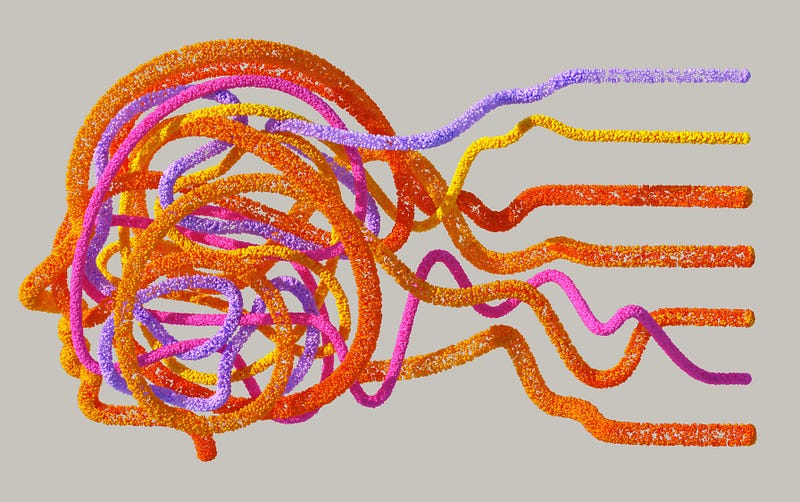
Image Credit: https://www.pexels.com/@googledeepmind/

Artificial Intelligence (AI) has become an integral part of our lives, permeating various sectors and influencing our daily interactions. However, beneath the sheen of technological advancement, a critical concern looms large — AI’s inadvertent perpetuation of racial bias.

The roots of this issue trace back to the vast datasets on which large language models are trained. Encompassing trillions of words, these datasets predominantly reflect the perspectives of English speakers, particularly those of white ethnicity. Books and articles, the primary sources for these datasets, are shown to have a significant bias, with 75% to 95% of them authored by individuals from white backgrounds. This creates a statistical bias favouring whiteness in generative AI platforms.

While it might be argued that the words themselves aren’t inherently racist, the absence of diversity in the training data casts a shadow over the resulting AI models. The privilege embedded in these datasets is palpable, and the AI, in its quest for efficiency through neural net probability calculations, tends to generate responses that lean towards racist generalisations.

The issue extends beyond language models to AI systems that process visual information. The imbalance in data collection is starkly evident in image databases used for computer vision. For instance, 45% of the most used image database in computer vision originates from the United States, leaving a mere 3% for China and India combined, representing 36% of the world’s population. This skewed representation leads to cultural and ethical biases, with algorithms mislabeling images based on their limited training data.

One poignant example comes from facial recognition systems, where MIT researcher Joy Buolamwini uncovered a disturbing bias. While these systems exhibited high accuracy in classifying the gender of white individuals, the accuracy plummeted as the skin shades darkened, particularly for dark-skinned females.

The bias isn’t confined to image classification; it extends to Natural Language Processing (NLP). Word embeddings, a common technique in NLP, can inadvertently encode gender stereotypes. Research has demonstrated that analogies derived from models trained on Google News articles perpetuate gender biases, linking professions like ‘doctor’ to ‘man’ and ‘nurse’ to ‘woman.’

Addressing the ethical implications of biased AI requires a multi-faceted approach. Scientists and engineers must confront the imbalance in training sets, actively working to diversify datasets and eliminate racial and gender biases. Users and non-experts, on the other hand, need to comprehend that AI, rooted in complex mathematics, operates as a ‘black box.’ Despite efforts to decipher its intermediate outputs, the inherent complexity of neural networks often leads to unintended biases.

In unravelling the shadows of bias within AI, it is imperative to acknowledge this ethical dilemma and collectively strive for transparency, inclusivity, and fairness in the development and deployment of artificial intelligence.

AI
Artificial Intelligence
Algorithms
Technology
Bias In Ai
Recommended from ReadMedium