
AI Will Not Take Your Job. Someone Using AI Will
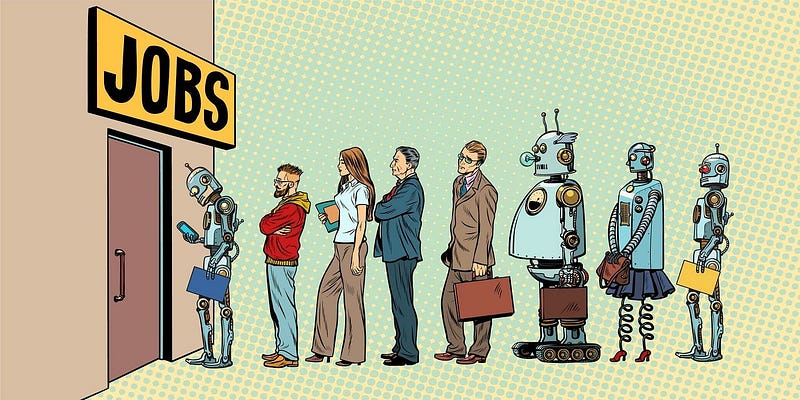
Let’s face it, the rise of artificial intelligence (AI) has sparked fear and trepidation in the hearts of many workers, myself inclusive! I was legit worried that the robot apocalypse was just around the corner, ready to snatch our jobs and livelihoods away. The major fear stems from Automation! Everything is now being automated! Many people especially those in the manufacturing sector are the worst hit. But let’s put those fears to rest and take a closer look at the real culprit here. The AI technology by itself cannot take anyone’s job. It’s really not the AI that’s coming for your job; it’s someone using AI. And trust me, they can be quite sneaky about it.
The AI Revolution
First, let’s acknowledge the undeniable fact that AI is reshaping the job landscape. It’s shaping how you get jobs by filtering your CV. Then on the job, it’s improving efficiency, reducing errors, and taking over repetitive tasks, freeing up humans to do more creative and strategic work. However, the key point to remember is that AI is a tool, like a hammer or a screwdriver. It cannot operate alone. It’s an assistive technology that requires human intervention in its operations. It is humans who develop, implement, and manage the technologies. Therefore, it is ludicrous to claim that AI can take over entire jobs and replace human workers. It doesn’t have a personal vendetta against your job. So, instead of pointing fingers at AI, we should be pointing them at those who wield it.
Case Study #1: The Chatbot Bandit
Imagine you’re a customer service representative at a tech company. You’ve been dealing with irate customers for years, answering the same questions over and over again. Then, one day, your boss introduces a shiny new chatbot (usually with a cool female name like Anna, Carine etc), that can handle customer inquiries 24/7 without a bathroom break. You panic, thinking your job is on the line. But wait, there’s a twist.
Your coworker, let’s call him Bassey, takes an interest in this chatbot. Instead of fearing it, he decides to become its master. Bassey spends his evenings and weekends teaching the chatbot the quirks of the company, the most common customer complaints, and even how to use emojis to sound friendlier. Guess what? Bassey’s job is safe, and he’s now the go-to guy for maintaining and improving the chatbot. Meanwhile, you’re still answering the phone, waiting for the robot apocalypse that never comes.
Case Study #2: The Spreadsheet Wizard
Meet Mfon, an accountant working for a mid-sized firm. She’s been crunching numbers and creating spreadsheets manually for years. Then, one day, the company decides to implement AI-powered accounting software. Panic ensues among the accountants, including Mfon. But she’s not one to sit back and let technology replace her.
Mfon dives headfirst into learning the ins and outs of the new software. She becomes the spreadsheet wizard, wielding the AI as her wand to analyze financial data faster and more accurately than ever before. The company loves her newfound efficiency, and Mfon’s job is not only secure, but she also gets a promotion.
The Real Culprit is Complacency
In these examples, it’s evident that AI isn’t to blame for job insecurity; complacency probably is. I know these examples sound textbook-like, but hear me out. Those who fear AI without first attempting to explore, embrace and leverage its capabilities are the ones at risk. They’re like people who see a bicycle and think, “It’s going to replace my legs.” No, it’s not. It’s a tool to help you go faster and farther. I work as a Software QA. I stumbled upon an article on how folks are using AI to generate test cases and do other amazing QA things. That changed my perspective a whole lot. Guess what? I am trying to research and apply it! Not like I have a choice anyway.
I sincerely believe humans are indispensable. We have unmatched abilities, such as emotional intelligence, creativity, and originality. These are qualities that an AI machine cannot replicate. Additionally, humans possess the ability to show empathy and react to situations with a human touch, while AI machines cannot. Robots can automate work processes, but they cannot replace humans in areas such as customer service, innovation, and strategic thinking.
Adaptability Is Key
So, how do you ensure AI doesn’t steal your job? Here are some steps to consider:
1. Embrace Learning: Stay curious and be open to learning about new technologies and tools in your field. The more you know, the better you can wield AI to your advantage.
2. Become the Expert: Don’t run away from AI; run towards it. Become the go-to person in your organization for understanding and implementing AI solutions in your area of expertise.
3. Creativity Matters: AI may be great at crunching numbers, but it struggles with creativity and innovation. Focus on tasks that require human ingenuity and leave the mundane stuff to the machines.
4. Collaboration is Key: Work with AI, not against it. Collaborate with machines to enhance your performance and achieve better results. Think of it as a dynamic duo rather than a rivalry.
From experience, my conclusion is this; AI isn’t the villain we should be worried about. It’s a powerful tool that can either enhance our abilities or replace us if we let it. The real danger lies in complacency and resistance to change. So, don’t fear AI; embrace it, learn it, and use it to your advantage. It’s a classic adapt-or-die scenario. Remember, AI will not take your job; someone using AI will. Will that someone be you, or will you be left behind in the technological dust? The choice is yours.


