
AI in Robotics: Use of Artificial Intelligence in Robotics
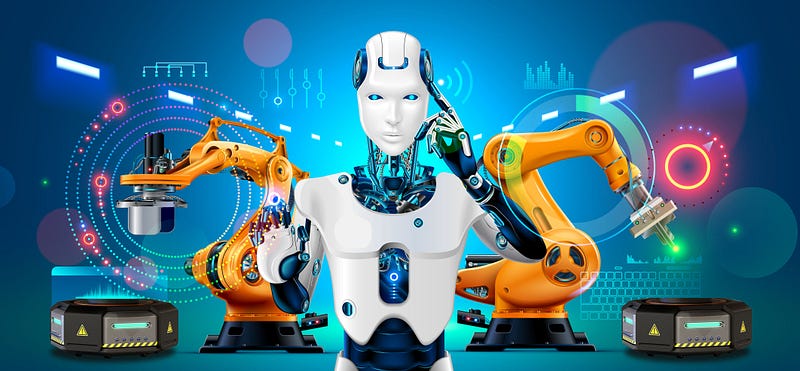
Robots were the first-known automated type machines people got to know. There was a time when robots were developed for performing specific tasks, yes such machines were earlier developed without any artificial intelligence (AI) to perform only repetitive tasks.
But now the scenarios are different, AI in getting integrated into robots to develop the advanced level of robotics that can perform multiple tasks, and also learn new things with a better perception of the environment.
AI in robotics helps robots perform the crucial tasks with a human-like vision to detect or recognize the various objects.
Nowadays, robots are developed through machine learning training. A huge amount of datasets is used to train the computer vision model, so that robotics can recognize the various objects and carry out the actions accordingly with right results.
And, further, day-by-day, with more quality and precise machine learning processes, robotics performance is getting improved.
So, right here we are discussing the machine learning in robotics and types of datasets used to train the AI model developed for robots.
How AI is Used in Robotics?
The AI in robotics not only helps to learn the model to perform certain tasks but also makes machines more intelligent to act in different scenarios.
There are various functions integrated into robots like computer vision, motion control, grasping the objects, and training data to understand physical and logistical data patterns and act accordingly.
And to understand the scenarios or recognize the various objects, labeled training data is used to train the AI model through machine learning algorithms.
Here, image annotation plays a key role in creating a huge amount of datasets helping the robotics to recognize and grasp different types of objects or perform the desired action in the right manner making AI successful in the robotics.
Application of Sensors in Robotics
The sensor helps the robots to sense the surroundings or perceive the visuals of the environment. Just like five key sensors of human beings, combinations of various sensing technologies are used in the robotics.
From motion sensors to computer vision for object detection, there are multiple sensors providing a sensing technology into changing and uncontrolled environments making the AI possible in the robotics.
Uses of Types of Sensors in Robotics:
- Time-of-flight (ToF) Optical Sensors
- Temperature and Humidity Sensors
- Ultrasonic Sensors
- Vibration Sensors
- Millimeter-wave Sensors
Nowadays a wide range of increasingly more sophisticated and accurate similar sensors, combined with systems that can fuse all of this sensor data together is empowering robots to have increasingly good perception and awareness for the right actions in real-life.
Application of Machine Learning in Robotics
Basically, machine learning is the process of training an AI model to make it intelligent enough to perform specific tasks or some varied actions.
And to feed the ML algorithms, a set of data is used at a large scale to make sure AI models like robotics can perform precisely. As much as training data will be used to train the model, the accuracy would be at the best level.
In robotics, it is trained to recognize the objects, with the capability to grasp or hold the same object and ability to move from one location to another location.
Machine learning mainly helps to recognize the wide-ranging objects visible in different shapes, sizes and various scenarios.
And the machine learning process keeping running if robots detect new objects, it can make the new category to detect such objects if visible again in the near future.
However, there are different disciplines of teaching a robot through machine learning. And deep learning is also used to train such models with high-quality training data for a more precise machine learning process.
APPLICATION OF AI IN ROBOTICS
AI in robotics makes such machines more efficient with self-learning ability to recognize the new objects. However, currently, robotics are used at the industrial purpose and in various other fields to perform the various actions with the desired accuracy at higher efficiency, and better than humans.
Video: Most Advance AI Robots
From handling the carton boxes at warehouses, robotics is performing the unbelievable actions making certain tasks easier. Right here we will discuss the application of AI robotics in various fields with types of training data used to train such AI models.
Robotics in Healthcare
Robotics in healthcare are now playing a big role in providing an automated solution to medicine and other divisions in the industry.
AI companies are now using big data and other useful data from the healthcare industry to train robots for different purposes.

From medical supplies, to sanitization, disinfection and performing the remote surgeries, AI in robotics making such machines become more intelligent learned from the data and performs various crucial tasks without the help of humans.
Robotics in Agriculture
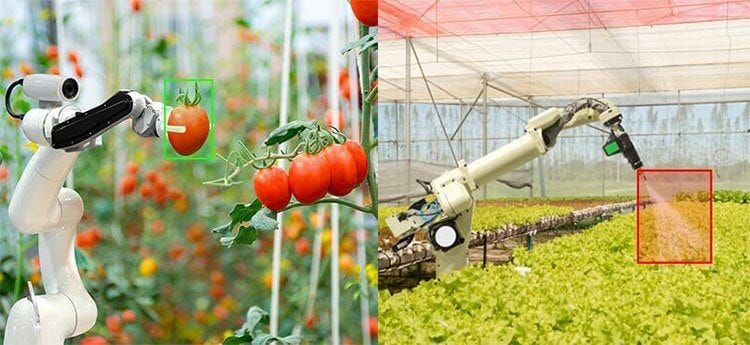
In the agriculture sector, automation is helping farmers to improve crop yield and boost productivity. And robotics is playing a big role in the cultivation and harvesting the crops with precise detection of plants, vegetables, fruits, and other unwanted floras.
In agriculture AI robots can perform the fruits or vegetable plucking, spraying the pesticides, and monitor the health conditions of plants.
Robotics in Automotive
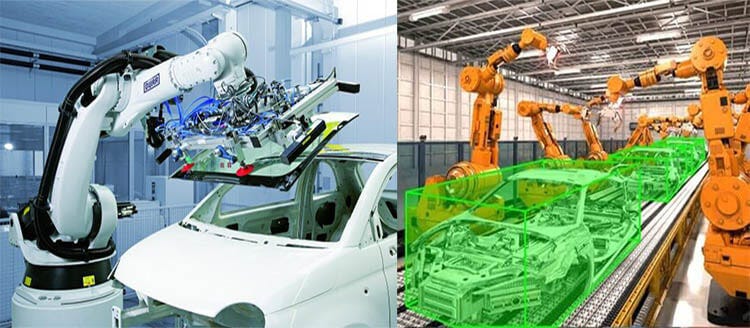
The automobile industry moved to the automation that leads to fully-automated assembly lines to assemble the vehicles. Except for a few important tasks, there are many processes performed by robotics to develop cars reducing the cost of manufacturing.
Usually, robotics is specially trained to perform certain actions with better accuracy and efficiency.
Robotics at Warehouses
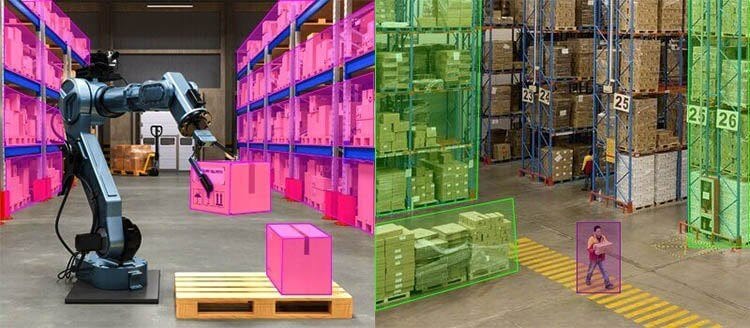
Warehouse needs manpower to manage the huge amount of inventory kept by mainly eCommerce companies to deliver the products to their customers or move from location to another location.
Robotics is trained to handle such inventories with the capability to carefully carry from one place to another place reducing the human workforce in performing such repetitive tasks.
Robotics at Supply Chain
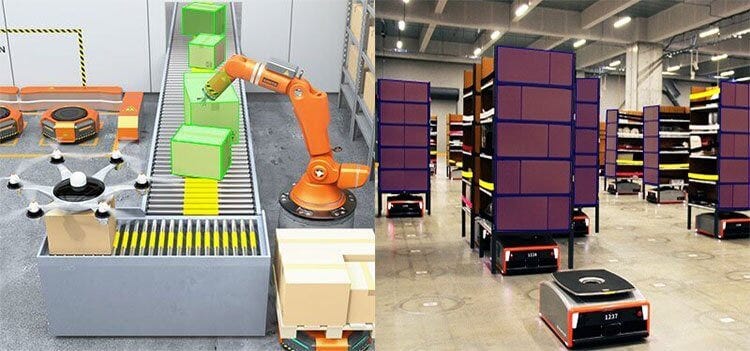
Just like inventory handling at warehouses, Robotics at logistics and supply chain plays a crucial role in moving the items transported by the logistic companies.
AI model for robotics gets trained through computer vision technology to detect various objects.
Such robotics can pick the boxes and kept at the desired place or load and unload the same from the vehicle at faster speed with accuracy.
Training Data for Robotics
As you already know a huge amount of training data is required to develop such robots.
And such data contains the images of annotated objects that help machine learning algorithms learn and recognize the similar objects when visible in the real-life.
And to generate a huge amount of such training data, image annotation techniques are used to annotate the different objects to make them recognizable to machines.
And Anolytics provides the one-stop data annotation solution to AI companies to render high-quality training data sets for machine learning-based model development.
Other AI Articles Trending on Medium:
How AI is Used in Healthcare to Control the COVID-19: Use Cases
How Does Google AI Detect Breast Cancer Better Than Radiologists
How AI Can be Used in Smart Cities: Applications Role & Challenge
How AI Based Drone Works: Artificial Intelligence Drone Use Cases
How AI is Changing Fashion: Impact on the Industry with Use Cases
This story was also featured on www.vsinghbisen.com
If you like this story, don’t forget to clap!!



